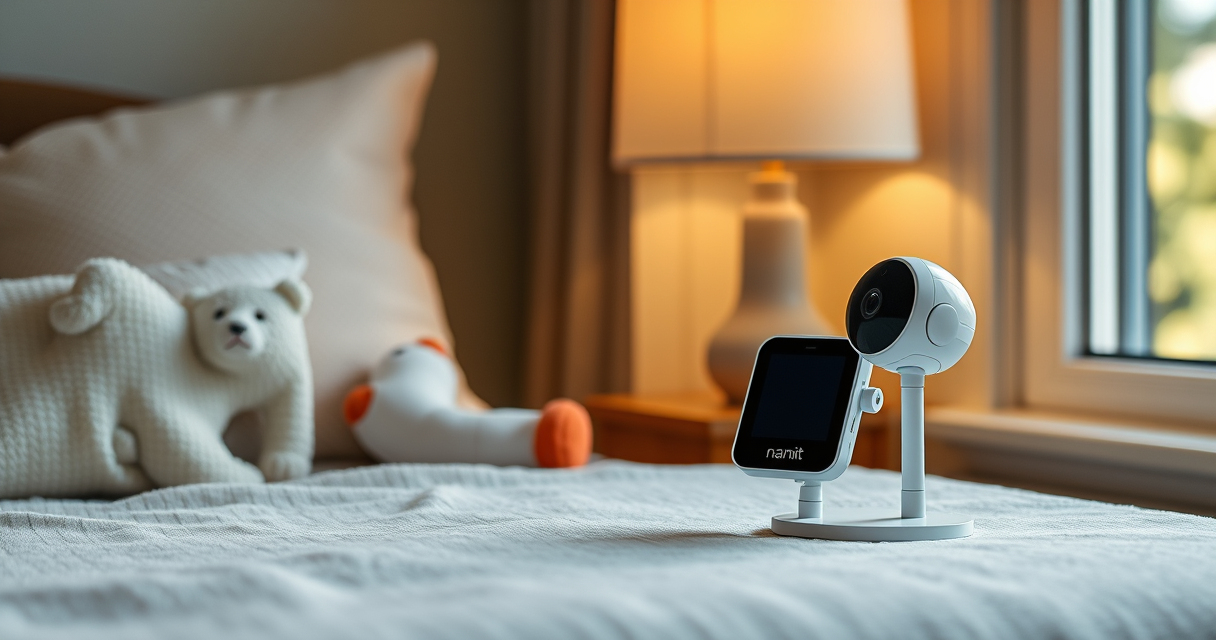

September is when the nights start drawing in and, if you’re anything like I was in that first year, the question of whether the central heating, the cooler air and the inevitable sniffles will disturb your baby’s sleep starts creeping back into your mind. That’s exactly when a monitor like the Nanit Smart Baby Video Monitor System earns its keep — not just as a camera, but as a tool that actually helps you understand what’s happening in the cot while you’re downstairs recovering your evening.

Turn the school run and nap time into listening time
- Thousands of audiobooks, podcasts and originals
- Listen on your phone, tablet or Echo — also offline
- Cancel anytime
I’ve spent real time with the Nanit system — the floor stand version with the 8-inch display — and this review covers who it suits, what it does genuinely well, the honest trade-offs, and whether it’s a smart pick during the Amazon September Baby Sale.
Our top pick at a glance

Nanit Smart Baby Video Monitor System
- ✔ Setup Options: Floor stand, wall mount
- ✔ Stages: Newborn to toddler
- ✔ Extras: Auto-captured milestones
What the Nanit Actually Does (and Does Well)
The core appeal is the combination of 1080p HD live streaming and genuinely useful sleep insights. Unlike a basic video monitor, the Nanit tracks sleep automatically — you don’t have to log anything — and gives you a picture of how long your baby slept, how many times they woke, and what happened around those wakings. In September, as routines shift after summer and sleep regressions loom, that data is reassuring rather than gimmicky.
- Crystal-clear video: the 1080p HD stream is sharp enough to see whether those night-time noises are a real wake-up or just settling.
- Temperature and humidity sensors: genuinely useful as autumn arrives and you’re second-guessing the nursery thermostat.
- Milestone capture: it auto-captures moments and sleep sessions, so you get clips you’d otherwise miss.
- Flexible monitoring: watch via the app on iOS or Android, on the 8-inch parent display, or even through Alexa and Google Home.
Setup Options: Floor Stand vs. Wall Mount
The system comes with two setup options, and this matters more than you might think. The floor stand is the one most parents start with — it slides under the cot mattress and positions the camera directly overhead, which is what enables the sleep tracking to work properly. No drilling, no wall damage, and you can move it between rooms or even take it travelling.
The wall mount is the better long-term choice once your baby becomes a climber or a toddler who treats the floor stand as a toy. If you’re setting up a nursery this September with a baby who’ll be mobile by spring, it’s worth planning for the switch early.
The Honest Trade-Offs
No monitor is perfect, and there are three things worth knowing before you buy. First, the Nanit requires a subscription for the initial camera setup — factor that ongoing cost into your thinking, because the sleep insights are the main reason to choose this over a cheaper monitor. Second, the battery life runs three to six hours, so during extended use you’ll want it plugged in; in practice, it lives on its charger like most parent units. Third, the initial setup can feel complex for some users — give yourself a calm half hour with the app rather than attempting it at 10pm on four hours’ sleep.
None of these are dealbreakers, but if you want a simple plug-and-play monitor with no subscription and no app, this isn’t it.
Living With It: The 8-Inch Display and Daily Use
The 8-inch display is a quiet luxury I didn’t expect to care about. It’s large enough to glance at from across the kitchen while making dinner, without unlocking your phone — and it means grandparents or a partner can check in without needing your login. Charging takes under two and a half hours, so topping it up during a nap routine becomes second nature.
Because it connects over WiFi, it also works when you’re not home: check in from date night, from work, or from the garden. The trade-off is that it depends on your home internet being solid, so position your router sensibly if the nursery is far away.
Is It Worth Buying in the September Baby Sale?
If you’ve had the Nanit on your list, September is a sensible moment to act. The Amazon Baby Sale brings the kind of reduction that softens the sting of the subscription question, and buying now means you’re set up before the darker evenings and the first winter colds arrive — precisely when you’ll lean hardest on the temperature readings and the sleep data.
For expectant parents due this autumn, or parents of a four-to-six-month-old heading into a regression, the timing is close to ideal. For someone whose baby already sleeps reliably and who just wants eyes on the cot, a simpler monitor may serve just as well.
More Details on Our Top Picks
Nanit Smart Baby Video Monitor System
The Nanit Smart Baby Monitor pairs genuinely sharp 1080p HD video with sleep tracking that takes the guesswork out of night wakings. The 8-inch display, temperature and humidity sensors and flexible floor-stand setup make it a confident all-rounder from newborn to toddler — provided you’re comfortable with a subscription and keeping it plugged in for long stretches.
Pros:
- Sleep tracking that works automatically, no logging
- Excellent 1080p HD video quality
- Temperature and humidity sensors perfect for autumn
- Floor stand and wall mount give real placement flexibility
Cons:
- Subscription required for initial camera setup
- Battery life limited during extended use
- Setup can be fiddly for less techy users
Best for: Data-curious parents of newborns to toddlers who want more than a basic camera
Not ideal for: Anyone wanting a simple, subscription-free plug-and-play monitor
Bottom line: If sleep insights matter to you, this is one of the smartest buys in the September Baby Sale — just budget for the subscription.
Affiliate disclosure: As an Amazon Associate we earn from qualifying purchases. Prices and availability are accurate as of the time of publishing.
Fall Picks
fall essentials
As an affiliate, we earn on qualifying purchases.