By introducing your baby to two languages early, you boost their brain’s flexibility and problem-solving skills. They’ll learn to differentiate sounds, switch between languages smoothly, and develop stronger memory and multitasking abilities. Bilingual development also broadens cultural understanding and nurtures self-awareness. These early advantages support lifelong learning and social skills. As your child grows, they’ll reap ongoing cognitive and cultural benefits—if you keep exploring how to nurture this valuable skill.

Turn the school run and nap time into listening time
- Thousands of audiobooks, podcasts and originals
- Listen on your phone, tablet or Echo — also offline
- Cancel anytime
Key Takeaways
- Early bilingual exposure enhances brain plasticity, supporting advanced language and cognitive development during the critical period.
- Managing two languages develops problem-solving, memory, and multitasking skills from a young age.
- Bilingual children demonstrate greater mental agility by differentiating and switching between languages seamlessly.
- Early language learning promotes cognitive flexibility, fostering lifelong adaptability and learning capabilities.
- Bilingualism strengthens self-awareness and communication skills, influencing how children perceive and connect with the world.
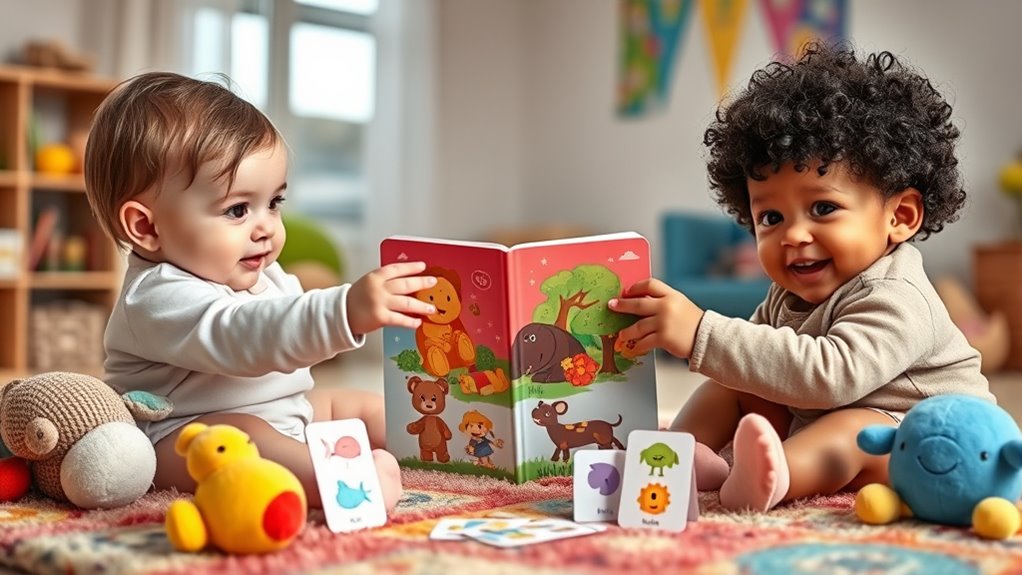
Have you ever wondered how babies become bilingual? It’s fascinating to see how young children pick up two languages almost effortlessly, shaping their language development in unique ways. When you expose a baby to two languages early on, you’re giving them the chance to develop a rich linguistic foundation that can boost their communication skills and cognitive abilities. During this critical period, their brains are especially flexible, allowing them to distinguish sounds, words, and grammar structures from both languages seamlessly. This early exposure not only enhances their ability to switch between languages but also deepens their understanding of cultural identity, helping them connect with different communities and traditions from a young age.
As your baby begins to learn both languages, you’ll notice how their language development becomes more complex and nuanced. They start by babbling in sounds from both languages, often mixing words or phrases as they experiment with their speech. This is a normal part of bilingual language development, and it shows that their brain is actively processing and integrating multiple linguistic systems. Over time, they’ll begin to differentiate the two languages more clearly, learning which words belong to which context and how to switch smoothly between them. This flexibility in language use encourages cognitive skills like problem-solving, memory, and multitasking, as their brain constantly manages multiple language rules and vocabularies. Early language exposure is a crucial factor in fostering these benefits, as it leverages the brain’s high plasticity during this formative stage.
Moreover, growing up bilingual influences their sense of cultural identity. By hearing and using two languages daily, your child naturally becomes more aware of cultural nuances, traditions, and values associated with each language. This dual exposure helps foster a broader worldview and promotes open-mindedness, as they learn to navigate different cultural contexts. Their ability to understand and appreciate diverse perspectives becomes part of who they are, shaping their sense of self in meaningful ways. When you support this bilingual journey, you’re not just teaching them words; you’re helping them develop a richer cultural identity rooted in understanding and respect.
In the end, nurturing your baby’s bilingualism is about more than just language—it’s about enriching their cognitive landscape and cultural awareness. Their early language development lays the groundwork for lifelong learning, adaptability, and a strong sense of identity. As they grow, they’ll carry the advantages of being bilingual in ways that extend far beyond words, influencing how they see the world and connect with others.
As an affiliate, we earn on qualifying purchases.
Frequently Asked Questions
How Early Should Parents Start Exposing Babies to Two Languages?
You should start exposing your baby to two languages as early as possible, ideally from birth or around six months. Early exposure helps reduce issues like code switching and language dominance, making it easier for your child to develop balanced bilingual skills. The sooner you introduce both languages, the better your child adapts naturally, enhancing cognitive benefits and fostering smooth, effortless switching between languages as they grow.
Can Bilingualism Delay a Child’s Language Development?
You might wonder if bilingualism delays your child’s language development. While some worry about language mixing, research shows it actually fosters cognitive flexibility, helping kids switch between languages smoothly. Early exposure doesn’t delay milestones; instead, it boosts their overall language skills. Your child may take a bit longer to master each language, but this process enhances their mental agility, making them better equipped for future learning and communication.
What Challenges Do Bilingual Babies Typically Face?
You might notice bilingual babies face challenges like code switching and language interference. They often blend words or switch between languages mid-sentence, which can seem confusing. This happens because their brains are still learning to differentiate and organize two languages simultaneously. While it can be tricky at first, with time and support, they develop strong skills in both languages, turning these challenges into cognitive advantages later on.
How Can Parents Balance Two Languages at Home?
Balancing two languages at home is like walking a tightrope—you want stability without losing your balance. You can do this by setting clear language boundaries, encouraging consistent use of each language, and being patient with code switching. Watch for language dominance and guarantee both languages get equal attention. This approach helps your child develop strong bilingual skills while avoiding confusion, creating a harmonious linguistic environment.
Are There Differences in Bilingual Advantages Across Languages?
You might wonder if bilingual advantages vary across languages. While differences can occur due to language transfer and cultural identity, research shows cognitive benefits like improved problem-solving and multitasking are consistent regardless of the languages spoken. Your child’s ability to switch between languages enhances executive function, and embracing both cultures strengthens their identity. So, no matter the languages, early bilingualism fosters valuable cognitive and cultural skills.
Conclusion
By raising your baby bilingual, you’re giving them a real cognitive boost. Studies show that bilingual children outperform their monolingual peers in problem-solving and multitasking. Plus, they tend to develop stronger executive functions, which help with focus and decision-making. Imagine the advantages your little one will have as they grow! Embracing two languages early not only enriches their cultural understanding but also sets the stage for a smarter, more adaptable future.
Halloween Picks
halloween
As an affiliate, we earn on qualifying purchases.