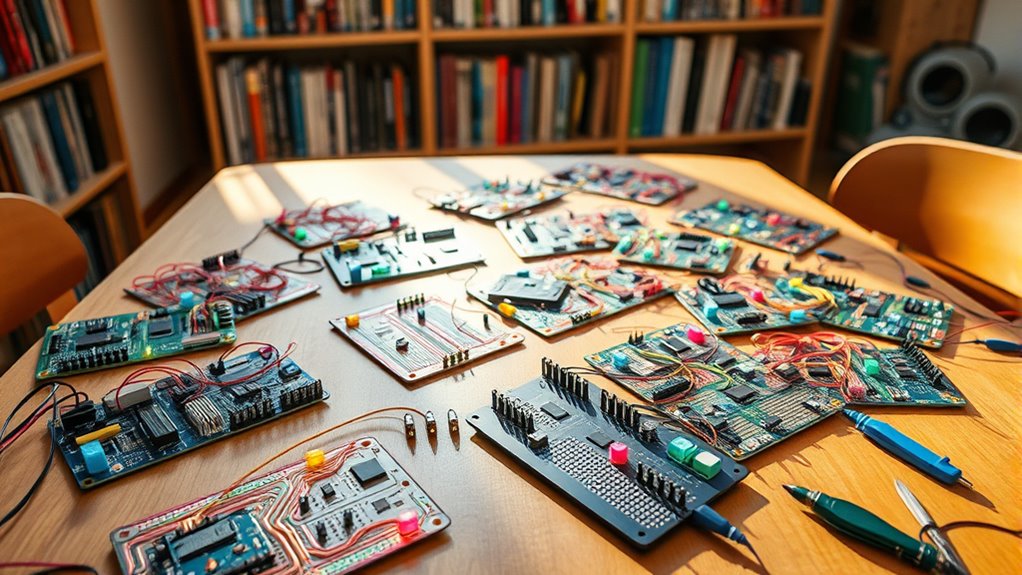

If you’re searching for kids circuit boards, you’re likely looking for a safe, engaging way to introduce young learners to electronics and STEM concepts. The best options balance simplicity with educational value, making it easy for kids to build and experiment. The Snap Circuits Classic SC-300 stands out as the overall best due to its intuitive design and extensive project lineup. Meanwhile, the National Geographic Circuit Kit offers a wide variety of electrical experiments, perfect for curious minds. However, tradeoffs include varying complexity levels and price points, which can impact suitability for different age groups or skill levels. Keep reading for a detailed comparison to find the perfect fit for your young engineer.

Turn the school run and nap time into listening time
- Thousands of audiobooks, podcasts and originals
- Listen on your phone, tablet or Echo — also offline
- Cancel anytime
Complete the kit


Key Takeaways
- The top-rated kits combine ease of use with a broad range of projects to keep kids engaged.
- More complex kits tend to offer greater educational depth but may be overwhelming for younger children.
- Build quality and safety features are critical for ensuring a positive and safe learning experience.
- Starter kits designed for ages 5-9 often focus on fundamental concepts, while older kids benefit from advanced options.
- Price varies significantly; investing in a slightly more expensive kit can provide better durability and learning value.
| Snap Circuits Classic SC-300 STEM Electronics Kit |  | Best Overall for Comprehensive Learning | Number of Projects: 300+ | Pieces Included: 60+ | Recommended Age: 8+ | VIEW ON AMAZON | See Our Full Breakdown |
| 12-Pack Electric Circuit Kit for Kids Ages 8-12 – STEM Educational Science Experiments |  | Best for Classroom and Group Learning | Number of Packs: 12 | Included Components: light bulb, switches, battery holders | Recommended Age: 8+ | VIEW ON AMAZON | See Our Full Breakdown |
| Snap Circuits Arcade SCA-200 STEM Electronics Kit for Kids Ages 8+ |  | Best for Creative and Interactive Projects | Number of Projects: Over 200 | Number of Components: 30 | Recommended Age: 8+ | VIEW ON AMAZON | See Our Full Breakdown |
| Sntieecr STEM Electric Circuit Motor Kit |  | Best for Mechanical-Electrical Hybrid Learning | Components: 5 crocodile clip leads, 5 bulbs, 2 motors, motor holders, rocker switches, propellers, buzzer, bulb holders, battery holders | Voltage Range: 1.5V-3V | Recommended Age: 8+ | VIEW ON AMAZON | See Our Full Breakdown |
| 3D Circuit Puzzle STEM Toys for Ages 8-13 |  | Best for Spatial Reasoning and Creative Engineering | Modules: 8 | Challenge Levels: 60 | Material: Premium ABS | VIEW ON AMAZON | See Our Full Breakdown |
| Snap Circuits BRIC Light STEM Building & Circuit Kit for Kids Ages 8+ |  | Best for Creative, Screen-Free STEM Building | Recommended Age: 8+ | Includes: 10 building projects | Compatibility: Works with other leading brick brands | VIEW ON AMAZON | See Our Full Breakdown |
| 20 Sets STEM Electric Circuit Kit for Kids Age 8-12 |  | Best for Basic, Versatile Electrical Learning | Number of Sets: 20 | Ages: 8+ | Components: Bulbs, switches, battery holders | VIEW ON AMAZON | See Our Full Breakdown |
| National Geographic Circuit Kit for Kids with 120 Electrical Projects |  | Best for Extensive, Multimedia Learning | Number of Projects: 120+ | Suitable for: Kids | Includes: Electrical components, wires, instructions, QR code for videos | VIEW ON AMAZON | See Our Full Breakdown |
| Snap Circuits Flight Deck STEM Toy, Paper Airplane Launcher, Ages 8+ |  | Best for Physics and Air Pressure Experiments | Brand: Snap Circuits | Age Range: Ages 8+ | Set Name: Flight Deck | VIEW ON AMAZON | See Our Full Breakdown |
| Circuit Board for Kids STEM Electronics Kit for Ages 8+ |  | Best for Extensive, Modular STEM Projects | Modules: Fan, projector, bulb, RGB light, music | Projects: Over 500 QR-guided STEM projects | Design: Reusable snap-together blocks | VIEW ON AMAZON | See Our Full Breakdown |
| SNAP CIRCUITS Jr. SC-100 STEM Electronics Kit, 100+ Projects, Ages 8+ |  | Best for Entry-Level Young Learners | Number of Projects: 100+ | Number of Components: 29 | Recommended Age: 8+ | VIEW ON AMAZON | See Our Full Breakdown |
| Snap Circuits Beginner SCB-20 STEM Electronics Toy for Kids Ages 5-9 |  | Best for Very Young Children Starting STEM Early | Recommended Age: 5-9 | Projects Included: 21 | Kit Components: Snap-together circuit pieces, lighted color-changing fan | VIEW ON AMAZON | See Our Full Breakdown |
| Snap Circuits 203 STEM Electronics Kit, Over 200 Projects, Ages 8+ |  | Best for Advanced Learners and Educators | Number of Projects: Over 200 | Pieces Included: 42 | Batteries Needed: 3 AA batteries (not included) | VIEW ON AMAZON | See Our Full Breakdown |
More Details on Our Top Picks
Snap Circuits Classic SC-300 STEM Electronics Kit
This kit stands out for its vast array of over 300 projects, making it ideal for kids who want a broad, engaging introduction to electronics. Compared with the Snap Circuits Arcade SCA-200, it offers more projects but fewer advanced features like microcontrollers, making it perfect for beginners who want extensive hands-on experience. Its colorful, snap-together pieces simplify assembly, fostering confidence in young learners. However, it requires batteries (not included), and its focus on electronic projects may limit appeal for children interested in mechanical or creative building beyond circuits. It’s a reliable choice for families seeking a versatile, educator-approved kit that covers foundational electronics comprehensively.
Pros:- Offers over 300 educational and fun projects
- No tools or soldering required, easy to assemble
- Includes colorful, snap-together components suitable for beginners
Cons:- Requires batteries (not included)
- Limited to electronic projects
Best for: Kids 8+ who want a wide range of electronic projects and a safe, tool-free experience.
Not ideal for: Parents seeking advanced coding or programmable features, since it focuses primarily on circuit assembly.
- Number of Projects:300+
- Pieces Included:60+
- Recommended Age:8+
- Batteries Required:Yes
Our verdict“This kit is best suited for young learners seeking a comprehensive, beginner-friendly electronics experience.”
12-Pack Electric Circuit Kit for Kids Ages 8-12 – STEM Educational Science Experiments
This set makes a strong case for structured, repetitive practice with basic electrical circuits, ideal for classroom settings or group activities. Unlike the Snap Circuits kits, which focus on a variety of projects, this collection emphasizes fundamental circuit building through simple experiments, making it great for introducing core concepts. Its inclusion of essential components like bulbs, switches, and battery holders supports hands-on learning, though it’s limited to basic experiments and doesn’t include advanced modules or microcontrollers. Requiring 2 AA batteries (not included), it’s best suited for supervised environments where young children can learn problem-solving in a controlled setting. It offers reliable STEM practice but lacks versatility for more creative or complex projects.
Pros:- Encourages hands-on STEM learning for kids
- Includes all necessary components for experiments
- Easy to assemble with clear instructions
Cons:- Requires 2 AA batteries (not included)
- Limited to basic circuit experiments
Best for: Teachers and parents looking for straightforward, repetitive circuit experiments for children aged 8 and up.
Not ideal for: Kids seeking more creative or programmable projects, as it is limited to basic circuit assembly.
- Number of Packs:12
- Included Components:light bulb, switches, battery holders
- Recommended Age:8+
- Model Number:DP502
- Manufacturer:GadgetGlee
Our verdict“This set offers dependable, straightforward circuit practice for beginners in educational settings.”
Snap Circuits Arcade SCA-200 STEM Electronics Kit for Kids Ages 8+
This kit is a strong choice for children who want a creative and engaging experience with over 200 projects, including games and microcontroller activities. Compared to the classic SC-300, it emphasizes interactive, game-based projects and includes more modern components, fostering creativity and innovation. Its 30 components are color-coded, making assembly straightforward and appealing. The need for 3 AA batteries (not included) may add to setup, but it encourages kids to explore basic electrical engineering with a focus on entertainment. While it offers fewer projects than the SC-300, its focus on fun and interaction makes it ideal for kids who enjoy playful STEM activities. It’s perfect for those who want to combine learning with game creation.
Pros:- Provides hands-on STEM learning with numerous projects
- No tools or soldering required, safe for kids
- Color-coded components make assembly easy and fun
Cons:- Batteries not included, requiring additional purchase
- Limited to 3 AA batteries, which may need frequent replacement
Best for: Kids 8+ interested in building interactive projects and games that combine creativity with electronics.
Not ideal for: Children primarily interested in purely educational or foundational electronics without game elements.
- Number of Projects:Over 200
- Number of Components:30
- Recommended Age:8+
- Batteries Required:3 AA (not included)
Our verdict“This kit is ideal for kids who want a fun, interactive way to explore electronics and engineering concepts.”
Sntieecr STEM Electric Circuit Motor Kit
This kit excels in teaching basic electrical circuits with a focus on motors and mechanical components, making it suitable for kids who enjoy both electronics and mechanical projects. Unlike the purely circuit-based kits like Snap Circuits, this set includes motors, propellers, and switches that enable kinetic projects, offering a different kind of hands-on experience. Its diverse components support multiple projects, but the short recommended operation time at 3V to prevent overheating limits continuous experimentation. Plus, small parts present choking hazards, requiring adult supervision. While it’s excellent for introducing basic electrical principles with a mechanical twist, it may not satisfy children seeking more advanced or software-oriented projects. It’s best for those who want to combine electrical circuits with simple motors and mechanical motion.
Pros:- Encourages STEM learning and hands-on experimentation
- Includes a variety of components for multiple projects
- Suitable for educational use in schools and at home
Cons:- Short recommended operation time to prevent overheating
- Small parts pose choking hazards for young children
Best for: Children 8+ who are interested in both electronics and basic mechanical engineering.
Not ideal for: Parents looking for purely electronic or coding-focused kits, as this emphasizes motors and mechanical movement.
- Components:5 crocodile clip leads, 5 bulbs, 2 motors, motor holders, rocker switches, propellers, buzzer, bulb holders, battery holders
- Voltage Range:1.5V-3V
- Recommended Age:8+
- Safety Warning:Avoid long use at 3V to prevent overheating
Our verdict“This kit suits kids eager to explore electrical motors and mechanical motion in a hands-on way.”
3D Circuit Puzzle STEM Toys for Ages 8-13
This innovative 3D circuit puzzle pushes beyond simple circuit assembly, promoting spatial reasoning and problem-solving with 60 challenge levels. Unlike Snap Circuits kits, which focus on straightforward projects, this set involves building multi-layered circuits with functional modules like lights, mist, and floating balls, making it highly engaging and visually stimulating. Its complex assembly may be challenging for children under 8 and requires adult supervision for younger users. The inclusion of multiple modules and challenge levels encourages creative engineering and independent play, but its complexity can be a barrier for beginners or younger kids. It’s best suited for children ready for more advanced, multi-dimensional puzzles and creative STEM exploration.
Pros:- Encourages STEM learning and problem-solving skills
- Includes multiple functional modules for interactive play
- Two modes: puzzle and free build for versatile fun
Cons:- May be complex for children under 8
- Requires adult supervision for assembly
Best for: Kids 8-14 who enjoy complex puzzles, spatial reasoning, and multi-layered circuit design.
Not ideal for: Younger children under 8 or those new to electronics, due to the complexity and assembly demands.
- Modules:8
- Challenge Levels:60
- Material:Premium ABS
- Age Range:8-14
- Safety Certification:Yes
Our verdict“This puzzle is perfect for older children ready to tackle complex, multi-layered circuit challenges.”
Snap Circuits BRIC Light STEM Building & Circuit Kit for Kids Ages 8+
This kit stands out for combining classic circuit learning with the tactile appeal of building bricks, making it ideal for kids who enjoy hands-on creative projects. Unlike the National Geographic Circuit Kit, which offers over 120 projects, the BRIC LIGHT kit is more focused with 10 specific builds, providing a more manageable starting point for beginners. Its compatibility with other brick brands adds to its versatility, but the limited project scope may feel restrictive for more advanced users. The requirement for batteries is a minor inconvenience, yet it fosters independence by encouraging kids to think about power sources. This pick makes the most sense for children who love combining construction play with simple electronics, especially those who prefer a tactile, creative approach over more complex circuit design.
Pros:- Encourages STEM learning and creativity through tactile building
- Compatible with other leading brick brands for expanded projects
- Promotes hands-on problem-solving and confidence
Cons:- Limited to 10 predefined projects, which may restrict ongoing engagement
- Requires batteries that are not included, adding to the cost
Best for: Young children aged 8+ who enjoy creative, screen-free building activities that blend arts and STEM concepts
Not ideal for: Parents seeking extensive project variety or more advanced circuitry, as the kit’s scope is limited to 10 projects and basic electronics
- Recommended Age:8+
- Includes:10 building projects
- Compatibility:Works with other leading brick brands
Our verdict“This kit is perfect for young builders who want a creative, easy-to-use introduction to circuits without overwhelming complexity.”
20 Sets STEM Electric Circuit Kit for Kids Age 8-12
This kit offers a broad range of simple electrical circuits, making it a solid choice for introducing beginners to STEM fundamentals. Compared with the National Geographic Circuit Kit, which emphasizes numerous projects and multimedia guides, this set provides 20 different circuit options, ideal for repeated experimentation. Its straightforward components like bulbs, switches, and battery holders are perfect for young learners, but the basic nature of the circuits limits complexity, making it less suitable for those seeking advanced projects. The requirement of 2 AA batteries, which are not included, is a minor inconvenience that can hinder immediate use. It’s best suited for families or classrooms wanting a versatile, no-frills circuit experience that encourages exploration without intimidating complexity.
Pros:- Encourages hands-on STEM learning with multiple circuit options
- Suitable for beginners with simple, easy-to-follow instructions
- Versatile for classroom or home use
Cons:- Requires 2 AA batteries not included, adding an extra step
- Limited to basic circuits, not suited for advanced projects
Best for: Beginners aged 8-12 looking for a straightforward, versatile introduction to electrical circuits
Not ideal for: More experienced young engineers or those needing complex or programmable projects, as the kit focuses on basic circuits only
- Number of Sets:20
- Ages:8+
- Components:Bulbs, switches, battery holders
- Power Source:2 AA batteries (not included)
Our verdict“This kit makes sense for young learners seeking a simple, adaptable way to explore electrical circuits without complexity.”
National Geographic Circuit Kit for Kids with 120 Electrical Projects
This comprehensive kit excels at engaging kids with over 120 electrical projects, far surpassing simpler kits like the 20 Sets STEM Electric Circuit Kit. Its safe, snap-together components and included video guides make complex concepts accessible, fostering creativity and confidence. However, the extensive variety requires some adult supervision for younger children, and the focus on electrical projects alone might limit exposure to broader STEM fields. Compared to kits with fewer projects, this option offers more value for kids eager to explore a wide range of electrical activities, from creating light shows to flying a copter. It is ideal for parents or educators seeking a highly interactive, multimedia-supported learning experience that keeps kids engaged over time.
Pros:- Over 120 engaging electrical projects for extended exploration
- Safe, easy-to-assemble components with no tools needed
- Includes video instructions and QR codes for interactive guidance
Cons:- Requires adult supervision for younger children
- Limited to electrical projects, less variety in broader STEM topics
Best for: Parents, teachers, or older kids who want an extensive, multimedia-rich introduction to electrical circuits and creativity
Not ideal for: Younger children or those with limited supervision, due to small parts and the need for guidance
- Number of Projects:120+
- Suitable for:Kids
- Includes:Electrical components, wires, instructions, QR code for videos
- Award:Toy of the Year Award
Our verdict“This kit is perfect for curious kids and educators wanting a deep, multimedia-supported electrical learning experience.”
Snap Circuits Flight Deck STEM Toy, Paper Airplane Launcher, Ages 8+
This unique kit combines circuit building with physics, allowing kids to create circuits that launch paper airplanes, flying saucers, and balls. It’s a distinct choice from the National Geographic Circuit Kit because it emphasizes physics principles alongside electronics, making it ideal for kids interested in how electricity interacts with air and motion. While the Flight Deck is engaging and promotes critical thinking, its limited scope of five projects might not satisfy those looking for variety or extensive exploration. Batteries are not included, requiring an additional purchase, which could delay immediate use. It’s best suited for children who enjoy combining STEM with physical experiments and want a compact, creative activity that blends multiple science disciplines.
Pros:- Encourages STEM learning through physics and electricity
- Includes multiple creative projects for sustained engagement
- Easy-to-follow instructions suitable for independent play
Cons:- Batteries not included, requiring extra purchase
- Limited to five projects, which may feel restrictive for some users
Best for: Kids aged 8+ who love physics, air pressure, and hands-on circuit projects with a playful twist
Not ideal for: Children seeking a broad range of electronics projects or more advanced circuit complexity, as the focus is specialized
- Brand:Snap Circuits
- Age Range:Ages 8+
- Set Name:Flight Deck
- Number of Items:1
Our verdict“This kit works best for kids interested in physics and air pressure, wanting a focused, hands-on experiment kit.”
Circuit Board for Kids STEM Electronics Kit for Ages 8+
This electronics kit offers a flexible, modular approach with reusable snap-together blocks and over 500 QR-guided projects, making it a comprehensive choice for budding engineers. Compared to the National Geographic Circuit Kit, which focuses on specific projects with guided instructions, this set emphasizes experimentation and customization, appealing to kids eager to explore many configurations. The inclusion of five interactive modules—fan, projector, bulb, RGB light, and music—broadens the scope for creative projects. However, the small parts pose a choking hazard for younger children, and adult supervision is recommended for safety. Batteries are included, but the small parts and complexity might make it less suitable for very young or novice users.
Pros:- Encourages extensive hands-on STEM learning with 500+ projects
- Reusable parts support multiple configurations and ongoing experimentation
- Includes diverse modules like fan, projector, and RGB light
Cons:- Small parts can be a choking hazard and require careful supervision
- Requires adult oversight for safe assembly and use
Best for: Older kids and beginners interested in exploring a wide variety of circuit configurations and engineering concepts independently
Not ideal for: Very young children or users seeking a simple, straightforward starter kit, due to small parts and complexity
- Modules:Fan, projector, bulb, RGB light, music
- Projects:Over 500 QR-guided STEM projects
- Design:Reusable snap-together blocks
- Age Range:8+
- Battery:Included
- Parts:Small parts, adult supervision recommended
Our verdict“This kit suits motivated older kids and beginners interested in deep experimentation and engineering creativity.”
SNAP CIRCUITS Jr. SC-100 STEM Electronics Kit, 100+ Projects, Ages 8+
This kit stands out for its approachable design tailored to kids aged 8 and up, offering over 100 projects with just 29 components. Compared with the larger 203 kit, it provides a more manageable introduction to electronics, especially for beginners or younger children. The color-coded parts and simple instructions make it easy to assemble circuits without soldering, fostering confidence and hands-on learning. However, its limited component count means more complex projects require additional kits, and batteries are not included, which could frustrate early learners eager to see their circuits in action. This makes it ideal for parents or educators seeking a safe, straightforward starter set that encourages exploration without overwhelming complexity.
Pros:- Over 100 educational and fun projects to explore
- No soldering or tools needed, enhancing safety and ease of use
- Color-coded components and clear instructions support independent learning
Cons:- Requires batteries, which are not included, adding extra cost
- Limited to 29 components, restricting complexity of projects
Best for: Parents or teachers introducing children aged 8+ to basic electronics and STEM concepts
Not ideal for: Older children or those seeking more advanced projects, as the component variety is limited compared to the 203 kit
- Number of Projects:100+
- Number of Components:29
- Recommended Age:8+
- Includes:Plastic snap-grid, 29 components, instruction manual
- Batteries Required:Yes
Our verdict“This kit suits beginners and younger children who need a simple, safe way to start exploring electronics hands-on.”
Snap Circuits Beginner SCB-20 STEM Electronics Toy for Kids Ages 5-9
This kit is designed specifically for children aged 5 to 9, emphasizing safety and simplicity with colorful, snap-together parts that promote early interest in electronics. Compared to the more advanced 203 kit, it offers only 21 projects, but its focus on core skills makes it perfect for introducing problem-solving in a very accessible format. The small size and colorful instructions help keep young children engaged, though the limited project scope might disappoint those seeking more variety or challenge. Because it requires adult supervision for the youngest users, it’s best suited for parents and educators who want a gentle, engaging introduction to STEM at an early age.
Pros:- Safe, easy-to-assemble snap-together parts
- Bright, colorful instructions that appeal to young children
- Encourages early problem-solving and STEM interest
Cons:- Limited to basic projects, not suitable for advanced learners
- Requires adult supervision for the youngest children
Best for: Parents and educators seeking a safe, easy-to-use starter kit for children as young as 5
Not ideal for: Older kids or those with prior experience in electronics, as the project range is limited and geared toward beginners
- Recommended Age:5-9
- Projects Included:21
- Kit Components:Snap-together circuit pieces, lighted color-changing fan
- Instruction Manual:Included
Our verdict“This kit is perfect for introducing very young children to STEM concepts in a safe, engaging way.”
Snap Circuits 203 STEM Electronics Kit, Over 200 Projects, Ages 8+
This comprehensive kit offers over 200 projects, making it ideal for children aged 8 and above who are ready to explore a wider range of electronics concepts. Unlike the smaller SC-100, the 203 kit includes 42 parts, enabling more complex and diverse projects, which makes it a better choice for serious hobbyists or classroom settings. The snap-together design remains straightforward, but some projects may require adult guidance, and batteries are not included, adding to the setup complexity. Its large project library makes it suitable for sustained learning, though the higher component count and project complexity might be overwhelming for absolute beginners or younger children just starting out.
Pros:- Over 200 projects for deep engagement
- Large set of 42 components facilitates complex experiments
- Suitable for both home use and educational environments
Cons:- Batteries are not included, requiring extra purchase
- Some projects may need adult supervision or guidance
Best for: Educators or parents seeking a versatile, in-depth electronics kit for children with some prior experience
Not ideal for: Complete beginners or very young children who need a simpler, less demanding introduction
- Number of Projects:Over 200
- Pieces Included:42
- Batteries Needed:3 AA batteries (not included)
- Recommended Age:8+
Our verdict“This kit is well-suited for motivated kids and educators wanting an extensive, hands-on electronics experience.”

How We Picked
These products were evaluated based on their educational value, ease of assembly, build quality, versatility of projects, and safety features. We prioritized kits that balance user-friendly design with enough complexity to challenge kids without causing frustration. The selection also reflects a range of price points and age appropriateness, ensuring options for beginners and more advanced learners alike. The ranking emphasizes long-term engagement potential and the ability to grow with the child’s developing skills.Factors to Consider When Choosing Kids Circuit Boards
Choosing the right kids circuit board involves considering several key factors that influence learning, safety, and value. While some kits are ideal for beginners, others are better suited for children with some prior experience. Understanding these factors helps ensure you pick a kit that aligns with your child’s age, interest level, and learning goals.Age Appropriateness and Complexity
Matching the kit’s difficulty level to your child’s age is crucial. Kits designed for younger children focus on simple circuits and colorful components, reducing frustration and promoting confidence. More advanced kits introduce concepts like motors and sensors, suitable for older kids willing to tackle challenging projects. Avoiding overly complicated kits for beginners prevents discouragement, while more experienced children can benefit from expanded project options.
Safety and Durability
Look for kits with high-quality, non-toxic components and secure connections to prevent accidents. Durability matters because kids may mishandle or accidentally break parts; sturdy construction ensures longevity. Safety features like insulated wires and rounded edges add peace of mind. Investing in well-made kits reduces the risk of needing replacements and guarantees a safer learning environment.
Project Variety and Educational Value
The more projects a kit offers, the longer it can hold a child’s interest. Kits with a wide range of experiments foster a deeper understanding of electrical principles, while themed kits can make learning more fun. Consider whether the projects align with your child’s interests—whether they prefer building robots, lights, or sound devices. A versatile kit can grow with your child’s skills and curiosity, providing ongoing educational value.
Expandability and Compatibility
Some kits are designed to be expandable, allowing additional components or modules to be added later. This can extend the lifespan of the kit and support more complex projects as skills develop. Compatibility with other brands or kits can also be advantageous, especially if your child begins to show a strong interest in electronics. Be mindful of whether the kit offers future upgrade options or integrates with broader STEM sets.
Price and Value
While budget matters, it’s important to weigh cost against features, durability, and educational content. Cheaper kits might lack longevity or sufficient project variety, leading to quicker disinterest. Higher-priced options often include more components, better build quality, and a wider range of experiments. Consider how much value the kit offers over time, especially if you want it to serve as a long-term learning tool rather than a short-term toy.
Frequently Asked Questions
Are kids circuit boards safe for young children?
Most kids circuit boards are designed with safety in mind, featuring insulated wires, rounded edges, and non-toxic materials. However, supervision is always recommended, especially for younger children, to prevent mishandling of small parts or accidental short circuits. Reading the manufacturer’s age recommendations helps ensure the kit is suitable for your child’s maturity level. Choosing a kit with secure, durable components can also reduce safety risks during play and learning.
Can I expand a beginner kids circuit kit as my child learns more?
Many beginner kits are designed to be expandable, offering additional modules or compatible accessories that can be purchased separately. Expanding a kit allows your child to explore more complex projects and deepen their understanding of electronics. However, check compatibility and whether the base kit supports future upgrades before purchasing. An expandable kit can be a good investment, growing with your child’s skills and interest levels.
What is the best age to start with kids circuit boards?
The ideal starting age varies based on the complexity of the kit. Kits aimed at ages 5-9 focus on simple circuits and colorful components, making them suitable for early elementary students. For children aged 8 and up, more advanced kits introduce motors, sensors, and programming concepts. Matching the kit to your child’s developmental stage ensures they stay engaged without feeling overwhelmed or bored.
How do I choose between a plastic or metal-based circuit kit?
Plastic-based kits are generally lighter, safer, and less prone to causing injuries, making them ideal for younger children. Metal components tend to be more durable and can offer better conductivity for more advanced projects, but they may require more careful handling. Consider your child’s age and maturity, as well as the intended use, to select the best material for durability and safety. For most beginner to intermediate users, plastic kits offer a good balance of safety and functionality.
Are there kits suitable for very young children (under 5)?
Yes, there are simplified circuit kits designed specifically for preschoolers and early elementary children. These kits typically feature larger, colorful pieces, and focus on introducing basic concepts like circuits and switches in a very safe, tactile way. However, even with age-appropriate kits, adult supervision remains essential. These kits are excellent for sparking early interest in STEM and laying a foundation for more complex projects later on.
Conclusion
For parents seeking a comprehensive and engaging learning experience, the Snap Circuits Classic SC-300 offers unmatched versatility and ease of use, making it the best overall choice. Those on a budget or looking for a wide variety of experiments might prefer the National Geographic Circuit Kit, which balances educational depth with affordability. Beginners or younger kids should consider simpler, larger-piece kits like the Snap Circuits Jr. SC-100 for a gentle introduction. For advanced young engineers, expanding to more complex kits with motors and sensors makes sense, especially as skills grow. Ultimately, the right choice depends on your child’s age, interest, and your educational goals—each of these options can help nurture a love for electronics and STEM concepts.
Halloween Picks

Fun Costumes Creepy Twin Boys Halloween Animatronic

Thuodo 8 FT Tall Halloween Inflatable Three-Headed Dragon with LEDs

Kalolary 11 ft Halloween Inflatable Archway Ghost House Tunnel
As an affiliate, we earn on qualifying purchases.