
Play kitchens boost imagination, social skills, and early cognitive development by encouraging pretend role-play and cultural exploration, while real cooking helps children develop practical skills, motor coordination, and problem-solving abilities through hands-on experience. Both approaches foster important growth, but they focus on different skills at different ages. If you’re interested in blending these methods effectively and ensuring safety, there’s plenty more to explore to support your child’s culinary journey.

Turn the school run and nap time into listening time
- Thousands of audiobooks, podcasts and originals
- Listen on your phone, tablet or Echo — also offline
- Cancel anytime
Key Takeaways
- Play kitchens foster imagination, social skills, and early cognitive development through pretend role-playing activities.
- Real cooking enhances practical skills, safety awareness, and understanding of nutrition and cultural diversity.
- Play kitchens support motor skill development and language growth in a low-risk, creative environment.
- Real cooking teaches children responsibility, problem-solving, and the importance of hygiene and safety protocols.
- Combining both approaches offers comprehensive learning, blending creativity with practical life skills.
As an affiliate, we earn on qualifying purchases.
Why Play Kitchens Boost Early Development Skills
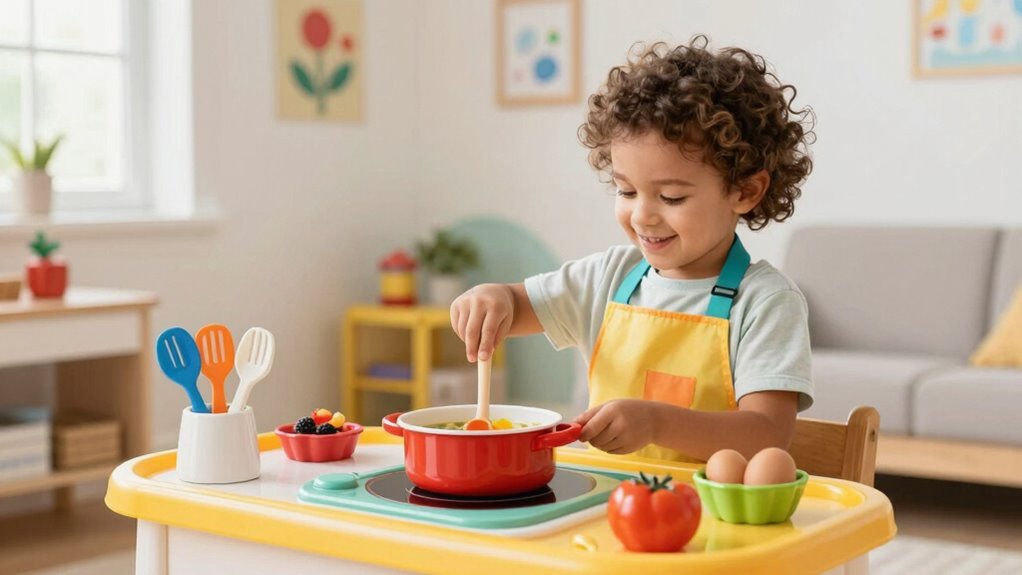
Play kitchens are more than just fun toys; they actively support early developmental skills. When your child engages in pretend play, they develop essential cognitive abilities like imagination, problem-solving, and social understanding. The role of pretend in play kitchens helps children explore real-world scenarios, fostering creativity and emotional expression. Additionally, mastering kitchen organization during play encourages early executive functioning, such as sorting, categorizing, and planning. As they arrange utensils or organize ingredients, kids learn about sequencing and responsibility. This type of play also promotes language development as children mimic cooking conversations and instructions. Engaging in pretend play with play kitchens allows children to practice real-life skills in a safe environment, further enhancing their learning experience. Moreover, imaginative role play helps children develop empathy and perspective-taking by acting out different scenarios. Incorporating structured play routines can further enhance these developmental benefits. Research also shows that early childhood development is significantly supported through these playful learning activities. Overall, play kitchens provide a dynamic environment that nurtures critical developmental skills through imaginative role play and the organization of their pretend culinary world.
When and How to Introduce Real Cooking at Home

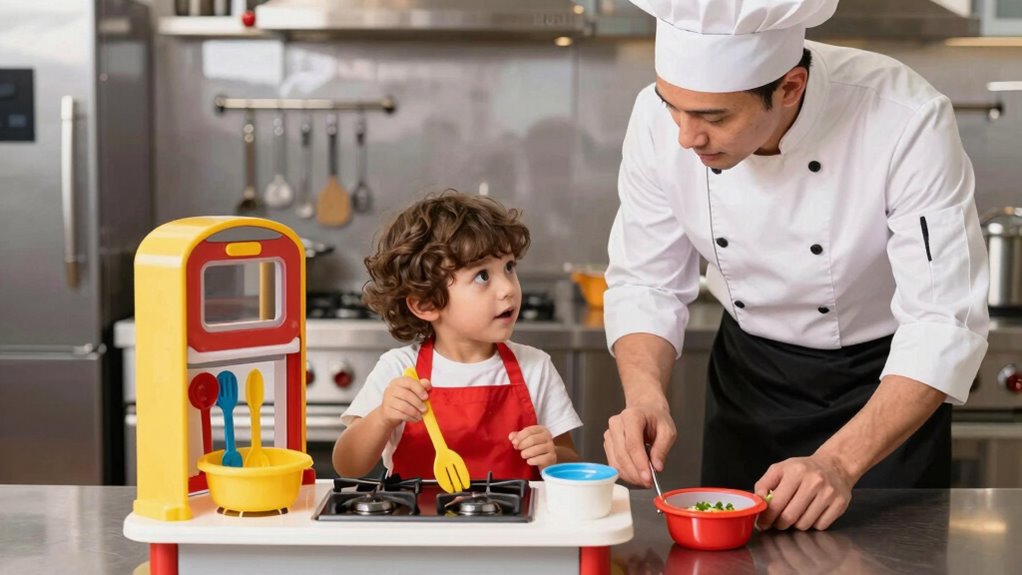
You can start introducing real cooking when your child shows interest and is around 4 or 5 years old. Keep safety in mind by supervising closely and choosing age-appropriate recipes that are simple to prepare. Gradually, you can involve them in basic tasks to build confidence and skills. Focusing on ergonomics and safety ensures a positive and enjoyable learning experience as they develop their cooking abilities. Additionally, understanding child development stages can help tailor activities to their abilities and attention span. Recognizing learning readiness is also important to ensure that the activities are suitable for their cognitive and motor skills development. Paying attention to developmental milestones can further guide you in selecting appropriate cooking tasks that promote growth and learning. Incorporating appropriate supervision at every step will help prevent accidents and foster a sense of responsibility.
Age Appropriateness Guidelines
Introducing real cooking to children should be based on their developmental readiness, ensuring they can handle basic tasks safely and responsibly. At this stage, consider cultural influences that shape their understanding of ingredients and cooking methods, making the experience meaningful. Dietary considerations are also key; if your family follows specific dietary needs or restrictions, teach your child about these to foster awareness and respect. Generally, children around age six or seven can start helping with simple tasks like stirring or washing vegetables, but always assess their individual maturity. Avoid rushing; wait until they show genuine interest and can follow instructions carefully. This approach helps build confidence, respect for food, and an appreciation for cultural and dietary nuances. Additionally, understanding sustainable cooking practices can encourage children to develop environmentally responsible habits early on. Incorporating lessons about environmentally friendly habits during cooking can further reinforce their awareness of sustainability.
Safety and Supervision Tips
Deciding when and how to start cooking with children requires careful attention to safety and supervision. You should assess their age, maturity, and understanding of hazards. To keep them safe, follow these tips:
- Teach fire safety early—show how to handle hot surfaces and never leave the stove unattended.
- Maintain kitchen hygiene—encourage handwashing before cooking and keep work areas clean.
- Supervise closely—always stay within reach, especially near knives, hot pans, or appliances.
- Use child-friendly tools—choose age-appropriate utensils and avoid sharp or heavy equipment.
- Incorporate child development stages to help determine the most suitable age for introducing real cooking activities safely.
- Understanding safe cooking techniques can further enhance the safety and confidence of both children and supervising adults.
- Be aware of the importance of air quality considerations in the kitchen, ensuring proper ventilation when cooking to reduce indoor pollutants and maintain a safe environment. Additionally, being aware of projector technology can help create an engaging visual environment for children’s learning experiences.
Simple Recipes To Start
Starting with simple recipes is the best way to build confidence and skills in young cooks. Choose dishes with straightforward steps, like salads or pasta, that teach basic techniques. Always emphasize kitchen safety—supervise closely and teach kids how to handle cooking tools carefully. Use age-appropriate utensils and ensure they understand hot surfaces and sharp objects. Introducing recipes gradually helps children develop independence and a love for cooking. Here’s a quick guide:
| Recipe | Key Skills | Safety Tips |
|---|---|---|
| Fruit Salad | Chopping, mixing | Use dull knives, supervise |
| Pasta | Boiling, stirring | Keep pot handles away from edges |
| Sandwiches | Spreading, assembly | Avoid sharp knives, clean area |
Starting simple paves the way for more advanced cooking adventures.
Cognitive Gains: Imagination vs. Practical Problem Solving
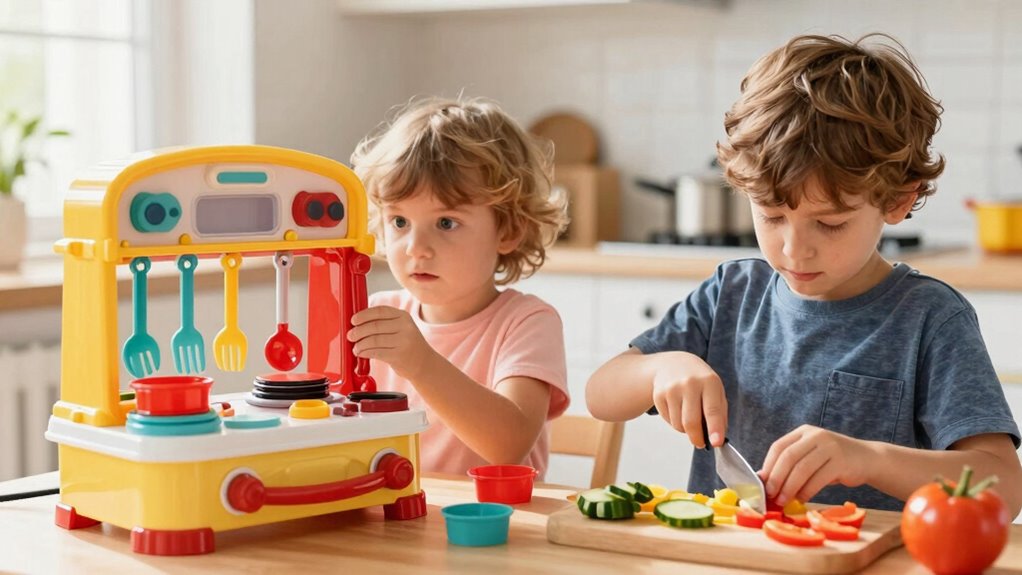
Engaging with play kitchens fosters rich imaginative skills, allowing you to see how children craft fantasy scenarios that boost creative thinking. This imaginative play helps them develop flexible thinking and storytelling abilities. While fantasy scenarios enhance creativity, real cooking emphasizes practical problem-solving skills, like measuring, timing, and troubleshooting. To deepen understanding, consider:
Playing with pretend kitchens nurtures creativity and storytelling, while real cooking sharpens practical problem-solving skills essential for daily life.
- How fantasy scenarios encourage open-ended thinking and innovation.
- The role of problem-solving in adapting recipes and fixing mistakes.
- The balance between imaginative storytelling and real-world application.
- How different cognitive skills grow through each activity over time. Additionally, incorporating natural light enhances cognitive focus and wellness touches in the environment can further support these developmental activities. Moreover, understanding the science behind sound healing can inspire calming, focus-enhancing spaces that benefit both play and real-world cooking experiences. Recognizing the importance of developmental stages helps tailor activities to optimize learning outcomes. Being aware of cognitive development milestones can guide parents and educators in choosing appropriate activities. Both activities support cognitive development, but play kitchens primarily nurture imagination, whereas real cooking sharpens practical problem-solving skills essential for everyday tasks. Incorporating appropriate body jewelry measurements and materials can also promote fine motor skills as children manipulate utensils and tools during cooking play.
Building Social Skills With Play and Real Cooking
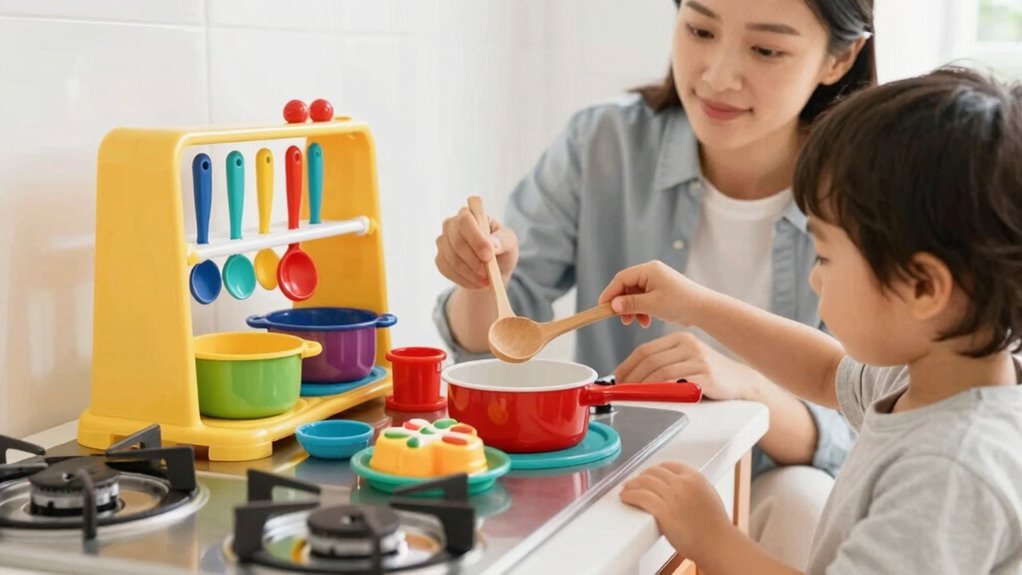
Both play kitchens and real cooking activities offer valuable opportunities to build social skills, as they encourage interaction, cooperation, and communication. When kids engage in imaginative storytelling through play, they learn to share ideas and express themselves, fostering confidence and empathy. Social role play allows children to assume different characters, helping them understand perspectives and develop emotional intelligence. In real cooking, working together to follow recipes or divide tasks strengthens teamwork and patience. Play kitchens provide a safe space for children to practice conversation and negotiation, while real cooking introduces them to real-world social interactions. Engaging in these activities also helps children develop social-emotional skills, which are essential for healthy relationships and effective communication. Both activities enhance social skills by promoting collaboration, active listening, and respectful communication, preparing children to navigate social settings confidently as they grow. Additionally, emotional intelligence can be cultivated through these shared experiences, as children learn to recognize and manage their feelings alongside others. Developing social skills in these contexts encourages children to build meaningful relationships and navigate social challenges more effectively. Incorporating guided interactions and feedback during these activities can further strengthen their social development and confidence.
Developing Motor Skills Through Play and Cooking Activities
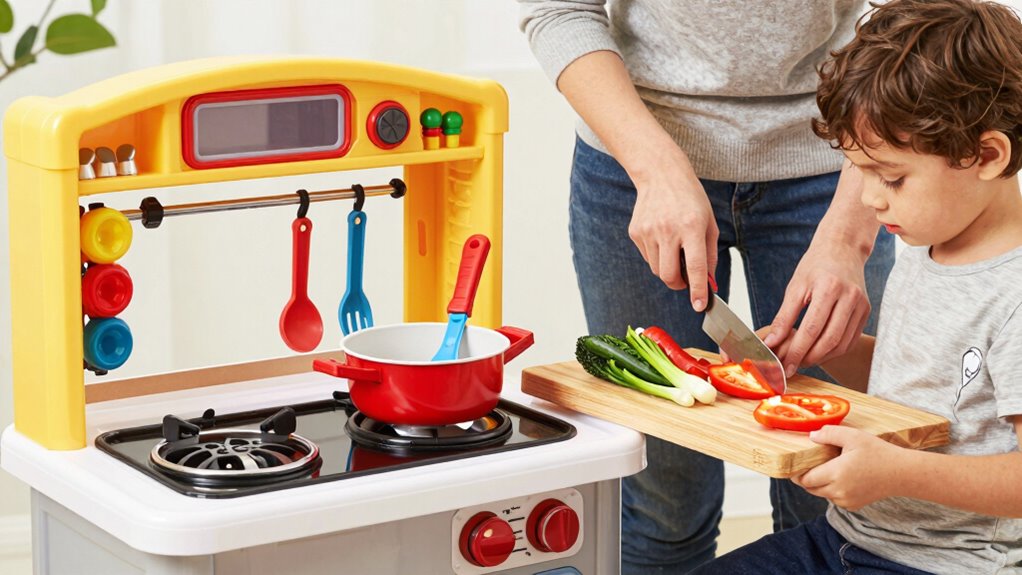
As you encourage your child to engage in play and cooking activities, you’ll notice their fine motor skills improve as they grasp utensils and manipulate small objects. These activities also boost hand-eye coordination, helping them coordinate their movements more accurately. Over time, you’ll see increased dexterity and grip strength, laying a foundation for future skills. Incorporating smart design principles into their play spaces can further enhance their development by creating inviting and accessible environments that support their growing abilities. Additionally, choosing ergonomic tools designed for small hands can make these activities safer and more comfortable for your child. Emphasizing developmentally appropriate toys and tools can also promote better skill acquisition and confidence during play, especially when considering age-appropriate options that match their current developmental stage. Understanding how learning environments influence motor development enables parents and educators to better support children’s growth through thoughtfully designed activities and spaces.
Fine Motor Development
Playing with play kitchens and cooking activities helps children develop their fine motor skills by encouraging them to grasp utensils, pour ingredients, and manipulate small objects. These activities promote precise movements essential for later tasks like writing and buttoning. As they practice, it’s important to emphasize kitchen safety and proper handling of cooking tools to prevent accidents. To deepen their skills, consider these activities:
- Picking up small food items with tongs or fingers
- Stirring ingredients with a spoon
- Cutting soft foods with child-safe knives
- Pouring liquids into containers with controlled movements
These tasks strengthen hand muscles and improve coordination, laying a foundation for more complex motor skills. Engaging in safe, supervised play helps children refine their fine motor abilities while also learning responsibility around kitchen tools.
Hand-Eye Coordination
Developing hand-eye coordination is a key benefit of engaging children in play kitchens and cooking activities. When kids pick up utensils and practice cutting, stirring, or pouring, they refine their ability to coordinate their vision with their movements. These activities also teach important kitchen safety skills, such as handling utensils carefully and avoiding accidents. As children focus on tasks like transferring ingredients or placing items in the oven, they improve their precision and control. Consistent practice in a safe environment helps build confidence in their motor skills and promotes better coordination overall. By encouraging kids to participate actively in pretend or real cooking, you foster their ability to judge distances and movements, laying a strong foundation for more complex motor skills later on.
Dexterity and Grip
Engaging children in play kitchens and cooking activities naturally enhances their dexterity and grip, laying the groundwork for strong fine motor skills. These activities improve kitchen ergonomics awareness and utensil handling, essential for safe and effective cooking. As they manipulate small objects, they develop hand strength and coordination. To deepen these skills, focus on:
- Practicing proper utensil handling techniques to improve precision.
- Encouraging the use of various tools to strengthen finger muscles.
- Setting up an ergonomic workspace that promotes comfortable movements.
- Incorporating activities like peeling or stirring to refine grip control.
These experiences help children understand ideal movement patterns, making real cooking easier and safer as they grow. Developing dexterity through play prepares them for more complex tasks, fostering independence and confidence in the kitchen.
Choosing the Right Approach: Key Factors to Consider
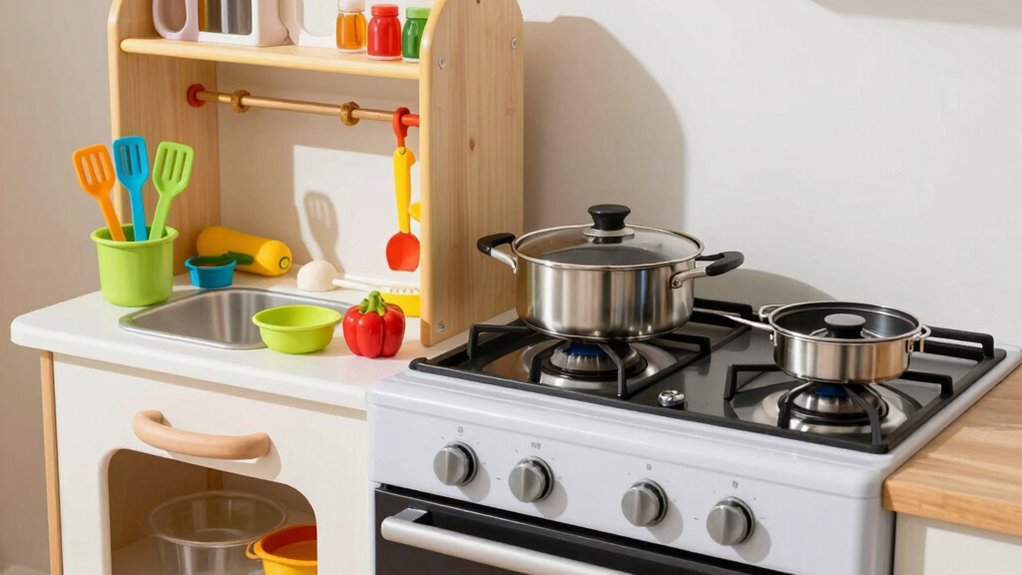
When deciding between a play kitchen and real cooking, it’s essential to contemplate factors like your child’s age, interests, and developmental goals. Cultural influences and dietary considerations also play a role in shaping their learning experience. For example, a child interested in international cuisines may benefit from real cooking to explore authentic ingredients. Conversely, younger children might develop better skills with a play kitchen that emphasizes safety and imagination. Use this table to evaluate:
| Factor | Consideration |
|---|---|
| Age | Younger children benefit from simple, safe play environments |
| Interests | Match tools and themes to their culinary curiosities |
| Cultural influences | Incorporate diverse cuisines for cultural awareness |
| Dietary considerations | Focus on healthy, age-appropriate food choices |
Choosing the right approach hinges on these factors, aligning learning with your child’s needs.
Tips for Combining Play Kitchens and Real Cooking for Better Learning
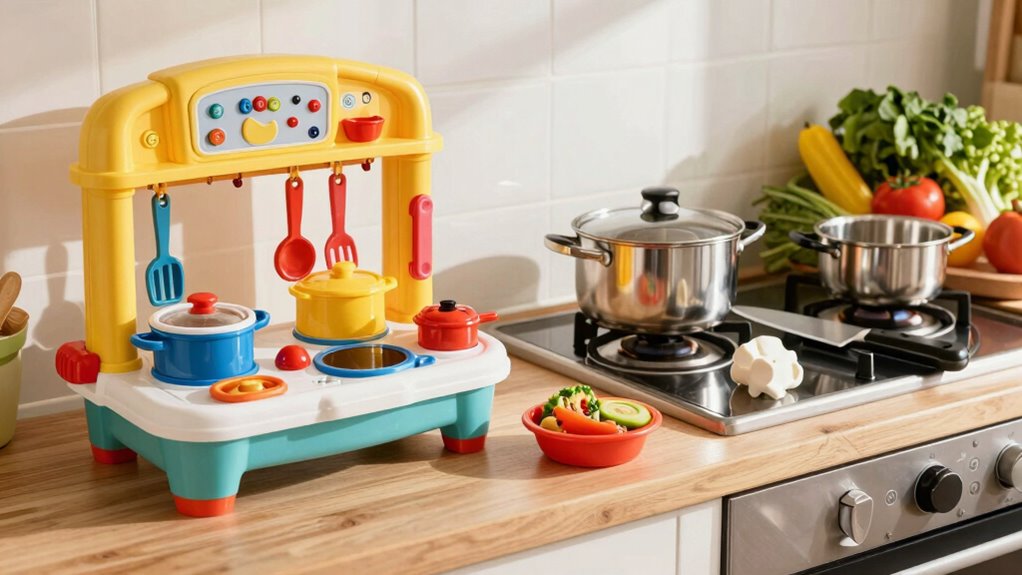
Combining play kitchens and real cooking can create a more all-encompassing learning experience by engaging your child’s imagination and developing practical skills. To do this effectively, incorporate cultural traditions and dietary restrictions into your activities.
Blending pretend play with real cooking enriches learning through imagination, culture, and practical skills.
- Use play kitchens to introduce cultural dishes, fostering appreciation for diverse traditions and sparking curiosity.
- During real cooking, involve your child in meal planning that respects dietary restrictions, teaching them about nutrition and inclusion.
- Encourage role-playing in the play kitchen to simulate grocery shopping for cultural ingredients or special diets.
- Connect the two by discussing the significance of certain foods, helping your child understand cultural and dietary contexts.
This approach makes learning meaningful and broadens your child’s understanding of food’s cultural and health aspects.
Safety Tips and Practical Ideas for Cooking With Kids
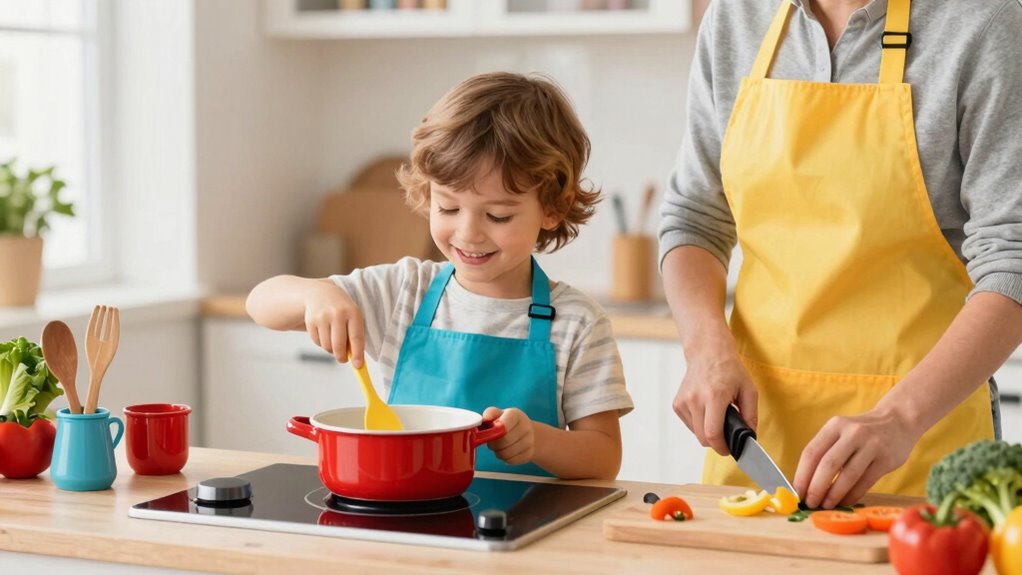
Ensuring safety while cooking with kids requires careful planning and supervision. Start by teaching them about food safety, like washing hands thoroughly before handling ingredients and avoiding cross-contamination. Keep sharp objects, hot pans, and heavy utensils out of reach to minimize kitchen hazards. Use age-appropriate tools, such as plastic knives or kid-friendly utensils, to reduce risk. Always supervise closely, especially when using the stove or oven, and turn pot handles inward. Create a designated safe zone for kids to work, and explain the importance of cleanliness and organization. Regularly check for spills or clutter that could cause slips or falls. By following these practical ideas, you can foster a safe, enjoyable cooking environment that teaches responsibility and safety awareness.
Supporting Your Child’s Culinary Skills at Home: Final Tips
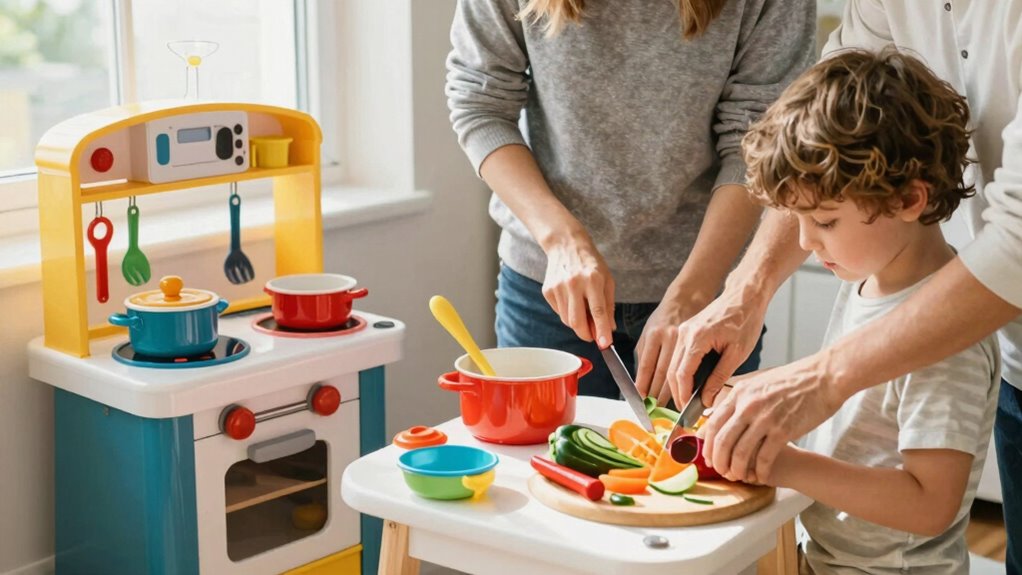
To effectively support your child’s culinary development at home, it’s important to provide ongoing encouragement and opportunities for practice. Engaging them in meal planning helps build their understanding of nutrition and decision-making. Teaching baking techniques, like measuring ingredients and mixing, boosts their confidence and skills. Here are some final tips:
- Involve your child in weekly meal planning to foster responsibility.
- Practice baking together, emphasizing safe use of tools and techniques.
- Encourage them to suggest recipes or dishes they’d like to try.
- Celebrate their progress, whether it’s a perfectly kneaded dough or a well-organized meal plan.
Consistent practice and positive reinforcement will nurture their culinary curiosity and skills over time.
Frequently Asked Questions
How Does Play Kitchen Size Affect a Child’s Development?
You’ll notice that play kitchen size impacts your child’s development by influencing their interaction and creativity. Larger kitchens offer more space constraints, encouraging longer imaginative play and social skills, while smaller ones fit toy scale better for limited areas. Choosing the right size helps your child explore roles confidently, boosting fine motor skills and problem-solving. Tailor the size to your space constraints for best growth and enjoyment.
Are There Specific Toys That Enhance Cooking-Related Skills?
Think of cooking skill toys as tiny apprentices guiding your child’s culinary journey. Educational kitchen sets and specialized cooking skill toys act like a chef’s trusted tools, sharpening their creativity and fine motor skills. These toys simulate real cooking processes, making learning fun and interactive. By engaging with them, your child develops essential skills like measuring, pouring, and stirring — all while imagining themselves as a master chef in their own mini kitchen.
When Is the Optimal Age to Transition From Play to Real Cooking?
You should consider moving from play to real cooking when your child reaches about 5 to 7 years old, aligning with their cognitive milestones and social readiness. At this stage, they can follow simple recipes, understand safety rules, and collaborate with others. Watch for signs of increased independence, curiosity about real ingredients, and their ability to handle basic kitchen tasks safely, ensuring a smooth and confident shift to real cooking experiences.
How Can Parents Encourage Safe Cooking Experiences at Home?
Think of your kitchen as a delicate garden that needs careful tending. To encourage safe cooking experiences, you must be the steadfast gardener, supervising your children at all times. Teach them about kitchen safety, like proper handling of utensils and hot surfaces, and set clear boundaries. Keep hazardous items out of reach and use child-proof locks. Your vigilant supervision nurtures their skills while ensuring they stay safe in the bustling kitchen landscape.
What Are the Benefits of Combining Pretend and Real Cooking Activities?
Combining pretend and real cooking activities boosts your child’s cognitive development and social skills. When they switch between imaginative play and actual cooking, they learn to follow instructions, problem-solve, and understand kitchen safety. This blend encourages creativity while building confidence and cooperation as they share tasks and ideas. You help them develop essential life skills and social awareness, making learning fun and meaningful through a balanced mix of pretend and real cooking experiences.
Conclusion
By blending play kitchens and real cooking, you’re planting seeds of curiosity and growth in your child’s mind. Think of it as nurturing a tiny chef’s garden—each activity a colorful bloom of skills and confidence. With your guidance, these culinary adventures become a delicious recipe for learning, where imagination and practicality simmer together. So, stir in patience and enthusiasm, and watch your child’s love for cooking blossom into a lifelong skill.
Fall Picks
fall essentials
As an affiliate, we earn on qualifying purchases.