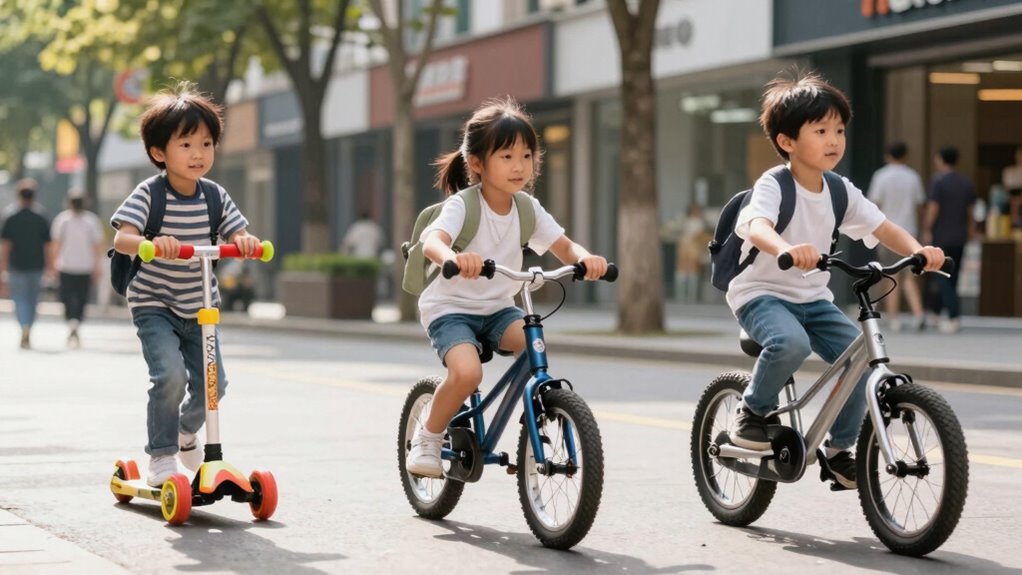
Moving your child from scooters to bikes involves following a motor skill ladder that emphasizes building balance and coordination first. Focus on activities like balancing, core exercises, and outdoor play to develop stability before pedaling. As their skills improve, introduce gentle steering and maneuvering to boost confidence. Ensuring safety habits and supportive home or community activities make the process smoother. Keep watching for signs of readiness, and you’ll discover more strategies to help your child make a successful switch.

Get baby and family essentials delivered free — and shop member deals
- Fast, free delivery on millions of items
- Access to Prime Big Deal Days deals on October 6–7
- Prime Video, Amazon Music and more included
Key Takeaways
- Develop foundational balance skills first through activities like standing on one foot and walking along lines before progressing to pedaling.
- Use balance aids such as balance beams or curb balancing to improve stability and control for riding transitions.
- Ensure proper riding posture, safety habits, and environmental awareness to build confidence and prevent accidents during bike progression.
- Gradually introduce steering, stopping, and maneuvering exercises to advance from pedaling to independent biking.
- Assess readiness by observing balance, coordination, and confidence, then support a safe, gradual transition with appropriate equipment.
kids balance bike with training wheels
As an affiliate, we earn on qualifying purchases.
As an affiliate, we earn on qualifying purchases.
What Is the Motor Skill Ladder and Why It Helps Kids Ride
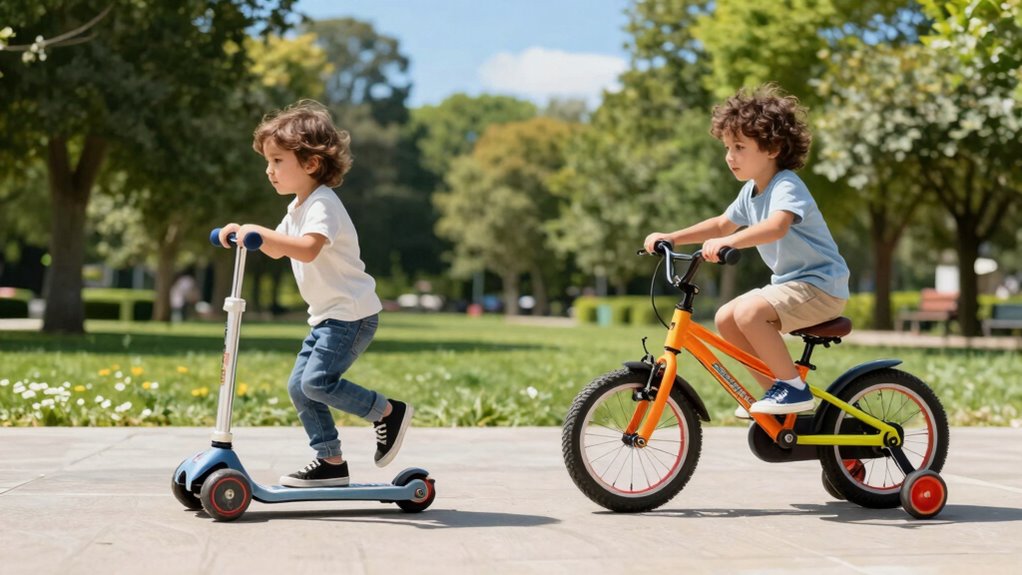
The motor skill ladder is a step-by-step framework that guides children through developing the essential skills needed to ride a bike confidently. It focuses on balance development and reaching coordination milestones gradually. This ladder helps you understand how kids progress from simple movements to more complex ones, like steering and pedaling. By breaking down skills into manageable steps, it guarantees your child builds a solid foundation before tackling more advanced tasks. This approach boosts their confidence and reduces frustration. The ladder emphasizes mastering balance first, which is vital for stability. As they climb each rung, your child gains better coordination, making the shift to riding smoother and safer. Incorporating digital content exploration and specialized training methods can further enhance their skill development and ensure a more enjoyable learning experience for both kids and parents. Additionally, understanding body awareness and control can help children develop better motor skills overall, facilitating their progression up the ladder. Recognizing the importance of motor skill development stages can help parents tailor their support effectively.
Developing Balance and Coordination Before Pedaling
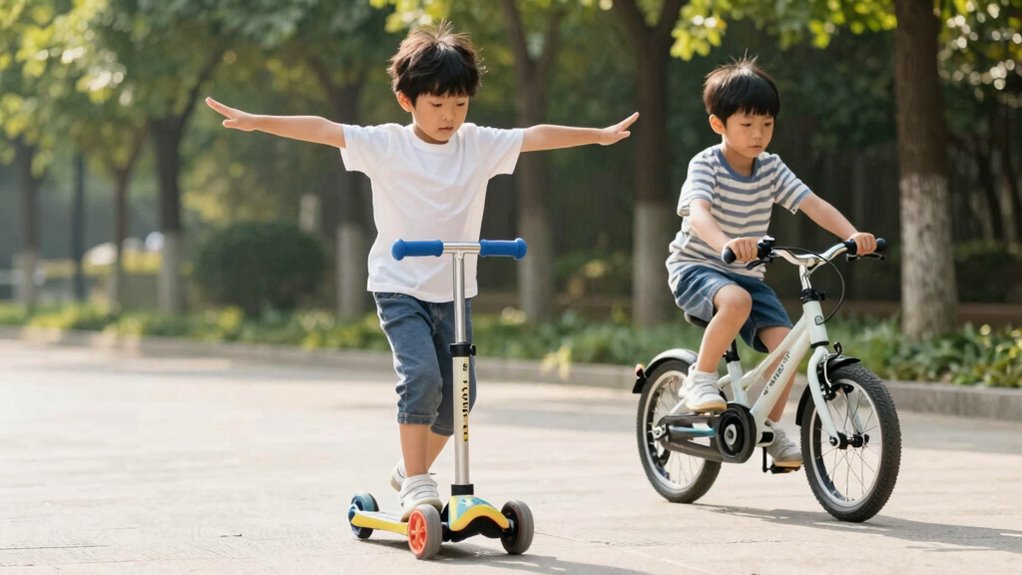
Before your child starts pedaling, it’s important to focus on enhancing their balance skills. Improving coordination abilities helps them control their movements more effectively. These foundational skills set the stage for a smoother shift to riding confidently. Incorporating Free Floating balance exercises can further support their development. Additionally, practicing proper drying techniques after falls or exposure to water can prevent slips and injuries during this learning process. Recognizing the significance of motor skill development can help tailor activities that promote overall coordination and confidence. Developing a strong foundation in early motor skills can also enhance their ability to learn new physical activities more quickly. Moreover, understanding home safety measures can create a secure environment that encourages children to practice their new skills with confidence.
Enhancing Balance Skills
Have you ever wondered why developing balance and coordination is essential before learning to pedal? Improving your child’s balance skills builds confidence and prepares them for more complex motor tasks. Focus on balance exercises such as standing on one foot, walking along a line, or balancing on a curb. These activities help refine stability and control. Additionally, incorporating core strengthening exercises like tummy time, sit-ups, or gentle planks enhances overall balance by providing a solid foundation. Remember, a strong core supports better posture and reduces falls. Moreover, AI training jobs and other tech-related roles are emerging opportunities for those interested in advancing their skills in specialized fields. To maximize progress, encourage frequent, playful balance activities that challenge their limits gradually, ensuring they develop the necessary skills to confidently move to the next stage of biking. Consistent practice is key to reinforcing these motor skills effectively, especially as a strong foundation can also benefit those exploring electric dirt bikes and other motorized activities. Building on basic balance, exploring balance boards and similar equipment can further enhance coordination and stability. Developing a diverse range of motor skills early on can also improve overall physical literacy, setting the stage for future sports or activities.
Improving Coordination Abilities
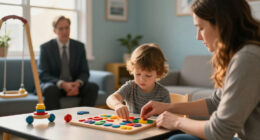
Developing coordination abilities is a crucial step before your child starts pedaling, as it helps them smoothly integrate balance, movement, and control. Focus on activities that enhance sensory integration, allowing your child to better process and respond to different sensations—crucial for coordinated movement. Incorporate fine motor exercises, like threading beads or stacking blocks, to strengthen small muscle control, which supports overall coordination. Encourage games that require hand-eye coordination, such as catching or bouncing balls, to boost their ability to synchronize movements. These activities build the foundation for smoother progressions from balance on a scooter or bike to pedaling confidently. Improving coordination isn’t just about muscle control; it’s about helping your child develop a seamless connection between their senses and movements. You can also incorporate outdoor gear and eco-friendly toys to make these activities more engaging and environmentally conscious. Additionally, emphasizing sensory processing activities can enhance your child’s ability to respond effectively to sensory information, further supporting their coordination development. Engaging in motor skill development exercises can further accelerate their progress and confidence, especially when these activities are tailored to support vetted methods of skill enhancement.
How Kids Progress From Pedaling to Maneuvering
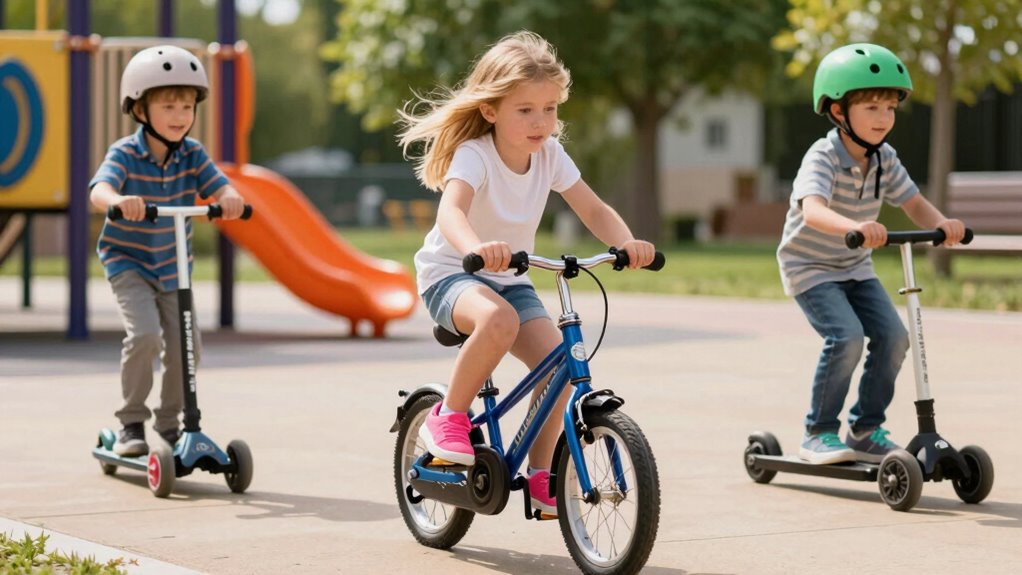
As children gain confidence in pedaling, they begin to explore how to steer and balance the bike. This progression marks an important step in their motor skill development. To help them progress, focus on balance improvement and incorporate coordination exercises that enhance their control. You might encourage activities like:
- Practicing gentle turns to develop steering skills
- Using balance beams or lines on the ground for stability
- Incorporating stop-and-go drills to improve coordination
These exercises help children understand how steering and balance work together, building their confidence and control. Additionally, understanding motor skill development can guide parents and teachers in designing effective practice routines. As they practice, they start to maneuver more smoothly, preparing for more advanced skills like tight turns and obstacle navigation. This gradual process helps them feel secure and competent on their bikes and supports their overall physical confidence. Incorporating balance exercises into their routine can further accelerate their progress. Research shows that motor skill practice enhances overall coordination, which is essential for mastering more complex biking maneuvers. Engaging in diverse motor skill activities further promotes well-rounded development and confidence in their riding abilities.
Building Confidence and Safe Habits as Kids Learn to Ride
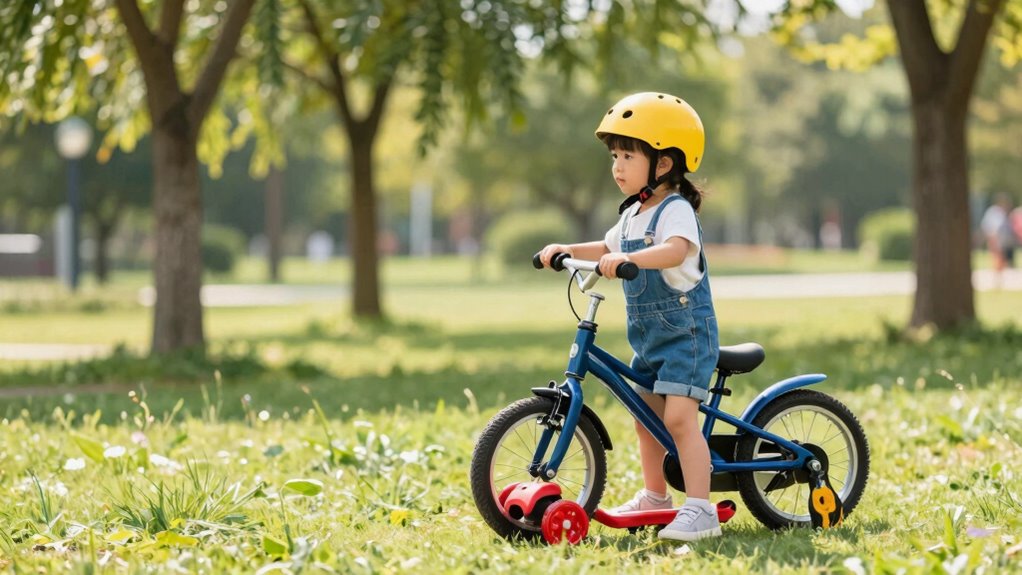
Once children start to master steering and balancing, their focus should shift to building confidence and establishing safe riding habits. Encourage them to always wear safety gear, including a helmet, to protect against falls. Reinforce the importance of maintaining a proper riding posture—standing or sitting upright with relaxed shoulders and a firm grip on the handlebars. Show them how to check their safety gear before riding and remind them to stay alert and aware of their surroundings. Praising their efforts boosts confidence, making them more willing to practice and improve. Consistent habits, like stopping at intersections and riding in designated areas, help instill safety as a core part of their riding experience. Additionally, understanding the contrast ratio of their riding environment can help children recognize when lighting conditions might affect visibility, further promoting safe riding practices. Developing habit formation early in their riding journey can lead to more responsible behavior over time. Building these habits early sets the foundation for safer, more confident cycling in the future and encourages mindful environmental awareness during rides. Incorporating visual cues like reflective tape or bright clothing can also improve visibility and safety during low-light conditions.
Supporting Your Child’s Motor Skills Development at Home and in the Community
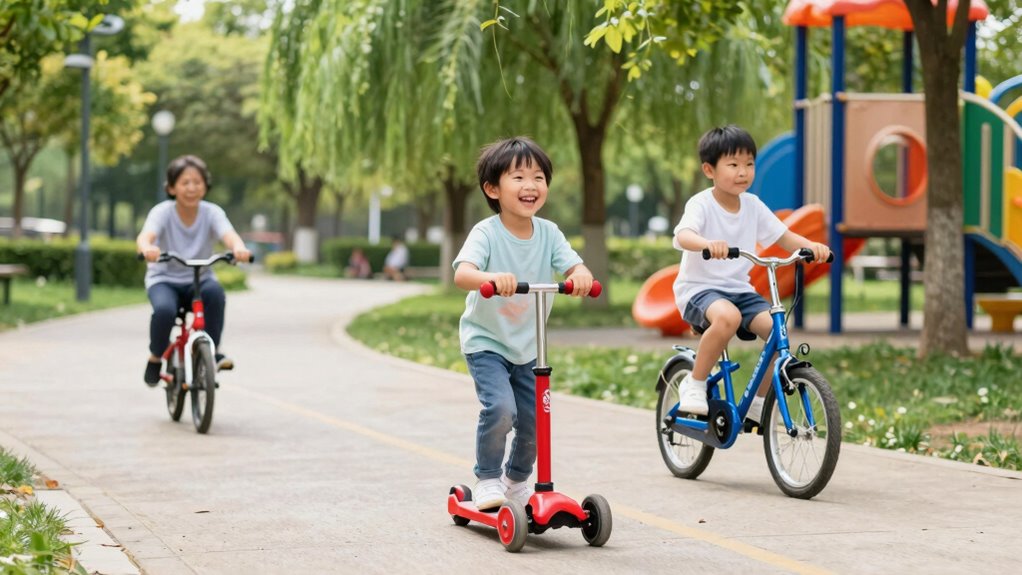
How can you actively support your child’s motor skills development both at home and in your community? Your parental involvement is essential. You can create opportunities for practice and exploration by encouraging activities that challenge balance, coordination, and strength. Leverage community resources like local parks, recreation centers, and sports programs to provide diverse environments and equipment for skill-building. Consider these strategies:
- Organize regular outdoor play sessions using playground equipment or bikes
- Enroll your child in community sports or dance classes for social and motor development
- Use local resources like libraries or community centers to find classes, workshops, or events focused on physical activity
- Incorporate interactive murals and digital frames into your home environment to make physical activity engaging and visually stimulating
- Promote motor skill development through activities that enhance neuromuscular coordination and muscle strength, which are foundational for overall physical growth.
How to Tell When Your Child Is Ready to Transition to a Bike
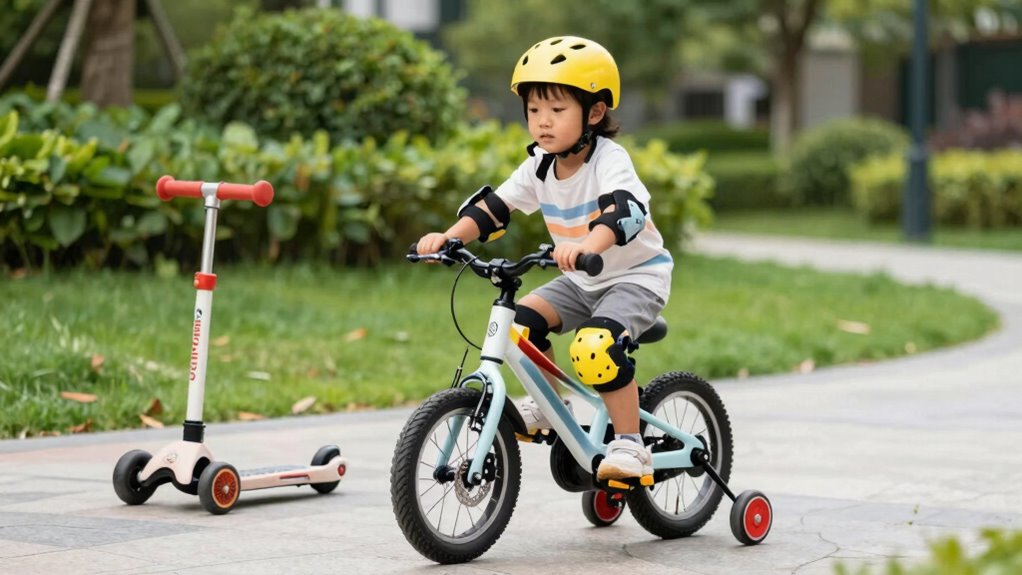
You’ll want to observe your child’s balance and coordination as key indicators they’re ready to ride. Confidence on two wheels and signs of physical readiness, like steady walking and climbing, also matter. When these skills come together, it’s a good time to think about shifting to a bike.
Balance and Coordination Skills
Evaluating your child’s balance and coordination skills is essential before moving to a bike. Observe how well they can maintain stability during activities like walking along a curb or balancing on one foot. You can also incorporate simple balance exercises to assess their control. Additionally, try coordination games such as catching and throwing a ball or managing obstacle courses. If your child demonstrates steady balance and smooth coordination, they’re likely ready for the next step. Look for signs like confidently balancing during play and quickly adapting movements. These skills indicate a good foundation for bike riding. Remember, patience is key—building these abilities takes time, so celebrate small progress along the way. When your child shows consistent balance and coordination, they’re ready to advance to a bike.
Confidence on Two Wheels
Once your child consistently demonstrates good balance and coordination during play, it’s a good sign they’re gaining confidence in their physical abilities. You’ll notice they’re enthusiastic to try new challenges and show enthusiasm for riding. Confidence on two wheels also involves understanding helmet safety; your child should recognize the importance of wearing a helmet every time they ride. They should also grasp basic riding etiquette, like slowing down near pedestrians and signaling turns. When your child can confidently handle their scooter or balance bike without frequent falls or hesitation, it signals readiness for a bike. Their growing independence, combined with a respectful attitude toward others and safety precautions, indicates they’re prepared to shift to a bike with confidence.
Physical Readiness Signs
Recognizing when your child is physically ready to move from a scooter or balance bike to a pedal bike involves observing specific signs of strength and coordination. Look for your child’s ability to pedal smoothly, maintain balance, and steer confidently. They should also have the endurance to ride for extended periods without fatigue. To support this transition, incorporate nutrition tips that promote muscle strength and energy, like protein-rich snacks. Also, encourage indoor activities that develop core stability and coordination, such as balance exercises or ball games. Signs of readiness include:
- Steady, controlled pedaling and steering
- Consistent balance while riding
- Ability to start and stop independently
Monitoring these signs helps guarantee your child’s physical readiness to ride a bike confidently and safely.
Common Challenges Kids Face When Learning to Ride and How to Help
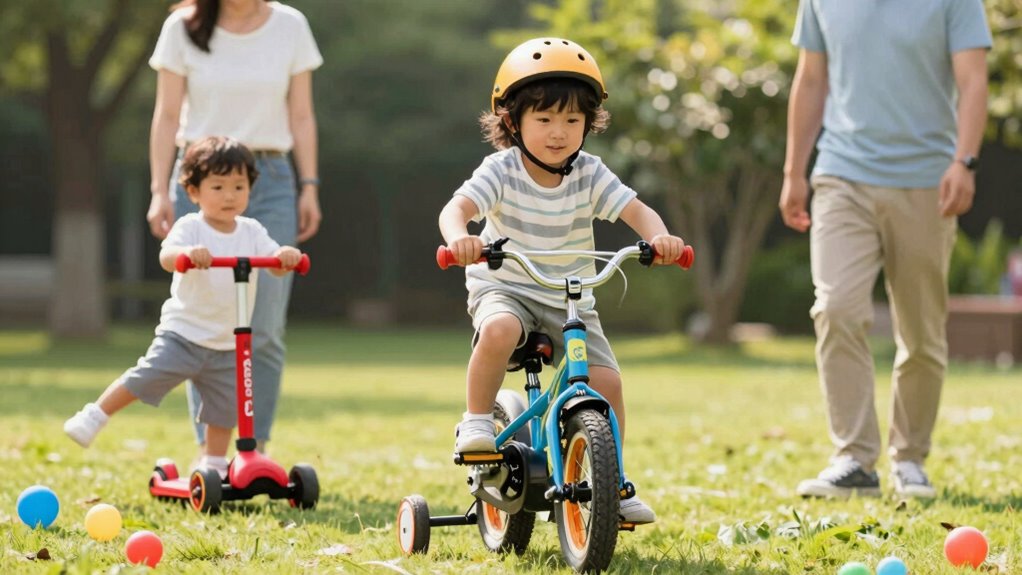
Learning to ride a bike can be challenging for many kids because they often struggle with balance, coordination, and confidence. One common obstacle is developing good hand-eye coordination, which helps kids steer and control the bike smoothly. Additionally, they may lack the necessary muscle strength in their legs and core to pedal steadily and stay upright. To help, encourage activities that build muscle and coordination, like balancing exercises or playing catch. Providing supportive training wheels or a gentle, steady surface can also boost confidence as they practice. Patience is key—kids need time to strengthen their muscles and fine-tune coordination. Celebrate small successes to keep them motivated and remind them that perseverance will help overcome these challenges.
Tips for Smoothly Transitioning From Scooters to Bikes
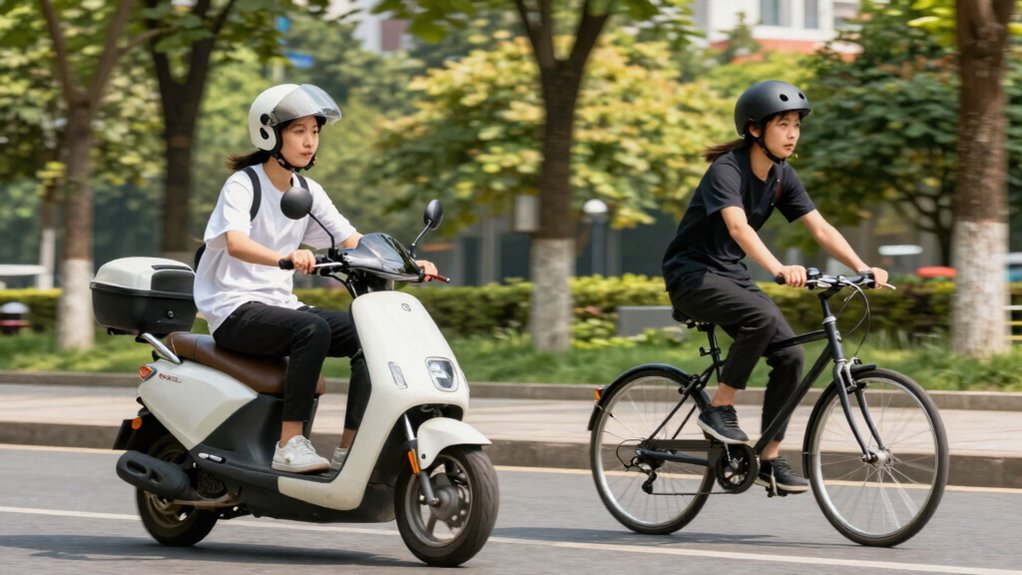
Switching from a scooter to a bike can feel intimidating, but with the right approach, the shift can be smooth and enjoyable. Start by ensuring your child’s helmet fits properly—snug but comfortable—since safety is essential. Gradually introduce riding accessories, like knee and elbow pads, to build confidence. Practice balancing on the bike in a safe, open space before riding on streets or trails. Encourage your child to pedal at a steady pace and look ahead, not down. To make the changeover easier, focus on these tips:
Ensure helmet fits snugly, practice in open spaces, and introduce safety gear gradually for a smooth transition.
- Adjust the bike’s seat height for comfortable pedaling
- Use training wheels temporarily if needed
- Practice starting, stopping, and turning in familiar areas
These steps help build skills and make the transition enjoyable.
Frequently Asked Questions
How Long Does It Typically Take for Children to Progress Through the Motor Skill Ladder?
You can expect children to reach motor skill milestones within different timeframes, but generally, the skill acquisition timeline varies by individual. Most kids progress from scooters to bikes over several months to a year, depending on practice and development. Your child’s coordination and strength influence the pace. Stay patient and supportive, encouraging regular practice. Remember, every child moves through the motor skill ladder at their own unique speed.
Are There Specific Age Ranges Ideal for Starting Scooter or Bike Lessons?
You can start scooter or bike lessons when your child’s ready to master balance exercises and hand-eye coordination, typically around ages 3 to 6. Picture a tiny acrobat wobbling on a scooter, then confidently gliding—this is the ideal age range to introduce lessons. Early practice builds skills, confidence, and coordination, turning chaos into fun and helping them conquer the motor skill ladder with ease.
What Are the Best Safety Gear Options for Different Age Groups?
You should choose protective gear that meets safety standards for each age group. For young children, opt for helmets with adjustable straps, knee and elbow pads, and gloves. Older kids and teens need high-quality helmets that meet safety standards like CPSC or ASTM, along with reinforced pads for added protection. Always verify gear fits properly to maximize safety, and replace any worn or damaged equipment before riding.
How Can Parents Encourage Persistence Despite Initial Failures?
Oh, the irony of failure—it’s actually your best teacher. You can encourage persistence by praising effort and offering encouragement, instead of just focusing on results. Set achievable goals to make progress feel manageable, and celebrate small victories. When your child sees setbacks as part of learning, they’ll stay motivated, knowing that each stumble is just a step closer to success. Keep the tone positive, and they’ll keep trying.
Are There Recommended Activities to Supplement Motor Skill Development at Home?
You can encourage your child’s motor skill development through a mix of indoor exercises and outdoor activities. Try indoor activities like obstacle courses or balancing games to build coordination. Outside, go for bike rides, jump rope, or play catch to improve strength and agility. These activities make learning fun and help your child develop essential motor skills, boosting their confidence and persistence even when they face challenges.
Conclusion
By understanding the motor skill ladder, you’re guiding your child along a path as steady as a climbing vine, helping them grow confident and safe riders. Watching each step unfold is like witnessing a small seed blossom into a confident cyclist. With patience, support, and encouragement, you’re not just teaching them to ride—you’re helping them soar on their own. Remember, every pedal and wobble brings them closer to independence and adventure.
Halloween Picks
halloween
As an affiliate, we earn on qualifying purchases.