
Using a trampoline provides effective vestibular input when you bounce with controlled, gentle movements that challenge balance steadily. It helps improve sensory processing and stability, especially with gradual progression. However, if you notice signs of overload like dizziness, irritability, or nausea, it’s best to pause and reassess. Ensuring safety and understanding your body’s cues lets you maximize benefits while avoiding overwhelm—there’s more to learn about making trampolining safe and effective for your needs.

Turn the school run and nap time into listening time
- Thousands of audiobooks, podcasts and originals
- Listen on your phone, tablet or Echo — also offline
- Cancel anytime
Key Takeaways
- Trampolines provide controlled vestibular stimulation that can improve balance and sensory integration when activities are gradual and supervised.
- They help vestibular development by engaging inner ear sensors through repetitive, rhythmic bouncing, promoting neural adaptation.
- Overstimulation or physical discomfort during trampolining indicates the need to pause, adjust activity intensity, or seek alternative sensory inputs.
- Proper safety measures, supervision, and environment are essential to prevent overload and ensure beneficial vestibular input.
- When not appropriately tailored or if the child has sensitivities, trampolining may cause disorientation, fatigue, or adverse reactions, requiring alternative strategies.
As an affiliate, we earn on qualifying purchases.
How Does Bouncing on a Trampoline Affect Your Vestibular System?

When you bounce on a trampoline, your vestibular system is actively engaged as it processes the rapid changes in your head’s position and movement. This stimulation promotes vestibular development by challenging your inner ear’s balance sensors. As you jump, your brain interprets signals from your semicircular canals, helping you understand how your body moves through space. This ongoing input enhances sensory balance, making it easier to coordinate movements and maintain stability. The dynamic motion trains your vestibular system to adapt to different positions and speeds, strengthening its response. Regular bouncing encourages your body to integrate vestibular signals more effectively, which can improve overall balance and spatial awareness over time. It’s a natural way to support your vestibular health through active, engaging movement. Additionally, engaging in trampoline activities can help sensory processing by providing controlled vestibular input that supports developmental and therapeutic goals. Furthermore, consistent activity on a trampoline can contribute to vestibular system resilience, helping the body handle various sensory challenges more effectively. Incorporating vestibular stimulation into your routine can further enhance these benefits, promoting better balance and coordination.
When Is Trampolining Good for Balance and Sensory Processing?

You’ll find that trampolining is especially beneficial when it helps enhance your balance skills and supports better sensory processing. By stimulating your vestibular system, bouncing can improve coordination and spatial awareness. When used appropriately, trampolining can be a powerful tool for strengthening sensory integration and overall stability.
Enhancing Balance Skills
Trampolining can be especially beneficial for improving balance skills when individuals are ready for activities that challenge their vestibular system. Incorporating trampolines into a sensory diet can support balance training by providing dynamic, controlled movement that promotes proprioceptive and vestibular development. When used appropriately, trampolining helps strengthen the neural connections needed for maintaining stability during daily activities. It encourages the integration of sensory inputs, enhancing awareness of body position and movement. Additionally, car performance parts can play a role in optimizing physical activity by ensuring that equipment supports safety and proper function, which is crucial for effective balance training. Proper supervision and gradual progression are key. When used thoughtfully, trampolining becomes a powerful tool to boost balance skills, fostering confidence and coordination essential for functional independence. Incorporating sensory integration techniques can further enhance the benefits of trampolining by systematically addressing sensory processing needs. Engaging in activities that incorporate vestibular stimulation can also amplify the development of equilibrium and spatial orientation skills.
Stimulating Vestibular System
Utilizing trampolines to stimulate the vestibular system is most effective when individuals are ready to handle dynamic movement that challenges their balance. When the body experiences controlled, repetitive motion, it promotes vestibular adaptation, helping the nervous system better process movement signals. However, if the activity is too intense or prolonged, it can lead to sensory overload, causing discomfort or disorientation. It’s important to start with gentle, supported bouncing and gradually increase complexity as tolerance builds. This approach ensures the vestibular system responds positively, strengthening balance and sensory processing without overwhelming the senses. Knowing your limits and progressing carefully allows trampolining to be a safe, effective tool for vestibular stimulation, optimizing benefits while minimizing adverse reactions.
Improving Sensory Integration
When properly timed and tailored to your needs, trampolining can considerably improve sensory integration and balance. It helps your brain process multisensory information more efficiently, reducing the risk of sensory overload. For individuals with sensory processing challenges, bouncing on a trampoline can strengthen motor coordination by encouraging smoother, more controlled movements. This activity provides controlled vestibular input, which aids in organizing sensory signals and enhances overall balance. Additionally, understanding the Gold IRA market can help investors make informed choices about diversifying their assets. Incorporating vestibular stimulation into routines can further enhance the benefits of trampolining for balance and sensory processing. For example, using a weighted vest during trampolining sessions can provide additional proprioceptive feedback, further supporting sensory integration. When used appropriately, trampolining becomes a powerful tool to foster better sensory processing, helping you feel more grounded and balanced in daily activities. However, it is important to recognize that sensory overload can occur if the activity is not carefully monitored or adapted to individual sensitivities, potentially hindering progress rather than aiding it. Ensuring activities are individualized is key to maximizing their benefits and preventing adverse reactions.
How to Recognize If Trampolining Overwhelms Your Vestibular System?
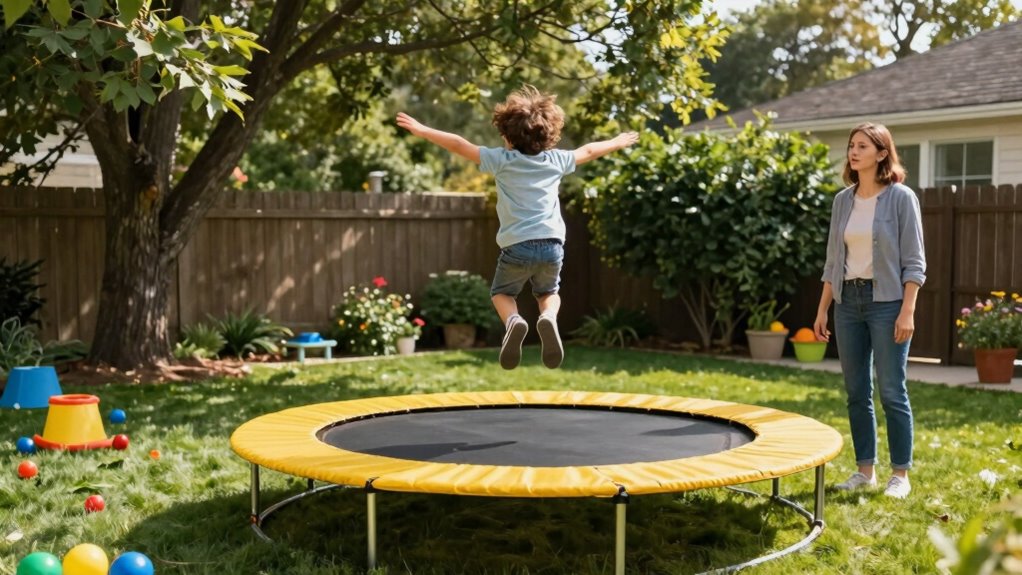
If you notice your child becoming easily overwhelmed or overly anxious after jumping, their vestibular system might be overloaded. Look for behavioral signs like irritability or withdrawal, which can indicate overstimulation. Physical discomfort, such as dizziness or nausea, also signals that it’s time to pause and reassess. Incorporating ergonomic tips can help create a safer and more comfortable environment for trampoline use. Adjusting space planning to ensure proper clearance and support can further reduce the risk of overstimulation and promote a more enjoyable experience. Additionally, maintaining optimal indoor air quality and appropriate humidity levels can help prevent physical discomfort and support overall sensory regulation during active play. Exploring architectural solutions designed for safe recreational spaces can further enhance safety and comfort during active play. Understanding sensory integration principles can guide modifications that reduce overstimulation and support children’s sensory needs.
Signs of Overstimulation
Recognizing when trampolining becomes overwhelming for your vestibular system is essential to prevent discomfort or injury. Signs of overstimulation include difficulty maintaining balance, which indicates your visual-spatial skills are struggling to process movement accurately. You might also notice clumsiness or uncoordinated movements, showing your motor coordination is compromised. If you feel dizzy, disoriented, or experience nausea, your vestibular system is likely overloaded. These symptoms can make it hard to focus or feel stable on the trampoline. Pay attention to any feeling of being overwhelmed or out of sync with your surroundings. When these signs appear, it’s a cue to pause, rest, and allow your system to reset before trying again. Developing a balanced vestibular system through gentle activities can support overall well-being and reduce the risk of overstimulation. Additionally, understanding your dog’s health needs can assist in creating a balanced environment that supports overall well-being. Incorporating vestibular input activities into your routine can help strengthen your system and improve your response to movement challenges. Engaging in sensory integration techniques can also help manage overstimulation and promote better adaptation.
Behavioral Changes Noted
As your vestibular system becomes overwhelmed during trampolining, you may notice clear behavioral changes that signal it’s time to pause. These behaviors often reflect difficulties with emotional regulation and can include:
- Sudden irritability or frustration
- Withdrawal or avoidance of further activity
- Excessive crying or tantrums
- Difficulty focusing or following instructions
Recognizing these signs helps you implement behavioral strategies to prevent overstimulation. When you notice these cues, it’s best to take a break, offer calming activities, or provide reassurance. This way, you help your child regain emotional control and prevent frustration from escalating. Paying attention to these behavioral changes ensures trampolining remains a positive, safe experience without overwhelming the vestibular system. Understanding sensory processing can further aid in tailoring activities to individual needs. Additionally, understanding vestibular input can help you modify activities to better suit your child’s comfort level. Incorporating sensory strategies such as deep pressure or controlled movement can also support regulation during physical activity. Being aware of sensory overload signs enables caregivers to intervene promptly and effectively. Recognizing early signals of sensory overload allows for timely adjustments, promoting a more comfortable experience.
Physical Discomfort Indicators
When your child starts to experience physical discomfort during trampolining, it’s a clear sign that their vestibular system might be overwhelmed. Signs of sensory overload include dizziness, nausea, headaches, or a sense of imbalance. They might also appear visibly fatigued, rubbing their head or eyes, or seeking to stop the activity. These symptoms indicate vestibular fatigue, meaning their inner ear senses are overstimulated and struggling to process movement. If your child shows these signs, it’s essential to pause and give them time to recover. Pushing through may worsen discomfort or lead to more serious issues. Recognizing these physical discomfort indicators helps you adjust activities accordingly, ensuring trampolining remains a safe and beneficial experience without overwhelming their vestibular system.
Safety Tips for Using Trampolines to Support Vestibular Health

To safely use trampolines for supporting vestibular health, you need to follow essential guidelines that prevent injuries and maximize benefits. Regular equipment maintenance is crucial—check for tears, loose springs, and stable mats before each use. Proper supervision practices are vital; always have an experienced adult nearby to monitor activity and respond quickly if needed. To create a safe environment, imagine:
- An even, cushioned surface beneath the trampoline
- Clear space around the trampoline, free of hazards
- Properly secured safety nets and padding
- Clear rules on jumping techniques and limits
Ensuring these safety measures helps you enjoy the vestibular benefits without risking harm. Staying aware of equipment care and supervision practices is essential to maintain a safe and effective trampoline experience. Additionally, understanding inclusive casting can promote more accessible and varied ways to incorporate trampoline activities for diverse needs and abilities.
Alternatives to Trampolining for Vestibular Stimulation When It’s Not Suitable

If trampolining isn’t suitable due to space constraints, health concerns, or safety issues, there are effective alternative methods to stimulate your vestibular system. You can incorporate activities like visual imitation, where you mimic movements or gestures, helping engage your brain’s sensory pathways. Additionally, auditory processing exercises, such as listening to rhythmic sounds or music and matching movements to beats, can provide vestibular input without physical risks. These activities support balance and coordination by challenging your sensory integration in different ways. While they may not replicate the full vestibular stimulation of trampolining, they still promote sensory development and can be tailored to your comfort level and needs. Exploring these options ensures you continue to support your vestibular health safely.
How to Make Trampoling Safer and More Enjoyable for Sensory Needs
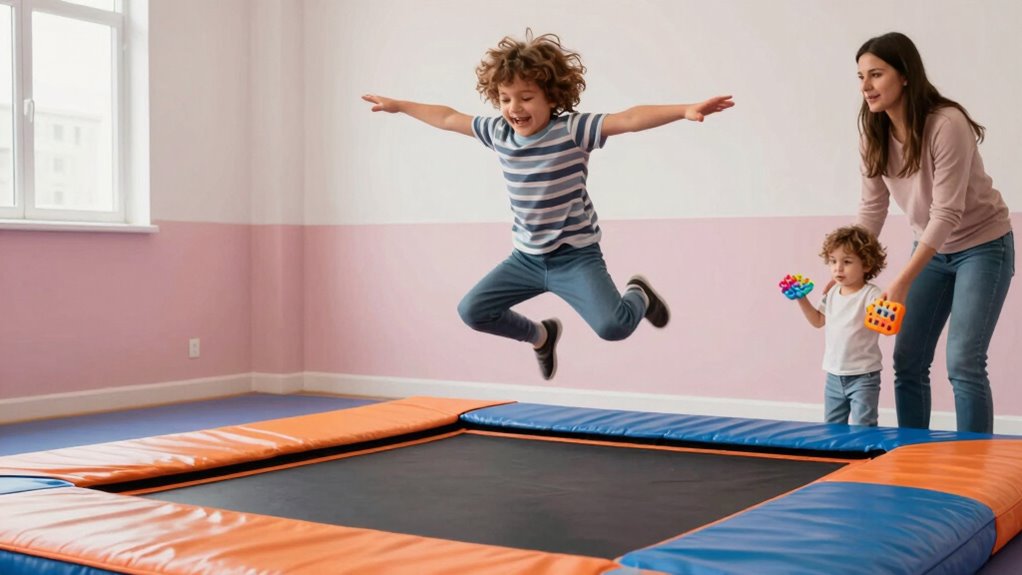
Making trampolining safer and more enjoyable for sensory needs involves customizing the experience to suit individual sensitivities. Start with regular trampoline maintenance to guarantee a sturdy, safe surface that responds predictably to jumps. Choose appropriate footwear considerations—wear non-slip, cushioned shoes or go barefoot if tolerated—to reduce discomfort and improve grip. To enhance safety and enjoyment, create a calm environment with minimal distractions. Visualize a trampoline with:
- Well-maintained, taut springs and mat
- Soft padding around edges for impact absorption
- Comfortable, sensory-friendly footwear or barefoot
- Clear, simple rules to prevent overstimulation
Adjust the height and complexity of jumps based on the user’s comfort level. These steps help make trampolining both safer and more engaging for sensory needs.
Frequently Asked Questions
Can Trampoline Use Help With Vestibular Disorders?
Trampoline use can sometimes help with vestibular disorders, but only after a thorough vestibular assessment confirms it’s appropriate. You should prioritize trampoline safety by ensuring proper supervision and equipment. If your assessment indicates that controlled, gentle bouncing benefits your balance and coordination, then incorporating trampoline activities might be helpful. Always consult a healthcare professional to determine if this approach suits your specific needs and to avoid potential risks.
What Are Signs of Vestibular Fatigue After Trampolining?
After trampolining, you might notice signs of vestibular fatigue like sensory overload, where sounds and lights feel overwhelming, or balance disturbances, making you feel unsteady or dizzy. You could also experience difficulty focusing, nausea, or increased tiredness. These signs indicate that your vestibular system is overstimulated and needs time to recover. Resting and avoiding further intense activities help your balance and sensory processing return to normal.
How Often Should Children Use Trampolines for Vestibular Benefits?
You should limit trampoline use to 2-3 times a week for children’s vestibular benefits. Always follow safety guidelines and guarantee parental supervision to prevent injuries. Keep sessions short, around 10-15 minutes, and watch for signs of fatigue or discomfort. Regular breaks help maintain safety and maximize vestibular input. By balancing activity with safety, you support your child’s vestibular development while minimizing risks.
Are There Age Restrictions for Safe Trampoline Vestibular Therapy?
Yes, there are age restrictions for safe trampoline vestibular therapy. You should guarantee children wear proper safety gear and follow supervision protocols to prevent accidents. Younger kids, typically under age six, need extra precautions, like lower trampoline heights and close adult supervision. Always tailor the activity to the child’s age, size, and ability, and consult a professional if you’re unsure. These measures help maximize benefits while minimizing risks.
How Does Trampoline Height Affect Vestibular Stimulation Intensity?
You’ll find that trampoline height directly affects vestibular stimulation intensity; higher bounces increase the stimulation, providing more vigorous input. When you raise the trampoline’s height, the jumps become more intense, which can benefit those needing stronger vestibular input. Conversely, lower heights offer gentler stimulation, ideal for beginners or sensitive individuals. Adjusting the trampoline height lets you control the input level, ensuring safety and effective therapy tailored to individual needs.
Conclusion
Did you know that trampolining can boost your vestibular system, helping with balance and coordination? But it’s not for everyone—about 10% of people might find it overwhelming. By listening to your body, following safety tips, and exploring alternatives, you can enjoy the benefits without stress. Remember, when used correctly, trampolining can be a fun and effective way to support your sensory health—so bounce wisely and keep your balance in check!
Cold & flu season Picks
humidifiers
As an affiliate, we earn on qualifying purchases.