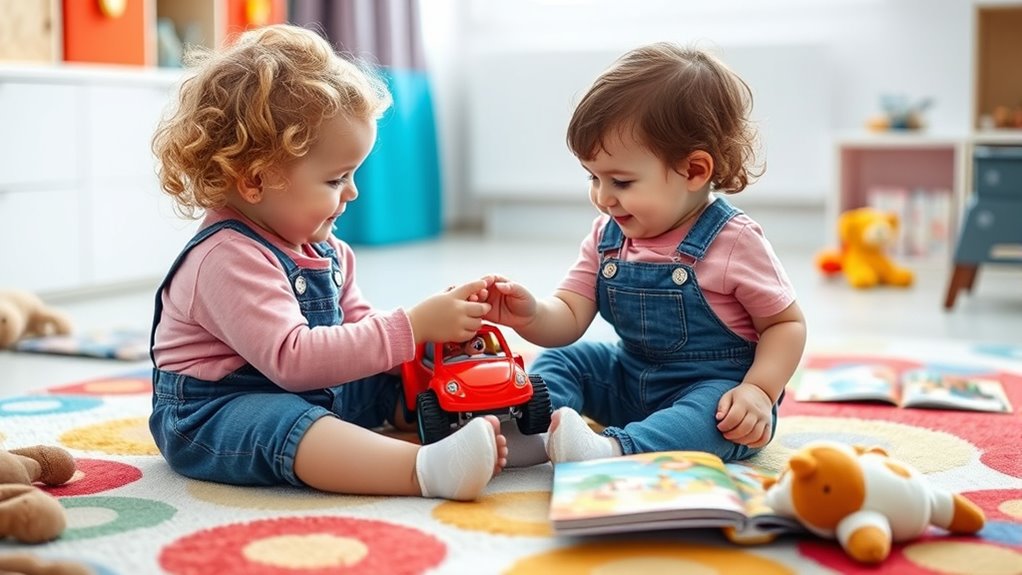

Teaching toddlers about sharing and turn-taking is a gradual process. It’s realistic to celebrate small successes, like taking turns or sharing a toy briefly, rather than expecting perfect behavior right away. Show patience, model calm responses, and reinforce positive actions with praise. Remember, setbacks are normal as they develop these skills over time. If you keep encouraging and guiding gently, you’ll see their confidence grow and more moments of cooperation emerge. Keep exploring for more helpful insights.
Key Takeaways
- Toddlers are naturally self-focused; sharing and turn-taking develop gradually through consistent practice and patience.
- Small successes, like sharing a toy briefly, should be celebrated to build confidence and reinforce positive behavior.
- Use simple, low-stakes opportunities such as playing with shared toys or taking turns in games to encourage social skills.
- Modeling calm, respectful behavior and validating feelings help toddlers learn appropriate sharing and patience.
- Expect setbacks and setbacks; progress occurs over time with gentle guidance, positive reinforcement, and understanding of developmental limits.

Teaching toddlers about sharing and turn-taking might seem challenging, but it’s an essential skill that helps them develop social confidence and empathy. When you guide your little one through these interactions, you’re also helping them learn conflict resolution — how to navigate disagreements calmly and effectively. These early lessons set the foundation for healthier relationships later in life, so it’s worth approaching this phase with patience and understanding.
At this age, toddlers are still learning to manage their emotions, so emotional regulation plays a critical role. When a toy is taken or shared, your child might feel anger, frustration, or disappointment. Your job is to help them recognize and label these feelings, so they can better understand their emotional responses. For example, if your toddler gets upset when another child grabs a toy, you can say, “It looks like you’re feeling upset. Let’s take a deep breath together.” This not only validates their feelings but also models calm, controlled responses, which they’ll imitate over time.
It’s important to remember that perfect sharing isn’t realistic at this stage. Toddlers are naturally self-focused and might struggle with taking turns without whining or fussing. Instead of expecting instant harmony, celebrate small successes and gently guide them when conflicts arise. When disputes happen, help your child learn conflict resolution by encouraging words over tears or tantrums. You might say, “You want the block, and your friend wants it too. Can you wait for your turn?” This teaches patience and problem-solving skills, reinforcing that sharing involves give-and-take, not just immediate gratification.
You can foster these skills by creating opportunities for your toddler to practice sharing and turn-taking in low-stakes situations. Play games that require taking turns, like rolling a ball back and forth or playing with shared toys. Praise your child whenever they successfully wait their turn or share without fuss. Reinforcing positive behavior builds their confidence and helps them associate sharing with feelings of pride and connection.
Additionally, understanding that blade weight varies across different wind turbines can be used as a metaphor for patience—just as blades have different weights and require different handling, toddlers need time and patience to learn sharing skills.
It’s also helpful to set realistic expectations. Toddlers won’t master sharing overnight, and setbacks are part of the learning process. Keep your tone calm and encouraging, and avoid punishing them for natural frustrations. Instead, use these moments as teachable opportunities to discuss emotions, resolve conflicts peacefully, and model calm behavior. Remember, each small step your child takes toward sharing and turn-taking is a big achievement in their social development. With patience and consistent guidance, they’ll gradually learn to navigate social situations with more ease and confidence.
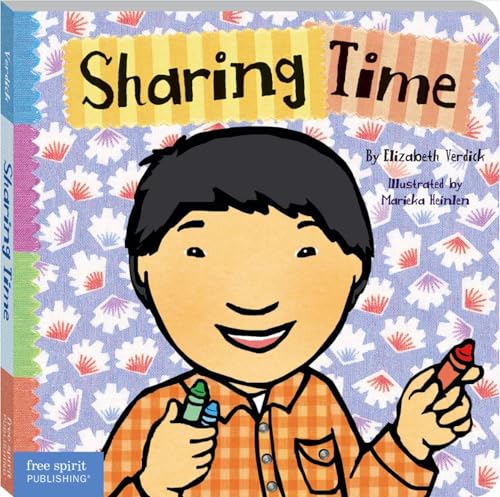
Sharing Time (Toddler Tools® Board Books)
- Condition: Used Book in Good Condition
As an affiliate, we earn on qualifying purchases.
As an affiliate, we earn on qualifying purchases.
Frequently Asked Questions
How Do I Handle Persistent Sharing Disagreements Between Toddlers?
When toddlers persist in sharing disagreements, set clear sharing boundaries and stay consistent. Calmly intervene, acknowledging their feelings, and guide them through conflict resolution by encouraging them to express themselves and find solutions together. Reinforce positive behavior with praise, and give each child individual attention to reduce jealousy. Remember, patience is key—over time, they’ll learn to navigate disagreements more independently.
When Is My Toddler Ready to Learn About Turn-Taking?
Your toddler is ready to learn about turn-taking when they start showing early social skills, like waiting for their turn and sharing small toys. Usually, around age two, they hit sharing milestones that make turn-taking more natural. You’ll notice them trying to take turns and understand the concept, but patience is key. Support their progress with simple games and praise to help them develop this important social skill.
What if My Child Refuses to Share at All?
If your child refuses to share, set clear sharing boundaries and stay consistent. Avoid forcing, and instead, teach them about taking turns and respecting others’ feelings. Use gentle guidance during sibling conflicts, saying things like, “It’s your turn now,” to help them understand sharing as a positive experience. Remember, patience is key; they’re still learning social skills, and over time, sharing will become more natural for your child.
Are There Specific Toys That Promote Sharing Skills?
Think of your child’s toys as tiny ships sailing toward cooperation. Choose sharing toys like puzzles, board games, or dolls that encourage joint participation. Sharing activities such as passing a ball or taking turns with a toy kitchen help build skills naturally. These specific toys and activities serve as anchors, making sharing fun and engaging, while teaching your toddler the importance of taking turns and working together.
How Can I Encourage Sharing in a Group Setting?
To encourage sharing in a group setting, you can model sharing behaviors and use sharing strategies like taking turns and praising kids when they share. Address sibling conflicts by calmly guiding them to resolve disagreements and reminding them of the importance of taking turns. Create opportunities for cooperative play, and reinforce positive behaviors with encouragement. This approach helps toddlers learn sharing skills in a supportive environment.
Conclusion
In reality, expecting perfect sharing and turn-taking from toddlers isn’t realistic. Instead, celebrate small progress and model patience. For example, if your child hesitates to share a toy, gently encourage them and show understanding. Over time, these moments build their social skills. Remember, your consistent guidance helps them learn gradually. Patience and positive reinforcement make a big difference, turning everyday interactions into valuable opportunities for your toddler’s growth.