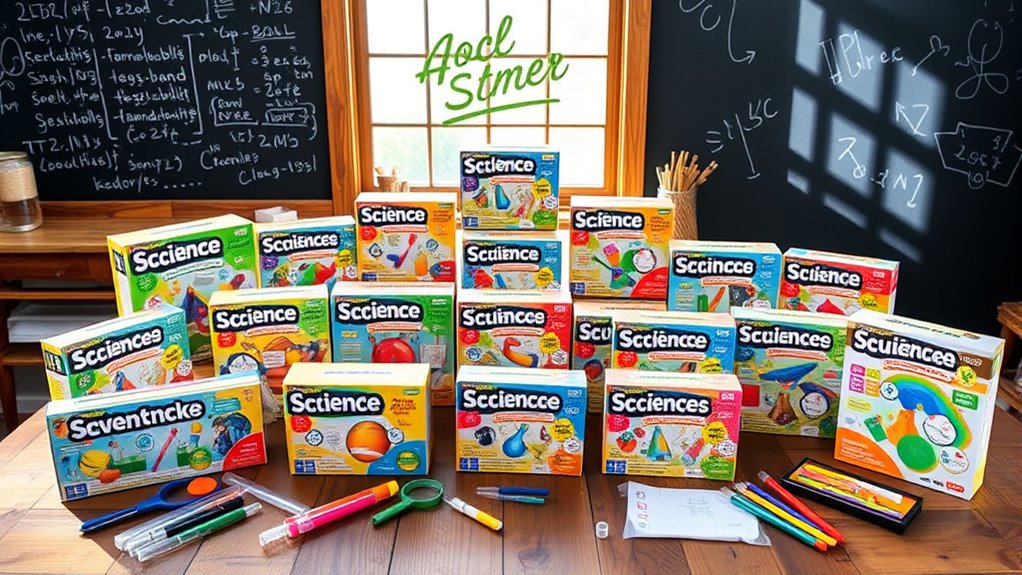

Science kits offer a hands-on way to explore the wonders of science, making learning engaging and interactive for kids and beginners alike. The National Geographic Mega Science Lab stands out as the best overall for its wide variety of experiments, while the National Geographic Chemistry Set is ideal for budding chemists. However, tradeoffs include price, complexity, and the scope of experiments—some kits are perfect for young kids, but not challenging enough for older enthusiasts. Keep reading for a detailed breakdown of the top options and how to choose the right kit for your needs.

Get baby and family essentials delivered free — and shop member deals
- Fast, free delivery on millions of items
- Access to Prime Big Deal Days deals on October 6–7
- Prime Video, Amazon Music and more included
Complete the kit


Key Takeaways
- The top kits balance experiment variety with safety and ease of use, making them suitable for different age groups.
- More comprehensive kits tend to cost more but offer better long-term value for serious learners.
- Compact kits are ideal for limited space or beginners, but may lack the depth of larger sets.
- The highest-rated kits often include detailed guides and safety gear, essential for safe experimentation.
- Price and scope are the main tradeoffs; choosing between a simple starter kit and a full STEM set depends on the user’s experience level.
| National Geographic Hobby Rock Tumbler Kit for Kids and Adults Ages 8+ | 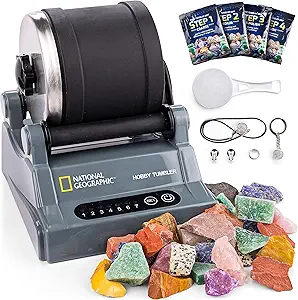 | Best for Hands-On Gem Polishing and Educational Fun | Suitable Age: 8+ | Includes: Tumbler, four polishing grits, sifter, nine rough gemstones, learning guide | Motor: High-quality, durable | VIEW ON AMAZON | See Our Full Breakdown |
| National Geographic Mega Science Lab with 75 Experiments for Kids 8-12 |  | Best for Wide-Ranging Science Exploration Across Disciplines | Number of Experiments: 75 | Age Range: 8-12 | Includes: Earth science, chemistry, magic experiments, rock/mineral/crystal specimens | VIEW ON AMAZON | See Our Full Breakdown |
| My First Science Experiments Kit for Kids Ages 4+ |  | Best for Introducing Young Children to STEM with Simple, Safe Experiments | Age Range: Ages 4+ | Number of Experiments: 100+ | Safety Standards: ASTM F963-17 | VIEW ON AMAZON | See Our Full Breakdown |
| National Geographic Gross Science Kit with 45 Experiments for Kids 8-12 |  | Best for Gross and Fun Science That Engages Kids Through Messy Experiments | Number of Experiments: 45 | Recommended Age: 8-12 | Includes: Experiment guide, household items | VIEW ON AMAZON | See Our Full Breakdown |
| National Geographic Break Open 10 Premium Geodes for Kids Ages 8-12 with Safety Goggles and Learning Guide |  | Best for Hands-On Geode Discovery and Crystallization | Number of Geodes: 10 | Age Range: 8-12 | Includes: Safety goggles, learning guide | VIEW ON AMAZON | See Our Full Breakdown |
| National Geographic Chemistry Set with 45 Experiments for Kids 8-12 |  | Best Overall Chemistry Kit for Balanced Learning and Engagement | Number of Experiments: 45 | Recommended Age: 8-12 | VIEW ON AMAZON | See Our Full Breakdown | |
| UNGILINGA 150 Experiments Science Kit for Kids, STEM Educational Project Toys for Boys and Girls, Includes Volcano, Chemistry, Physics, and Scientist Tools |  | Best for Comprehensive, Multi-Disciplinary Science Exploration | Number of Experiments: 150 | Includes: Volcano, Crystal, Magic, Dig, Reaction, Physics, Scientist Tools | VIEW ON AMAZON | See Our Full Breakdown | |
| National Geographic Science Magic Kit for Kids with 100+ Experiments and Magic Tricks |  | Best for Creative STEM Learning Through Magic and Experiments | Age Range: 8 years and up | Included Components: Materials for 20 magic experiments, bonus booklet, magic wand, white gloves | VIEW ON AMAZON | See Our Full Breakdown | |
| National Geographic Earth Science Kit with 100+ Activities for Kids 8-12 | 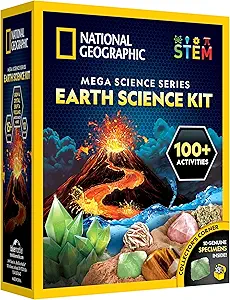 | Best for Hands-On Earth Science Exploration | Activities: 100+ | Suitable Age: 8-12 | VIEW ON AMAZON | See Our Full Breakdown | |
| National Geographic Amazing Chemistry Set with 100+ Experiments for Kids Ages 8-12 |  | Best for Extensive Chemistry Exploration with Real Tools | Number of Experiments: 100+ | Includes: test tubes, beakers, pipettes, crystals, glow solutions | VIEW ON AMAZON | See Our Full Breakdown | |
| National Geographic Ultimate Volcano Science Kit for Kids Ages 8-12 |  | Best for Geology Enthusiasts and Hands-On Learning | Ages: 8-12 | Includes: eruption powder, pop crystals, volcanic rocks, reusable mold, learning guide | Educational Focus: geology, chemistry, earth science | VIEW ON AMAZON | See Our Full Breakdown |
| Science Experiment Kit for Kids 6-12, STEM Chemistry Set with Volcano |  | Best for Broad Science Exploration and Critical Thinking | Number of experiments: 130+ | Recommended age: 6-12 | Includes: volcano eruption, crystal growing, slime making, lab experiments | VIEW ON AMAZON | See Our Full Breakdown |
| science kit | Includes | Number of Experiments |
|---|---|---|
| National Geographic Hobby Rock | Tumbler, four polishing grits, sifter, nine rough gemstones, learning guide | — |
| National Geographic Mega Scien | Earth science, chemistry, magic experiments, rock/mineral/crystal specimens | 75 |
| My First Science Experiments K | — | 100+ |
| National Geographic Gross Scie | Experiment guide, household items | 45 |
| National Geographic Break Open | Safety goggles, learning guide | — |
| National Geographic Chemistry | — | 45 |
| UNGILINGA 150 Experiments Scie | Volcano, Crystal, Magic, Dig, Reaction, Physics, Scientist Tools | 150 |
| National Geographic Science Ma | — | — |
| National Geographic Earth Scie | — | — |
| National Geographic Amazing Ch | test tubes, beakers, pipettes, crystals, glow solutions | 100+ |
| National Geographic Ultimate V | eruption powder, pop crystals, volcanic rocks, reusable mold, learning guide | — |
| Science Experiment Kit for Kid | volcano eruption, crystal growing, slime making, lab experiments | 130+ |
More Details on Our Top Picks
National Geographic Hobby Rock Tumbler Kit for Kids and Adults Ages 8+
This rock tumbler kit stands out for its durability and quiet operation, making it an excellent choice for home use. Compared with the Geodes kit, it offers a more active, process-oriented experience that produces polished gemstones, but it requires multiple cycles and is limited to small rocks, which might feel slow for impatient users. The included learning guide helps turn a simple activity into a STEM learning opportunity. Its leakproof rubber barrel and easy one-touch operation make it accessible for beginners, yet the process can be time-consuming, which could frustrate those seeking instant results. Overall, this kit is ideal for families interested in geology and patience-testing projects, but it’s less suited for those seeking quick, high-volume gemstone polishing.Pros:- Easy to operate with one-touch controls
- Durable motor and leakproof design
- Includes gemstones and learning guide
- Quiet operation suitable for home use
Cons:- Requires multiple cycles for optimal results
- Limited to small rocks and gemstones
- Takes time to complete the tumbling process
Best for: Families or individuals who want a durable, educational hobby that emphasizes patience and craftsmanship.
Not ideal for: Users expecting rapid results or looking to polish large rocks, since the small gemstone capacity and lengthy cycles may disappoint.
- Suitable Age:8+
- Includes:Tumbler, four polishing grits, sifter, nine rough gemstones, learning guide
- Motor:High-quality, durable
- Noise Level:75% quieter than plastic models
Our verdict“This kit makes the most sense for those interested in geology and patience-driven projects, valuing durability and educational content over speed.”
National Geographic Mega Science Lab with 75 Experiments for Kids 8-12
This kit excels in offering a broad spectrum of experiments, with 75 activities spanning earth science, chemistry, and magic tricks, making it ideal for curious kids. When compared to the Geodes kit, it provides a more diverse experience but less focus on geology specifically. Its inclusion of real specimens adds a tangible element to the learning process, fostering curiosity and hands-on engagement. However, some experiments may require adult supervision, and for more advanced science learners, the activities might feel somewhat basic. This product is best suited for kids eager to explore many science fields in one package, but it may not satisfy those seeking deeper or more complex experiments.Pros:- Includes 75 experiments across multiple science disciplines
- Features real rock, mineral, and crystal specimens
- Encourages creativity and hands-on learning
- Suitable for a wide age range (8-12)
Cons:- Requires adult supervision for some experiments
- Basic activities may not challenge advanced learners
- Limited focus on individual science topics
Best for: Parents or educators looking for a comprehensive, multi-disciplinary science kit that introduces children to various fields.
Not ideal for: Advanced science students or kids seeking in-depth experiments in a single discipline, as the activities are more introductory.
- Number of Experiments:75
- Age Range:8-12
- Includes:Earth science, chemistry, magic experiments, rock/mineral/crystal specimens
Our verdict“This kit is perfect for broad science exploration, especially for children eager to try many different experiments without deep specialization.”
My First Science Experiments Kit for Kids Ages 4+
This kit offers over 100 experiments tailored for very young children, making it ideal for nurturing early curiosity and basic scientific understanding. Compared to the Mega Science Lab, it focuses on simpler, safer activities like water fireworks and walking water that require minimal supervision. Its well-illustrated instructions and high safety standards ensure an engaging yet secure experience for children as young as four, but some of the experiments may be too basic for older kids or those with previous STEM exposure. This kit is best suited for parents wanting to introduce early science concepts in a fun, manageable way, but it may not hold the interest of more advanced or older children.Pros:- Over 100 engaging, age-appropriate experiments
- Promotes STEM learning and critical thinking
- Easy-to-follow, illustrated instructions
- Meets ASTM F963-17 safety standards
Cons:- Some experiments require adult supervision
- Limited tools included, may need additional household items
- Activities may be too basic for older or more experienced children
Best for: Parents and caregivers seeking safe, age-appropriate science activities for preschool and early elementary children.
Not ideal for: Older children or kids with prior science experience who might find the activities too simple and not challenging enough.
- Age Range:Ages 4+
- Number of Experiments:100+
- Safety Standards:ASTM F963-17
Our verdict“This kit is excellent for early learners, offering a gentle, safe introduction to science that fosters curiosity and foundational skills.”
National Geographic Gross Science Kit with 45 Experiments for Kids 8-12
This kit’s focus on gross science makes it engaging for kids who love slime, chemical reactions, and dissection activities. Compared with the Geode kit, it emphasizes more on fun and messy experiments, which can be both a strength and a drawback—messy for some children and requiring cleanup. Its clear instructions and illustrations make the activities accessible, but the durability of materials for repeated use isn’t specified, and younger children may need supervision during the messier steps. This kit suits children who thrive on tactile, slightly gross activities, but may be less appealing for those preferring tidy or less messy experiments.Pros:- Engages kids with fun, gross experiments like slime and dissection
- Includes easy-to-follow instructions and illustrations
- Teaches concepts like polymers and chemical reactions
- Uses household items for many activities
Cons:- Experiments can be messy and require cleanup
- Requires adult supervision for younger children
- Limited info on durability of materials for multiple uses
Best for: Children aged 8-12 who enjoy gross, hands-on science and are comfortable with some mess and supervision.
Not ideal for: Parents seeking neat, low-mess science activities or children sensitive to mess or requiring minimal cleanup.
- Number of Experiments:45
- Recommended Age:8-12
- Includes:Experiment guide, household items
Our verdict“This kit is ideal for kids who love gross science and are prepared for some mess, making science both fun and tactile.”
National Geographic Break Open 10 Premium Geodes for Kids Ages 8-12 with Safety Goggles and Learning Guide
This geode kit offers a highly tactile experience, encouraging children to physically crack open natural geodes and discover colorful crystals inside. Compared with the Rock Tumbler, it emphasizes exploration and surprise rather than polishing skills. The inclusion of safety goggles promotes safe cracking, but the effort involved can vary depending on the geodes’ hardness, and crystals inside may differ in size and beauty. It’s perfect for kids eager to see crystals firsthand and learn about geode formation, but it’s less suitable for those with limited hand strength or patience for cracking.Pros:- Encourages hands-on exploration and discovery
- Includes safety goggles for safe cracking
- Comes with educational materials and colorful crystals
- Natural geodes provide authentic experience
Cons:- Cracking geodes requires effort and care
- Crystals inside may vary in size and appearance
- Not suitable for children under 8
Best for: Children aged 8-12 who enjoy hands-on discovery and learning about mineral formation through physical activity.
Not ideal for: Children under 8 or those who may find cracking geodes too physically demanding or potentially frustrating.
- Number of Geodes:10
- Age Range:8-12
- Includes:Safety goggles, learning guide
- Material:Natural geodes
Our verdict“This geode kit is perfect for curious kids who want a tactile, educational experience with crystals, provided they’re comfortable with some effort and patience.”
National Geographic Chemistry Set with 45 Experiments for Kids 8-12
This chemistry set stands out for its extensive variety of 45 experiments that make chemical reactions tangible and exciting. Compared to the National Geographic Gross Science Kit, which offers similar experiments but with a focus on gross-out reactions, this set emphasizes a broader scientific process, making it more suitable for kids interested in foundational chemistry. The instructions are kid-friendly with illustrations, but some experiments require adult supervision due to potential messiness or safety concerns. The limited details on included materials could mean additional household items are needed, which might frustrate some users. However, its focus on STEM learning and engaging experiments makes it an excellent choice for parents seeking a well-rounded chemistry experience.
Pros:- Wide variety of 45 experiments to keep kids engaged
- Clear, illustrated instructions make setup easy
- Promotes STEM learning and curiosity in chemistry
Cons:- Requires adult supervision for some experiments
- Limited info on included materials may mean additional household items are needed
Best for: Families who want a versatile chemistry kit that balances fun with educational value, suitable for children aged 8-12
Not ideal for: Parents seeking a mess-free, low-maintenance activity for younger children or complete beginners without supervision needs
- Number of Experiments:45
- Recommended Age:8-12
Our verdict“This kit is ideal for curious kids who enjoy hands-on experiments and can handle some mess and supervision.”
UNGILINGA 150 Experiments Science Kit for Kids, STEM Educational Project Toys for Boys and Girls, Includes Volcano, Chemistry, Physics, and Scientist Tools
This kit offers an impressive 150 experiments spanning earth science, chemistry, and physics, making it a high-value choice for serious young science enthusiasts. In comparison to the National Geographic Earth Science Kit, which focuses mainly on earth sciences, the UNGILINGA kit provides a broader spectrum of scientific topics, appealing to kids eager to explore multiple disciplines. Its high-quality tools and easy-to-follow instructions support independent exploration, but some experiments may be complex enough that older children will benefit most. A potential downside is that some experiments require household items, and supervision might be needed for younger or less experienced children. Overall, this kit is perfect for those who want a comprehensive and challenging science experience.
Pros:- 150 experiments across multiple science fields
- Includes high-quality tools and kid-friendly materials
- Easy-to-follow instructions facilitate independent learning
Cons:- Some experiments may need adult supervision
- Materials might require additional household items
Best for: Older children or curious students who want an in-depth, multi-topic science kit for at-home learning or school projects
Not ideal for: Younger kids or beginners who might find the complexity overwhelming without adult help
- Number of Experiments:150
- Includes:Volcano, Crystal, Magic, Dig, Reaction, Physics, Scientist Tools
Our verdict“This kit is best suited for older, motivated kids ready for a wide-ranging scientific challenge.”
National Geographic Science Magic Kit for Kids with 100+ Experiments and Magic Tricks
This kit combines science with magic, offering over 100 experiments and tricks that captivate children 8 and up. Unlike the National Geographic Amazing Chemistry Set, which is chemistry-focused, this magic kit emphasizes entertainment and creativity while embedding scientific principles. It includes materials for 20 magic tricks plus a booklet with 85+ additional experiments, fostering both imagination and STEM curiosity. However, some experiments require household items not included, and adult supervision remains necessary for safety. The focus on magic tricks makes it especially appealing for kids who thrive on performative activities, but those seeking purely traditional science experiments may find it less comprehensive. Still, it balances fun and learning well.
Pros:- Over 100 experiments and magic tricks for engaging STEM fun
- Includes all necessary materials and a bonus booklet
- Encourages creativity, imagination, and hands-on learning
Cons:- Requires adult supervision for some activities
- Limited to children 8+; younger kids may find it less suitable
Best for: Kids who enjoy magic, performing, and blending entertainment with science, especially those aged 8 and above
Not ideal for: Children looking for straightforward science experiments without a performance element
- Age Range:8 years and up
- Included Components:Materials for 20 magic experiments, bonus booklet, magic wand, white gloves
Our verdict“This kit is perfect for kids who love performing magic while learning fundamental science concepts.”
National Geographic Earth Science Kit with 100+ Activities for Kids 8-12
This earth science kit offers over 100 activities, including volcano eruptions, crystal growing, and geologic digs, making it ideal for children interested in geology and earth sciences. Compared to the National Geographic Amazing Chemistry Set, which is chemistry-centric, this kit provides a broader focus on earth-related phenomena, fostering a deep curiosity about our planet. Its detailed learning guide supports educational exploration, but some experiments may need adult supervision, and the exact number of crystals or rocks included isn’t specified. This kit excels at encouraging tactile, exploratory learning about earth sciences, though it might be less engaging for kids who prefer purely chemical experiments.
Pros:- Over 100 activities, including volcano and crystal experiments
- Detailed educational guide supports learning
- Encourages tactile exploration and scientific curiosity
Cons:- Some experiments require adult supervision
- Limited info on the quantity of crystals and rocks included
Best for: Children aged 8-12 with a keen interest in geology and earth sciences seeking a hands-on educational experience
Not ideal for: Kids not particularly interested in earth science or those looking for a broader chemistry-focused kit
- Activities:100+
- Suitable Age:8-12
Our verdict“This kit is ideal for earth science enthusiasts who enjoy hands-on, exploratory activities about our planet.”
National Geographic Amazing Chemistry Set with 100+ Experiments for Kids Ages 8-12
This chemistry set provides over 100 experiments, including crystal growing, color-changing solutions, and glowing test tubes, offering a comprehensive experience for budding chemists. Compared to the National Geographic Chemistry Set with 45 experiments, which emphasizes core concepts and safety, this set expands on that foundation with bonus experiments and a wider variety of engaging activities. The inclusion of real scientific tools like test tubes and beakers enhances hands-on learning, but adult supervision remains important, especially for younger children, and some experiments might require household items not included. This kit suits kids eager for a deep dive into chemistry with plenty of activities and tools.
Pros:- Over 100 experiments with a variety of engaging themes
- Includes real scientific tools for authentic experience
- Large number of experiments with bonus content enhances value
Cons:- Requires adult supervision for safety
- Some experiments may need household items not included
Best for: Children aged 8-12 interested in exploring chemistry through a wide range of experiments and real scientific equipment
Not ideal for: Parents seeking a simpler, less involved chemistry kit for beginners or very young children
- Number of Experiments:100+
- Includes:test tubes, beakers, pipettes, crystals, glow solutions
Our verdict“This kit is perfect for motivated young chemists eager for a comprehensive, tool-rich chemistry experience.”
National Geographic Ultimate Volcano Science Kit for Kids Ages 8-12
This kit stands out for its focus on real volcanic rocks and a reusable mold, making it ideal for kids interested in geology and earth science. Unlike the more extensive Science Experiment Kit for Kids 6-12, which offers a broad range of experiments, this set zeroes in on volcanoes, providing a more immersive experience in that specific area. The inclusion of real rocks and a detailed learning guide deepens understanding, but it requires close supervision to prevent messes and ensure safety during eruptions. Its targeted scope makes it perfect for budding geologists, but less suitable for children seeking a variety of science projects.
Pros:- Includes authentic volcanic rocks for authentic learning experiences
- Reusable mold allows multiple eruptions and experiments
- Comprehensive guide enhances understanding of geology concepts
Cons:- Requires adult supervision for safe handling during eruptions
- Components can be messy, requiring cleanup
Best for: Children aged 8-12 who are passionate about geology and earth sciences, and enjoy focused, reusable experiments.
Not ideal for: Parents or educators seeking a wide variety of science activities or electronic components, as this kit is specialized and may involve mess and supervision.
- Ages:8-12
- Includes:eruption powder, pop crystals, volcanic rocks, reusable mold, learning guide
- Educational Focus:geology, chemistry, earth science
- Awards:Toy of the Year Award
Our verdict“This kit is ideal for young geology enthusiasts who want a focused, reusable volcano experiment with educational depth.”
Science Experiment Kit for Kids 6-12, STEM Chemistry Set with Volcano
This comprehensive kit offers over 130 experiments, making it a strong choice for children who want variety beyond just volcanoes. Compared with the National Geographic Ultimate Volcano Science Kit, which specializes in volcano eruptions, this set covers a broader spectrum of science activities, including crystal growing, slime making, and lab experiments. Its wide range encourages critical thinking and problem-solving, but it involves adult supervision for many activities and may require extra materials not included in the box. While it lacks electronic components or advanced machinery, its versatility makes it suitable for homeschooling, classroom use, or family science nights.
Pros:- Offers over 130 hands-on experiments for extensive science exploration
- Encourages critical thinking, problem-solving, and STEM skills
- Suitable for home, school, or group activities, fostering educational fun
Cons:- Requires adult supervision for certain experiments
- Additional materials may be needed beyond what’s included
Best for: Parents and educators seeking a versatile, all-in-one science kit for children aged 6-12 that promotes critical thinking and hands-on learning.
Not ideal for: Children primarily interested in geology or volcanoes specifically, as this kit offers a wider but less specialized experience, and some experiments need additional materials.
- Number of experiments:130+
- Recommended age:6-12
- Includes:volcano eruption, crystal growing, slime making, lab experiments
Our verdict“This kit is a strong choice for curious kids and educators who want a comprehensive, multi-disciplinary science experience with ample activities.”

How We Picked
The products in this roundup were evaluated based on several key criteria: experiment diversity, ease of use, safety features, educational value, and overall build quality. Kits that offered a broad range of experiments while remaining user-friendly scored higher, especially if they included detailed instructions and safety gear. We prioritized brands with consistent quality and positive reviews, aiming to recommend options suited for different ages and experience levels. The ranking reflects a balance between value, complexity, and educational impact, ensuring there’s a suitable choice for every type of buyer—from parents of young children to serious STEM enthusiasts.Factors to Consider When Choosing Science Kits
Choosing the right science kit involves more than just looking at the number of experiments. Consider the age and skill level of the user, as kits designed for beginners may lack depth for advanced learners. Safety features, including goggles and gloves, are essential, especially for chemical or geode-based kits. The scope of experiments and included materials impacts both the educational value and the long-term interest. Budget is also a factor—more comprehensive kits typically cost more but provide better value over time. Lastly, think about storage and space, as some kits can be bulky and require organized storage solutions.Age and Skill Level
Matching the kit to the user’s age and experience ensures a positive experience. Younger children need simple, guided experiments with minimal safety concerns, while older kids and teens often seek more complex projects that challenge their understanding. Overly simple kits can bore more advanced users, while overly complicated sets can frustrate beginners. Pay attention to recommended age ranges and skill descriptions to find a kit that strikes the right balance.
Educational Content and Experiment Scope
Look for kits that offer a variety of experiments aligned with educational goals. Some kits focus on specific fields like chemistry or geology, while others provide broader STEM experiences. The number of experiments and the depth of content matter: a larger set with detailed guides offers better learning value. However, more content also means more complexity, which may require additional supervision or prior knowledge. Consider how much engagement and challenge you want the user to have.
Safety and Quality
Safety features like goggles, gloves, and non-toxic materials are essential, especially for chemical or geode kits. High-quality kits use durable materials and include comprehensive instructions that emphasize safe practices. Cheaper kits may omit safety gear or use lower-grade components, increasing risk. Always check reviews for safety concerns and verify that the kit complies with safety standards applicable in your region.
Price and Long-term Value
While budget kits can be appealing, they often offer limited experiments and lower-quality materials. Investing in a more expensive set can provide a richer educational experience and last longer, especially if it includes reusable tools or expandability options. Consider whether the kit can grow with the user or be supplemented with additional experiments. Balance your budget with the potential for sustained interest and learning.
Storage and Space Requirements
Some kits come with bulky containers or numerous small parts that need organized storage. If space is limited, look for compact kits with clear compartments or minimal parts. Proper storage helps maintain the kit’s components and encourages ongoing use. Assess your available space before purchasing to ensure the set remains accessible and easy to maintain over time.
Frequently Asked Questions
Are science kits suitable for very young children?
Many science kits are designed specifically for young children, typically ages 4-8, featuring simple experiments with minimal safety concerns. However, it’s important to choose kits labeled for their age group, as kits meant for older kids may contain chemicals or tools that are unsafe or too complex for younger users. Supervision is recommended regardless of age, especially when handling small parts or chemicals. Always read the safety instructions and choose a kit that matches the child’s developmental level for a safe and educational experience.
Do I need additional tools or materials with these kits?
Most science kits come with everything needed for the experiments included, such as chemicals, tools, and instructions. However, some advanced or specialized kits may recommend or require additional items like batteries, household items, or extra safety gear. Always review the product details to confirm what is included and assess whether you might need to purchase supplementary materials. This prevents surprises and ensures the experiments can be completed smoothly.
Are these kits reusable after completing the experiments?
Many quality kits include reusable components like tools, containers, or certain chemicals that can be used for additional experiments or projects. Reusability adds to the overall value, especially if the kit is designed for ongoing engagement. However, some kits with single-use chemicals or fragile parts may not be suitable for reuse. Check the product description and reviews to determine how durable and reusable the components are before making a purchase.
How do I choose a kit appropriate for my child’s age and experience?
Start by considering the recommended age range and skill level listed by the manufacturer. For young children or beginners, look for kits with simple instructions and safety features. For older kids or those with some experience, select kits that offer more complex experiments and detailed guides. Reading reviews can also provide insights into how well the kit matches its intended age group. Matching the kit to their current abilities encourages confidence and sustained interest.
What should I consider if I want a science kit that lasts multiple years?
Look for kits with high-quality, durable components and a broad scope of experiments that can be expanded with additional sets or supplies. Kits that include reusable tools, comprehensive guides, and modular parts tend to be more adaptable over time. It’s also worth considering brands known for STEM education, which often design kits with long-term engagement in mind. This approach helps justify the initial investment and keeps the learning experience fresh as the user grows.
Conclusion
For parents or educators seeking the best overall experience, the National Geographic Mega Science Lab offers a versatile and engaging set that appeals to a wide age range. Those prioritizing value will find the Science Experiment Kit for Kids 6-12 provides plenty of experiments at a lower price point. Experts or serious STEM learners should consider the National Geographic Chemistry Set for its depth and quality. Beginners and younger children will benefit from simple, guided kits like My First Science Experiments Kit to foster curiosity. For specific interests like geology or volcanoes, specialized kits such as the Break Open Geodes or Ultimate Volcano Kit are excellent choices. Your ideal pick depends on the age, experience level, and scientific interests of the user.
Cold & flu season Picks
humidifiers
As an affiliate, we earn on qualifying purchases.