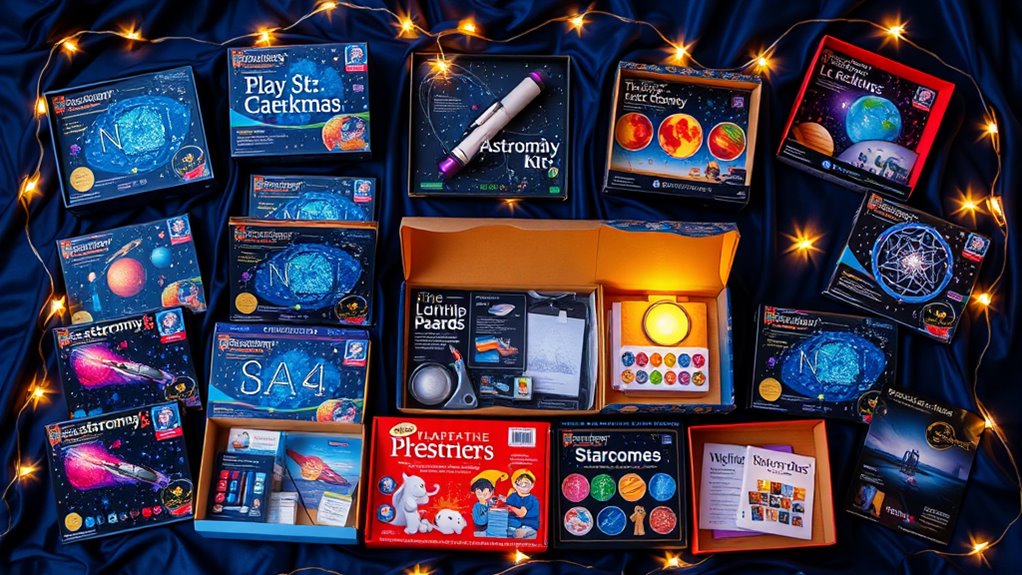

Searching for the best kids astronomy kits can feel overwhelming, with options ranging from simple star projectors to fully functional telescopes. The top pick, the National Geographic Mega Space Science and Craft Activity Kit, stands out for its engaging mix of crafts and space facts, ideal for younger children. The Wow in the World Kids’ Telescope & Astronomy Kit offers beginner-friendly viewing with audio guides that make learning fun, while the NASA Lunar Telescope provides more serious stargazing capabilities for older kids. The main challenge lies in balancing usability, age appropriateness, and educational value—more advanced options often require patience and proper handling, while simpler kits may lack depth. Keep reading to explore these options in detail and find the perfect fit for your young space enthusiast.

Turn the school run and nap time into listening time
- Thousands of audiobooks, podcasts and originals
- Listen on your phone, tablet or Echo — also offline
- Cancel anytime
Complete the kit


Key Takeaways
- The best kits blend educational content with hands-on activities, keeping kids engaged and learning.
- Simple star projectors are great for very young children, but serious budding astronomers need beginner telescopes.
- High-quality optics and sturdy build matter more for older kids interested in actual stargazing than for casual learners.
- Interactive features like talking models or app integration add value but can increase complexity and cost.
- Considering the child’s age and interest level is crucial to choosing a kit that will be both fun and educational without causing frustration.
| National Geographic Mega Space Science and Craft Activity Kit for Kids |  | Best Overall for Hands-On Space Exploration | Number of Items: Over 100 pieces | Recommended Age: 8 years and up | Educational Objective: STEM | VIEW ON AMAZON | See Our Full Breakdown |
| Telescope for Kids, 50mm 100x Silver Beginner Telescope with Tripod |  | Best for Outdoor Exploration and Observation | Aperture: 50mm | Magnification: 100x | Eyepieces: 6mm & 20mm | VIEW ON AMAZON | See Our Full Breakdown |
| 4M Solar System Planetarium – DIY Glow In The Dark Astronomy Model for Kids & Teens |  | Best for DIY Solar System Building and Learning | Brand: 4M | Age Range: 8 years and up | Number of Packs: 1 | VIEW ON AMAZON | See Our Full Breakdown |
| Thames & Kosmos Planetarium Projector – STEM Educational Tool with Star Maps & Space Images | 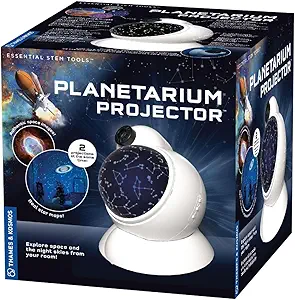 | Best for Indoor Space Learning and Visualization | Size: 6 inches | Projection Modes: Dual (star maps and space images) | Included Image Disks: 4 | VIEW ON AMAZON | See Our Full Breakdown |
| National Geographic Ultimate Space Arts and Crafts Activity Kit for Kids |  | Best for Creative Art and Space STEM Integration | Brand: Blue Marble | Age Range: 8 years and up | Educational Objective: STEM | VIEW ON AMAZON | See Our Full Breakdown |
| Wow in the World Kids’ Telescope & Astronomy Kit, 25x & 50x Magnification, Adjustable Tripod, Includes Star Wheel & Audio Content, Intro to Astronomy for Ages 6+ |  | Best Overall for Young Beginners | Magnification: 25x & 50x | Tripod Height: up to 48 inches | Eyepieces: Two | VIEW ON AMAZON | See Our Full Breakdown |
| Smartivity DIY Solar System Kit – Gear-Driven Planet Model for Kids 8-14 |  | Best for Creative Astronomers Aged 8-14 | Brand: Smartivity | Age Range: 8 years and up | Number of Items: 1 | VIEW ON AMAZON | See Our Full Breakdown |
| Science Can Solar System for Kids, Talking Astronomy Solar System Model Kit |  | Best for Visual Learners and Bedtime Astronomy | Brand: Science Can | Age Range: 36 months – 12 years | Number of Items: 1 | VIEW ON AMAZON | See Our Full Breakdown |
| Science Can Solar System for Kids, Interactive Talking Solar System Model |  | Best for Interactive Learning and Planet Facts | Ages: 6-12 | Power Source: 3 AA batteries (not included) | Languages: English and French | VIEW ON AMAZON | See Our Full Breakdown |
| Discovery Galactic Space Science Kit – 61 Experiment STEM Lab for Kids |  | Best for All-in-One Space STEM Exploration | Number of Experiments: 61 | Age Range: 8+ | Includes: DIY telescope, crystals, moon rocks, slime, molds, glitter, excavation tools | VIEW ON AMAZON | See Our Full Breakdown |
| NASA Lunar Telescope for Kids Ages 8-12 with Tripod and Finder Scope |  | Best for Beginner Lunar Observation | Target Age: 8-12 | Optical Glass: High-quality | Includes: Tripod, Finder Scope | VIEW ON AMAZON | See Our Full Breakdown |
| Doctor Jupiter Space Science Toy for Kids Ages 8 and Up |  | Best for Interactive, Hands-On Space Learning | Brand Name: Doctor Jupiter | Age Range: 8 years and up | Number of Items: 1 | VIEW ON AMAZON | See Our Full Breakdown |
| kids astronomy kit | Age Range |
|---|---|
| National Geographic Mega Space | — |
| Telescope for Kids | — |
| 4M Solar System Planetarium | 8 years and up |
| Thames & Kosmos Planetarium Pr | — |
| National Geographic Ultimate S | 8 years and up |
| Wow in the World Kids’ Telesco | — |
| Smartivity DIY Solar System Ki | 8 years and up |
| Science Can Solar System for K | 36 months – 12 years |
| Science Can Solar System for K | — |
| Discovery Galactic Space Scien | 8+ |
| NASA Lunar Telescope for Kids | — |
| Doctor Jupiter Space Science T | 8 years and up |
More Details on Our Top Picks
National Geographic Mega Space Science and Craft Activity Kit for Kids
This kit stands out as the most comprehensive hands-on experience, combining over 100 pieces for a variety of space-themed science and craft projects. Unlike the simpler craft kit from Blue Marble, it actively engages children with activities like foam rocket launches and glow-in-the-dark constellations, fostering both creativity and STEM learning. However, it is best suited for children aged 8 and up and may require adult supervision for some activities. Its focus on space crafts limits exposure to broader astronomy concepts. The inclusion of detailed instructions and all necessary components makes it ideal for motivated young learners who enjoy interactive projects.
Pros:- Engages children with diverse, hands-on space science activities
- Includes all materials and step-by-step instructions for easy use
- Encourages creativity and deepens understanding of space concepts
Cons:- Limited to space-themed projects, which may narrow interest
- Some activities may require adult supervision for safety and guidance
Best for: Families seeking a well-rounded, interactive space activity kit for children aged 8 and older who enjoy crafting and STEM experiments.
Not ideal for: Younger children under 8 or kids who prefer digital or observational astronomy without hands-on crafts.
- Number of Items:Over 100 pieces
- Recommended Age:8 years and up
- Educational Objective:STEM
- Brand:National Geographic
- Model Number:NGMEGASPACE
- UPC:810070624408
Our verdict“This kit is perfect for parents who want a comprehensive, craft-focused space learning experience for children 8 and up.”
Telescope for Kids, 50mm 100x Silver Beginner Telescope with Tripod
This beginner telescope makes space observation accessible to young explorers, with features like adjustable magnification, dual eyepieces, and a sturdy tripod. Compared to the more elaborate planetarium projector from Thames & Kosmos, it offers a direct, real-world view of the night sky, fostering curiosity through actual observation. Its portability and lightweight design make it ideal for outdoor use, but its 50mm aperture and 100x magnification limit detailed planetary viewing, making it less suitable for serious amateur astronomers. It’s especially well-suited for kids interested in spotting the moon and planets, with an included Moon guide to enhance learning.
Pros:- Easy to use and portable for outdoor activities
- Includes multiple accessories like finderscope and Barlow lens for versatile viewing
- Encourages STEM curiosity through real sky observation
Cons:- Limited magnification restricts detailed celestial viewing
- Designed for beginners, not suitable for advanced astronomy pursuits
Best for: Parents and children looking to start outdoor astronomy with a simple, practical telescope for casual sky watching.
Not ideal for: Children seeking detailed planetary or deep-sky observation or advanced astrophotography.
- Aperture:50mm
- Magnification:100x
- Eyepieces:6mm & 20mm
- Included Accessories:Tripod, finderscope, Barlow lens, Moon observation guide
Our verdict“This telescope is a solid choice for young beginners eager to explore the night sky without complex equipment.”
4M Solar System Planetarium – DIY Glow In The Dark Astronomy Model for Kids & Teens
This model shines as a creative, non-electronic way to teach kids about the solar system. Unlike the high-tech projector from Thames & Kosmos, it relies solely on assembly, painting, and glow-in-the-dark features, making it perfect for hands-on learners who enjoy crafts. While it excludes Pluto, the basic set provides a solid overview of planets, encouraging children to learn through building and quizzing themselves. The main tradeoff is that assembly and painting can be a challenge for younger children or those with limited fine motor skills, and it offers only a basic representation without advanced features like orbital mechanics.
Pros:- Encourages active participation through assembly and painting
- Glow-in-the-dark elements enhance visual interest
- Includes educational quiz questions to reinforce learning
Cons:- Requires assembly and painting, which may be difficult for some kids
- Does not include Pluto or more detailed planetary data
Best for: Parents who want a tactile, educational activity centered on understanding planetary positions and the solar system’s layout.
Not ideal for: Children seeking electronic or highly detailed space models with more interactive features.
- Brand:4M
- Age Range:8 years and up
- Number of Packs:1
- Number of Items:1
- Included Components:kit
Our verdict“Ideal for children who learn best through hands-on building and creativity, rather than digital or electronic models.”
Thames & Kosmos Planetarium Projector – STEM Educational Tool with Star Maps & Space Images
This projector offers a compelling way to bring the stars into any room, with authentic star maps and stunning images from the James Webb Space Telescope. Compared with the more craft-oriented kits, it provides a visual experience that can captivate children and make astronomy more tangible. Its 6-inch size limits the projection area, and setup requires some patience, but the multiple projection modes and mounting options make it versatile for different spaces. It’s particularly suited for children interested in space imagery and night sky visualization, providing a more passive but awe-inspiring experience.
Pros:- Creates an immersive star and space display on walls or ceilings
- Includes authentic images from the James Webb Space Telescope
- Multiple projection modes and adjustable nightlight
Cons:- Requires assembly and proper setup for best results
- Limited projection size might not fill larger rooms
Best for: Parents wanting a visual, indoor astronomy experience that can serve as a nightlight or educational display for space images.
Not ideal for: Children seeking hands-on building activities or outdoor observing experiences.
- Size:6 inches
- Projection Modes:Dual (star maps and space images)
- Included Image Disks:4
- Hemispheres Covered:Northern and Southern
- Features:Nightlight, auto-off timer
- Mounting Options:Tabletop or wall
Our verdict“A great choice for space-loving kids who enjoy visual displays and indoor learning without the need for extensive assembly.”
National Geographic Ultimate Space Arts and Crafts Activity Kit for Kids
This kit combines space education with art, offering three different craft projects such as glow-in-the-dark solar system models and space-themed window art. Compared to the more straightforward educational kits, it emphasizes creativity and hands-on art, appealing to children who love both science and craft activities. While its focus on art may limit the depth of astronomy learning, it offers a satisfying STEAM experience suitable for children 8 and older. The inclusion of all necessary materials and high ratings make it a reliable choice for combining artistic expression with space themes.
Pros:- Includes three engaging space-themed craft projects
- Fosters creativity alongside STEM learning
- All materials and instructions included, with high customer satisfaction
Cons:- Requires adult supervision for younger children
- Limited to craft activities, lacking direct observation or building components
Best for: Parents seeking a creative, multi-activity space kit that blends arts and STEM for children 8 and up.
Not ideal for: Kids who prefer purely scientific or observation-based activities over arts and crafts.
- Brand:Blue Marble
- Age Range:8 years and up
- Educational Objective:STEM
- Set Name:Ultimate Space Activity Kit
- Number of Packs:1
- Included Components:Three complete space-themed craft kits
- Model Number:NGSPACEXL
- UPC:810070627355
Our verdict“This kit is ideal for children who enjoy artistic projects and want a creative introduction to space topics.”
Wow in the World Kids’ Telescope & Astronomy Kit, 25x & 50x Magnification, Adjustable Tripod, Includes Star Wheel & Audio Content, Intro to Astronomy for Ages 6+
This kit stands out for providing a well-rounded introduction to astronomy with adjustable magnification and engaging educational content. Compared with the Science Can Solar System for Kids, Talking Astronomy Solar System Model, it offers more hands-on observation rather than projection, making it ideal for kids eager to peer at planets and stars directly. Its included star wheel and audio guides deepen understanding without overwhelming younger children. However, the tripod’s height may not suit all kids comfortably, and clear skies are necessary for best results. This pick makes the most sense for families wanting a comprehensive, beginner-friendly telescope that combines visual exploration with educational fun.
Pros:- Educational and engaging for young kids interested in astronomy
- Includes multiple magnification options and adjustable tripod
- Comprehensive learning tools like star wheel and audio guides
Cons:- Limited to beginner level observations, restricting long-term use
- Tripod height may not be comfortable for all children
- Requires clear weather for optimal viewing
Best for: Families with young children interested in basic telescopic observation and astronomy learning.
Not ideal for: Parents seeking a more advanced or portable telescope for frequent outdoor use, as this model is somewhat bulky and limited to beginner levels.
- Magnification:25x & 50x
- Tripod Height:up to 48 inches
- Eyepieces:Two
- Focus:Focus knob
- Altitude Adjustment:Yes
- Includes:Star wheel, audio content, illustrated guide
Our verdict“This telescope kit offers a solid entry point for young kids keen on discovering the night sky with educational support.”
Smartivity DIY Solar System Kit – Gear-Driven Planet Model for Kids 8-14
This kit excels at combining hands-on building with space learning, allowing children to assemble a rotating solar system model that visually demonstrates planetary orbits. Unlike the Science Can Solar System for Kids, Talking Astronomy Solar System Model, which emphasizes projection and passive listening, this model promotes active participation through assembly, fostering a deeper understanding of planetary movement. Its eco-friendly materials and age-appropriate design make it a thoughtful gift for curious middle-grade kids. The main tradeoff is that it requires adult supervision and assembly, making it less suitable for very young children or those seeking instant gratification. Overall, this kit is perfect for kids who enjoy tinkering and want a lasting, educational project.
Pros:- Encourages active learning through model assembly
- Teaches about planetary orbits and space in a visual way
- Made from eco-friendly, safe materials
Cons:- Assembly can be challenging for younger children
- Limited to educational use, not a play toy for active exploration
Best for: Children aged 8-14 who love building and exploring space concepts through hands-on projects.
Not ideal for: Younger children under 8 or kids who prefer quick, ready-to-play toys rather than assembly-based activities.
- Brand:Smartivity
- Age Range:8 years and up
- Number of Items:1
- Included Components:Box
- Model Number:SMRT1313
- Best Sellers Rank:#20,302 in Toys & Games
Our verdict“This kit is ideal for curious kids who enjoy building models and learning about planetary motion firsthand.”
Science Can Solar System for Kids, Talking Astronomy Solar System Model Kit
This model offers a unique projection experience, turning space learning into a visual spectacle that can be enjoyed in low light. Its bilingual features and included disks with space images make it accessible and versatile. Compared to the Science Can Solar System for Kids, Talking Astronomy Solar System Model, which emphasizes projection, this kit’s focus on interactive image projection is especially appealing for children who love visual stimulation. The inclusion of a night light adds a comforting element, making it suitable for bedtime routines. However, the need for batteries (not included) and variable projection quality can be limiting factors. This kit caters well to younger children or those who prefer passive, visual learning tools over hands-on models.
Pros:- Interactive projection of planets and space scenes enhances engagement
- Bilingual features promote language learning alongside astronomy
- Includes a night light, making it suitable for bedtime
Cons:- Requires 3 AA batteries, which are not included
- Projection quality depends on lighting conditions
- Limited variety in projection disks
Best for: Young children and visual learners who enjoy interactive projection and bedtime astronomy stories.
Not ideal for: Older children seeking more detailed, hands-on models or active building projects, as this is more about visual display than physical assembly.
- Brand:Science Can
- Age Range:36 months – 12 years
- Number of Items:1
- Included Components:Manual, Planets Axis, Stickers, Projector, Slides
- Model Number:1204732021es0001
- Best Sellers Rank:#5,053 in Toys & Games
Our verdict“This projection-based kit is excellent for young children and bedtime astronomy explorations but offers less hands-on building activity.”
Science Can Solar System for Kids, Interactive Talking Solar System Model
This model emphasizes interactive quiz modes and full-color planetarium projections, making it ideal for children who learn best through play and visual stimuli. Unlike the Wow in the World Kids’ Telescope & Astronomy Kit, which focuses on direct sky observation, this model offers detailed facts and engaging questions to deepen space knowledge in children aged 6-12. Its built-in projector and quiz system make learning about planets both fun and informative. A drawback is that batteries (not included) are required, and the device may need frequent replacements for continuous use. Nevertheless, it suits kids who enjoy interactive digital features over physical observation, fostering curiosity with a playful approach.
Pros:- Interactive quiz mode enhances engagement and learning
- Includes a planetarium projector for immersive visuals
- Durable, safe design suitable for young children
Cons:- Batteries not included, additional purchase needed
- No assembly required but dependent on battery operation
- Limited physical interaction
Best for: Children aged 6-12 who enjoy interactive quizzes and visual facts about planets and space phenomena.
Not ideal for: Kids who prefer hands-on, physical models or outdoor stargazing, as this is primarily a digital, interactive toy.
- Ages:6-12
- Power Source:3 AA batteries (not included)
- Languages:English and French
- Number of quiz questions:53
- Number of projector disks:3
- Number of images:24
Our verdict“This interactive talking model offers an engaging way for kids to learn space facts through digital play and projection, ideal for curious learners who enjoy multimedia experiences.”
Discovery Galactic Space Science Kit – 61 Experiment STEM Lab for Kids
This kit delivers a broad range of 61 space-themed experiments, from building telescopes to excavating moon rocks, making it ideal for children who prefer variety and hands-on activities. Compared to the Wow in the World Kids’ Telescope & Astronomy Kit, which is more observational, this set emphasizes active experimentation and cross-disciplinary learning, including chemistry and archaeology. The extensive number of experiments offers lasting engagement, but younger children may need adult supervision, and small components require careful handling. This kit suits kids who love detailed projects and want a comprehensive space STEM experience, though it may be overwhelming for those seeking quick or simple activities.
Pros:- Extensive collection of 61 experiments covering multiple science areas
- Includes tools for building telescopes, growing crystals, and excavating rocks
- Encourages curiosity through hands-on exploration
Cons:- Requires adult supervision for small parts and safety
- Some components are small, demanding careful handling
Best for: Children 8 and up who enjoy a wide array of space-related experiments and multi-disciplinary STEM learning.
Not ideal for: Parents seeking a lightweight, straightforward activity or for very young children who need simpler, larger components.
- Number of Experiments:61
- Age Range:8+
- Includes:DIY telescope, crystals, moon rocks, slime, molds, glitter, excavation tools
Our verdict“This expansive STEM kit offers a diverse and engaging space science experience for curious, active kids ready for multiple experiments.”
NASA Lunar Telescope for Kids Ages 8-12 with Tripod and Finder Scope
This telescope stands out as an excellent entry point for young children interested in lunar observation. Its high-quality optical glass and simple setup make it accessible for kids aged 8-12, providing detailed views of the moon that can spark early interest in astronomy. Unlike larger, more complex telescopes, this model is primarily designed for lunar sights, which means it’s less suitable for exploring planets or deep sky objects. The inclusion of a stable tabletop tripod and a finder scope simplifies alignment and viewing, making it ideal for beginners, but it does require adult supervision for proper use and safety. Compared to more advanced telescopes, it offers a straightforward experience focused on the moon, reducing frustration but limiting versatility. This pick is perfect for young kids who want a dedicated lunar telescope without the need for extensive setup or upgrades.
Pros:- Easy to assemble and operate for young beginners
- Provides detailed, close-up lunar views that enhance learning
- Includes a stable tabletop tripod for steady viewing
- High-quality optical glass improves image clarity
Cons:- Limited to lunar observation, reducing overall versatility
- Suitable mainly for children, which might limit its long-term use as skills advance
- May require adult supervision for proper alignment and safety
Best for: Families seeking an easy-to-use, educational telescope for lunar viewing that won’t overwhelm beginners
Not ideal for: Parents looking for a versatile telescope capable of planetary and deep sky observation, as this model is mainly suited for moon viewing
- Target Age:8-12
- Optical Glass:High-quality
- Includes:Tripod, Finder Scope
- Use:Beginner-friendly
Our verdict“This telescope makes the most sense for young kids who are specifically interested in moon exploration and need a straightforward, beginner-friendly setup.”
Doctor Jupiter Space Science Toy for Kids Ages 8 and Up
Compared with the lunar-focused NASA Lunar Telescope, the Doctor Jupiter Space Science Toy offers a broader range of activities that appeal to curious young scientists. Its over 50 experiments, including rocket launches and planet formations, foster active engagement and critical thinking skills, making it ideal for children who prefer hands-on learning over passive observation. The kit’s detailed instructions and variety of components support independent exploration, but it does require adult supervision for some experiments involving small parts and chemicals, which could be a concern for very young children. While the telescope in the Kids Astronomy Telescope is limited to lunar views, this kit promotes broader STEM skills and parent-child bonding through shared projects. It’s best suited for kids who love to experiment and want more than just observing the night sky.
Pros:- Over 50 engaging space experiments to inspire curiosity
- Encourages problem-solving, critical thinking, and STEM skills
- Includes detailed, easy-to-follow instructions for independent use
- Promotes bonding through shared activities and exploration
Cons:- Requires adult supervision for some experiments, especially with small parts
- Contains small components that are potential choking hazards for younger children
- Some activities may be messy or require additional materials
Best for: Parents seeking an interactive, experiment-based space activity kit that encourages STEM learning in children aged 8 and up
Not ideal for: Families looking for a simple, observational telescope for basic sky viewing, as this kit focuses on experiments and hands-on projects
- Brand Name:Doctor Jupiter
- Age Range:8 years and up
- Number of Items:1
- Included Components:Rocket Sticker Sheet, Conical Flask, Measuring Cylinder, Dropper, Funnel, Rocket, Rocket Cap, Launching Pad, Launch Tube, Take Off Button, Tray, Spatula, Bouncy Planet Mold, Rocket Station Set, 2 Cups, 2 Stirring Sticks, 2 Balloons, Medium & Small Bands, Ingredients, Food Colours, Instruction Manual, Activity Pad
- Manufacturer:Metis Learning Solutions Pvt. Ltd.
- Model Number:DJ Space Science Kit
Our verdict“This science kit is ideal for children who thrive on hands-on projects and want to explore space through experiments rather than just observation.”

How We Picked
These products were evaluated based on their educational value, ease of use, durability, and overall engagement potential. I prioritized kits that offered a good balance of hands-on activities and scientific accuracy, especially for different age ranges. Cost-effectiveness was also considered, ensuring that options provide real learning opportunities without unnecessary excess. The ranking reflects how well each kit addresses different skill levels and interests, with a focus on value and long-term appeal rather than just initial excitement.Factors to Consider When Choosing Kids Astronomy Kits
Choosing the right kids astronomy kit involves more than just picking the most popular or expensive option. It’s important to consider factors like age appropriateness, educational content, and ease of use. A kit that is too complex may frustrate younger children, while a very simple one might not satisfy older kids eager for real stargazing. Think about whether the child prefers hands-on activities, like craft projects, or wants to look through a telescope. Compatibility with their interest level and patience for assembly also play a key role in making a satisfying choice.Age Appropriateness and Skill Level
Matching the kit to a child’s age ensures they can understand and enjoy the activities without frustration. Younger children benefit from kits with simple, colorful components and basic concepts, like glow-in-the-dark planets or craft projects. Older kids, especially those interested in real astronomy, will appreciate more advanced telescopes and models that challenge their skills. Avoid overly complex setups for beginners, but don’t underestimate older kids’ capacity for learning if the content is engaging and well-designed.
Educational Content and Engagement
Look for kits that combine fun with learning, providing clear explanations about celestial bodies and space phenomena. Interactive elements like talking models or augmented reality features can deepen understanding, but they should complement rather than replace fundamental learning. Kits that include activities such as building models or conducting experiments tend to foster better retention. Remember, the goal is to cultivate curiosity, so choose options that inspire questions and exploration.
Ease of Use and Assembly
Ease of setup and straightforward instructions are key, especially for parents who may not be familiar with astronomy or science kits. A well-designed kit minimizes the need for complex assembly or calibration, making the experience more about discovery than frustration. Consider whether the included tools are durable and whether the instructions are clear enough for children to follow independently or with minimal adult supervision. This factor can significantly impact how much your child enjoys the kit over time.
Durability and Quality of Components
Since kids can be rough with their toys, choosing a kit with sturdy, high-quality components ensures it will last through repeated use. Optical parts, in particular, should be resistant to damage and easy to clean. Craft and model materials should be safe and non-toxic, especially for younger children. Investing in durable options can mean better value over time, as the kit remains functional and safe for extended periods.
Price and Long-term Value
While budget-friendly options are tempting, they often sacrifice depth or quality. Higher-priced kits typically offer better optics, more comprehensive educational content, and durable construction, which can be worth the investment for serious young astronomers. Consider whether the kit includes expandable features or additional accessories that can grow with your child’s interest. Balancing cost and value ensures you get a product that entertains and educates without needing frequent replacement.
Frequently Asked Questions
Is a telescope necessary for a beginner kid interested in astronomy?
Not necessarily. For very young children or casual explorers, a simple star projector or planetarium model can spark interest without the need for a telescope. However, if your child shows a serious interest in observing celestial objects, a beginner-friendly telescope can provide a more immersive experience. Look for models with easy setup and decent optics to avoid frustration and encourage continued curiosity. Starting with a basic telescope also helps children develop patience and an understanding of how to handle more advanced equipment later.
What age is suitable for a real telescope?
Most entry-level telescopes are suitable for children aged 8 and up, especially those with simplified controls and sturdy builds. Younger children under 8 may find telescopes too complicated or fragile, and their attention span might be limited for prolonged observing sessions. For this age group, kits with built-in guides or app support can make the experience more accessible. As children grow and develop more patience, they can transition to more sophisticated telescopes with better optics and features.
Are interactive or talking models worth the extra cost?
Interactive models, like talking planetarium kits or models with app integration, can significantly enhance engagement and learning, especially for visual and auditory learners. They often provide explanations and fun facts that deepen understanding without requiring extensive reading. However, they tend to be more expensive and sometimes require batteries or devices, adding complexity. If your child loves tech and interactive experiences, these models can be worthwhile; otherwise, simpler kits may offer more straightforward educational value.
How important is optical quality in a kids telescope?
Optical quality directly impacts the clarity of views and overall enjoyment in stargazing. Cheaper telescopes with poor optics can lead to fuzzy images and frustration, discouraging continued interest. For kids, a telescope with decent lenses that is easy to operate is preferable over high-end models that are complicated or fragile. Investing in a beginner telescope with good optics can foster a love for astronomy and motivate further exploration as skills improve.
Should I prioritize educational content over fun features?
Balancing educational value with fun features is key to maintaining a child’s interest. While engaging gadgets or colorful designs attract initial attention, meaningful learning experiences keep kids invested over time. Look for kits that combine playful elements with clear explanations about space science. A well-designed kit that educates while entertaining helps foster curiosity and encourages ongoing exploration rather than fleeting interest.
Conclusion
For parents seeking the best overall experience, the National Geographic Mega Space Science and Craft Activity Kit offers a versatile, engaging introduction to space science suitable for a wide age range. Those looking for the best value might prefer the Science Can Solar System Models for interactive and educational features at a lower price point. The NASA Lunar Telescope makes a great choice for older kids or budding astronomers ready to explore the skies more seriously. Beginners and casual explorers will find simple star projectors or basic telescopes perfect, while more dedicated young astronomers should consider models with better optics and expandability. Matching the kit to your child’s age, interest level, and curiosity ensures a rewarding experience that encourages a lifelong fascination with space.
Evergreen bestsellers Picks
bestsellers
As an affiliate, we earn on qualifying purchases.