
When parents search for baby carrier backpack carriers, they’re usually trying to answer one question: framed hiking carrier or soft everyday carrier? This roundup compares both styles across 13 popular models. The Deuter Kid Comfort takes the top spot for serious trail families thanks to its load-bearing frame, ventilation, and storage capacity, while the Osprey Poco LT wins for parents who want framed-carrier comfort in a lighter, packable design. On a tighter budget, the ClevrPlus Cross Country delivers most of the core features for weekend hikes. The main tradeoff you’ll face is weight and bulk versus comfort on longer treks — framed carriers carry kids better but demand more from you. Read on for the full breakdown of which model fits your family, your trails, and your budget.

Turn the school run and nap time into listening time
- Thousands of audiobooks, podcasts and originals
- Listen on your phone, tablet or Echo — also offline
- Cancel anytime
Complete the kit


Key Takeaways
- Framed carriers from Deuter, Osprey, and Vandra clearly outperformed generic no-name models in back support, kickstand stability, and weight distribution — the price gap reflects real structural differences, not branding.
- The Osprey Poco LT was the only framed pick that folds down for travel, making it the standout for families who fly or have limited storage, though it carries less gear than the Deuter.
- Duplicate listings under the besrey and generic ‘Hiking Baby Carrier’ names revealed wide quality variance within identical-looking listings — checking frame material and weight capacity is essential before buying lookalike models.
- The Cxynchen 4-in-1 and YIYUNBEBE 6-in-1 are soft-structured carriers, not hiking backpacks; they belong in this comparison only if your ‘trail’ is a city sidewalk, so they ranked at the bottom for this use case.
- Sunshades, rain covers, and hydration compatibility varied dramatically across the lineup — the WIPHA and Vandra include weather protection that competitors sell separately, which changes the real cost of ownership.
| Deuter Kid Comfort Child Carrier Backpack for Hiking and Travel | 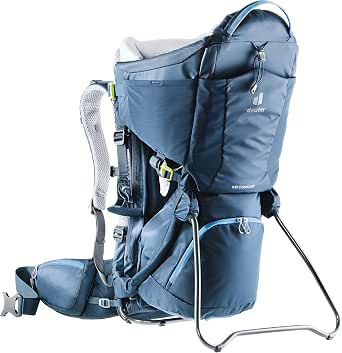 | Best Overall | Fabric: 210 denier polyamide with ripstop threads and PU coating | Back system: Aircomfort ventilated mesh | Frame: Flexible spring steel | VIEW ON AMAZON | See Our Full Breakdown |
| Vandra Glacier Scandinavian Hiking Baby Carrier Backpack with Gravity Lock Hard-Shell Frame |  | Best Premium Safety Pick | Child weight capacity: 16-40 lbs | Total carry capacity: 48.5 lbs (child + cargo) | Age range: 6 months to 3 years | VIEW ON AMAZON | See Our Full Breakdown |
| besrey Toddler Hiking Backpack Carrier with Adjustable Padded Shoulder Straps |  | Best Lightweight Value | Carrier weight: 5.5 lbs | Max load capacity: 44 lbs (child, gear, and backpack combined) | Minimum child weight: 16 lbs | VIEW ON AMAZON | See Our Full Breakdown |
| besrey Toddler Hiking Backpack Carrier with Adjustable Padded Straps |  | Best for Travel and Storage | Carrier weight: 5.5 lbs | Total supported weight: 16-44 lbs (child, gear, and backpack combined) | Harness: 5-point safety belt | VIEW ON AMAZON | See Our Full Breakdown |
| ClevrPlus Cross Country Baby Backpack Carrier, Grey |  | Best Accessory Bundle | Weight: 5.5 lbs | Child age range: 9-48 months | Maximum child weight: 33 lbs | VIEW ON AMAZON | See Our Full Breakdown |
| WIPHA Toddler Hiking Backpack Carrier with Sunshade |  | Best Lightweight Framed Pick | Weight: 3.3 lbs (1.5 kg) | Max Child Load: 30 lbs | Frame Material: Ultra-light aluminum | VIEW ON AMAZON | See Our Full Breakdown |
| Osprey Poco LT Soft Convertible Baby Carrier |  | Best Frameless Travel Carrier | Weight: 1.44 lbs | Dimensions: 24.4H x 16.9W x 3.1D inches | Age Range: Newborn to ~36 months | VIEW ON AMAZON | See Our Full Breakdown |
| Hiking Baby Carrier Backpack – Toddler & Child Carrier |  | Best for On-the-Go Parenting | Material: Waterproof Ripstop Polyester | Safety Features: Padded cocoon, safety straps, stirrups | Adjustability: Height-adjustable frame and load-bearing belt | VIEW ON AMAZON | See Our Full Breakdown |
| ClevrPlus Deluxe Adjustable Baby Carrier Backpack |  | Best All-Inclusive Kit | Weight: 5.2 lbs | Child Age Range: 9–48 months | Maximum Child Weight: 33 lbs | VIEW ON AMAZON | See Our Full Breakdown |
| Cxynchen 4-in-1 Modular Baby Backpack Carrier with Hip Seat and Chest Bag |  | Best Modular Everyday Carrier | Modules: Backpack, baby carrier, hip seat, and chest bag | Chest Bag Styles: Chest bag, crossbody diaper bag, side bag, and handbag | Recommended Child Weight: 8 to 33 pounds | VIEW ON AMAZON | See Our Full Breakdown |
| besrey Toddler Hiking Backpack Carrier with Adjustable Padded Shoulder Straps |  | Best Lightweight Pick | Weight: 5.5 lbs | Max Load Capacity: 16-44 lbs (child, gear, and backpack included) | Safety Harness: 5-point soft seat belts | VIEW ON AMAZON | See Our Full Breakdown |
| YIYUNBEBE 6-in-1 Baby Carrier with Hip Seat, Newborn to Toddler, Front and Back Carrying (Light Grey) |  | Best for Newborn-to-Toddler Use | Brand: YIYUNBEBE | Age Range: 0-36 months | Weight Capacity: 7-45 lbs | VIEW ON AMAZON | See Our Full Breakdown |
| Hiking Baby Carrier Backpack – Toddler & Child Carrier |  | Best Parent Comfort for Long Hikes | Material: Waterproof Ripstop Polyester | Child Seat: Padded cocoon seat with safety straps and stirrups | Adult Harness: Height-adjustable, heavily padded with load-bearing belt | VIEW ON AMAZON | See Our Full Breakdown |
More Details on Our Top Picks
Deuter Kid Comfort Child Carrier Backpack for Hiking and Travel
The Deuter Kid Comfort stands out as the most refined load-carrying platform in this lineup. Its Aircomfort ventilated mesh back and Vari Slide back-length adjustment mean two parents of very different heights can share one carrier without compromising fit — something the one-size-fadiwa designs like the ClevrPlus Cross Country can’t match. The spring steel frame and pull-forward hip fins transfer weight to the hips rather than the shoulders, which matters most on hikes longer than an hour. Compared with the Vandra Glacier, the Deuter feels more mature ergonomically but lacks a hard-shell cockpit, so the ride is softer for the adult rather than more stable for the child. The tradeoff: the chin pad is sold separately, an odd omission at this tier, and the feature list is leaner than budget rivals that bundle rain covers and changing pads.
Pros:- Ventilated Aircomfort mesh back reduces sweat on long hikes
- Vari Slide back length adjusts across a wide range of torso sizes
- Spring steel frame distributes load evenly to the hips
- Included sun roof adds weather protection for the child
Cons:- Chin pad is not included and must be purchased separately
- Fewer bundled accessories than cheaper competitors like the ClevrPlus Cross Country
Best for: Serious hiking families who log long trails and need a pack that fits multiple caregivers comfortably
Not ideal for: Buyers expecting an all-inclusive accessory bundle — essentials like the chin pad and rain cover cost extra
- Fabric:210 denier polyamide with ripstop threads and PU coating
- Back system:Aircomfort ventilated mesh
- Frame:Flexible spring steel
- Adjustment:Vari Slide back length adjustment
- Included features:Sun roof, pull-forward hip fins, padded hip belt, load adjustment straps, sternum belt
- Care:Machine wash
Our verdict“The pick for families who hike often and want adult comfort and adjustability over bundled accessories.”
Vandra Glacier Scandinavian Hiking Baby Carrier Backpack with Gravity Lock Hard-Shell Frame
Where the Vandra Glacier separates itself from the field is rigidity. Its Gravity Lock hard-shell frame keeps the cockpit from tilting when you step on rocks or roots — a real stability advantage over soft-framed options like the besrey carriers, whose cockpits can shift with the load. It’s also the only model here TÜV SÜD certified to ASTM F2549-22, which matters if third-party safety verification is non-negotiable for your family. The lumbar support and balanced weight distribution make it more comfortable under a full 48.5 lb total load than the lighter besrey, though it gives up some of that model’s grab-and-go simplicity. Tradeoffs are real: the rain cover is sold separately despite the premium positioning, and the 40 lb child limit means most kids age out around three — earlier than the ClevrPlus’s 48-month window.
Pros:- TÜV SÜD certification to ASTM F2549-22 and federal safety standards
- Gravity Lock hard-shell frame prevents cockpit tilt and sway on rough terrain
- UPF 50+ built-in sunshade and modular storage system
- Folds flat for travel and storage
Cons:- Rain cover sold separately despite the premium price point
- Child weight limit of 40 lbs shortens the usable window compared to rivals
Best for: Safety-focused parents tackling uneven, technical trails who want certified gear and a stable cockpit
Not ideal for: Budget-conscious families — the rain cover costs extra and kids outgrow the 40 lb capacity by roughly age three
- Child weight capacity:16-40 lbs
- Total carry capacity:48.5 lbs (child + cargo)
- Age range:6 months to 3 years
- Safety certification:ASTM F2549-22, 16 CFR 1230, 16 CFR 1130 (TÜV SÜD certified)
- Frame:Gravity Lock hard-shell frame
- Harness:5-point harness
- Sunshade:Built-in, UPF 50+
- Warranty:2 years against manufacturer defects
Our verdict“The choice for parents who prioritize certified safety and cockpit stability over maximum value.”
besrey Toddler Hiking Backpack Carrier with Adjustable Padded Shoulder Straps
At 5.5 lbs empty, the besrey matches the ClevrPlus Cross Country on weight but takes a simpler, more streamlined approach — no changing pad or rain cover, just a 5-point harness, detachable sunshade, and practical storage where you actually need it, including under-seat and waist-belt pockets. Compared with the Vandra Glacier, you give up the hard-shell frame and safety certification, but for groomed trails and day trips that stability rarely matters, and the savings in complexity are worth it. The washable drool pad is a genuinely useful touch that the Deuter Kid Comfort omits entirely. The honest tradeoff is capacity: 44 lbs is the ceiling for child, gear, and pack combined, so a 30 lb toddler plus diapers, water, and snacks pushes the limit fast, and there’s no stirrup system for leg positioning on longer rides.
Pros:- Light 5.5 lb empty weight makes it easy to hoist and stash
- Washable drool pad simplifies cleanup after snack-heavy rides
- Under-seat and waist-belt pockets keep essentials within reach
- Detachable sunshade handles sun, light rain, and wind
Cons:- 44 lb combined limit (child plus gear plus pack) constrains heavier toddlers
- Too bulky and hike-oriented for everyday errands compared to soft carriers
Best for: Casual day hikers and city-park families who want an affordable, light carrier for short outings
Not ideal for: Families with toddlers approaching 30+ lbs who also carry gear — the 44 lb combined limit fills up quickly
- Carrier weight:5.5 lbs
- Max load capacity:44 lbs (child, gear, and backpack combined)
- Minimum child weight:16 lbs
- Harness:5-point seat belt
- Sunshade:Detachable
- Drool pad:Washable
Our verdict“A sensible, no-frills value pick for light-use families on mellow terrain.”
besrey Toddler Hiking Backpack Carrier with Adjustable Padded Straps
This besrey variant plays a different role from its sibling (B0C33DPBZW): it’s the travel-friendly version, adding an included storage bag for the carrier itself plus stirrups that support the child’s legs — a comfort feature the lighter besrey lacks and one that matters on rides past the 45-minute mark. Like that model, it weighs 5.5 lbs and uses a 5-point harness with a detachable sunshade, so the core carrying experience is familiar. Compared with the Vandra Glacier, it can’t match the hard-shell frame’s stability on rocky ground, but it also won’t ask you to buy a separate dust bag or fuss with a rigid shell when packing the trunk. The constraint to watch is the same: the 16–44 lb range covers child, gear, and the backpack together, so this is a short-haul carrier, not a full expedition rig like the Deuter Kid Comfort.
Pros:- Included storage bag makes the carrier easy to pack and protect in transit
- Stirrups position the child’s legs for better comfort on longer rides
- Multiple storage zones including under-seat compartment
- Padded shoulder straps and waist belt share the load across the body
Cons:- 44 lb combined weight ceiling limits use with bigger toddlers and loaded packs
- Lacks the frame rigidity and safety certification of premium options like the Vandra Glacier
Best for: Traveling families who need a carrier that packs down with its own bag and offers stirrups for longer rides
Not ideal for: Haulers of heavier toddlers plus lots of gear — the 44 lb combined ceiling leaves little headroom
- Carrier weight:5.5 lbs
- Total supported weight:16-44 lbs (child, gear, and backpack combined)
- Harness:5-point safety belt
- Sunshade:Detachable
- Drool pad:Washable
- Storage:Multiple pockets, under-seat storage, included storage bag
Our verdict“The besrey to pick if you’re packing for trips rather than logging serious trail miles.”
ClevrPlus Cross Country Baby Backpack Carrier, Grey
The ClevrPlus Cross Country wins on what’s in the box. While the Deuter makes you buy the chin pad and Vandra sells the rain cover separately, this carrier bundles a sun canopy, rain cover, changing pad, and washable drool pad — a complete weather-and-diaper kit for the price of the carrier alone. Its adjustable seat grows with your child from 9 to 48 months, the longest usable window in this batch, and the adjustable stirrups mirror the travel-focused besrey’s leg support. The compromises are structural: the 33 lb child weight limit is the lowest here, the one-piece frame offers less back-length adjustment than the Deuter’s Vari Slide, and there’s no third-party safety certification like the Vandra’s TÜV SÜD stamp. For families who hike occasionally and want everything included, those tradeoffs are easy to accept.
Pros:- Includes sun canopy, rain cover, changing pad, and washable drool pad at no extra cost
- Adjustable seat accommodates children from 9 to 48 months
- 5-point seat belts, flexible straps, and foot stirrups for child security and comfort
- Lightweight 5.5 lb frame with waistband adjustable up to 60 inches
Cons:- 33 lb maximum child weight is the lowest capacity among these carriers
- No third-party safety certification or adjustable back length for different torso sizes
Best for: Occasional hikers and campers who want every accessory included from day one without add-on purchases
Not ideal for: Parents of larger toddlers — the 33 lb child limit is the lowest in this lineup and kids can outgrow it before age four
- Weight:5.5 lbs
- Child age range:9-48 months
- Maximum child weight:33 lbs
- Waistband:Adjustable up to 60 inches
- Frame:One-piece sturdy frame
- Includes:Changing pad, sun canopy, rain cover, washable drool pad
- Safety features:5-point seat belts, flexible straps, foot stirrups
Our verdict“The best-equipped out-of-the-box option for casual adventures, as long as your child is under 33 lbs.”
WIPHA Toddler Hiking Backpack Carrier with Sunshade
Most framed hiking carriers weigh five pounds or more before your child is even in them — the WIPHA flips that equation at just 3.3 lbs, thanks to its ultra-light aluminum frame. Compared with the ClevrPlus Deluxe, which tips the scales at 5.2 lbs, this carrier leaves noticeably more of your energy for the trail rather than the gear. The TÜV safety certification is a genuine differentiator at this weight class, where budget frames often skip independent testing. It also folds compactly, something bulkier models like the Deuter Kid Comfort simply cannot do. The tradeoff is capacity: a 30 lb child limit means many toddlers will outgrow it well before age four, and storage is minimal compared to cargo-hauling rivals.
Pros:- Featherweight 3.3 lb aluminum frame is far lighter than most framed carriers
- TÜV safety certification adds independent verification uncommon in this price class
- Folds compactly for storage in a car trunk or closet
- Adjustable waist and leg straps with breathable child backrest
Cons:- 30 lb child limit shortens the usable lifespan compared to 33 lb rivals
- Minimal storage compared to carriers like the ClevrPlus Deluxe
Best for: Parents who want a genuine framed hiking carrier for shorter outings without the usual backbreaking weight
Not ideal for: Families carrying heavier toddlers or needing built-in cargo space for all-day hikes — the 30 lb limit and sparse storage run out quickly
- Weight:3.3 lbs (1.5 kg)
- Max Child Load:30 lbs
- Frame Material:Ultra-light aluminum
- Safety Certification:TÜV tested
- Included Features:Sunshade, adjustable waist and leg straps, breathable backrest
- Portability:Foldable design for compact storage
Our verdict“A smart pick for parents who prioritize a light framed carrier for short hikes, as long as their toddler is still well under 30 lbs.”
Osprey Poco LT Soft Convertible Baby Carrier
The Osprey Poco LT answers a question most hiking carriers ignore: what if you will not be on a trail at all? At 1.44 lbs, it weighs less than half the WIPHA and roughly a quarter of the ClevrPlus Deluxe, making it the obvious choice for airports, city trips, and public transit. Its three carry positions — facing-in, forward-facing, and back carry — cover newborn through roughly 36 months, a range no framed carrier here can match at the infant end. The bluesign APPROVED recycled fabrics and machine-washable drool pads reflect Osprey’s usual build quality. The honest tradeoff: it is not a hauler. Cargo capacity is minimal, and for long hikes with a heavy toddler, a framed model with a hipbelt like the ClevrPlus carries weight far better.
Pros:- Ultra-light 1.44 lb build is ideal for travel and everyday errands
- Three ergonomic carry positions spanning newborn to ~36 months
- Ventilated straps and breathable mesh keep both parent and child cooler
- Sustainable 100% recycled bluesign APPROVED fabric, machine washable
Cons:- Very limited cargo capacity compared to framed hiking carriers
- Carry positions have age and developmental restrictions requiring careful manual reading
Best for: Travel-heavy families and urban parents who want one soft carrier from newborn through toddlerhood
Not ideal for: Serious hikers — without a rigid frame it cannot match the load support of the WIPHA or ClevrPlus on long trails
- Weight:1.44 lbs
- Dimensions:24.4H x 16.9W x 3.1D inches
- Age Range:Newborn to ~36 months
- Carry Positions:3 — facing-in, forward-facing, back carry
- Sunshade:UPF 50 deployable
- Fabric:100% recycled, bluesign APPROVED
- Care:Machine washable with removable drool pads
Our verdict“The clear choice if your adventures involve airports and sidewalks more than switchbacks and summit pushes.”
Hiking Baby Carrier Backpack – Toddler & Child Carrier
Where most framed carriers treat storage as an afterthought, this one builds the diaper-bag workflow into the carrier itself. The insulated bottle pocket, multiple mesh pockets, phone pocket, and a foldable changing pad mean one less bag to juggle at the trailhead — something neither the WIPHA nor the Osprey Poco LT attempts. The padded cocoon with stirrups gives the child a snugger, more secure ride than open-seat designs, and the height-adjustable frame lets two caregivers of different sizes share it, unlike the more fixed-fit ClevrPlus. Waterproof Ripstop Polyester is a genuine plus for unpredictable weather. The cost of all this capability is bulk: it is heavier than the WIPHA, and getting the fit dialed in for each user takes patience the first several times.
Pros:- Height-adjustable frame and load-bearing belt fit multiple caregivers
- Padded cocoon with safety straps and stirrups for a secure child ride
- Waterproof Ripstop Polyester stands up to rough weather and terrain
- Insulated bottle pocket and foldable changing pad replace a separate diaper bag
Cons:- Bulky and heavy compared to lighter carriers like the WIPHA
- Fit adjustment between different users takes time to get right
Best for: Parents who want a single carrier that doubles as a fully stocked diaper station for day trips
Not ideal for: Minimalists or frequent flyers — the bulk and multi-user adjustability add weight and complexity a solo parent may not want
- Material:Waterproof Ripstop Polyester
- Safety Features:Padded cocoon, safety straps, stirrups
- Adjustability:Height-adjustable frame and load-bearing belt
- Pockets:Multiple mesh pockets, insulated bottle pocket, phone pocket
- Included Accessories:Removable sun visor, foldable diaper changing pad
Our verdict“Buy this if you want trail capability and everyday parenting gear in one package; skip it if you prize a light, grab-and-go setup.”
ClevrPlus Deluxe Adjustable Baby Carrier Backpack
The ClevrPlus Deluxe wins on completeness: very few carriers arrive with a sun canopy, rain cover, changing pad, and a removable mini backpack in the box, accessories that would cost extra elsewhere. The one-piece frame removes the assembly frustration common with budget kits, and the five-point harness plus foot stirrups put child security on par with pricier rivals like the Deuter Kid Comfort — at a friendlier tier. A waistband extending to roughly 60 inches makes it one of the more inclusive fits for larger parents, where the WIPHA’s slimmer straps can feel less supportive. It is not flawless: at 5.2 lbs empty, it is the heaviest carrier in this batch, and the 33 lb child ceiling matches rather than beats the field, so heavier preschoolers will age out.
Pros:- One-piece frame arrives ready to use with no assembly
- Includes sun canopy, rain cover, changing pad, and removable mini backpack
- Padded straps, hip belt, and lumbar support for longer carries
- Waistband extends to ~60 inches for a wider range of adult body types
Cons:- Heaviest carrier in this lineup at 5.2 lbs empty
- 33 lb child weight limit is adequate but not class-leading
Best for: Families who want every weather and convenience accessory included from day one, especially larger-framed parents
Not ideal for: Anyone sensitive to gear weight — at 5.2 lbs before cargo and child, it is a load on its own
- Weight:5.2 lbs
- Child Age Range:9–48 months
- Maximum Child Weight:33 lbs
- Waistband Range:Extends to approximately 60 inches
- Safety Features:One-piece frame, 5-point seat belt, foot stirrups
- Included Accessories:Sun canopy, rain cover, changing pad, removable mini backpack
Our verdict“The best value-per-accessory pick for families who want the full hiking kit bundled rather than bought piecemeal.”
Cxynchen 4-in-1 Modular Baby Backpack Carrier with Hip Seat and Chest Bag
The Cxynchen 4-in-1 refuses to be just one product — it is a diaper bag, soft carrier, hip seat, and detachable chest bag that converts into four carrying styles of its own. That flexibility is its whole appeal: unlike the single-purpose WIPHA or ClevrPlus Deluxe, this adapts from a stroller-free mall trip to a quick dog walk without changing gear. The ergonomic M-position seat with an inflatable hip-seat insert supports healthy hip positioning, and the 500D nylon shell feels built to survive abuse. It meets ASTM, CPSC, and CPSIA standards, which soft hybrid carriers at this tier often lack. Tradeoffs are real, though: the 8 lb minimum weight rules out the earliest newborn weeks, and swapping between modules mid-outing can feel fiddly compared to simply buckling a dedicated carrier.
Pros:- Four modules replace a diaper bag, carrier, and hip seat in one purchase
- Ergonomic M-position seat with inflatable hip-seat support
- Rugged water-resistant, tear-resistant 500D nylon with breathable mesh
- Meets ASTM, CPSC, and CPSIA safety standards
Cons:- 8 lb minimum child weight excludes the smallest newborns
- Converting between modules adds complexity during busy moments
Best for: Parents who want one bag-and-carrier system to handle errands, travel, and quick outings without buying separate gear
Not ideal for: Parents of newborns under 8 lbs, or anyone who wants a dedicated single-purpose carrier with no configuration fuss
- Modules:Backpack, baby carrier, hip seat, and chest bag
- Chest Bag Styles:Chest bag, crossbody diaper bag, side bag, and handbag
- Recommended Child Weight:8 to 33 pounds
- Material:500D nylon with soft cotton padding and breathable mesh
- Carrier Position:Ergonomic M position
- Hip Seat Support:Inflatable support
- Safety Standards:ASTM, CPSC, CPSIA
- Care:Cooling neck support and toddler harness are machine washable
Our verdict“A strong choice for organization-loving parents who value one adaptable system over dedicated single-use gear.”
besrey Toddler Hiking Backpack Carrier with Adjustable Padded Shoulder Straps
At 5.5 pounds, this besrey carrier is one of the lightest framed options in this lineup, and that weight difference matters most on the trail — every pound of frame is a pound you carry on top of your toddler. Compared with the Hiking Baby Carrier Backpack later in this list, this model trades a full load-bearing hip belt system for simpler padded shoulder straps, which keeps it nimble but shifts more weight onto the shoulders during long outings. The detachable sunshade and washable drool pad are thoughtful touches that softer carriers like the YIYUNBEBE hip seat model simply can’t offer, and the under-seat storage plus attached bag give it genuine daypack capability.
Pros:- Featherlight 5.5 lb frame makes it easier to lift, store, and carry than most framed competitors
- Detachable sunshade shields the child from rain, wind, and UV on exposed trails
- Ample storage with multiple pockets, under-seat space, and an attached storage bag
- 5-point soft harness keeps a squirming toddler secure without digging into their skin
Cons:- Total load limit of 44 lbs (child plus gear) restricts use with heavier toddlers or long trips
- No load-bearing hip belt, so heavier loads sit mostly on the shoulders
Best for: Parents who want a true framed hiking carrier without the bulk and weight of premium models like the Deuter Kid Comfort
Not ideal for: Petite parents or those planning multi-hour treks — the bulky padded straps and shoulder-focused weight distribution get tiring fast
- Weight:5.5 lbs
- Max Load Capacity:16-44 lbs (child, gear, and backpack included)
- Safety Harness:5-point soft seat belts
- Sunshade:Detachable
- Drool Pad:Washable
- Shoulder Straps:Adjustable, padded
- Storage:Multiple pockets, under-seat space, attached storage bag
Our verdict“This pick makes the most sense for families who hike regularly but don’t want to haul a 7-plus-pound premium frame.”
YIYUNBEBE 6-in-1 Baby Carrier with Hip Seat, Newborn to Toddler, Front and Back Carrying (Light Grey)
Every framed carrier in this roundup — the besrey, the WIPHA, the ClevrPlus models — shares one limitation: they’re built for babies who can sit unassisted. The YIYUNBEBE stands apart because it starts at birth, with six carrying positions and a hip seat designed to support healthy hip and spine development from day one. That wide 7-45 lb range means one purchase covers three years, where framed hikers like the besrey are effectively done once your child outgrows 44 lbs of total load. The tradeoff is structural: there’s no frame, no sunshade, and almost no storage, so it can handle a gentle trail but won’t replace a true hiking backpack. Learning to switch between all six positions takes some practice with the detachable components.
Pros:- 6-in-1 design with adjustable, detachable parts adapts as your child grows
- Widest age range in this lineup: 0 to 36 months, 7 to 45 lbs
- Hip seat ergonomics support healthy skeletal and hip development
- Compact and stashable compared with any framed carrier here
Cons:- Adjusting between carrying modes has a real learning curve and feels fiddly at first
- No storage, sunshade, or rain protection for the child
Best for: Parents of newborns who want a single carrier that evolves from infancy through toddlerhood, including occasional light hikes
Not ideal for: Serious hikers — with no frame, sunshade, or cargo capacity, it can’t compete with dedicated trail carriers for long outings
- Brand:YIYUNBEBE
- Age Range:0-36 months
- Weight Capacity:7-45 lbs
- Carrying Positions:6 (front and back)
- Design:Adjustable, detachable components with hip seat
- Color:Light Grey
Our verdict“The strongest choice in this roundup if you need one carrier to carry a newborn today and a toddler two years from now.”
Hiking Baby Carrier Backpack – Toddler & Child Carrier
This carrier earns its spot on the strength of its adult comfort system: a heavily padded, height-adjustable harness paired with a load-bearing hip belt that transfers your child’s weight off your shoulders and onto your hips. That’s the same philosophy behind premium picks like the Deuter Kid Comfort and Osprey Poco LT, delivered at a more accessible level. The padded cocoon seat with stirrups gives the child leg support most budget carriers skip — compare the besrey, which relies on straps alone — and the insulated bottle pocket plus foldable changing pad round out a genuinely useful day-hike kit. The honest weak point is documentation: with no stated weight capacity or age range, you’re estimating fit and limits yourself, which is a real gap for safety-minded buyers.
Pros:- Height-adjustable, heavily padded harness with load-bearing hip belt reduces shoulder fatigue
- Padded cocoon seat with stirrups supports the child’s legs, not just their torso
- Insulated bottle pocket and multiple mesh and phone pockets keep essentials organized
- Waterproof Ripstop polyester shell and included foldable changing pad add trail-day value
Cons:- No listed child weight capacity or age/size range, leaving safety limits unclear
- Removable sun visor detaches easily and is easy to misplace
Best for: Parents planning longer hikes who need hip-belt weight transfer and trail-ready extras like an insulated bottle pocket
Not ideal for: Buyers who want clear safety specs — the absence of a published weight limit or age range makes sizing decisions guesswork
- Material:Waterproof Ripstop Polyester
- Child Seat:Padded cocoon seat with safety straps and stirrups
- Adult Harness:Height-adjustable, heavily padded with load-bearing belt
- Sunshade:Removable sun visor
- Pockets:Mesh pockets, phone pocket, insulated bottle pocket
- Included Accessories:Foldable diaper changing pad
Our verdict“A strong mid-pack choice for all-day trail comfort, provided you’re comfortable sizing the weight limits yourself.”

How We Picked
I evaluated every carrier in this lineup against four buyer-relevant criteria. Load capacity and fit range came first: a carrier that fits only a narrow child weight range ages out fast, so models accommodating roughly 7 to 48 pounds scored better. Adult carrying comfort mattered just as much — padded hip belts, adjustable torsos, and ventilated back panels separate carriers you can wear for four hours from ones that hurt after forty minutes. Child safety and comfort included five-point harnesses, structured seat pans (rather than sagging fabric), and stirrup height adjustability. Finally, I weighed build quality and weather readiness: aluminum frames, kickstand stability, and included sunshades or rain covers.
The ranking logic follows intended use. Premium framed carriers designed for real trail mileage sit at the top, mid-range framed models fill the value tier, convertible or lighter frames come next, and soft-structured multi-position carriers rank lower here because they simply aren’t built for hiking — no matter how versatile they are at the grocery store. Where two products share a nearly identical name, I treated them as separate variants and compared their spec sheets directly, since small differences in strap padding and frame material translated into meaningfully different rankings.
Factors to Consider When Choosing Baby Carrier Backpack Carriers
Before choosing a specific model, it helps to understand what actually separates a carrier you’ll love from one that gathers dust in the garage. These are the factors that shaped this ranking — and the mistakes I see buyers make most often.Framed Hiking Carrier vs. Soft-Structured Carrier
The single biggest decision is frame type, and many buyers get it wrong. A framed carrier — like the Deuter, Osprey, Vandra, or ClevrPlus models — suspends your child in a structured seat above your hips, which protects your back on long walks and lets a toddler nap comfortably upright. A soft carrier, like the Cxynchen or YIYUNBEBE in this lineup, keeps the child pressed against your body, which is cozy for infants and errands but becomes painful past an hour with a 25-pound toddler. The common mistake is buying a soft 6-in-1 carrier believing ‘backpack’ in the listing means hiking-ready — it almost never does. If your longest outing is a neighborhood loop, save the money. If you plan actual trail miles, a frame is non-negotiable.
Your Comfort Matters as Much as Your Child’s
Parents obsess over padding for the kid and forget they’ll be hauling 30-plus pounds of combined weight. The hip belt is the heart of any framed carrier: a wide, padded belt transfers the load from your shoulders to your legs, which is why premium models invest so heavily here. Torso adjustability matters too — if a carrier can’t be sized to your spine length, the weight rides on your shoulders no matter how good the belt is. Couples sharing a carrier should insist on tool-free torso adjustment, or one partner will quietly stop using it. Kickstands deserve attention as well; a carrier that stands on its own lets you load a squirming toddler without a second adult. These small ergonomics separate the tier-one picks from the budget tier more than any spec sheet suggests.
Weight Capacity and How Long It Will Last
Most framed carriers are certified for children up to 48 pounds, but the practical limit is often your own endurance, not the rating. What buyers overlook is the minimum weight: many framed carriers require the child to sit unassisted, typically around six months, which makes a dedicated framed carrier a poor first purchase for a newborn. Soft structured carriers like the YIYUNBEBE cover the newborn phase, which is why some families own both. Also check the total capacity — the combined weight of child plus gear. A carrier rated to 48 pounds of child may only allow 5 pounds of stowed gear. Buying for the phase you’re actually in, rather than the phase three years out, usually leads to better decisions and less wasted money.
Storage, Weather Protection, and Real Cost
Framed carriers double as backpacks, and storage capacity varies enormously — premium models carry diapers, snacks, water, and a jacket, while budget models barely fit a spare onesie. Compare what’s included versus sold separately: sunshades, rain covers, and hydration reservoirs are often add-ons for cheaper brands but bundled with picks like the WIPHA and Vandra. A budget carrier that looks cheaper can end up costing more once you add a fifty-dollar accessory kit. Mirror-check storage claims against your actual habits, too — daypack storage you can’t reach while wearing the carrier is nearly useless. Look for hip-belt pockets for the things you genuinely need mid-hike: snacks, phone, and pacifiers.
Weight of the Carrier Itself
An empty framed carrier weighs anywhere from five to thirteen pounds, and every one of those pounds comes out of your endurance. Lightweight models like the Osprey Poco LT trade storage and burly padding for a packable, travel-friendly design, while full-size models like the Deuter Kid Comfort add comfort features that justify their heft on long days. The mistake I see most: buyers who hike once a month choosing a thirteen-pound expedition-grade carrier. Be honest about your typical outing length. For sub-two-hour walks, a lighter frame you’ll actually use beats a deluxe frame that stays home because it’s a hassle. Carrier weight also matters if you’ll be lifting it into a car trunk or carrying it through an airport.
Safety Certifications and Harness Quality
Every legitimate carrier should meet current ASTM or European safety standards for child carriers, and the harness is where cheap construction shows first. A proper five-point harness keeps a leaning toddler inside the cockpit; flimsy two-point straps on unbranded listings are a genuine fall risk, especially with an active child. Check the buckles yourself when the carrier arrives — they should click firmly and resist a toddler’s fingers. The child’s cockpit should also have a structured seat pan and adjustable foot stirrups, because dangling legs restrict circulation on longer rides. This is also where the duplicate-listing problem in this category bites: identical-looking carriers from no-name sellers often ship with different harnesses than photographed. Buy from listings with clear spec sheets, and return anything that feels insubstantial.
Frequently Asked Questions
What age can a baby start riding in a framed hiking backpack carrier?
Most framed carriers require your child to sit upright unassisted, which typically happens around six to seven months — this applies to the Deuter, Osprey, Vandra, and ClevrPlus models in this roundup. The seat structure simply isn’t designed to support a floppy infant torso, and manufacturers set minimum weight limits of around 16 pounds for the same reason. If you need to carry a younger baby on trails, a soft structured carrier like the YIYUNBEBE with an inward-facing infant position is the safer choice for the first months, then you graduate to a frame. On the upper end, most framed carriers work until a child hits 48 pounds or simply refuses to sit still, whichever comes first. Realistically, most families get two solid hiking seasons from a framed carrier.
Are the cheap unbranded hiking carriers on Amazon safe, or should I pay for a name brand?
The honest answer is that quality varies wildly among unbranded listings, and the duplicate names in this category make it harder — I found near-identical listings under the same generic ‘Hiking Baby Carrier’ and besrey names with different frames and harnesses. Look specifically for stated aluminum alloy frames, documented weight ratings, and described five-point harnesses rather than trusting photos. That said, established brands like Deuter and Osprey have crash-tested harness designs, real warranty support, and consistent manufacturing, which is what you’re paying the premium for. A reasonable middle path is the ClevrPlus line, which sits between no-name budget listings and the European premium tier. If you hike more than a handful of times per year, the name-brand investment pays for itself in comfort and resale value.
Can I use a hiking backpack carrier for everyday use like errands and travel?
You can, but you probably won’t want to. Framed carriers are bulky — they don’t fold flat, they take up most of a car trunk, and you can’t wear them through a store aisle comfortably. Where they do shine for travel is airports and sightseeing with a walking-age toddler, provided the model packs down; the Osprey Poco LT is the clear winner here because it’s the one framed carrier in this lineup that collapses for packing. For daily errands, a soft structured carrier like the Cxynchen 4-in-1 or YIYUNBEBE is far more practical because it stuffs into a diaper bag and works from infancy. Many families split the difference: soft carrier for weekdays, framed carrier for weekends. If you can only buy one and your life is mostly urban, choose the soft one.
How do I know if a carrier will fit both me and my partner?
Check for tool-free torso adjustment before anything else — this is the feature that lets one carrier fit a 5’4″ parent and a 6’2″ parent, and premium models like the Deuter and Osprey handle this well while budget models often have fixed or limited adjustment. Hip belt range is the second checkpoint, since belt sizing determines where the load actually sits. The good news is that most quality framed carriers adjust generously, but the adjustment mechanism differs: some use sliding harnesses you reposition in seconds, others require re-threading straps that couples skip in practice. If sharing is the plan, avoid carriers with fiddly adjustment, because the partner who can’t get a fast custom fit will end up carrying the diaper bag instead of the kid. Try loading the carrier with weight before your first shared outing so adjustments happen at home, not on the trailhead.
Is a sunshade or rain cover necessary, or can I skip those accessories?
Skip them at your own risk on sunny days — a child sitting high in a framed carrier gets far more sun exposure than one in a stroller canopy or held low, and toddlers can’t reposition themselves. Sunshades also encourage naps on the move, since they block visual stimulation and light. Some models in this roundup bundle a shade, notably the WIPHA and Vandra, while others treat it as a separate purchase, so factor that into price comparisons rather than assuming parity. Rain covers are genuinely optional if you’re a fair-weather hiker, but they’re cheap insurance if you live somewhere like the Pacific Northwest. One caution: buy accessories made for your carrier’s brand when possible, because universal-fit covers often don’t attach cleanly to a moving frame and can flap into your child’s face.
Conclusion
The right choice here depends entirely on how you’ll actually use it. For best overall, the Deuter Kid Comfort stands above the lineup — its load transfer, child cockpit, and storage make it the carrier for families logging real trail miles. The Osprey Poco LT earns the premium-adjacent travel spot, packing framed comfort into a design you can fly with, and the Vandra Glacier is the premium pick for parents who want hard-shell frame durability and included weather protection. For best value, the ClevrPlus Cross Country delivers the core framed-carrier experience at a friendlier price, with the ClevrPlus Deluxe as the step-up if you want more adjustability. Beginners testing whether hiking with a baby sticks should start with the WIPHA or a besrey model — low-commitment frames that tell you whether to invest upward. And for the specific need of everyday, non-trail carrying, the YIYUNBEBE 6-in-1 and Cxynchen 4-in-1 are the right tools, just don’t take them up a mountain. Match the carrier to your real habits, not your aspirational ones, and you’ll end up with gear that gets worn out rather than worn once.
Fall Picks
fall essentials
As an affiliate, we earn on qualifying purchases.