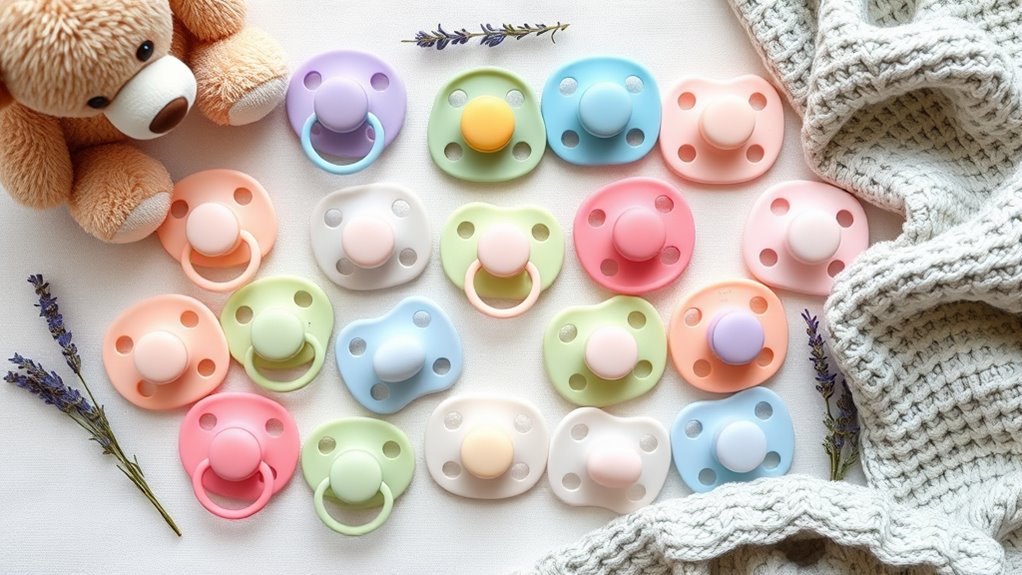

Silicone pacifiers differ mainly in nipple shape, one-piece versus multi-piece construction, and how well they match your baby’s age and palate. My top overall pick is the NUK Timeless Comfy One-Piece Pacifier, which combines an orthodontic silicone nipple with a seamless, easy-to-clean body at a sensible pack size. The Philips Avent Soothie stands out for newborns thanks to its hospital-familiar shape, while the BIBS De Lux and FRIGG Daisy SilkySoft win on Scandinavian design and soft nipple feel. The core tradeoff in this category is between orthodontic shaping that supports palate development and simpler round or cherry nipples some babies accept more readily. There’s also a durability-versus-design tension: one-piece silicone models last longer and clean more easily, while multi-piece fashion pacifiers look better but trap moisture in crevices. Keep reading for the full breakdown of all 15 options.

Turn the school run and nap time into listening time
- Thousands of audiobooks, podcasts and originals
- Listen on your phone, tablet or Echo — also offline
- Cancel anytime
Complete the kit


Key Takeaways
- One-piece silicone designs (NUK Timeless, Chicco PhysioForma, Dr. Brown’s HappyPaci) dominated the top of my ranking because they have no joints where moisture or bacteria collect and they clean faster than multi-piece rivals.
- Orthodontic nipple shapes from NUK and Chicco earned higher marks for palate support, but the Philips Avent Soothie and BIBS round nipples proved better picks for newborns who reject flattened shapes.
- Age sizing matters more than brand: the Tommee Tippee Ultra-Light lineup ranks differently at 0–6 months versus 18–36 months because the larger shield and stiffer nipple suit toddlers but frustrate younger babies.
- Scandinavian fashion picks (BIBS De Lux, FRIGG Daisy, Itzy Ritzy) cost meaningfully more per pacifier and come in smaller packs, making them premium style choices rather than value buys.
- The Nuby Softees Pacifier & Teether was the only hybrid option, and it underperformed as a dedicated pacifier — a useful signal that two-function products compromise on both.


| silicone pacifier | Material | Age range | Pack size |
|---|---|---|---|
| Tommee Tippee Ultra-Light Stay | BPA-free silicone | Newborn, baby, and toddler | 4 pacifiers |
| NUK Timeless Comfy Pacifier | 100% medical-grade silicone | 0–6 months | 5 pacifiers |
| Chicco PhysioForma One-Piece S | 100% silicone | 16–24 months | 2 pacifiers |
| Philips Avent Soothie Pacifier | Medical-grade silicone | 0–3 months | 4 pacifiers |
| NUK Comfy Orthodontic Silicone | 100% medical-grade silicone | 0–6 months | 5 pacifiers |
| Suavinéx SX PRO Silicone Pacif | 100% silicone | 0–6 months | — |
| Chicco PhysioForma One-Piece S | 100% silicone | 6–16 months | 2 |
| BIBS Pacifiers | Silicone | — | — |
| FRIGG Daisy SilkySoft Silicone | 100% medical-grade silicone | 0–6 months | — |
| NUK 100% Silicone Comfy Orthod | 100% medical-grade silicone | 0–6 months | — |
| Philips Avent Soothie Newborn | Medical-grade silicone | 0–3 months | 4 pacifiers |
| Tommee Tippee Ultra-Light Paci | BPA-free silicone | 18–36 months | — |
| Itzy Ritzy Silicone Pacifiers | 100% food grade silicone | 6–18 months | — |
| Nuby Silicone Softees Pacifier | 100% soft silicone | 0+ months | — |
| Dr. Brown’s HappyPaci Silicone | 100% silicone | 0–6 months | 4 pacifiers |
More Details on Our Top Picks
Tommee Tippee Ultra-Light StayPut Pacifier, Pack of 4
The Ultra-Light StayPut is the pick for caregivers who want to keep a pacifier’s weight down. Its symmetrical nipple works whichever way it lands, while the curved, ventilated shield is shaped to sit between the nose and chin and let air reach the skin. Compared with Philips Avent Soothie, which is sized specifically for newborns up to 3 months, Tommee Tippee lists this option for newborns through toddlers, giving it a broader age range. The tradeoff is that broad sizing may not offer the same age-specific fit as NUK Timeless Comfy’s 0–6 month design or Chicco PhysioForma’s toddler version. The pack of four also means a larger supply than some families need at once.
Pros:- Lightweight construction is designed to reduce the pacifier’s pull at the mouth
- Symmetrical nipple can be placed either way up
- Curved shield has air holes to let skin breathe
- BPA-free silicone and a stated newborn-to-toddler age range
Cons:- Broad age range may not provide the age-specific sizing of NUK Timeless Comfy or Chicco PhysioForma
- Four pacifiers may be more than some households need
Best for: Caregivers seeking a light, symmetrical silicone pacifier across multiple early age stages
Not ideal for: Families who prefer a pacifier sized for one specific age or need only one or two spares
- Material:BPA-free silicone
- Construction:One-piece
- Pack size:4 pacifiers
- Nipple design:Symmetrical
- Shield:Curved with air holes
- Weight claim:20% lighter than Ultra-light Original; 50% lighter than leading one-piece silicone brand
- Age range:Newborn, baby, and toddler
Our verdict“Choose this Tommee Tippee if a light, reversible design matters more than age-specific sizing.”
NUK Timeless Comfy Pacifier, 100% Silicone One-Piece Design, BPA-Free, 5-Pack (0-6 Months)
For a newborn-focused option, NUK Timeless Comfy pairs a one-piece medical-grade silicone body with an orthodontic, breast-like nipple shaped for a young baby’s palate. Its heart-shaped shield leaves room beneath the nose, and top-rack dishwasher compatibility gives caregivers a straightforward cleaning option. Compared with the broader age range listed for Tommee Tippee Ultra-Light StayPut, NUK’s 0–6 month sizing makes its intended stage clearer, though it also means moving to another model as a baby grows. Philips Avent Soothie is an alternative for the narrower newborn-to-3-month window and can be sterilized in boiling water or a sterilizer. NUK’s five-pack offers more spares than Chicco’s two-pack, but it arrives in a plain poly bag rather than retail packaging.
Pros:- One-piece, 100% medical-grade silicone construction
- Orthodontic nipple is shaped to fit a baby’s palate
- Heart-shaped shield leaves space beneath the nose
- Five pacifiers and top-rack dishwasher compatibility
Cons:- 0–6 month sizing means an older baby will need a different model
- Ships in a bulk-free poly bag rather than a retail box
Best for: Caregivers choosing a silicone pacifier specifically for babies from birth through six months who want multiple spares
Not ideal for: Families seeking one pacifier to cover later stages or who want presentation-ready retail packaging
- Material:100% medical-grade silicone
- Construction:One-piece
- Age range:0–6 months
- Pack size:5 pacifiers
- Nipple:Breast-like orthodontic shape
- Shield:Heart-shaped
- Cleaning:Top-rack dishwasher-safe
- Origin:Made in the USA
- Packaging:Bulk-free sealed poly bag
Our verdict“Pick NUK Timeless Comfy for a newborn-stage design with a larger set of spares than Chicco’s two-pack.”
Chicco PhysioForma One-Piece Silicone Orthodontic Pacifiers, 16–24 Months, 2-Pack
Chicco PhysioForma is the age-specific choice for toddlers from 16 to 24 months. Its one-piece silicone construction avoids seams or joints, and the ventilated shield is designed to limit moisture buildup against the skin. A reusable microwave-safe sterilizing case doubles as a carry case, a practical distinction from the Philips Avent Soothie, which is intended for newborns and uses a different sterilizing setup. Compared with Tommee Tippee Ultra-Light StayPut, whose stated age span runs from newborn through toddler, Chicco gives a clearer fit target but covers a much narrower stage. The two-pack is a smaller supply than NUK Timeless Comfy’s five-pack, and this model will not suit younger babies. Its product information also provides no independent review details to help judge fit beyond the listed features.
Pros:- Designed for the 16–24 month age stage
- One-piece construction has no seams or joints
- Ventilated shield is designed to reduce moisture buildup
- Reusable microwave-safe case serves for sterilizing and carrying
Cons:- Age range is limited to 16–24 months
- Two pacifiers provide fewer spares than the NUK five-pack
- Product information offers no independent review details
Best for: Caregivers of 16–24-month-olds who want a toddler-sized one-piece silicone pacifier and a portable sterilizing case
Not ideal for: Families with younger babies or anyone seeking a larger multi-pack
- Material:100% silicone
- Construction:One-piece
- Age range:16–24 months
- Pack size:2 pacifiers
- Nipple:Orthodontic
- Shield:Ventilated
- Sterilizing case:Reusable and microwave-safe; sterilizes in about 3 minutes
- Origin:Italy
- Other material details:BPA-free and latex-free
Our verdict“Choose Chicco PhysioForma when toddler-specific sizing and the included sterilizing case matter more than pack size.”
Philips Avent Soothie Pacifiers for Newborns, 0–3 Months, BPA-Free, 4-Pack
Philips Avent Soothie keeps its use case tightly focused: a one-piece medical-grade silicone pacifier for babies 0–3 months. The symmetrical nipple can face either way, and the pacifier can be sterilized in a sterilizer or boiling water. Those cleaning options give it a different appeal from NUK Timeless Comfy, which offers top-rack dishwasher cleaning and is sized through six months. Soothie’s narrower age window can suit caregivers who want a newborn-specific option, but it also means replacing the model as the baby grows. The pack includes four pacifiers in lilac and pink; by comparison, Chicco PhysioForma’s two-pack is aimed at much older babies and includes a case. Philips Avent’s guidance to replace after four weeks of use also calls for more frequent planned replacement than the other listed product details specify.
Pros:- One-piece medical-grade silicone construction
- Symmetrical nipple supports either-way placement
- Can be sterilized in a sterilizer or boiling water
- Four pacifiers in two colors
Cons:- Designed only for babies aged 0–3 months
- Replacement guidance calls for a new pacifier after four weeks of use
Best for: Caregivers of babies aged 0–3 months who want a symmetrical silicone pacifier that can be sterilized by boiling or in a sterilizer
Not ideal for: Families looking for a pacifier sized beyond three months or who want to avoid frequent replacement
- Material:Medical-grade silicone
- Construction:One-piece
- Age range:0–3 months
- Pack size:4 pacifiers
- Nipple:Symmetrical
- Material safety:BPA-free and latex-free
- Colors:2 lilac and 2 pink
- Cleaning:Sterilizer or boiling water
- Replacement guidance:Replace after 4 weeks of use
Our verdict“Choose Soothie for a newborn-specific design and flexible sterilizing options, with its short age window and replacement schedule in mind.”
NUK Comfy Orthodontic Silicone Pacifiers, 0-6 Months, Pink Fashion, 5 Count
NUK Comfy brings the same core newborn-to-six-month approach as NUK Timeless Comfy, with a Pink Fashion look for caregivers who want a coordinated color choice. Both use one-piece medical-grade silicone, an orthodontic breast-like nipple, and a heart-shaped shield designed to leave space beneath the nose. The five-count and top-rack dishwasher compatibility make this a practical set for families who want spares on hand. Compared with Philips Avent Soothie, NUK covers through six months rather than three, but Soothie offers sterilization by boiling water or in a sterilizer. NUK’s care guidance is limited to the dishwasher’s top rack, and the bulk-free poly bag lacks a retail box. This option makes the most sense when its color and larger set suit the household; its listed details otherwise closely track NUK Timeless.
Pros:- Five pacifiers provide several spares
- One-piece, 100% medical-grade silicone construction
- Breast-like orthodontic nipple and heart-shaped shield
- Top-rack dishwasher-safe and made in the USA
Cons:- Suitable only for babies aged 0–6 months
- Dishwasher guidance is limited to the top rack
- Ships in a bulk-free poly bag rather than a retail box
Best for: Caregivers of babies 0–6 months who want a five-pack in a pink style and prefer top-rack dishwasher cleaning
Not ideal for: Families who need older-baby sizing, sterilizer compatibility, or retail-box packaging
- Material:100% medical-grade silicone
- Construction:One-piece
- Age range:0–6 months
- Pack size:5 pacifiers
- Color/style:Pink Fashion, Timeless Collection
- Nipple:Breast-like orthodontic shape
- Shield:Heart-shaped
- Cleaning:Top-rack dishwasher-safe
- Origin:Made in the USA
Our verdict“Choose NUK Comfy for a pink five-pack with newborn-to-six-month sizing and dishwasher cleaning.”
Suavinéx SX PRO Silicone Pacifier, 0-6 Months, Green, 2-Pack
Suavinéx earns its spot with a physiological nipple that mimics breastfeeding and keeps the tongue in a natural position — a genuine advantage for parents worried about nipple confusion during the early months. The Spanish Society of Pediatric Dentistry endorsement gives the oral-development claims some clinical backing that most competitors lack. Compared with the NUK Comfy pacifiers, which also use a breast-like orthodontic shape, the Suavinéx adds a reversible design, so a half-asleep caregiver never has to figure out which way is up. The tradeoff is a narrow 0–6 month age range, meaning you’ll be shopping again mid-year, and the ecosystem pairing with Suavinéx bottles and clips nudges you toward buying into the brand. For breastfed newborns, though, this is one of the most thoughtful designs available.
Pros:- Physiological nipple design supports natural latch and oral development
- Reversible shape eliminates upside-down placement worries
- One-piece silicone construction is ultra-soft and easy to clean
- Endorsed by the Spanish Society of Pediatric Dentistry
Cons:- Limited age range (0–6 months) requires sizing up later
- Coordination with Suavinéx bottles and clips may encourage additional purchases
Best for: Breastfeeding families who want a pacifier that supports a natural latch and won’t interfere with nursing
Not ideal for: Parents wanting a single pacifier to last through the first year — the 0–6 month sizing means a second purchase later
- Brand:Suavinéx
- Material:100% silicone
- Age Range:0–6 months
- Quantity:2 pack
- Nipple Type:Physiological (SX PRO)
- Design Origin:Spain
- Endorsement:Spanish Society of Pediatric Dentistry (SEOP)
Our verdict“If you’re breastfeeding and want a pacifier designed around a natural latch, the SX PRO is the strongest choice in this lineup — just plan to size up at six months.”
Chicco PhysioForma One-Piece Silicone Orthodontic Pacifiers, 6–16 Months, 2-Pack
What sets the Chicco PhysioForma apart isn’t just the orthodontic nipple — several pacifiers here claim that — it’s the included reusable sterilizing case that sanitizes in about three minutes. That’s a real-world difference: compared with the FRIGG Daisy, which explicitly forbids microwave sterilizers, the Chicco turns cleaning from a chore into an afterthought. The ventilated shield also does quiet, useful work by reducing moisture trapped against drooly six-month-old skin, a common source of irritation that solid shields like the Philips Avent Soothie don’t address as directly. The catch is that the sterilizing case assumes you own a microwave, and the 6–16 month window means newborns are out of luck — you’d need a different starter pacifier first.
Pros:- Includes a reusable sterilizing and carry case that works in about 3 minutes
- Ventilated shield helps reduce moisture buildup around the mouth
- Soft, lightweight one-piece silicone construction
- BPA-free and latex-free
Cons:- Designed only for babies 6–16 months
- Microwave required to use the sterilizing case
Best for: Parents of older babies who value quick, on-the-go sterilization and worry about moisture-related skin irritation
Not ideal for: Newborn parents and microwave-free households — the age range and the sterilizing case both rule them out
- Brand:Chicco
- Material:100% silicone
- Age Range:6–16 months
- Pack Size:2
- Construction:One piece
- Shield:Ventilated
- Sterilizing Case:Reusable, microwave safe
- Made In:Italy
- BPA/Latex Free:Yes
Our verdict“For babies past the newborn stage, this is the most hygienic, travel-friendly pick here — provided you have a microwave and don’t need a newborn size.”
BIBS Pacifiers – De Lux Collection, BPA-Free Round Silicone Nipple, Made in Denmark, Set of 2 (Cloud/Black)
The BIBS De Lux is the style play of this roundup — Danish-made, four decades of design heritage, and a muted Cloud/Black colorway that looks nothing like the pastel multi-packs from NUK or Tommee Tippee. Underneath the aesthetics is a round nipple that mimics the breast shape, similar in spirit to the Suavinéx SX PRO but with a cherry-like profile rather than a physiological one. Material safety is a strong point: BPA, PVC, and phthalate-free, with eco-conscious manufacturing that appeals to sustainability-minded buyers. The tradeoffs are real, though. A single size means fit varies by baby, and the firmness of silicone won’t win over babies who gravitate toward the softer feel of natural rubber latex. You’re paying a premium for looks and brand trust as much as function.
Pros:- Safe, non-toxic materials free of BPA, PVC, and phthalates
- Round nipple mimics natural breast shape for comfort
- Trusted Danish brand with over 40 years of design heritage
- Eco-friendly and sustainable manufacturing
Cons:- One size may not fit all ages or developmental stages
- Silicone nipple may not suit babies who prefer natural rubber latex
Best for: Design-conscious parents who want a safe, stylish pacifier and don’t mind paying for Danish craftsmanship
Not ideal for: Babies who prefer soft natural latex nipples, or parents who need precise age-staged sizing
- Brand:BIBS
- Collection:De Lux
- Nipple Shape:Round
- Material:Silicone
- BPA/PVC/Phthalate-Free:Yes
- Country of Origin:Denmark
- Quantity:Set of 2
- Colors:Cloud/Black
Our verdict“Buy the BIBS De Lux if you want a pacifier that looks as considered as it’s built — skip it if your baby needs latex-soft suppleness or staged sizing.”
FRIGG Daisy SilkySoft Silicone Baby Pacifier (Baby Pink/Soft Lilac, 0-6 Months)
The FRIGG Daisy stands out for a detail most brands ignore: a shield with an outward curve that keeps the plastic off baby’s cheeks and chin, working alongside air holes to minimize the drool rash that flat shields — like the Philips Avent Soothie’s — can aggravate. The SilkySoft medical-grade silicone nipple is among the gentlest-feeling options here, and the security handle is a practical touch for grabbing in the dark. But this pampering comes with strict rules: no microwaves, sterilizers, or dishwashers, only boiling-water sanitizing, and FRIGG recommends discarding each pacifier after one to two months. Compared with the dishwasher-safe NUK Comfy five-pack, ownership is noticeably more demanding. You’re choosing skin comfort and material purity over convenience.
Pros:- 100% medical-grade silicone free from BPA, BPS, PVC, and phthalates
- Outward-curved shield keeps plastic off delicate skin
- Air holes and security handle add safety
- Designed and manufactured in Denmark
Cons:- Cannot be cleaned in microwave, sterilizer, or dishwasher
- Needs replacement after 1–2 months of consistent use
Best for: Babies with sensitive skin or a tendency toward drool rash, whose parents don’t mind hand-sanitizing routines
Not ideal for: Busy parents who rely on dishwashers or sterilizers — the boiling-water-only care and frequent replacement will feel like a chore
- Material:100% medical-grade silicone
- Age Range:0–6 months
- Made In:Denmark
- Safety Features:Air holes, security handle, outward-curved shield
- Free From:BPA, BPS, PVC, phthalates
- Care:Boiling water only; no sterilizers, microwaves, or dishwashers
- Replacement:Discard after 1–2 months of consistent use
Our verdict“If your baby’s skin reacts to ordinary shields, the FRIGG Daisy is worth the extra care — otherwise, a dishwasher-safe option like the NUK Comfy is less hassle.”
NUK 100% Silicone Comfy Orthodontic Pacifiers, 0–6 Months, Neutral Fashion, 5 Count
Losing pacifiers is a certainty of parenting, and the NUK Comfy five-pack is built for that reality — more soothers per purchase than any two-pack option here, including the Chicco PhysioForma or the BIBS De Lux. Functionally it holds its own: the breast-like orthodontic nipple and a heart-shaped shield that fits under baby’s nose echo the same oral-development thinking as pricier picks, and top-rack dishwasher safety beats the FRIGG Daisy’s boiling-water-only routine handily. The compromises are about polish rather than performance: the bulk poly-bag packaging makes it a poor baby-shower gift next to the BIBS presentation, and the neutral colors are plain compared with designer options. As a working stash for the diaper bag, car, and crib, though, nothing in this lineup matches the practicality.
Pros:- Breast-like nipple shape with orthodontic design
- Five pacifiers per pack for maximum household coverage
- BPA-free medical-grade silicone
- Top-rack dishwasher-safe
Cons:- Bulk poly-bag packaging looks cheap and is unsuitable for gifting
- Plain neutral styling compared with premium alternatives
Best for: Parents who want affordable backup pacifiers stashed everywhere and prefer dishwasher-safe cleanup
Not ideal for: Gift-givers or design-focused buyers — the plain poly-bag packaging and neutral colors lack presentation
- Material:100% medical-grade silicone
- Age Range:0–6 months
- Count:5
- Nipple Shape:Breast-like orthodontic
- Shield:Heart-shaped
- BPA-Free:Yes
- Care:Top-rack dishwasher-safe
- Packaging:Sealed plastic poly bag
Our verdict“This is the practical workhorse pick — buy it to stock every room and the diaper bag, and reach for something prettier when presentation matters.”
Philips Avent Soothie Newborn Pacifiers, 0–3 Months, BPA-Free, Green, 4-Pack
The Soothie’s one-piece medical-grade silicone build is the same style many hospitals hand out, which makes this the safest bet for brand-new newborns who have never taken a pacifier before. Compared with the Dr. Brown’s HappyPaci, which spans 0–6 months, the Soothie is sized more precisely for the smallest babies, so the shield sits better against a tiny face. The symmetrical nipple means there’s no wrong way to insert it — a genuine relief during 3 a.m. soothing. The tradeoff is real, though: the 4-week replacement interval adds recurring cost, and the 0–3 month sizing means you’ll be shopping again within a season, unlike the Itzy Ritzy 6–18 month option.
Pros:- One-piece design leaves no crevices for trapped milk or water
- Medical-grade, BPA-free and latex-free silicone safe for newborns
- Symmetrical nipple works in any orientation
- Four-pack covers the inevitable drops and washes
Cons:- Strict 0–3 month age range means quick outgrowing
- Manufacturer recommends replacing every 4 weeks
Best for: Parents of newborns who want the hospital-proven one-piece shape from day one
Not ideal for: Parents who want one purchase to last months — the sizing and 4-week replacement cycle get expensive
- Age Range:0–3 months
- Material:Medical-grade silicone
- BPA-Free:Yes
- Latex-Free:Yes
- Design:One-piece with symmetrical nipple
- Color:Green
- Pack Size:4 pacifiers
- Cleaning:Sterilizer or boiling water
- Replacement Interval:Every 4 weeks
Our verdict“Buy this if you want the familiar hospital-classic shape for a newborn, and accept that you’ll replace it quickly as baby grows.”
Tommee Tippee Ultra-Light Pacifier, 18-36 Months, Silicone, Pack of 4
Most silicone pacifiers on this list stop at 6 or 18 months, which leaves toddler families underserved — that’s exactly the gap this pick fills. The 18–36 month sizing is the widest upper range here, and the ultra-lightweight body does something the Philips Avent Soothie doesn’t: it stays put in a mouth rather than sliding out and hitting the floor. Fewer drops means fewer germ pickups and less rinsing throughout the day. The curved shield with air holes also addresses the skin irritation older toddlers with drool and teeth can develop. Compared with the Chicco PhysioForma 16–24 month option, this covers a longer window, though silicone skeptics should note that toddlers accustomed to natural rubber latex nipples may reject the firmer feel.
Pros:- Ultra-light design keeps the pacifier in place, reducing drops
- Air holes in the curved shield prevent drool rash and irritation
- Symmetrical nipple sits correctly every time
- BPA-free silicone sized specifically for toddlers
Cons:- Silicone feel may not suit babies used to latex nipples
- Bright toddler-friendly styling may not appeal to minimalist parents
Best for: Toddler parents struggling to find a pacifier sized appropriately past 18 months
Not ideal for: Toddlers who strongly prefer the softer give of natural rubber latex nipples
- Brand:Tommee Tippee
- Age Range:18–36 months
- Material:BPA-free silicone
- Quantity:4 pacifiers
- Nipple Type:Symmetrical
- Shield Feature:Air holes for breathability
- Weight:Ultra-lightweight
Our verdict“This is the pick for families whose toddlers have outgrown nearly every other silicone pacifier on the shelf.”
Itzy Ritzy Silicone Pacifiers for Babies 6-18 Months, Set of 2 (Buttercream & Toast)
If the Philips Avent Soothie is function-first and forgettable-looking, this two-pack is the opposite: neutral Buttercream and Toast tones with a braid detail that reads as a deliberate accessory rather than baby gear. The substance matches the styling — 100% food-grade silicone, BPA and PVC free, ASTM-tested, with two large vent holes and a collapsible handle that reduces snagging risk. The 6–18 month range bridges nicely between newborn picks and the Tommee Tippee toddler option. The tradeoffs are honest ones: you get only two pacifiers where competitors give four or five, and the symmetrical nipple won’t satisfy parents who specifically want an orthodontic shape like the Chicco PhysioForma line. You’re paying a style premium and accepting fewer backups.
Pros:- 100% food-grade silicone, BPA and PVC free
- ASTM safety certified with vent holes and collapsible handle
- Neutral, sophisticated color palette with braid detail
- Wide 6–18 month age coverage
Cons:- Only two pacifiers per set for the money
- Symmetrical nipple won’t suit babies needing orthodontic shaping
Best for: Style-conscious parents who want neutral-toned pacifiers that coordinate with outfits and photos
Not ideal for: Parents who lose pacifiers constantly — a two-pack runs out fast compared with 4- and 5-packs
- Brand:Itzy Ritzy
- Material:100% food grade silicone
- Age Range:6–18 months
- Quantity:2 pacifiers
- Colors:Buttercream & Toast
- Safety Certification:ASTM safety standards
- BPA-Free:Yes
- PVC-Free:Yes
- Handle:Collapsible with braid detail
Our verdict“Choose this when aesthetics matter as much as safety, but know you’re getting style over quantity.”
Nuby Silicone Softees Pacifier & Teether – 5 Pack
The clever move here is the textured handle that doubles as a teether — a design no other pick in this lineup offers. Around the four-to-six month mark, when babies start gnawing on everything, this dual function means one product covers two jobs, and the five-pack gives you the most backups of any option here, beating even the NUK 5-packs on versatility. The 100% soft silicone construction and safety air holes make it gentle enough from birth. The honest tradeoff: unlike the Philips Avent Soothie or Dr. Brown’s HappyPaci, this one has a shorter real-world track record with fewer established reputations behind it, and parents who want an orthodontic or bottle-matched nipple shape will find the generic soother form less targeted. As a practical, budget-minded workhorse, though, it holds up.
Pros:- Textured handle doubles as a teether for sore gums
- Largest pack size in the roundup at 5 pacifiers
- 100% soft silicone gentle on newborn gums
- Safety air holes designed for use from birth
Cons:- Newer product with a shorter proven reputation than category stalwarts
- Generic soother shape lacks orthodontic or bottle-matched design
Best for: Parents approaching the teething phase who want soothing and gum relief in one product
Not ideal for: Parents who prioritize a long-established brand track record or orthodontic nipple shaping
- Material:100% soft silicone
- Age Range:0+ months
- Quantity:5 pacifiers
- Features:Textured teething handle
- Safety:Two safety air holes
- Dual Function:Pacifier and teether in one
Our verdict“This pick makes the most sense for budget-savvy parents whose babies are heading into teething territory and need quantity plus function.”
Dr. Brown’s HappyPaci Silicone Pacifier, 4-Pack, 0-6 Months
The standout feature is nipple-shape continuity: the bulb shape mirrors Dr. Brown’s bottle nipples, so bottle-fed babies are far more likely to accept it without a fight — something the Nuby Softees and its generic soother shape can’t claim. The contoured butterfly shield curves away from the face with breathable holes, a step up from flatter shields like the Soothie’s when it comes to reducing drool rash. Cleaning is genuinely easy too: the one-piece build is dishwasher-safe on the top rack and sterilizer-safe, with no hollow parts that trap water like some handled designs. The compromise is the open-back bulb design, which parents who prefer a closed, traditional soother silhouette may not love, and unlike the Tommee Tippee toddler pick, it tops out at 6 months.
Pros:- Bulb shape matches Dr. Brown’s bottle nipples for easier acceptance
- Contoured butterfly shield with breath holes reduces skin irritation
- One-piece design is dishwasher and sterilizer safe with no trapped water
- Soft silicone withstands early biting
Cons:- Open-back design may not appeal to parents preferring closed soothers
- Age range ends at 6 months, requiring a new pacifier soon after
Best for: Bottle-fed babies already using Dr. Brown’s bottles who need a pacifier they’ll accept instantly
Not ideal for: Parents who dislike open-back pacifier designs or need sizing beyond 6 months
- Material:100% silicone
- Age Range:0–6 months
- Pack Size:4 pacifiers
- Colors:Gray, Green, Ecru
- Nipple Shape:Bulb (matches Dr. Brown’s bottles)
- Shield:Contoured butterfly shape with breathable holes
- Safety:BPA and phthalate-free
- Cleaning:Dishwasher safe (top rack), sterilizer safe
Our verdict“If your baby drinks from Dr. Brown’s bottles, this is the path of least resistance to pacifier acceptance — just plan for the next size up at 6 months.”

How We Picked
I evaluated each pacifier on four criteria that actually drive buying decisions. Nipple design and acceptance came first: whether the shape is orthodontic (flattened, asymmetric) or symmetric/round, and how soft the silicone feels, since babies who refuse a shape make every other feature irrelevant. Construction quality came second — one-piece silicone molds beat multi-piece assemblies for hygiene and durability, and I checked shield ventilation, ring or button handling, and whether the silicone felt prone to tearing or tackiness over time. Age-appropriate sizing was third, because a pacifier that is the right shape but wrong size can gag a newborn or fall out of a toddler’s mouth. Finally, I weighed pack value and replaceability: how many pacifiers you get and how easily you can reorder the exact same model your baby has bonded with.
The ranking reflects a simple priority order: safe, hygienic construction first, nipple acceptance second, then value and style. That’s why the one-piece orthodontic models cluster at the top, newborn-specific shapes fill the middle, and the fashion-forward and hybrid options sit lower — not because they’re poorly made, but because they trade practical benefits for aesthetics or versatility that most buyers don’t need.
Factors to Consider When Choosing Silicone Pacifiers
Before settling on a specific pacifier, it helps to understand the structural choices in this category — they explain most of the price and performance differences you’ll see across the 15 products above.One-Piece vs. Multi-Piece Construction
This is the single biggest decision, and it affects hygiene, safety and lifespan. A one-piece silicone pacifier like the NUK Timeless or Chicco PhysioForma is molded as a single object, so there are no seams where saliva, milk residue or mold can hide — a quick rinse and they’re clean. Multi-piece designs like the BIBS De Lux or Suavinéx SX PRO join the nipple, shield and ring mechanically, which creates small gaps that need more careful washing and periodic inspection for loosening. One-piece models also satisfy the safest crib-sleep guidance, since nothing can detach. The tradeoff is aesthetic: multi-piece pacifiers offer wood-look accents, fashion colors and a more designed appearance. If your priority is low-maintenance hygiene for daily use, go one-piece; if you want a pacifier that coordinates with outfits and you don’t mind stricter cleaning, multi-piece is reasonable.
Nipple Shape: Orthodontic vs. Round
Orthodontic nipples (NUK, Chicco) are flattened and often asymmetric, designed to sit against the tongue and support natural palate development — most pediatric dentists favor this shape for longer-term use. Round or cherry nipples (Philips Avent Soothie, BIBS) are symmetrical, which means there’s no wrong way to insert them, and many newborns accept them faster because the shape resembles a natural latch. The common mistake here is assuming orthodontic is automatically better for your baby; some infants flatly reject asymmetric nipples and you’ll cycle through three models before finding one they keep. A practical strategy is to start with whichever shape matches your feeding method — bottle-fed babies often accept the same brand’s pacifier nipple — and keep a second shape as backup. Whichever you choose, the nipple should be soft enough to flex but firm enough that a baby can’t collapse or chew through it once teeth arrive.
Age and Size Matching
Every pacifier in this roundup is age-graded, and those bands are not marketing decoration. A 0–6 month nipple in a toddler’s mouth gets chewed to pieces within weeks, while an 18–36 month model in a newborn’s mouth can gag them or simply be too bulky to hold. The mistake most first-time parents make is buying a large multi-pack in one size, then repurchasing three months later when their baby moves up a band — check whether your preferred brand covers the full age range before committing (Tommee Tippee and Chicco both do). Size transitions are also the natural moment to reassess shape, since jaw development changes what fits comfortably around the one-year mark. Budget for at least two sizes in the first year. And if you’re weaning, note that toddler-sized pacifiers exist partly to limit the damage of prolonged use — don’t jump straight to an oversized model hoping it discourages the habit entirely.
Silicone Quality and Replacement Cycles
Not all silicone is equal, and the difference shows up weeks after purchase. Higher-grade medical silicone stays smooth and springy; cheaper formulations turn tacky, cloudy or yellowed after repeated sterilizing, and a tacky nipple is a sign it’s degrading and holding residue. Regardless of quality, silicone pacifiers have a finite life — plan to replace them every four to eight weeks with daily use, and immediately if you see tears, pinholes or texture changes, especially once teeth erupt. This is why pack count matters for value calculations: a five-pack of mid-priced pacifiers often outlasts a two-pack of premium ones in real cost-per-month terms. Always confirm the product is BPA-free and intended for repeated sterilization (boiling, steam or UV). And buy duplicates of the exact model your baby accepts — a pacifier-loving infant who loses their favorite at bedtime is a genuinely miserable situation to avoid.
Shield Design and Practical Details
The shield is where daily-use comfort gets decided, and it’s the most overlooked factor before purchase. Look for curved shields that follow the face (Chicco, Suavinéx do this well) rather than flat discs that press into the nose and chin, and check that the shield is wide enough to meet safety guidance against ingestion. Ventilation holes matter for skin — trapped saliva behind a flat, unventilated shield causes drool rash, one of the most common complaints with budget models. A ring or knob you can grip with one hand at 3 a.m. is worth more than it sounds; ultra-light models like the Tommee Tippee StayPut are easier for young babies to hold in place but can be slippery to retrieve. Finally, consider whether the pacifier will fit in your sterilizer or carrying case — oversized fashion handles sometimes don’t.
When to Pay More (and When Not To)
Premium pacifiers — the BIBS, FRIGG and Suavinéx tier — buy you design, refined materials and often a nicer shield contour. They do not buy better silicone safety, since even the budget options in this roundup meet the same material standards. Pay more if your baby has rejected several mainstream shapes and you need to try a different nipple geometry, or if the pacifier will be visible in photos and daily life and aesthetics matter to you. Don’t pay more for a first pacifier, because there’s a real chance your newborn refuses it regardless of price — this is the single most common wasted purchase in the category. A smarter approach: start with an inexpensive multi-pack of orthodontic and round shapes, identify what your baby keeps in their mouth, then invest in premium versions of that shape. Also skip any model marketed as a pacifier-teether hybrid if you specifically need a pacifier; as the Nuby showed, hybrids compromise the soothing function.
Frequently Asked Questions
How many silicone pacifiers should I buy at once?
Plan on six to eight pacifiers in rotation for a newborn: enough to cover the crib, diaper bag, car and washing cycle, with spares for the inevitable losses. Multi-packs like the NUK five-packs or Philips Avent four-packs exist precisely because a single pacifier is never enough in practice. That said, don’t buy six of one model before confirming your baby accepts the shape — buy one or two small packs of different nipple shapes first, then bulk-buy the winner. Also remember that silicone degrades with use, so a large stockpile should be rotated rather than stored indefinitely; silicone can dry and stiffen in storage over a couple of years. Replace every active pacifier every four to eight weeks.
My baby keeps spitting out their pacifier — is it the shape or the size?
Usually the shape, but size is the second suspect. Newborns with a strong gag reflex will eject anything too long or bulky, which points to size — drop down an age band or choose a newborn-specific model like the Philips Avent Soothie. If size is right but the pacifier still won’t stay, the nipple shape is likely the problem: babies who breastfeed often reject flat orthodontic nipples in favor of round ones that mimic a natural latch, while bottle-fed babies usually prefer whichever shape their bottle nipple resembles. Try one shape from each camp before concluding your baby is simply a pacifier refuser. Weight also plays a role — ultra-light designs like the Tommee Tippee StayPut are made specifically for young babies who can’t hold heavier models in place.
Are one-piece silicone pacifiers really safer than multi-piece ones?
They carry a structural safety advantage, yes. A one-piece mold like the NUK Timeless or Dr. Brown’s HappyPaci has no nipple-to-shield joint that can loosen, no trapped moisture between components, and nothing to detach and become a choking hazard — which is why one-piece designs align with the safest sleep guidance. Multi-piece pacifiers from reputable brands still pass safety testing, so this isn’t a matter of certified versus dangerous; it’s about failure modes over months of use and sterilizing cycles. The practical difference is maintenance: one-piece models need a rinse and occasional boil, while multi-piece models benefit from disassembled cleaning and regular checks for loose fittings. If you’re a low-effort cleaner or plan to keep pacifiers past six months, one-piece is the safer and simpler bet.
When should I switch from a newborn pacifier to the next size up?
Follow the manufacturer’s age bands rather than your baby’s preference, because the sizing reflects nipple length and shield width relative to airway and jaw development. Most brands mark the first transition around six months (NUK, Chicco and Tommee Tippee all do), with a second around 16–18 months. The signs your baby has outgrown a size are subtle: increased chewing on the nipple, the shield leaving marks on the face, or the pacifier suddenly falling out constantly. Don’t delay the switch to keep a favorite model — an undersized nipple encourages chewing, and a chewed silicone nipple is a degradation risk. If you’re planning to wean off pacifiers entirely, many parents skip the toddler size around the one-year mark and treat that age band transition as the natural off-ramp.
Is it worth paying extra for designer brands like BIBS or FRIGG?
Only for specific reasons, not for quality alone. BIBS, FRIGG and Suavinéx deliver genuinely nicer design, refined shield contours and distinctive colors, but their silicone meets the same safety standards as mid-priced options, and you get fewer pacifiers per pack. The value case exists if your baby has already rejected mainstream shapes and a different nipple geometry is worth trying, or if you want a pacifier that photographs well and doesn’t scream baby gear. Where premium brands underperform is economy: two premium pacifiers cost roughly what a five-pack of NUK or Dr. Brown’s does, and since silicone needs replacing every couple of months regardless of price, the recurring cost adds up. A reasonable split is one premium two-pack for outings and photos, backed by an inexpensive multi-pack for everyday rotation.
Conclusion
The right choice here depends less on brand loyalty than on your baby’s age and which tradeoff you’d rather live with. For best overall, the NUK Timeless Comfy One-Piece is my top recommendation — it combines orthodontic shaping, hygienic one-piece construction and a practical five-pack, which is why it leads this ranking. The best value pick is the Dr. Brown’s HappyPaci 4-Pack, which delivers the same one-piece silicone construction at a lower cost per pacifier, with the NUK Comfy multi-packs close behind. For newborns and first-time parents, the Philips Avent Soothie is the safest starting point thanks to its hospital-familiar shape and symmetric nipple that most young babies accept quickly. The best premium options are the BIBS De Lux and FRIGG Daisy SilkySoft — buy them for design and nipple softness, not durability per dollar. For specific needs: toddlers do best with the Tommee Tippee Ultra-Light 18–36 month model, palate-conscious long-term users should choose the Chicco PhysioForma in the right age band, and style-minded parents of 6–18 month olds will like the Itzy Ritzy set. Whatever you pick, buy two of them — the pacifier your baby loves is the one that will go missing.
Halloween Picks
halloween
As an affiliate, we earn on qualifying purchases.