
The best ride-on toy for most families is the First Ride On 36V Two-Seater Kids Electric UTV, which pairs a roomy two-seat design with a more capable electric format. For younger children or simpler play, the VEVOR Toddler Push Car offers music, a horn, and under-seat storage without requiring a powered vehicle, while the FanttikRide N7 Pro Wiggle Car gives kids an active, pedal-free way to move. The main choice is between powered speed and features, hands-on movement, and toys designed for smaller spaces or early riders. Age fit, supervision needs, storage, and the surface where a child will ride can matter as much as the toy’s headline features. Read on for the full breakdown of all 15 picks and guidance on matching a ride-on to your child and home.

Turn the school run and nap time into listening time
- Thousands of audiobooks, podcasts and originals
- Listen on your phone, tablet or Echo — also offline
- Cancel anytime
Complete the kit


Key Takeaways
- The lineup’s strongest all-around format is a two-seater electric UTV: the First Ride On 36V models suit families who want a larger powered ride, while their size and power make them a less simple fit for very young beginners.
- Ride-on play does not have to mean batteries: the VEVOR push car, CAT Excavator Push Car, and Little Tikes Tractor & Cart favor child-powered or parent-guided play over electric driving.
- Wiggle cars and the drift kart offer a different kind of movement: the FanttikRide N7 Pro and Lil’ Rider use body motion, while the Razor Crazy Cart Shuffle adds a more active go-kart style.
- Some picks are built around a play theme rather than all-purpose driving: the Step2 roller coaster, JCB excavator, and CAT excavator suit children drawn to specific kinds of imaginative play.
- Two products appear in multiple colors, not as different ride formats: the blue and pink FanttikRide N7 Pro share a role, as do the First Ride On 36V UTV color variants, so buyers should choose by style and fit rather than treating each color as a new category.
| First Ride On 36V Two-Seater Kids Electric UTV, 400W, Black Camo |  | Best for Outdoor Two-Rider Adventures | Recommended age: 6–10 years | Seating: Two seats | Battery: 36V 9Ah | VIEW LATEST PRICE | See Our Full Breakdown |
| FanttikRide N7 Pro Electric Wiggle Car with Flashing Wheels, Blue |  | Best for Versatile Indoor and Outdoor Play | Age range: 36 months–12 years | Motor: 45W | Battery: 12V | VIEW LATEST PRICE | See Our Full Breakdown |
| First Ride On 36V Two-Seater Kids Electric UTV, Cobalt Blue |  | Best for Older Children Sharing a UTV | Recommended age: 6–12 years | Seating capacity: 2 | Motor: Dual 200W motors | VIEW LATEST PRICE | See Our Full Breakdown |
| VEVOR Toddler Ride-On Push Car with Music, Horn, and Under-Seat Storage |  | Best for First-Time Toddler Riders | Recommended age: 19 months–3 years | Material: PP plastic | Maximum weight capacity: 48.5 lb (22 kg) | VIEW LATEST PRICE | See Our Full Breakdown |
| First Ride On 36V Two-Seater Kids’ Electric UTV, Pink |  | Best for Families Who Prefer a Pink UTV | Recommended age: 6 years and up | Seating: Two seats | Battery: 36V 9Ah | VIEW LATEST PRICE | See Our Full Breakdown |
| Step2 Up & Down Rapid Ride & Hide Kids Roller Coaster with 9-Foot Track |  | Best for Active, Self-Directed Play | Age range: 2–6 years | Track length: 9 ft | Dimensions: 12.75 in H × 110 in W × 27 in D | VIEW LATEST PRICE | See Our Full Breakdown |
| First Ride On JCB 3CX 24V Ride-On Excavator Toy |  | Best for Construction-Themed Versatility | Recommended age: 3 years and up | Battery: 24V rechargeable | Motors: Dual 120W | VIEW LATEST PRICE | See Our Full Breakdown |
| First Ride On Ford Bronco Raptor 24V Two-Seater Ride-On Truck with Remote Control, Pink |  | Best for Shared Rides | Recommended age: 3–8 years | Voltage: 24V | Seating: Two-seater | VIEW LATEST PRICE | See Our Full Breakdown |
| Best Ride On Cars CAT Excavator Push Car |  | Best for Young Toddlers | Recommended age: 12 months to 3 years | Type: Kids’ push ride-on | Material: Plastic | VIEW LATEST PRICE | See Our Full Breakdown |
| Kid Trax Marvel Spidey 6V Bumper Car Ride-On Toy |  | Best for Slow Indoor Spinning | Age range: 18 months to 4 years | Maximum weight: 66 lbs | Battery: 6V rechargeable | VIEW LATEST PRICE | See Our Full Breakdown |
| Gotrax RT1 Kids Electric ATV Ride-On Toy |  | Best for Beginner Electric Riding | Recommended age: 1.5–4 years | Battery: 12V 4.5Ah rechargeable lead-acid | Stated battery life: Up to 80 minutes | VIEW LATEST PRICE | See Our Full Breakdown |
| Razor Crazy Cart Shuffle Kid-Powered Drifting Go-Kart |  | Best for Active Drifting Play | Recommended age: 4–12 years | Power: Kid-powered; no batteries required | Frame: Adjustable length | VIEW LATEST PRICE | See Our Full Breakdown |
| Lil’ Rider Wiggle Car Ride-On Toy, Blue |  | Best Battery-Free Everyday Pick | Recommended age: 3 years and up | Power source: Kid-powered; no batteries, gears, or pedals | Materials: Plastic body with metal frame | VIEW LATEST PRICE | See Our Full Breakdown |
| Little Tikes Tractor & Cart Foot-to-Floor Ride-On Toy |  | Best for Pretend Farm Play | Age range: 18 months–5 years | Movement: Foot-to-floor | Material: Plastic | VIEW LATEST PRICE | See Our Full Breakdown |
| FanttikRide N7 Pro Electric Wiggle Car with Flashing Wheels, Pink |  | Best Feature-Rich Electric Wiggle Car | Recommended age: 36 months–12 years | Speed range: 1.9–4 mph | Maximum weight capacity: 150 lbs | VIEW LATEST PRICE | See Our Full Breakdown |
| ride on toys for kid | Recommended age | Dimensions | Maximum weight capacity |
|---|---|---|---|
| First Ride On 36V Two-Seater K | 6–10 years | 55 × 35 × 31 in | — |
| FanttikRide N7 Pro Electric Wi | — | — | 150 lb |
| First Ride On 36V Two-Seater K | 6–12 years | — | — |
| VEVOR Toddler Ride-On Push Car | 19 months–3 years | 20.08 × 9.84 × 17.72 in | 48.5 lb (22 kg) |
| First Ride On 36V Two-Seater K | 6 years and up | 55 × 35 × 31 in | — |
| Step2 Up & Down Rapid Ride & H | — | 12.75 in H × 110 in W × 27 in D | — |
| First Ride On JCB 3CX 24V Ride | 3 years and up | — | — |
| First Ride On Ford Bronco Rapt | 3–8 years | — | — |
| Best Ride On Cars CAT Excavato | 12 months to 3 years | 11 × 21 × 14.3 inches | Listed as 6.2 pounds |
| Kid Trax Marvel Spidey 6V Bump | — | — | — |
| Gotrax RT1 Kids Electric ATV R | 1.5–4 years | 28.34 × 15.74 × 17.91 inches | 66 lbs |
| Razor Crazy Cart Shuffle Kid-P | 4–12 years | 37 × 19.84 × 16.81 inches | 150 pounds |
| Lil’ Rider Wiggle Car Ride-On | 3 years and up | 30 × 13.5 × 16 inches | 110 lbs |
| Little Tikes Tractor & Cart Fo | — | 44.88 L × 18.44 W × 18.44 H inches | 50 pounds |
| FanttikRide N7 Pro Electric Wi | 36 months–12 years | — | 150 lbs |
More Details on Our Top Picks
First Ride On 36V Two-Seater Kids Electric UTV, 400W, Black Camo
For families looking for a ride-on toy that can carry two children across outdoor spaces, this UTV offers more utility than the single-rider FanttikRide N7 Pro. Its dual 200W motors, 14-inch EVA tires, and rear spring suspension are aimed at handling uneven ground, while the metal chassis and rear storage box suit longer backyard outings. A gradual-start pedal, forward and reverse gears, electronic braking, and three-point belts on both seats add useful control and restraint features. The tradeoff is that children drive it themselves: unlike the pink Ford Bronco Raptor in this roundup, this model has no remote control. Its stated 40–60-minute runtime also varies with terrain, so it suits planned outings more than all-day riding.
Pros:- Two seats with three-point seat belts support shared rides.
- 14-inch EVA tires and rear spring suspension are suited to outdoor surfaces.
- Gradual start, forward and reverse gears, and electronic braking give children hands-on driving controls.
- Rear storage box, Bluetooth music, FM radio, and LED lights add practical and entertainment features.
Cons:- No remote control is listed, so children operate the UTV themselves.
- The 40–60-minute stated runtime varies with terrain and may limit longer outings.
- At 55 × 35 × 31 inches, it requires substantial storage space.
Best for: Families with two children ages 6–10 who have outdoor space and want a self-driven electric UTV with room for shared rides.
Not ideal for: Caregivers who want remote control, or families without space to store a 55-inch-long vehicle.
- Recommended age:6–10 years
- Seating:Two seats
- Battery:36V 9Ah
- Motors:Dual 200W motors
- Top speed:5–8 mph
- Runtime:Approximately 40–60 minutes per charge, depending on terrain
- Maximum rider weight:132 lb (60 kg)
- Dimensions:55 × 35 × 31 in
Our verdict“Choose this camo UTV for two children who can drive independently and need an outdoor-focused ride-on with suspension and storage.”
FanttikRide N7 Pro Electric Wiggle Car with Flashing Wheels, Blue
The N7 Pro offers a different kind of ride-on experience from the larger First Ride On UTVs: it pairs a compact, single-seat wiggle-car format with electric and manual riding modes. Its 360-degree steering and two speed settings let riders turn in tight spaces, while the anti-tip chassis and spring shock system add support for energetic play. Flashing PU wheels, Bluetooth audio, and a seat rated for up to 150 pounds make it more flexible across ages than the VEVOR toddler push car, though the N7 Pro is intended for riders from 36 months and requires independent steering. Its 4 mph maximum speed favors controlled play over fast outdoor driving, and the listed battery average life of 1.75 hours should not be treated as a guaranteed runtime.
Pros:- Manual and electric modes give children more than one way to ride.
- 360-degree steering suits turns and play in tighter spaces.
- Two speed settings and an anti-tip chassis support controlled riding.
- Flashing shock-absorbing PU wheels and Bluetooth audio add play features.
Cons:- The 4 mph maximum speed is slower than the First Ride On electric UTVs.
- The listed 1.75-hour battery average life does not specify conditions.
- It has one seat, unlike the two-child UTV options in this roundup.
Best for: Families seeking one compact ride-on for children who want both self-propelled wiggle-car play and low-speed electric riding.
Not ideal for: Buyers who want a two-seat vehicle, higher outdoor speeds, or a stated runtime guaranteed for a particular riding surface.
- Age range:36 months–12 years
- Motor:45W
- Battery:12V
- Maximum speed:4 mph
- Low speed:1.9 mph
- Battery average life:1.75 hours
- Maximum weight capacity:150 lb
- Steering:360-degree; manual and electric modes
Our verdict“Pick the N7 Pro for a child who will enjoy steering and switching between manual and electric play more than riding in a full-size UTV.”
First Ride On 36V Two-Seater Kids Electric UTV, Cobalt Blue
This cobalt-blue UTV is a strong fit for older children who want a two-seat vehicle with hands-on driving controls. Its listed age range extends to 12 years, compared with the black camo version’s stated range ending at 10, while the core setup is similar: dual 200W motors, a 36V battery, 14-inch EVA tires, and rear spring suspension. Three-point belts on both seats and a gradual-start feature support a more controlled ride, and the rear storage box gives children somewhere to keep small outing items. Compared with the FanttikRide N7 Pro, this is built for two riders and outdoor UTV-style driving, not compact turning play. It is heavy at 39.1 kg, has no remote control, and its 40–60-minute runtime depends on terrain.
Pros:- Two seats with three-point seat belts accommodate shared rides.
- The listed age range extends to 12 years.
- EVA tires, a metal frame, and rear spring suspension are suited to varied outdoor terrain.
- Throttle pedal, forward and reverse shifting, gradual start, and electronic braking provide direct driving controls.
Cons:- At 39.1 kg and 55 × 35 × 31 inches, it is difficult to move and store in smaller spaces.
- No remote control is listed; children must operate the vehicle themselves.
- The stated 40–60-minute runtime varies with terrain.
Best for: Families with older children ages 6–12 who want a two-seat electric UTV for outdoor riding and can store a heavy, full-size toy.
Not ideal for: Buyers who need a lightweight or compact ride-on, remote operation, or longer rides without recharging.
- Recommended age:6–12 years
- Seating capacity:2
- Motor:Dual 200W motors
- Battery:36V 9Ah
- Top speed:5–8 mph
- Runtime:40–60 minutes per charge, depending on terrain
- Maximum rider weight:132 lb (60 kg)
- Item weight:39.1 kg
Our verdict“Choose the cobalt-blue UTV for older siblings who want a shared outdoor ride and have room to store a heavy vehicle.”
VEVOR Toddler Ride-On Push Car with Music, Horn, and Under-Seat Storage
For toddlers who are not ready for a powered vehicle, the VEVOR offers a simple foot-to-floor ride with a four-wheel base, a wide backrest, and a rear anti-tip support bar. That makes it a more age-focused first ride than the electric First Ride On UTVs, which are designed for older children who can operate a throttle and gears. The music-playing steering wheel, horn, and under-seat compartment give little riders features to explore without adding a battery-powered driving system. Its plastic construction also keeps the listed item weight to 1.55 kg, making it easier for an adult to move than the much heavier cobalt-blue UTV. The tradeoff is a short useful age window: it is listed for ages 19 months to 3 years and supports up to 48.5 pounds.
Pros:- Four-wheel design, wide backrest, and rear anti-tip support bar are suited to early riding.
- Music-playing steering wheel and horn give toddlers simple interactive features.
- Under-seat storage holds small items during play.
- Listed item weight of 1.55 kg makes it easier to move than the electric UTVs.
Cons:- The age range is limited to 19 months–3 years.
- The 48.5 lb maximum capacity offers less room to grow than the N7 Pro’s 150 lb capacity.
- It is a push car rather than an electric ride-on, so it does not provide powered driving.
Best for: Caregivers seeking a lightweight first ride-on for a toddler who can sit, steer, and move the car with their feet.
Not ideal for: Families shopping for an electric vehicle, a ride-on that will suit older children, or a higher weight capacity.
- Recommended age:19 months–3 years
- Material:PP plastic
- Maximum weight capacity:48.5 lb (22 kg)
- Dimensions:20.08 × 9.84 × 17.72 in
- Listed item dimensions:24.02 × 9.06 × 24 in (L × W × H)
- Item weight:1.55 kg
- Features:Music-playing steering wheel, horn, under-seat storage, wide backrest, rear anti-tip support bar
Our verdict“Choose the VEVOR for a toddler’s first foot-powered ride, but skip it if you need a toy for older children or electric driving.”
First Ride On 36V Two-Seater Kids’ Electric UTV, Pink
This pink UTV gives families the same two-seat, outdoor-driving format as the black camo First Ride On, with a matching 36V battery, dual 200W motors, metal chassis, and 14-inch EVA tires. It has variable-pedal control, forward and reverse gears, gradual start, electronic braking, and three-point belts on both seats, so the riding setup is well equipped for children operating the vehicle themselves. Compared with the cobalt-blue model, the key practical difference in the supplied specifications is its shorter stated runtime: 25–45 minutes per charge, rather than 40–60 minutes. It also lacks a remote control, unlike the pink Ford Bronco Raptor elsewhere in the roundup. This pick makes sense when the color and two-seat layout lead the decision, but not when maximizing ride time is the priority.
Pros:- Two seats with three-point seat belts and a stated 132 lb maximum load.
- Dual 200W motors and a 5–8 mph top speed support powered outdoor riding.
- 14-inch EVA tires and rear spring suspension are designed for traction and shock absorption.
- Variable-pedal control, forward and reverse gears, Bluetooth music, FM radio, and a rear storage box.
Cons:- The stated 25–45-minute runtime is shorter than the black camo and cobalt-blue UTVs’ stated ranges.
- No remote control is listed, so children operate the vehicle themselves.
- Its 55 × 35 × 31-inch dimensions require ample storage space.
Best for: Families seeking a pink two-seat electric UTV for children ages 6 and up, with room for a second rider and a maximum load of 132 pounds.
Not ideal for: Buyers prioritizing longer stated runtime, remote control, or a compact vehicle that is easy to store.
- Recommended age:6 years and up
- Seating:Two seats
- Battery:36V 9Ah
- Motor power:Dual 200W motors; 400W total
- Top speed:5–8 mph
- Runtime:25–45 minutes per charge
- Maximum load:132 lb (60 kg)
- Dimensions:55 × 35 × 31 in
Our verdict“Choose the pink UTV when a two-seat ride and its color matter more than longer stated runtime or remote operation.”
Step2 Up & Down Rapid Ride & Hide Kids Roller Coaster with 9-Foot Track
The Step2 Up & Down Rapid Ride & Hide is a different kind of ride-on: children power the play by climbing aboard and sending the car down its 9-foot track, rather than steering a battery-powered vehicle. That makes it a strong fit for kids who want repeated movement and a simple activity they can manage themselves. Compared with the Kid Trax Marvel Spidey Bumper Car, it has no battery, joystick controls, or electronic ride features, but its track gives play a clear physical challenge. The sections separate for storage, though its 110-inch width means it still needs substantial floor or yard space when assembled. The listed expansion works only with a specific Step2 track pack, so buyers should not expect broad compatibility.
Pros:- Nine-foot track supports repeated climb-and-ride play.
- Includes an ATV-inspired ride-on car.
- Track sections come apart for storage.
- Double-walled plastic is designed for durable, easy-to-clean play.
Cons:- The assembled track is 110 inches wide and needs considerable space.
- The compatible track expansion is sold separately.
- Expansion compatibility is limited to a specific Step2 pack.
Best for: Families with toddlers and preschoolers who have room for a fixed track and want active, battery-free ride-on play.
Not ideal for: Households short on floor or yard space, or buyers hoping to add any track extension beyond the compatible Step2 expansion.
- Age range:2–6 years
- Track length:9 ft
- Dimensions:12.75 in H × 110 in W × 27 in D
- Material:Double-walled plastic
- Included components:Ride-on car and track
- Storage:Track sections come apart
- Expansion compatibility:Compatible with Step2 Farther and Faster Coaster Track Expansion: Second Edition; not compatible with other extension packs
Our verdict“Choose the Step2 coaster for roomy homes or yards where active, repeatable track play matters more than powered driving.”
First Ride On JCB 3CX 24V Ride-On Excavator Toy
The JCB 3CX stands out for combining a powered ride with construction play: children can use the detachable loader and excavator arms, then switch to car mode with its reversible seat. A parent remote with three speed settings gives adults more control than the child-operated Kid Trax Marvel Spidey Bumper Car, while manual driving lets the child take over. Soft start, an emergency stop, a three-point belt, and a stabilizer wheel add layers of control for young riders. The tradeoff is a more involved machine than a simple push-on toy, and its stated average battery life is 1.5 hours. Unlike the two-seat Ford Bronco Raptor, this is a one-child pick focused on hands-on pretend work rather than shared rides.
Pros:- Converts between excavator and car modes with detachable arms and a reversible seat.
- Parent remote offers three adjustable speeds alongside manual controls.
- Soft start, emergency stop, three-point belt, and stabilizer wheel are listed safety features.
- Removing the arms makes the vehicle more compact for storage.
Cons:- Average battery life is listed as 1.5 hours.
- Canopy is not included.
- Its detachable components add more setup and storage pieces than a simple ride-on.
Best for: Families with children aged 3 and up who want parent-controlled electric driving plus construction-themed pretend play.
Not ideal for: Buyers seeking a two-child vehicle, a long uninterrupted battery session, or a ride-on with a canopy.
- Recommended age:3 years and up
- Battery:24V rechargeable
- Motors:Dual 120W
- Speed range:1.25–5 mph
- Average battery life:1.5 hours
- Remote control:2.4G remote with 3 adjustable speeds
- Safety features:Soft start, emergency stop, 3-point safety belt, stabilizer anti-tip wheel
- Detachable components:Front loader and rear excavator arms
Our verdict“Pick the JCB 3CX if construction play and parent speed control matter more than a second seat or longer battery runtime.”
First Ride On Ford Bronco Raptor 24V Two-Seater Ride-On Truck with Remote Control, Pink
The Ford Bronco Raptor makes the most sense when a ride-on needs to carry two children at once. Its two individual seats and three-point belts offer a more structured shared ride than the single-seat JCB 3CX, while the 21-inch seat width gives buyers a useful fit detail to check before purchasing. Parent remote control and soft start help adults manage early rides; rear suspension adds another comfort feature. Bluetooth, radio, and adjustable-volume audio bring more entertainment than the Step2 coaster, though they are not the reason to choose it if space and a passenger seat are not priorities. Battery life ranges from about 50 minutes to two hours depending on use and speed, so frequent high-speed driving may shorten outings.
Pros:- Two seats let siblings or friends ride together.
- Each seat has an individual three-point belt.
- Parent remote control and soft start support adult supervision.
- Bluetooth, built-in radio, music, and adjustable volume add entertainment options.
Cons:- Battery life varies from about 50 minutes to 2 hours with use and speed.
- The two-seat layout may be more vehicle than a single rider needs.
- Its recommended age range ends at 8 years, limiting use as children grow.
Best for: Families with two children aged 3–8 who want a shared powered ride and parent remote control.
Not ideal for: Families with only one rider, limited storage space, or a need for predictable long sessions between charges.
- Recommended age:3–8 years
- Voltage:24V
- Seating:Two-seater
- Seat width:21 inches
- Speed settings:3: 2.0, 2.7, and 4.3 mph
- Battery life:50 minutes to 2 hours, depending on usage and speed
- Remote control range:Up to 98 feet
- Safety features:Two individual 3-point seat belts, anti-slip seats, soft start, parental remote control
Our verdict“Choose this Bronco when two children need a shared ride; for one rider or a smaller play footprint, the JCB 3CX is a more focused option.”
Best Ride On Cars CAT Excavator Push Car
This CAT excavator is the simplest, youngest-rider option in this group: a lightweight push ride-on for ages 12 months to 3 years, with no battery or remote to manage. A functional front bucket and under-seat storage give toddlers small jobs to invent, while the backrest offers support during short rides. Compared with the larger powered First Ride On JCB 3CX, it asks less of both the child and the storage area, but it does not provide motorized movement or parent remote control. One data point needs careful checking: the listed maximum weight capacity is 6.2 pounds, the same as the item weight, which appears unusually restrictive for a child’s ride-on. Buyers should verify the manufacturer’s capacity before relying on this choice.
Pros:- Designed for younger riders, with a recommended age range of 12 months to 3 years.
- Functional front bucket encourages construction-themed pretend play.
- Under-seat storage holds small toys.
- Lightweight plastic body is listed at 6.2 pounds.
Cons:- The listed maximum weight capacity is only 6.2 pounds and should be verified before purchase.
- Push-powered design lacks the motor and remote control of the JCB 3CX.
- Recommended age range ends at 3 years.
Best for: Caregivers seeking a compact, non-powered construction-themed ride-on for a young toddler, after confirming the weight limit.
Not ideal for: Families who need a powered ride, a higher verified weight capacity, or a toy for children older than 3.
- Recommended age:12 months to 3 years
- Type:Kids’ push ride-on
- Material:Plastic
- Dimensions:11 × 21 × 14.3 inches
- Item weight:6.2 pounds
- Maximum weight capacity:Listed as 6.2 pounds
- Features:Functional front bucket, under-seat storage, steering wheel with music and horn sounds, backrest
Our verdict“Consider this CAT push car for a young toddler who wants simple construction play, but verify its unusually low listed weight capacity first.”
Kid Trax Marvel Spidey 6V Bumper Car Ride-On Toy
The Kid Trax Spidey bumper car is built around a particular kind of fun: joystick steering and 360-degree spins at a maximum speed of 1 mph. That low speed suits families who want controlled movement and playful turns, rather than the faster outdoor driving offered by the 24V JCB 3CX. Its soft rubber bumper, adjustable seat belt, and anti-flat wheels support its bumper-car format, while flashing lights add visual appeal for young Spidey fans. The tradeoff is limited pace and a narrower use case: children looking for distance, varied terrain, or a conventional steering wheel may prefer another ride-on. Assembly includes attaching the bumper, and the battery needs charging before play.
Pros:- Dual joysticks control forward movement and 360-degree spins.
- Maximum speed of 1 mph supports a slow-paced ride.
- Soft rubber bumper and adjustable seat belt are included.
- Rechargeable 6V battery and 120V wall charger are supplied.
Cons:- Maximum speed is limited to 1 mph.
- Bumper attachment and battery charging are required before play.
- Its spin-focused design may not suit children seeking a conventional driving experience.
Best for: Spidey-loving children aged 18 months to 4 years whose families want a slow, spin-focused ride-on for supervised play.
Not ideal for: Buyers seeking faster outdoor driving, longer-range rides, or steering-wheel controls instead of dual joysticks.
- Age range:18 months to 4 years
- Maximum weight:66 lbs
- Battery:6V rechargeable
- Charger:120V wall charger
- Controls:Dual joysticks
- Maximum speed:1 mph
- Turning:360-degree spins
- Safety features:Adjustable seat belt and soft rubber bumper
Our verdict“Choose the Spidey bumper car for slow, supervised spinning play, not for the faster driving range of the JCB 3CX.”
Gotrax RT1 Kids Electric ATV Ride-On Toy
The Gotrax RT1 is the gentlest electric option in this group for very young riders: its 1.5 mph top speed and push-button control keep operation simple, while forward and reverse let toddlers practice steering without needing an adult to reposition the ATV each time. Its anti-rollover design and 8-inch tires suit paved paths better than rough ground. Compared with the kid-powered Lil’ Rider Wiggle Car, the RT1 supplies movement at the press of a button rather than requiring a child to twist and propel the toy, but it also adds charging and battery upkeep. The tradeoff is its short age and weight window: children who want a faster ride or room to grow will outgrow this 66-pound-capacity model sooner than options such as the Razor Crazy Cart Shuffle.
Pros:- Low 1.5 mph maximum speed suits cautious first-time riders.
- Push-button acceleration and forward/reverse modes are easy to operate.
- Anti-rollover design adds stability-focused support.
- Up to 80 minutes of stated play per charge.
Cons:- The 66-pound limit and age recommendation narrow its useful growing room.
- The modest speed may feel limiting to children ready for faster riding.
- Its 8-inch tires are intended for paved roads, not rough terrain.
Best for: Parents seeking a slow, straightforward first electric ride-on for a child aged 1.5 to 4 who will mostly ride on paved surfaces.
Not ideal for: Families wanting a ride-on that can suit older children, handle rough terrain, or keep going without charging.
- Recommended age:1.5–4 years
- Battery:12V 4.5Ah rechargeable lead-acid
- Stated battery life:Up to 80 minutes
- Maximum speed:1.5 mph
- Driving modes:Forward and reverse
- Tire size:8 inches
- Maximum weight capacity:66 lbs
- Dimensions:28.34 × 15.74 × 17.91 inches
- Item weight:12.5 lbs
Our verdict“Choose the RT1 for a young beginner who needs simple, slow electric riding on paved ground, not for a child who needs a longer-lasting or more adventurous ride-on.”
Razor Crazy Cart Shuffle Kid-Powered Drifting Go-Kart
Rather than delivering motorized speed, the Razor Crazy Cart Shuffle makes the rider generate movement by shuffling their feet. That makes it a more active choice than the electric Gotrax RT1, and its Drift Bar and rear caster wheels give kids a way to steer into spins and sideways movement. The adjustable frame also helps it fit a wider age span than the RT1’s toddler-focused design. This is a better match for children who want to control the ride and enjoy practicing maneuvers than for riders who expect an accelerator to do the work. Its main tradeoff is the effort required: foot shuffling takes space and energy, and the freestyle handling is less suited to a child who wants a straightforward, steady ride like the Little Tikes Tractor & Cart.
Pros:- Battery-free design avoids charging and battery maintenance.
- Drift Bar gives riders control over spins and drifting.
- Adjustable-length frame can accommodate growing riders.
- 150-pound capacity offers more headroom than the toddler-focused Gotrax RT1.
Cons:- Riders must propel the kart by shuffling their feet.
- Drifting and caster-wheel movement call for open, clear riding space.
- The 4–12 age recommendation excludes younger toddlers.
Best for: Active riders aged 4–12 who want a battery-free go-kart with adjustable fit and controlled drifting on suitable open surfaces.
Not ideal for: Children who want motorized movement, or families without enough clear space for shuffling, turns, and spins.
- Recommended age:4–12 years
- Power:Kid-powered; no batteries required
- Frame:Adjustable length
- Wheels:Polyurethane front wheels; rear caster wheels
- Material:Alloy steel
- Maximum weight capacity:150 pounds
- Dimensions:37 × 19.84 × 16.81 inches
- Weight:7.99 kg
Our verdict“Pick the Crazy Cart Shuffle for an older child who wants active, self-powered drifting, but skip it if motorized riding is the main goal.”
Lil’ Rider Wiggle Car Ride-On Toy, Blue
The Lil’ Rider offers a simple way to get moving without batteries, pedals, or gears: children turn the steering wheel and wriggle the car forward. Its plastic body and metal frame support up to 110 pounds, giving it more capacity than the Little Tikes Tractor & Cart, though the tractor’s cart makes it the better choice for carrying toys during pretend play. The Wiggle Car can work indoors or outdoors, but only on smooth, flat surfaces; the product specifically advises against wood floors. That surface restriction matters for families hoping to use it throughout the house. Compared with the motorized Gotrax RT1, it avoids charging and encourages active steering, but it asks the rider to supply all the movement and has a short manufacturer warranty.
Pros:- Runs without batteries, gears, or pedals.
- Steering and body movement encourage active play and coordination.
- Can be used indoors or outdoors on suitable smooth, flat surfaces.
- 110-pound weight capacity exceeds the Little Tikes Tractor & Cart’s 50-pound limit.
Cons:- Not recommended for wood floors.
- Needs a smooth, flat surface to move as intended.
- Adult supervision is required, and the manufacturer warranty is 30 days.
Best for: Families looking for a battery-free ride-on for children aged 3 and up who have smooth tile, linoleum, concrete, or asphalt available.
Not ideal for: Homes with wood floors or uneven riding areas, and buyers who want powered movement or built-in carrying space.
- Recommended age:3 years and up
- Power source:Kid-powered; no batteries, gears, or pedals
- Materials:Plastic body with metal frame
- Maximum weight capacity:110 lbs
- Dimensions:30 × 13.5 × 16 inches
- Suitable surfaces:Smooth, flat linoleum, concrete, asphalt, or tile
- Use limitation:Not recommended for wood floors
- Supervision:Adult supervision required
Our verdict“Choose the Lil’ Rider for active, battery-free play on compatible floors, but pass if your child’s main riding area is wood flooring or uneven ground.”
Little Tikes Tractor & Cart Foot-to-Floor Ride-On Toy
The Little Tikes Tractor & Cart stands apart from the faster-looking cars and go-karts by turning a ride into a hauling game. Its attachable cart gives toddlers a reason to transport toys, while the working steering wheel and horn add simple pretend-farm details. As a foot-to-floor toy, it avoids the charging needs of the Gotrax RT1 and does not ask children to master the wiggle steering used by the Lil’ Rider. The tractor’s 50-pound capacity, however, is the lowest among these three picks, so it offers less room to grow than either. Its nearly 45-inch length also calls for storage space, and adult assembly is required. Choose it for imaginative outdoor play and cargo carrying, not for compact storage or higher-capacity riding.
Pros:- Attachable cart lets children carry toys and other small items.
- Working steering wheel and horn support imaginative play.
- Foot-to-floor movement avoids batteries and charging.
- Spacious seat and durable tires are suited to toddler outdoor play.
Cons:- The 50-pound maximum capacity is lower than the Lil’ Rider Wiggle Car’s 110-pound limit.
- Adult assembly is required.
- At 44.88 inches long, it needs more storage room than the Gotrax RT1.
Best for: Parents of toddlers aged 18 months to 5 who want a foot-powered tractor for outdoor pretend play and carrying toys.
Not ideal for: Families needing a compact ride-on, a higher weight limit, or a toy that arrives ready to use without adult assembly.
- Age range:18 months–5 years
- Movement:Foot-to-floor
- Material:Plastic
- Included components:Green tractor and cart
- Features:Working steering wheel and horn; attachable cart
- Maximum weight capacity:50 pounds
- Dimensions:44.88 L × 18.44 W × 18.44 H inches
- Assembly:Adult assembly required
Our verdict“Choose the Tractor & Cart for toddler farm-themed play and toy hauling, but skip it if space or a higher weight limit matters more.”
FanttikRide N7 Pro Electric Wiggle Car with Flashing Wheels, Pink
The FanttikRide N7 Pro pairs wiggle-car steering with electric power, making it a more feature-heavy alternative to the fully kid-powered Lil’ Rider Wiggle Car. Riders can use electric or manual mode, choose from speeds of 1.9–4 mph, and add music through the Bluetooth speaker; the flashing wheels also make the ride more visually playful. A widened wheelbase, low center of gravity, spring shocks, and soft-start acceleration are design features aimed at a steadier ride, while the oversized seat supports up to 150 pounds. It also arrives mostly assembled and can stand upright for storage. The tradeoff is greater complexity than the battery-free Razor Crazy Cart Shuffle: this model needs charging, and its maximum speed is higher than the Gotrax RT1’s toddler-focused pace.
Pros:- Adjustable 1.9–4 mph speeds and electric/manual modes offer more riding choices than the kid-powered Lil’ Rider.
- Flashing wheels and a Bluetooth speaker add entertainment features.
- Stability-focused design includes a widened wheelbase, low center of gravity, and rear spring shocks.
- Arrives 90% preassembled and can be stored upright.
Cons:- Requires charging, unlike the battery-free Razor Crazy Cart Shuffle.
- Its 4 mph maximum is faster than the Gotrax RT1 and may not suit families seeking very slow toddler riding.
- Battery use and upkeep add work that kid-powered options avoid.
Best for: Families wanting an electric wiggle-style ride with adjustable speed, extra entertainment features, and capacity for larger or older children.
Not ideal for: Buyers seeking a simple battery-free toy, a particularly slow toddler ride, or a model without charging and storage considerations.
- Recommended age:36 months–12 years
- Speed range:1.9–4 mph
- Maximum weight capacity:150 lbs
- Maximum supported height:69 inches
- Modes and steering:Electric and manual modes; 360° steering
- Features:Flashing LED and PU wheels; Bluetooth speaker
- Stability features:Widened wheelbase, low center of gravity, double-triangle frame, dual rear spring shocks, soft-start acceleration
- Assembly and storage:90% preassembled; stands upright
- Certifications:CPSIA and ASTM F963
Our verdict“Choose the N7 Pro for families who want an adjustable-speed electric wiggle car with extra features, but choose a battery-free ride-on for simpler upkeep.”
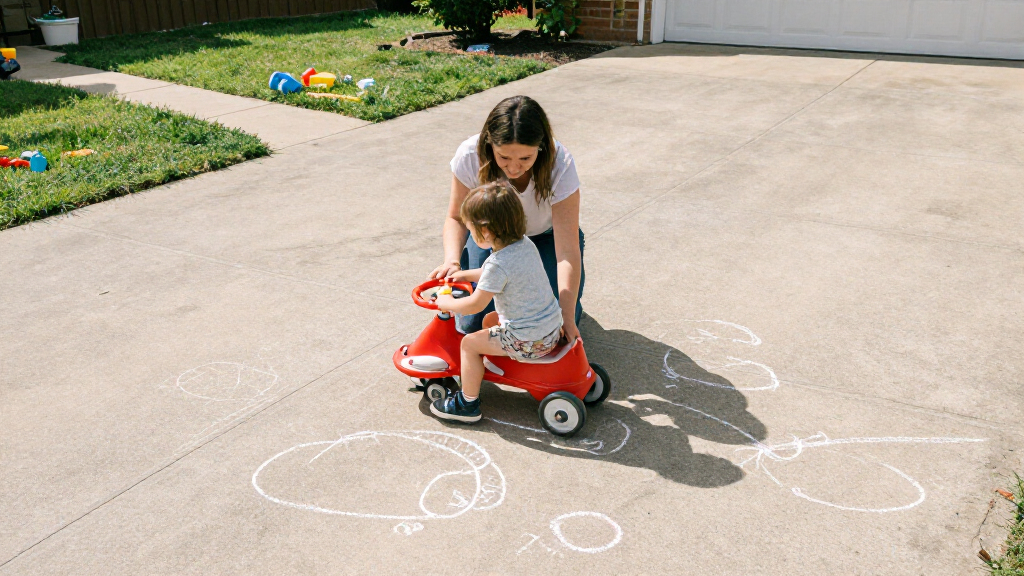
How We Picked
I ranked these 15 ride-on toys by how well their design fits a clear kind of buyer, rather than treating every powered vehicle as interchangeable. I weighed the riding format, likely ease of use, seating and control style, play value, and how much room or adult involvement the toy may call for. The list spans electric UTVs and trucks, push cars, wiggle toys, a foot-powered tractor, a go-kart, an excavator, and a roller coaster, so the best choice depends on a child’s ability and play space as much as the vehicle’s features.
Versatility and usability drive the upper rankings: the First Ride On 36V two-seater UTV leads for families seeking a substantial powered ride, while simpler push and wiggle designs rank better for children who need a less complex starting point. Specialized toys rank well for the play style they serve, but lower as general-purpose choices. I also treated color variants as versions of the same basic format, not as separate feature upgrades. Because the lineup includes very different ages, movement styles, and supervision needs, I recommend checking each product’s current manufacturer guidance before choosing.
Factors to Consider When Choosing Ride On Toys For Kids
The right choice depends less on choosing the most powerful toy and more on matching the ride to your child, available space, and the kind of play you want to encourage. These factors can help narrow the field before you compare individual models.
Match the controls to your child’s current skills
Children vary in how quickly they can steer, stop, and follow simple riding rules, even at the same age. A push car or wiggle toy keeps movement closely tied to a child’s own actions, while an electric ride introduces controls and powered motion. Avoid choosing a higher-powered model mainly because a child may grow into it; a toy that feels hard to control can stay parked. Check the maker’s age, weight, and supervision guidance, then think about whether your child can manage the controls consistently. When in doubt, a simpler ride gives a beginner room to learn without adding powered driving to the task.
Think about where riding will happen
A toy that works well on a broad, clear outdoor area may be awkward in a hallway, small yard, or shared path. Larger electric vehicles need room to turn and park, while wiggle toys and compact push cars can suit tighter play spaces. Surfaces matter too: grass, pavement, and indoor flooring can change how easily a toy rolls and how much control a child has. A common mistake is measuring only the toy’s footprint and overlooking turning space, storage, and the route between the house and riding area. Before buying, map out where the child can ride safely and where the toy will live when play ends.
Choose the movement style, not just the vehicle theme
Construction graphics, character styling, and vehicle shapes can attract a child, but the riding action determines much of the play. Wiggle cars and kid-powered karts call for active movement, whereas powered UTVs and trucks focus more on steering a motorized vehicle. Push cars and foot-to-floor toys keep propulsion simple, and a roller coaster offers a fixed, repeatable ride rather than open-ended driving. Ask whether your child wants to pretend to operate equipment, move independently, or repeat a physical activity. Matching that preference often matters more than choosing the most elaborate theme.
Budget for adult attention and upkeep
Powered toys can bring more controls and charging routines, while manual toys avoid battery care but may still need checks for wheels, fasteners, and moving parts. Adult involvement also varies: younger riders may need direct supervision and help getting started, while a toy with a remote control can give caregivers another way to guide use. Do not assume a remote makes an electric ride suitable for every beginner; the child still needs an appropriate fit and a safe riding area. Check what assembly, charging, and routine care the manufacturer calls for before you buy. A simpler toy may be the better value if it gets used often and takes little setup.
Prioritize fit and seating over extra features
Seat count and listed capacity affect how a child fits and whether siblings can share a ride, but a two-seater also means a larger toy and more space to store it. Music, horns, flashing wheels, and themed details can make a toy inviting, yet they do not replace comfortable access to the seat or manageable controls. Measure the child against the manufacturer’s size and weight limits rather than relying on a broad age label. For multi-child households, also decide whether shared riding is truly useful or whether turn-taking on a smaller toy would work better. Pay for extra features only when they support the kind of play your child will return to.
Set expectations for variety and repeat play
A specialized toy can be a better match than an all-purpose vehicle when a child has a clear interest, such as construction play or repeated track rides. Its narrower play pattern may also mean less variety over time. General-purpose ride-ons allow more open-ended movement but may feel less distinctive to a child who wants a particular pretend-play theme. Consider what else the toy can do: can it be used indoors or outdoors as directed, shared, or incorporated into other games? Choosing based on the play your child already enjoys is usually a safer bet than expecting novelty alone to sustain interest.
Frequently Asked Questions
Should I choose an electric ride-on or a child-powered toy for a first ride?
Start with your child’s ability to steer, stop, and follow instructions, not with the toy’s feature list. Push cars, foot-to-floor toys, and wiggle cars let the child create movement directly and can offer a simpler introduction. Electric models add powered motion and controls, which may suit a child ready for that responsibility but call for close attention to the maker’s guidance and the riding area. A remote-control feature can help an adult guide some rides, but it does not replace supervision. If you are unsure, choose the simpler format and move up when the child shows consistent control.
Is a two-seater ride-on a good choice if I have siblings?
It can be useful when both children are within the maker’s age and weight limits and the toy’s seating is intended for shared use. A two-seater is typically larger than a single-rider option, so check turning room, storage, and access to the riding area before choosing one. Also consider whether the children will ride together safely or whether they are more likely to argue over steering and turns. If only one child will use it most of the time, a smaller model may be easier to store and handle. Supervise shared rides and follow the product’s instructions for passenger use.
Can a ride-on toy be used indoors and outdoors?
That depends on the model, its wheels, and the surface, so follow the manufacturer’s directions rather than assuming every ride-on works in both settings. Large electric vehicles need clear space and may be difficult to maneuver indoors, while compact push or wiggle toys can be easier to use in a room with enough open floor. Outdoor ground conditions can also affect traction and control, especially for a child still learning. Remove obstacles and keep riding away from stairs, traffic, and other hazards. If indoor use matters, measure the available space and check the toy’s intended surfaces before buying.
What should I check before buying a battery-powered ride-on?
Review the manufacturer’s age and weight limits, control instructions, charging directions, and any guidance about where the toy can be used. Make sure you have a suitable place for charging and storage, plus enough open riding space for the model’s size. Ask whether an adult will need to guide early rides or manage regular charging, since those tasks affect how often the toy gets used. Safety equipment and adult supervision should match the product instructions and the riding area. These checks help prevent a feature-rich vehicle from becoming impractical at home.
How do I choose between a wiggle car and a go-kart?
Both call for active riding, but they offer different play styles. A wiggle car moves through steering and body motion, while a go-kart format may feel more like piloting a dedicated vehicle and can call for a different level of coordination. Compare the maker’s age and size guidance with your child’s ability to control the ride, then consider whether you have an appropriate smooth, open area. A compact wiggle toy may suit casual play and tighter spaces; a kart is a better fit when a child wants a more focused driving activity. Neither format should be chosen without checking its specific instructions and supervision needs.
Conclusion
For the best overall pick, I’d start with the First Ride On 36V Two-Seater Kids Electric UTV if your child is ready for a larger powered ride and you have room for it. For a best-value style of play without electric controls, the VEVOR Toddler Push Car is a practical place to start; for beginners who want active movement, compare it with the FanttikRide N7 Pro Wiggle Car. The best premium-style choice in this lineup is the First Ride On Ford Bronco Raptor 24V Two-Seater Ride-On Truck for buyers seeking a more vehicle-focused powered option, though its size and powered format are not right for every household. For specific interests, choose the Step2 roller coaster for track-based play or an excavator model for construction-themed pretend play. My final advice is to pick the riding format your child can control and your space can support; color and extra effects should come after fit, play style, and supervision needs.


