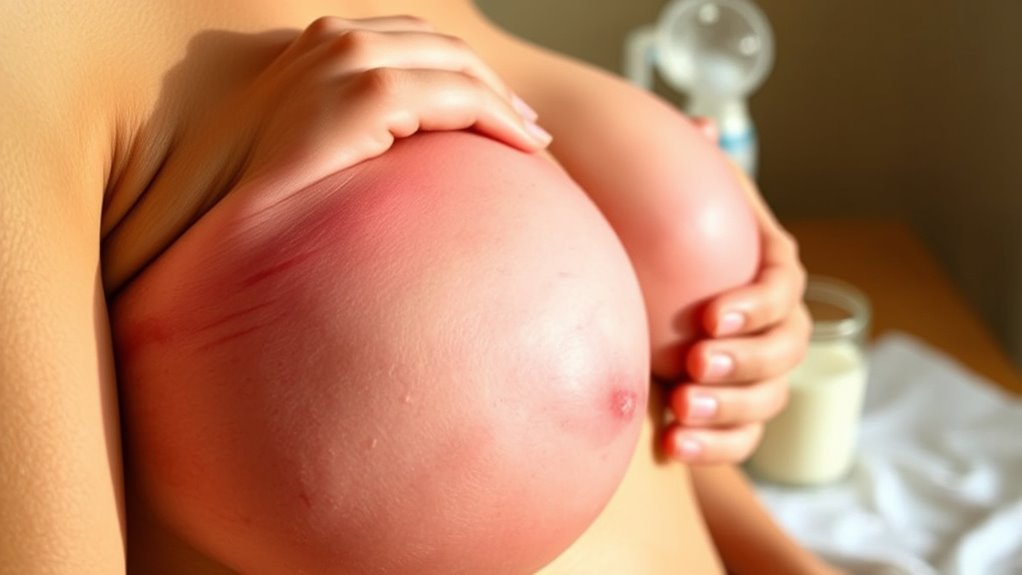

To prevent and manage clogged ducts and mastitis, make certain you nurse frequently and change positions often to fully empty your breasts. Proper latch, gentle massage, and warm compresses before feeding help clear blockages. Stay well-hydrated, rest, and seek medical advice if you notice symptoms like redness, pain, or flu-like signs. Addressing issues early supports your milk supply and overall comfort—continue to discover more tips to keep breastfeeding smooth and pain-free.
Key Takeaways
- Proper breastfeeding techniques and varied positions help prevent clogged ducts and maintain milk flow.
- Early treatment of clogged ducts with massage and warm compresses reduces infection risk.
- Untreated clogged ducts can develop into mastitis, characterized by flu-like symptoms and breast redness.
- Frequent nursing, effective emptying, and staying hydrated support milk supply and prevent blockages.
- Safe milk storage involves clean containers, labeling, proper thawing, and using the freshest milk first.

Clogged ducts and mastitis are common issues that can disrupt your milk supply and cause discomfort. If you notice a painful, hard lump in your breast, it’s likely a clogged duct. These blockages happen when milk isn’t fully drained, often due to incorrect breastfeeding positions or infrequent nursing. To prevent this, it’s essential to pay attention to your breastfeeding positions. Try to vary your hold to guarantee all ducts are emptied thoroughly. Using different positions, such as football hold or cradle hold, can help you reach different areas of your breast. Proper latch and positioning make a significant difference in preventing clogs. Additionally, after nursing, gently massaging your breast toward the nipple can help clear any residual milk. Staying well-hydrated and ensuring frequent feedings also reduces the risk of blockages.
Mastitis, on the other hand, is an infection that occurs when a clogged duct isn’t addressed promptly. It often presents with flu-like symptoms—fever, chills, and fatigue—as well as redness, swelling, and pain in the affected breast. If you suspect mastitis, it’s necessary to continue nursing or pumping frequently to keep the milk flowing and prevent further buildup. Applying warm compresses before feeding can help loosen the blockage, making milk flow easier. If you develop symptoms of mastitis, consult your healthcare provider for antibiotics if necessary, but keep nursing to help clear the infection. Rest and hydration are essential, and some find that pain relievers help manage discomfort.
Managing your milk supply effectively involves more than just addressing issues when they arise. Good milk storage tips can help guarantee your milk stays fresh and accessible. If you’re expressing milk, store it in clean, airtight containers, and label each with the date. Use the freshest milk first, and keep stored milk at the back of the fridge or freezer, away from the door, to maintain consistent temperature. When thawing frozen milk, do so gradually in the fridge or by placing the container in warm water. Avoid refreezing thawed milk, as it can compromise quality. Also, pay attention to your body’s cues; frequent and effective emptying of the breasts signals your body to produce more milk, helping maintain your supply.

Lansinoh Breast Therapy Packs, Hot and Cold Breast-Pads with 2 Soft Covers, Postpartum Essentials for Nipple Pain Relief, Mastitis, Engorgement, Support for Breastfeeding and Pump Aid, 2 Pack
COLD THERAPY – Use as an ice pack to relieve engorgement, swelling and pain in the early days…
As an affiliate, we earn on qualifying purchases.
As an affiliate, we earn on qualifying purchases.
Frequently Asked Questions
Can Clogged Ducts Cause Long-Term Milk Supply Issues?
Clogged ducts can cause long-term milk supply issues if not treated promptly. When duct blockages persist, they may reduce milk flow and signal your body to produce less milk over time. To prevent this, you should regularly empty your breasts, practice good latch techniques, and seek medical advice if the blockage persists. Addressing duct blockages early helps maintain your milk supply and prevents more serious complications.
Are There Natural Remedies to Prevent Mastitis?
You can often prevent mastitis with natural remedies, as research suggests herbal remedies and dietary adjustments may boost your immune system and promote milk flow. Incorporate herbs like garlic, ginger, and fenugreek, known for their antibacterial and lactation-enhancing properties. Maintain proper hydration, practice good breast hygiene, and avoid overly tight clothing. These natural strategies support your body’s defenses, reducing the risk of mastitis without relying solely on medication.
How Do I Differentiate Between Clogged Ducts and Mastitis?
You can tell the difference between a clogged duct and a breast infection by how you feel. A clogged duct usually causes localized pain and a firm lump, with no fever. Mastitis, on the other hand, often involves a breast infection, leading to more intense pain, redness, swelling, and flu-like symptoms like fever and chills. If symptoms worsen or don’t improve, see a healthcare provider promptly.
Can Stress Affect Milk Supply During Breastfeeding?
Stress can feel like a tornado ripping through your mind, and yes, it can definitely affect your milk supply during breastfeeding. When you experience breastfeeding stress, your body releases hormones that can slow down milk production. To keep your milk flowing smoothly, try to relax, breathe deeply, and find support. Managing stress helps your body produce enough milk and makes breastfeeding a more positive experience for both you and your baby.
What Are the Best Positions to Prevent Clogged Ducts?
To prevent clogged ducts, you should try different positions that keep the milk flowing easily. Make certain a proper latch during feeding, which helps clear the ducts effectively. You can also incorporate breast massage before and during nursing to loosen any buildup. Switching positions regularly during feeds and keeping your baby’s chin or nose aimed toward the clogged area also promotes drainage, reducing the risk of blockages and discomfort.

LaVie 5-in-1 Lactation Massager Roller, Manual Massage Roller, Breastfeeding Tool to Improve Milk Flow, Discomfort, Breast Massage, Medical Grade
5-in-1 DESIGN: Uniquely adapts to your needs, the lactation massage roller has 5 different ways to use it….
As an affiliate, we earn on qualifying purchases.
As an affiliate, we earn on qualifying purchases.
Conclusion
Remember, your breastfeeding journey is like a delicate dance—sometimes you hit a tricky step with clogged ducts or mastitis. But with patience and care, you can waltz through it, restoring your milk flow like a gentle river finding its path. Trust your instincts, seek support when needed, and know that each challenge is just a temporary cloud passing by. Soon, your breastfeeding symphony will play on beautifully, full of love and strength.

Chilling Home Nursing Pillow for Breastfeeding, Adjustable Nursing Pillow Breast Feeding Pillow Bottle Feeding, Breastfeeding Essentials for Newborn, Removable Cover
【Breastfeeding Essentials Must Have】The breastfeeding pillow is an excellent gift for baby showers, registry must-haves, and special occasions….
As an affiliate, we earn on qualifying purchases.
As an affiliate, we earn on qualifying purchases.

Lansinoh LatchAssist Nipple Everter for Breastfeeding with 2 Flange Sizes (19mm & 24mm) and Protective Case
HELPS BABIES LATCH- The Lansinoh LatchAssist Nipple Everter is a tool that gently draws out flat or inverted…
As an affiliate, we earn on qualifying purchases.
As an affiliate, we earn on qualifying purchases.