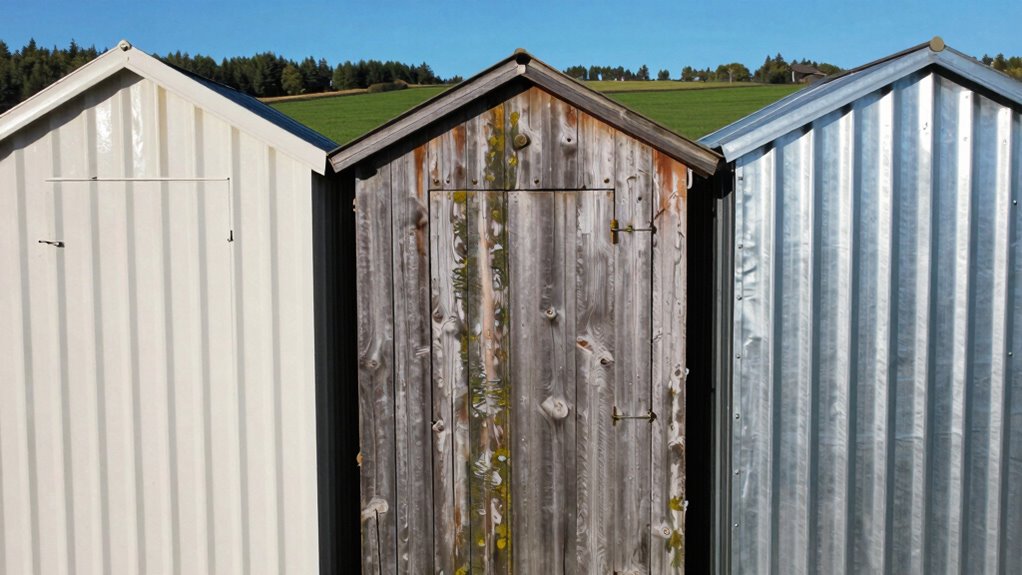

If you want a shed that lasts, resin offers a durable, weatherproof choice with minimal maintenance and resistance to pests. Wooden sheds provide charm and warmth but need regular upkeep to prevent rot and damage, lasting over 15 years. Metal sheds excel in durability, resisting rust and harsh weather for over 20 years with proper coatings. Consider your climate, style, and upkeep to find the best fit—more details help you make an informed decision.

Turn the school run and nap time into listening time
- Thousands of audiobooks, podcasts and originals
- Listen on your phone, tablet or Echo — also offline
- Cancel anytime
Key Takeaways
- Metal sheds generally last over 20 years with high resistance to warping, cracking, and rust, making them the most durable option.
- Resin sheds are highly weatherproof, resistant to pests, mold, and decay, typically lasting over 10 years with minimal maintenance.
- Wooden sheds, while charming and lasting 15+ years, require regular sealing and maintenance to prevent rot, insect damage, and decay.
- Metal sheds excel in harsh climates due to their corrosion resistance, whereas wooden and resin sheds may need extra protection.
- Overall, metal sheds offer the longest lifespan, followed by wood for aesthetic appeal, and resin for low maintenance durability.
Products Worth Considering

LEGO Icons Tranquil Garden Building Set – Japanese Zen Garden DIY Kit for Adults, 10315

Graco TrueCoat 360 Variable Speed Handheld Paint Sprayer

LEGO Star Wars Imperial Star Destroyer Building Set (75394)
As an affiliate, we earn on qualifying purchases.
What Are the Pros and Cons of Resin, Wood, and Metal Sheds?

Are resin, wood, and metal sheds the right choice for your storage needs? Each material offers unique advantages, especially when considering design flexibility and aesthetic appeal. Resin sheds provide a sleek, modern look that easily blends into any yard, and you can often customize colors and shapes. Wooden sheds naturally add charm and warmth, enhancing your landscape’s beauty, while allowing for various customization options. Additionally, wood’s natural insulation properties can help regulate temperature inside the shed, making it more versatile for different storage needs. Another factor to consider is material durability, which affects longevity and maintenance requirements over time. Metal sheds tend to have a more industrial appearance but can also be painted or coated to match your style. Your choice depends on how much you value visual appeal and design options. Additionally, considering fire safety during installation and use is important to ensure your shed remains a safe storage space.
Which Shed Material Is Most Durable and Weather-Resistant?
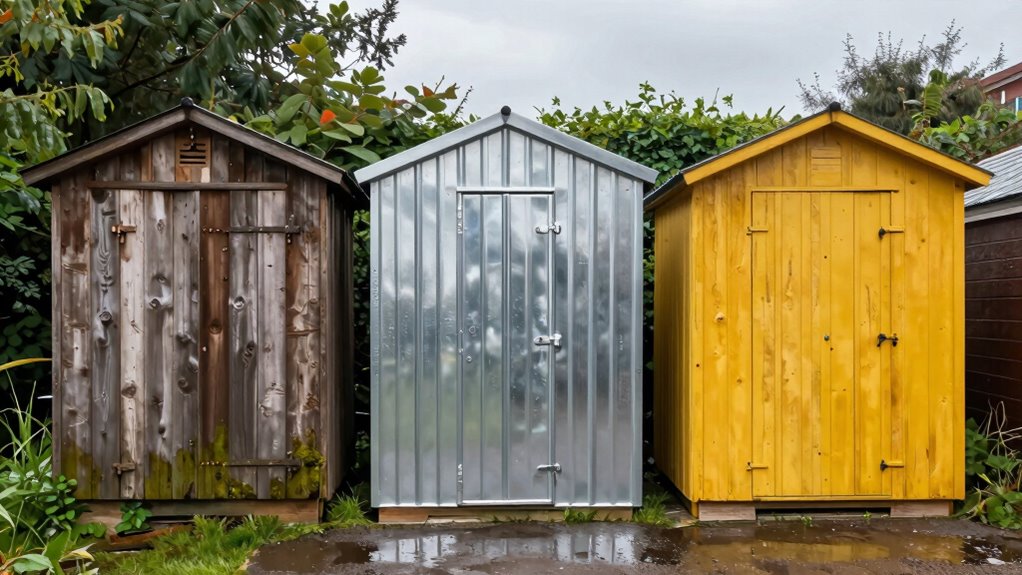
When choosing a shed, you want a material that stands up to the elements and lasts for years. Some options offer greater strength and resistance to weather, while others require less maintenance. Understanding the durability and longevity of each material helps you make the best decision for your needs. For example, high-quality materials can significantly improve the lifespan and weather resistance of your shed. Additionally, considering proper installation techniques can further enhance the durability of your shed over time. Incorporating weather-resistant coatings can also provide an extra layer of protection against environmental damage, which is especially important given the latest law updates impacting construction and maintenance standards. Recognizing the environmental factors specific to your location can help tailor your shed’s protection and ensure it remains resilient for years to come.
Material Strength and Durability
Choosing the right shed material is essential if you want something that can withstand harsh weather conditions and last for years. When comparing resin, wood, and metal, material strength and durability are key factors. Metal sheds often excel in structural integrity, providing resistance to warping and cracking. Resin sheds are lightweight yet resistant to corrosion, making them durable in wet climates. Wood sheds, while sturdy, may require treatment to prevent rot and insect damage. Additionally, material properties influence how well each material withstands environmental stressors over time, which is crucial for long-term durability and weather resistance. Here’s how they compare:
| Material | Corrosion Resistance | Structural Integrity | Longevity | Maintenance Needed |
|---|---|---|---|---|
| Resin | High | Moderate | 10+ years | Low |
| Wood | Low | High | 15+ years | Moderate |
| Metal | Very high | Very high | 20+ years | Moderate |
Resistance to Weather Elements
Different shed materials offer varying levels of protection against weather elements like rain, snow, wind, and UV rays. Resin sheds are highly weatherproof, especially when treated with a weatherproof coating that enhances resistance to moisture and UV damage. Resin resists warping and rotting better than wood, while metal’s durability hinges on proper coating to prevent corrosion. Metal sheds excel in corrosion resistance, particularly if they’re coated with protective finishes that prevent rust. Metal sheds benefit from protective coatings, which significantly extend their lifespan in humid or salty environments. Additionally, choosing sheds with proper sealing techniques can further improve their weather resistance. Well-designed drainage systems can also help prevent water accumulation that might compromise the shed’s structure. Wood sheds can withstand the elements but often require additional sealing or staining to improve their weather resistance. Overall, resin and metal sheds generally provide superior protection against harsh weather, making them more reliable over time. Your choice depends on the level of weather resistance you need and the shed’s specific environment. Weatherproof coatings play a crucial role in extending the lifespan of metal and resin sheds in challenging weather conditions.
Maintenance and Longevity
Ever wondered which shed material offers the best combination of durability and low maintenance? Resin sheds excel in this area, requiring minimal upkeep and resisting rot, rust, and pests. They typically need just an occasional wash to keep them looking new, making them ideal for low-effort shelf organization inside. Metal sheds are highly durable and weather-resistant but may need rust prevention treatments over time. Wood sheds, while aesthetically pleasing, demand regular maintenance like staining or sealing to prevent decay. Ventilation options vary by material; resin and metal sheds often include built-in vents, helping prevent moisture buildup and mold. Overall, for long-lasting performance with less maintenance, resin sheds stand out, providing reliable durability and better airflow for a healthier storage environment. Incorporating expert guidance or professional assistance during installation and maintenance can also help ensure your shed remains in optimal condition over the years. Additionally, understanding shed material properties can aid in choosing the best option for your climate and storage needs. Recognizing the weather resistance of each material can further inform your choice, ensuring your shed withstands local environmental challenges. Moreover, selecting materials with proven UV protection can extend the lifespan of your shed by preventing sun damage.
How Much Maintenance Do Resin, Wood, and Metal Sheds Need?
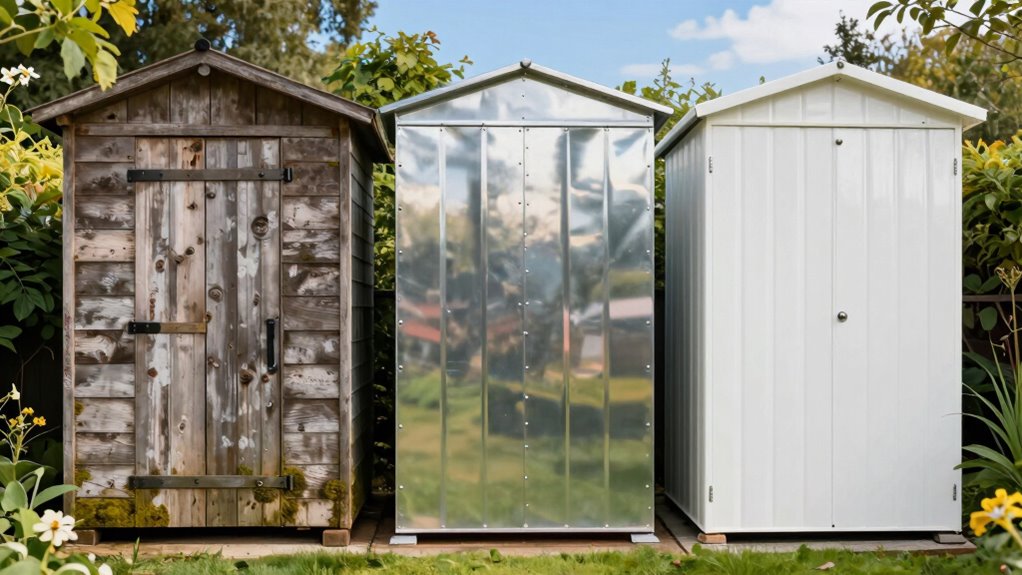
Resin, wood, and metal sheds each require varying levels of upkeep to stay in good condition. Your maintenance routines will differ depending on the material. Resin sheds are low-maintenance, needing only occasional cleaning with soap and water to remove dirt and debris. Metal sheds typically require rust prevention, so inspecting for corrosion and applying protective coatings is essential. Regular checks for rust formation can help prevent costly repairs later on. Additionally, applying protective coatings can significantly enhance the longevity of metal and wooden sheds, safeguarding them against environmental damage. Regular inspections for material-specific issues can help identify problems early, preventing further deterioration. Wood sheds demand more attention; you’ll need to regularly inspect for rot, pests, and peeling paint, along with routine cleaning to prevent mold. Proper maintenance routines can extend the lifespan of your shed and keep it looking attractive for years to come. Additionally, understanding the material-specific care can help you choose the best shed for your needs and ensure it remains durable over time. While resin sheds need minimal upkeep, wood and metal sheds involve more frequent cleaning requirements to preserve their durability.
What Is the Cost Difference Between Resin, Wood, and Metal Sheds?
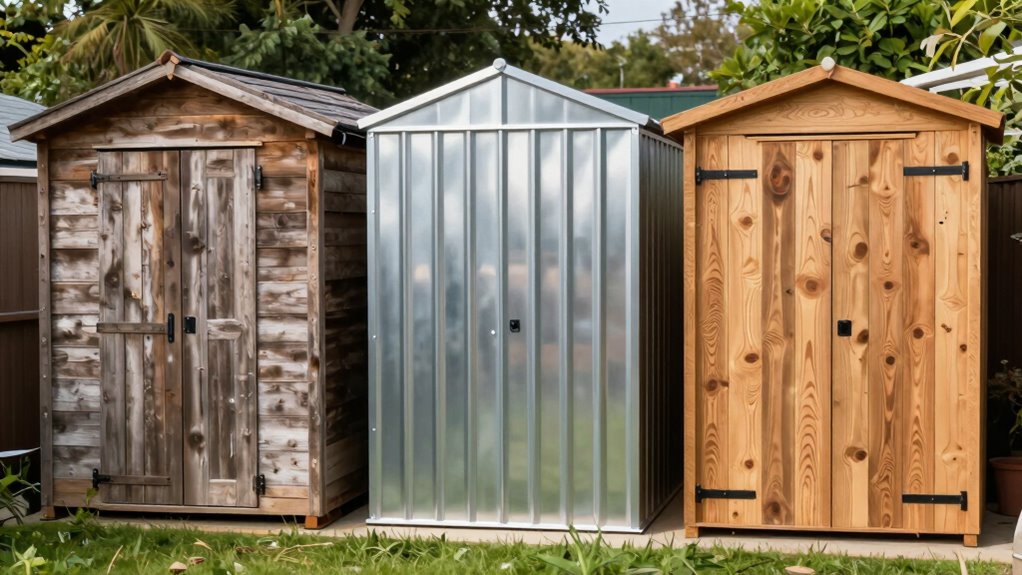
Are you trying to determine which shed offers the best value for your budget? The cost comparison between resin, wood, and metal sheds depends on material pricing and long-term expenses. Resin sheds are typically the most affordable upfront, but may have higher maintenance costs over time. Wood sheds often cost more initially but can add charm and value to your property. Metal sheds usually fall in the middle price range, offering durability at a reasonable cost. material durability and maintenance needs are key factors to consider when evaluating long-term costs. Choosing a shed material influences both initial investment and ongoing upkeep. Here’s a quick breakdown:
- Resin sheds: low initial cost, lower material pricing, possible higher upkeep
- Wood sheds: higher upfront investment, premium material pricing, longer lifespan
- Metal sheds: moderate price, durable material, moderate maintenance costs
- Long-term costs vary based on material durability and maintenance needs
Knowing these differences helps you choose wisely for your budget.
Which Shed Style Matches Your Home’s Look and Feel?
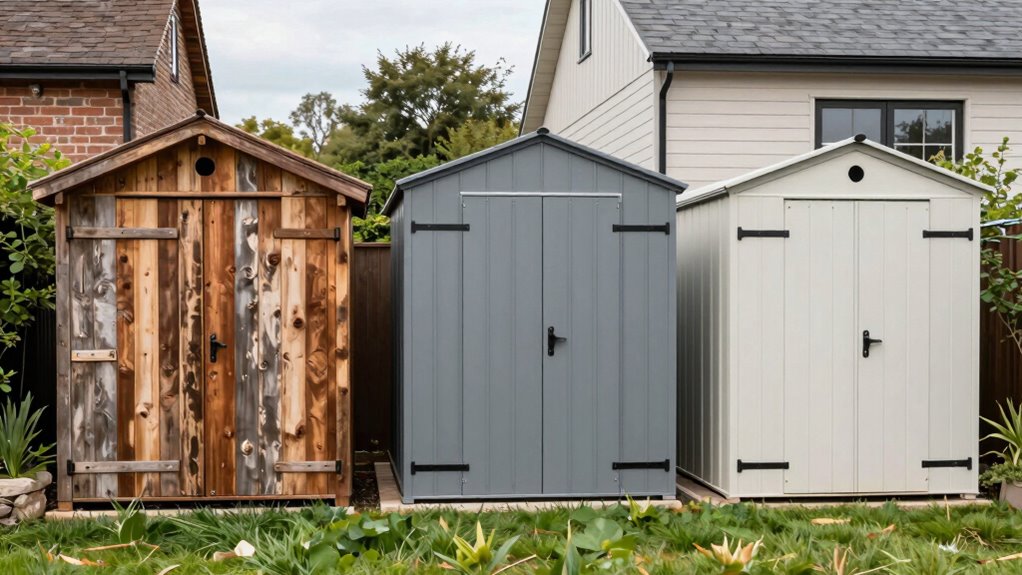
Choosing a shed style that complements your home’s architecture and exterior helps create a cohesive look and enhances your property’s curb appeal. Consider how the shed’s design fits your garden aesthetics—do you prefer a quaint, rustic vibe or a sleek, modern appearance? Wood sheds often blend seamlessly with traditional homes, offering warm tones and classic styles. Metal sheds provide a contemporary touch, with minimalist shapes and neutral color options that suit modern homes. Resin sheds come in various vibrant and subtle colors, making it easy to match or contrast with your house’s palette. Think about your overall outdoor style and choose a shed that enhances your home’s character, whether through color options or design details, for a harmonious and attractive backyard. Additionally, selecting a shed made from durable materials like metal or resin ensures longevity and low maintenance over time.
Is Installation Easy for Resin, Wood, or Metal Sheds?
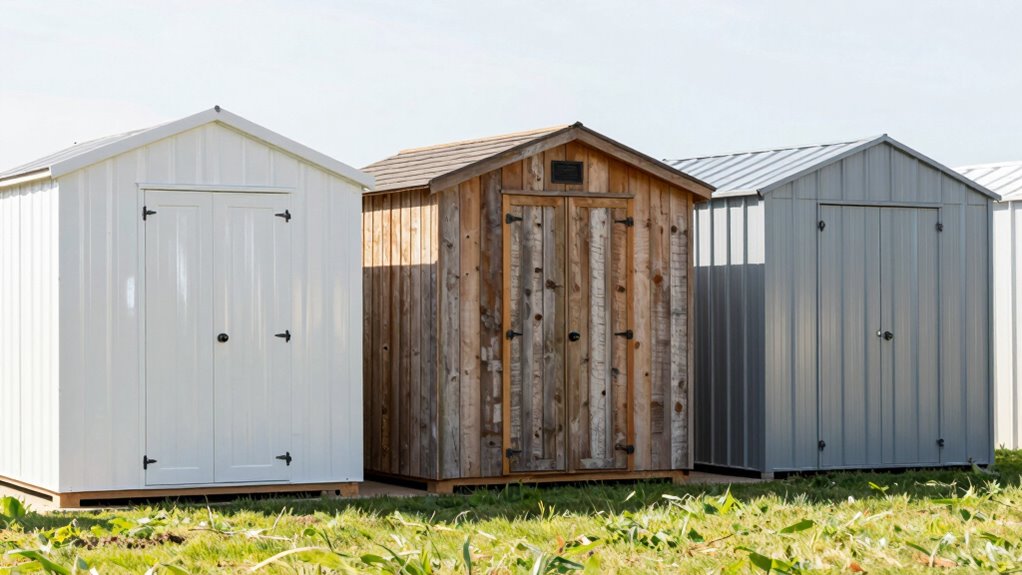
Installing resin, wood, or metal sheds varies in ease, depending on the design and size. You’ll want to contemplate the tools and skills needed to assemble each type, as some require more effort than others. Also, think about how much time you’ll need to complete the setup to choose the right option for your schedule.
Ease of Assembly
When it comes to assembly, the ease of putting together a shed depends largely on its material. Resin sheds are typically designed for quick, straightforward assembly with clear instructions, making them ideal if you want minimal hassle. Wood sheds may require more time due to pre-drilled holes and the need to align panels carefully. Metal sheds often come with bolt-and-panel systems that can be faster than wood but slightly more complex than resin. To streamline your project, follow some assembly tips like organizing all parts beforehand, reading instructions thoroughly, and enlisting help if needed. Shed customization is easier with resin, as panels often snap together, while wood and metal may need more precise fitting and tools. Ultimately, your choice depends on how much effort you’re willing to invest upfront.
Required Tools and Skills
Resin sheds are generally the easiest to install because they require minimal tools and skills. You won’t need specialized DIY skills or complex tool requirements, making them ideal for beginners. Most resin shed kits come with pre-cut panels and straightforward instructions, allowing you to assemble them with basic tools like a screwdriver, level, and drill. Unlike wood or metal sheds, which often demand measuring, cutting, or welding, resin sheds simplify the process. You can usually complete the installation with just a few common tools, reducing the chance of mistakes. This ease of assembly makes resin sheds accessible for DIY enthusiasts who want a quick, hassle-free setup without investing in advanced skills or extensive equipment.
Time Investment Needed
If you’re looking for a quick and straightforward project, resin sheds typically require the least amount of time to set up. They come with pre-assembled panels, so you can often complete installation in a few hours. Wood sheds demand more time, as you’ll need to assemble framing, walls, and possibly treat or paint for climate adaptability and aesthetic appeal. Metal sheds usually fall somewhere in between, with bolt-together parts that are simple to install but may require additional sealing. Expect to spend extra time ensuring proper leveling and securing. Overall, resin sheds are ideal if you want minimal effort and fast results, especially if climate adaptability and maintaining aesthetic appeal are priorities. Metal and wood options, however, might need more patience and effort upfront.
Are Resin, Wood, and Metal Sheds Environmentally Sustainable?
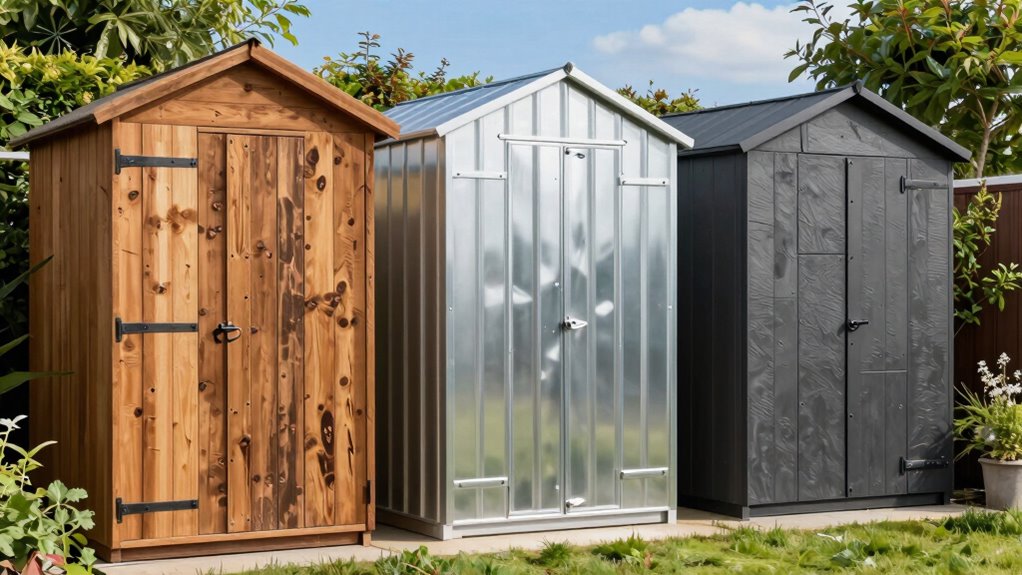
Determining the environmental sustainability of resin, wood, and metal sheds involves considering their manufacturing processes, durability, and recyclability. Resin sheds often use Eco Friendly Materials, but their production can involve non-renewable resources and plastics that are harder to recycle. Wood sheds, on the other hand, can be made from Renewable Resources if sourced responsibly from sustainably managed forests. They tend to have a lower environmental impact during manufacturing and are biodegradable. Metal sheds usually involve energy-intensive processes, but they are highly recyclable, reducing waste. Overall, your choice impacts the environment: wood can be sustainable with proper sourcing, resin’s sustainability depends on its materials, and metal offers recyclability but has a higher manufacturing footprint. Your decision should weigh these factors based on your eco priorities.
Which Shed Material Performs Best in Your Climate and Usage?
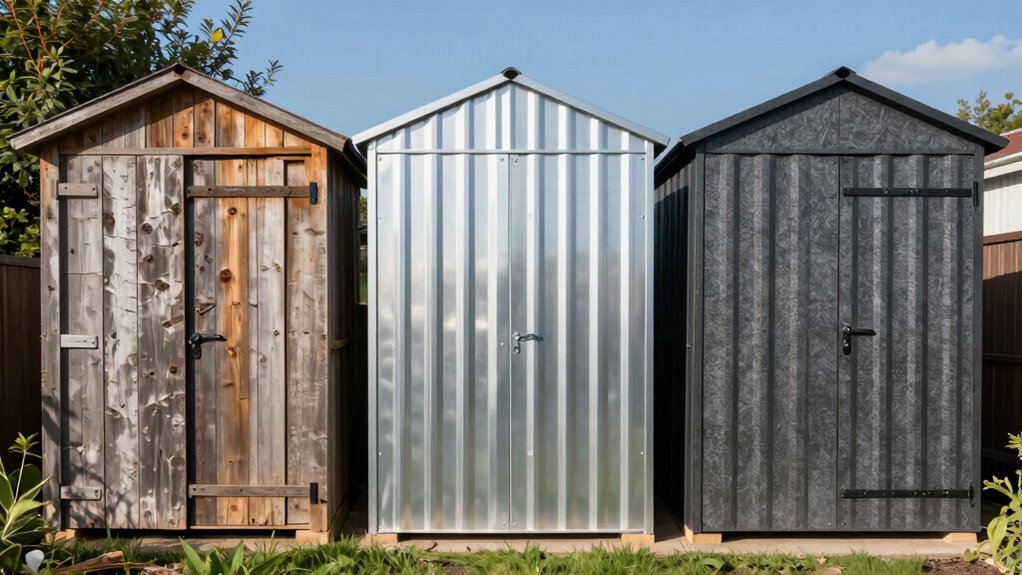
Choosing the right shed material depends heavily on your climate and how you plan to use it. Your climate’s conditions and your usage requirements determine which material offers the best performance. For example, resin sheds excel in areas with high humidity or heavy rain due to their climate adaptability, resisting rot and mold. Wooden sheds provide excellent insulation, making them suitable for colder climates and year-round storage. Metal sheds are durable against extreme weather, like strong winds or snow, but may need insulation if used frequently in hot climates. Consider these factors:
Choose shed materials suited to your climate for optimal durability and performance.
- Resistance to moisture and rot
- Insulation needs for temperature control
- Durability against weather extremes
- Maintenance requirements based on usage
Matching these factors ensures your shed withstands your environment and meets your needs effectively.
How to Choose a Long-Lasting Shed That Fits Your Needs
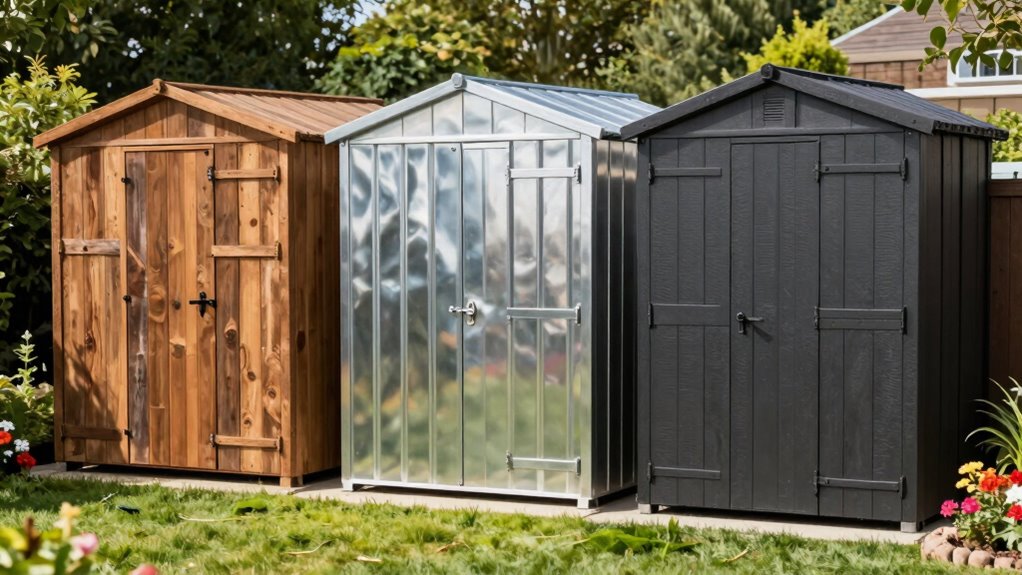
Selecting a shed that lasts depends on understanding your specific needs and how you’ll use it over time. Think about the size, style, and materials that align with your property and storage requirements. Design customization is key; choose a shed that allows for modifications to suit your evolving needs, whether adding shelves or windows. Consider the aesthetic appeal—your shed should complement your landscape and personal style. Durable materials like resin, wood, or metal can offer longevity, but pick one that matches your climate and maintenance preferences. Budget also plays a role, so weigh the upfront costs against long-term durability. By evaluating these factors, you’ll select a shed that not only endures but also enhances your outdoor space and meets your functional needs.
Frequently Asked Questions
Which Shed Material Offers the Best Fire Resistance?
You should choose a metal shed for the best fire resistance, as it offers superior fire safety compared to resin or wood. Metal withstands high temperatures and doesn’t ignite easily, enhancing your property’s safety. While resin and wood may be durable, they are more flammable and less reliable for fire safety. Investing in a metal shed guarantees better material durability and peace of mind against fire hazards.
Can Resin, Wood, or Metal Sheds Be Customized Easily?
You can customize resin, wood, and metal sheds easily, especially with design flexibility and color options. While some might worry about durability limits, these sheds are highly adaptable—resin sheds often feature easy-to-apply paint or decals, wood sheds can be painted or stained to match your style, and metal sheds offer versatile paneling for unique designs. With simple modifications, you’ll find a shed that perfectly fits your aesthetic and functional needs.
How Do Insulation Options Vary Across Shed Materials?
You’ll find insulation options vary depending on shed material. Resin sheds often require foam board or spray foam for effective insulation installation, boosting thermal performance. Wood sheds naturally provide better insulation, making it easier to add batt or spray foam insulation. Metal sheds need specialized insulation like reflective foil or foam panels to improve thermal performance. Your choice impacts how easily you can install insulation and how well your shed retains heat or coolness.
Are There Specific Security Features Available for Each Shed Type?
You can enhance security features for each shed type through shed customization options. For resin sheds, consider padlocks and reinforced doors; for wood sheds, add deadbolts and security bars. Metal sheds often come with pre-installed locking systems, but you can upgrade with security alarms and reinforced panels. Customizing your shed with these security features helps protect your belongings, regardless of the shed material you choose.
What Warranty Options Are Typically Offered for Resin, Wood, and Metal Sheds?
Did you know most shed manufacturers offer warranties covering at least 10 years? Resin sheds often come with material guarantees that highlight their durability against weather and UV damage. Wood sheds typically feature warranties on craftsmanship and materials, but may require maintenance. Metal sheds usually have warranties focused on rust resistance and structural integrity. Always check warranty policies carefully, so you know what’s covered for each shed type before making a decision.
Conclusion
Choosing the right shed depends on your climate, budget, and style. For instance, if you live in a rainy area, a metal shed might be your best bet for durability, while a wooden shed could suit a traditional home aesthetic. Consider maintenance and environmental impact too. Think about your needs—like storing gardening tools or bikes—and pick a shed that lasts. With the right choice, you’ll enjoy a sturdy, attractive storage solution for years to come.