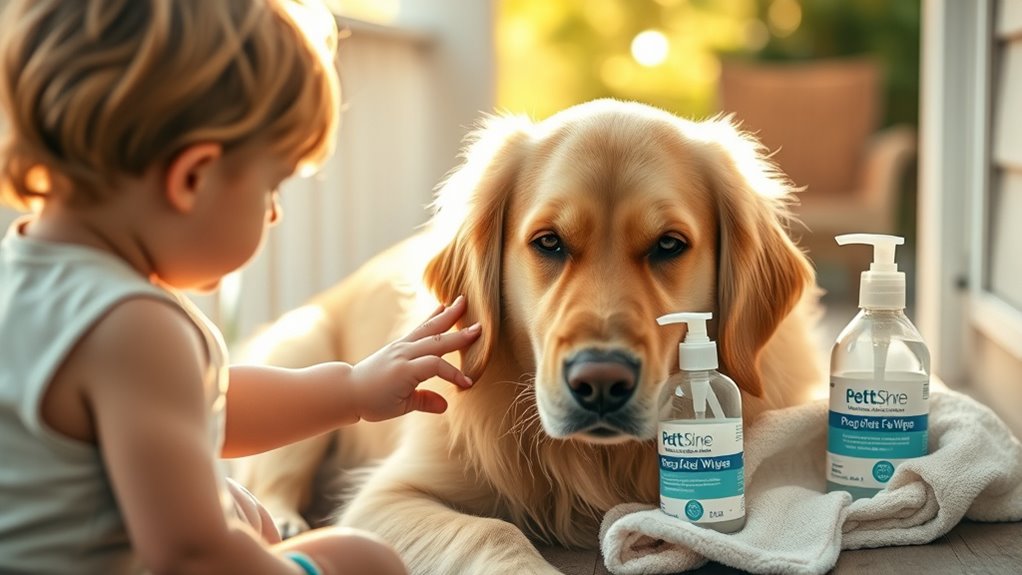

To keep your kids and pets safe and healthy, set clear rules for gentle handling and supervision at all times. Teach your children to handle animals calmly, use proper grooming techniques, and wash hands afterward to promote good hygiene. Watch for signs of pet stress and intervene early. Creating a secure environment and establishing these routines will help both your child and pet thrive, and you’ll discover more ways to make this bond safe and fun as you continue exploring.
Key Takeaways
- Supervise children during pet interactions to prevent scratches, bites, and stress.
- Teach children gentle handling techniques to promote safe, caring behavior towards pets.
- Establish clear rules for grooming and playing to ensure pet safety and hygiene.
- Promote regular handwashing after pet contact to reduce germ transmission.
- Create a calm, secure environment that fosters patience and positive bonding between kids and pets.
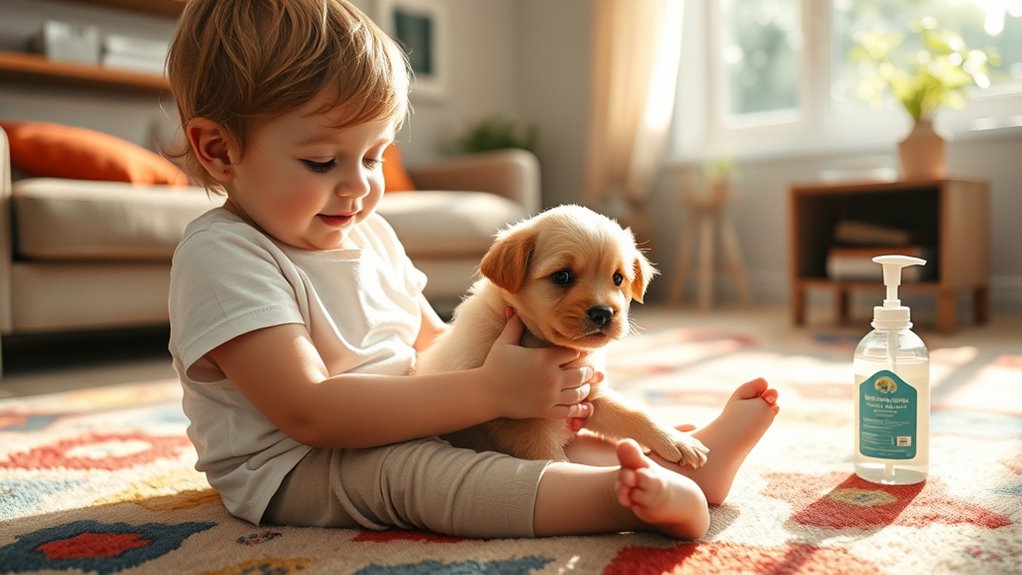
Have you ever wondered how pets can influence your children’s development? Bringing a pet into your home can teach kids responsibility, empathy, and even improve their social skills. But to guarantee these benefits, you need to be proactive about safety, hygiene, and gentle handling. One of the first steps is establishing clear rules around pet grooming and supervision. When your child helps with pet grooming, such as brushing fur or cleaning paws, they learn to be gentle and respectful of the animal’s comfort. Always supervise these interactions to prevent accidental scratches or bites, especially with young children who may not fully understand how to handle animals gently. Child supervision is essential because pets can react unpredictably if they feel stressed or uncomfortable, and children might unintentionally hurt or scare them. Keeping a watchful eye helps you intervene before a stressful situation escalates, ensuring that both your child and the pet stay safe.
Teaching your children proper grooming techniques also promotes hygiene and personal responsibility. Regular pet grooming isn’t just about keeping your pet looking good; it’s about maintaining their health and preventing the spread of germs. When your child participates in grooming, they become aware of the importance of cleanliness—not just for the pet but for themselves too. You can make this a fun learning activity, showing them how to use gentle brushes, checking for any skin issues, and cleaning ears or paws carefully. Always remind your kids to wash their hands afterward, reinforcing good hygiene habits. This routine also helps your pet feel comfortable and safe during grooming sessions, which can be a bonding experience if done with patience and kindness. Additionally, understanding home essentials related to pet care can help create a safe environment for both children and animals.

Pet Care Play Set for Kids, 16Pcs Doctor Kit Pretend Play Vet Puppy Dog Grooming & Feeding Toys with Backpack, Educational Toys for Girls and Boys 3-7 Years Old
✨ All-in-One Pretend Pet Care Playset: Includes everything for imaginative grooming fun: plastic scissors, comb, hair dryer, gel…
As an affiliate, we earn on qualifying purchases.
As an affiliate, we earn on qualifying purchases.
Frequently Asked Questions
How Can I Teach My Child Respectful Pet Interactions?
You can teach your child respectful pet interactions by modeling gentle pet handling yourself and explaining why it’s important. Show them how to approach animals calmly and softly, emphasizing respect for their feelings. Encourage your child to ask permission before petting, and praise them when they interact gently. Consistently reinforce these behaviors to help your child develop a caring attitude, ensuring safe and respectful interactions with pets.
What Signs Indicate a Pet Is Stressed Around Children?
You’ll notice signs like flattened ears, a tucked tail, or avoiding eye contact, which are clear pet body language cues indicating stress signals around children. If your pet shows these stress signals, it’s best to provide them space and monitor their comfort. Watch for growling, hissing, or lip licking, as these also suggest they’re overwhelmed. Recognizing these signs helps you make certain your pet stays safe and relaxed around kids.
Are There Specific Hygiene Practices for Kids After Pet Contact?
After pet contact, it’s best to practice good hygiene to keep everyone healthy. You should encourage kids to wash their hands thoroughly and consider pet bathing regularly to reduce germs. These simple habits help protect your family from potential bacteria transfer. By making hand washing a routine and keeping pets clean, you’re nurturing a safe environment where everyone can enjoy cuddles without worry.
How Do I Introduce a New Pet to a Family With Kids?
When introducing a new pet to your family with kids, start with safe introductions in a calm environment. Use pet training techniques to help your pet feel secure and teach kids gentle handling. Keep interactions supervised, and gradually let your kids get to know the pet at their own pace. This approach fosters trust, guarantees safety, and helps everyone build a positive relationship from the beginning.
What Age Is Safest for Children to Handle Different Pets?
Children aged 5 and older are generally safest for handling most pets, as they can understand safety rules better. According to pet allergy awareness, about 15% of kids develop allergies, so consider this before pet adoption. Kids under 5 may unintentionally cause harm or mishandle animals. Always supervise and teach gentle handling, adapting to each pet’s needs, and consider age-appropriate tasks to guarantee safety and comfort for everyone involved.

SereneLife Portable Camping Sink – Hand Washing Station with Foot Pump, 17L Fresh Water Tank, 24L Waste Tank, Soap Dispenser, Rolling Wheels & Quick Assembly for RV, Outdoor Events & Job Sites
HOLDS LOTS OF WATER: Large 17L fresh water tank and 24L waste tank support many hand washes before…
As an affiliate, we earn on qualifying purchases.
As an affiliate, we earn on qualifying purchases.
Conclusion
Now that you know the secrets to keeping pets and kids safe, hygiene spotless, and handling gentle, you’re basically a superhero in disguise. Imagine a world where chaos turns into giggles, germs vanish like magic, and every cuddle feels like a warm hug from the universe itself. With these tips, you’re not just managing a household—you’re creating a paradise where love, safety, and cleanliness reign supreme. Get ready to conquer the pet-and-kid universe with confidence!

Philips Sonicare for Kids Design a Pet Edition, Corded Electric, HX3601
SmarTimer and KidPacer keep kids brushing for 2 minutes
As an affiliate, we earn on qualifying purchases.
As an affiliate, we earn on qualifying purchases.

SPOT Soothers- Tabbie Lambie Dog Toy-Separation Anxiety Toys for Dogs, Stuffing Free, Scented with Calming Lavender Fragrance Beads to Safely Calm and Relax Dogs and Puppies, 8in
LAVENDER AROMATHERAPY: Soothe your furry companion with the calming scent of lavender, safely infused in artificial fragrance beads…
As an affiliate, we earn on qualifying purchases.
As an affiliate, we earn on qualifying purchases.