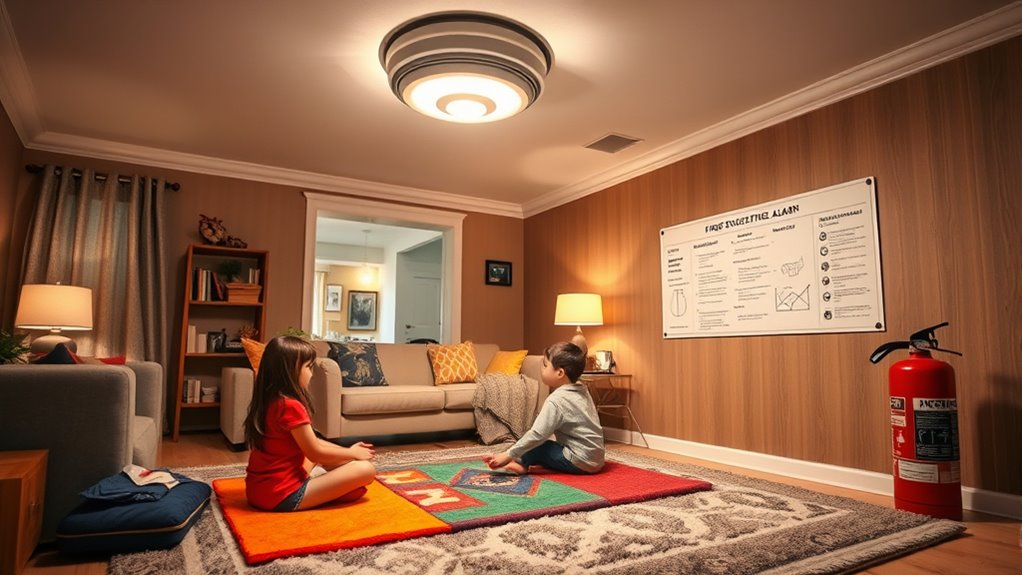

To guarantee home fire safety, create and regularly practice an escape plan with at least two exits from each room. Install and test smoke alarms on every level and inside bedrooms, making sure they work properly. Keep fire extinguishers accessible, especially in the kitchen, and know how to use them. Stay vigilant with safety checks and update your plan as needed. Continuing with these steps will help you better understand how to protect yourself and loved ones.
Key Takeaways
- Install and regularly test smoke alarms on every level and inside bedrooms for early fire detection.
- Identify and practice at least two escape routes per room, keeping them clear of obstacles.
- Develop and rehearse a fire escape plan, including outdoor meeting points, with all household members.
- Keep fire extinguishers accessible and know how to use them properly for small fires.
- Maintain vigilance by routinely checking safety equipment, practicing fire drills, and updating safety plans.

Have you ever considered how simple precautions can prevent devastating fires in your home? Many fires start unexpectedly, but with the right fire safety equipment and clear emergency escape routes, you can greatly reduce the risk and protect your loved ones. Installing smoke alarms on every level and inside bedrooms is a fundamental step. These alarms provide early warnings, giving you precious seconds to respond before smoke or flames become overwhelming. Regularly testing and maintaining your smoke detectors ensures they function properly when needed most. Fire extinguishers, especially in the kitchen and garage, are also essential fire safety equipment. Knowing how to use them correctly can help you put out small fires before they escalate. Remember, not every fire can be extinguished with a extinguisher, so always prioritize your safety and evacuate if the fire grows beyond control.
Alongside proper equipment, planning your emergency escape routes is indispensable. You should identify at least two exits from each room—preferably doors and windows—that are easy to access. Make sure these escape routes are free of clutter and obstacles so you can leave quickly if a fire breaks out. Practice your escape plan regularly with everyone in your household, especially children and elderly family members. During drills, emphasize the importance of staying low to avoid smoke inhalation and choosing the safest route out. It’s equally important to establish a designated outdoor meeting point where everyone can gather safely after escaping. This way, you’ll know if everyone is accounted for and can call emergency services promptly. Developing fire safety awareness can also help prevent complacency and ensure everyone understands the risks.
In addition to planning and equipment, understanding the importance of clear communication during an emergency is essential. Keep a fire emergency kit nearby, stocked with essentials like a flashlight, batteries, a whistle, and basic first aid supplies. Instruct your family to call emergency services immediately once outside, and never re-enter a burning building. Regularly review your fire safety plan, update your escape routes if your home layout changes, and remind everyone of the importance of fire safety equipment. These small but significant steps can make a life-saving difference during a fire. By staying vigilant, practicing your escape strategies, and maintaining your fire safety equipment, you’re actively creating a safer environment for yourself and your loved ones. Prevention, preparation, and awareness are the keys to minimizing fire risks and ensuring everyone’s safety at home.

First Alert Smoke Alarm, Battery-Operated Detector with Test & Silence Button, SMI100, 1-Pack
First Alert's Precision Detection advanced sensing technology complies with new industry standards to reduce cooking nuisance alarms and…
As an affiliate, we earn on qualifying purchases.
As an affiliate, we earn on qualifying purchases.
Frequently Asked Questions
How Often Should Smoke Alarms Be Replaced?
You should replace your smoke alarms every 8-10 years to guarantee they work properly. Regular battery maintenance is essential; change the batteries at least once a year or whenever the low battery alert sounds. Keep in mind that smoke alarm lifespan varies, so check the manufacturer’s instructions. If your alarm is over a decade old or malfunctioning, replace it promptly to stay protected and ensure it detects fires effectively.
What Are Common Causes of House Fires?
Ever wonder what causes house fires? Common culprits include cooking accidents, electrical safety issues, and improper use of fire extinguisher types. You might forget that overloaded outlets or faulty wiring can spark fires, so always check your electrical systems. Are you prepared to handle small fires? Keeping a fire extinguisher nearby and knowing the right type for different fires helps prevent small problems from becoming disasters.
How Can Children Learn Fire Safety at Home?
You can teach children fire safety at home through engaging fire safety education, making sure they understand fire hazards and escape plans. Keep a close eye on them with child supervision, especially around stoves, candles, and electrical outlets. Practice fire drills regularly so they know what to do in an emergency. Use simple language and age-appropriate lessons to help kids remember safety rules and stay calm during a fire.
Are There Specific Fire Safety Tips for Pet Owners?
Imagine your pet peacefully sleeping when a fire strikes; you can safeguard them by keeping fire safety in mind. Use fire-resistant bedding to reduce hazards, and always keep escape routes clear. Install pet-friendly alarms and practice evacuation with your pet regularly. Remember, pet safety is just as important—plan ahead, stay alert, and make certain your furry friends are secure during emergencies.
What Should I Include in a Fire Escape Kit?
You should include essentials like a flashlight, batteries, and a first aid kit in your fire escape kit. Pack important documents and emergency contact information, and make sure your fire escape routes are clear and accessible. Don’t forget to add personal items for pets. Keep the kit in a designated, easy-to-reach spot so you’re ready to act quickly during an emergency. Regularly check and update your kit to stay prepared.

Kidde Fire Extinguisher for Kitchen, Residential, Single-Use, 711A
Reliable Fire Protection: Stop tough grease fires
As an affiliate, we earn on qualifying purchases.
As an affiliate, we earn on qualifying purchases.
Conclusion
Now that you’ve learned the essentials of home fire safety—plans, alarms, and practice—imagine the night you hear that sudden, piercing alarm. Will you know exactly what to do? Every second counts, and a well-practiced plan could be the difference between safety and disaster. Stay alert, stay prepared. Your quick action could be the key to keeping everyone safe—so don’t wait until it’s too late. Are you ready to take that first step?

Kidde Fire Escape Ladder, 2-Story Rope Ladder, Extends to 13-Feet, Anti-Slip Rungs
Easy to use fire ladder – attaches quickly to most common windows (up to 11 inches deep &…
As an affiliate, we earn on qualifying purchases.
As an affiliate, we earn on qualifying purchases.

AmzBoom 2-Pack Fire Extinguisher for Home, Kitchen, Car, and Grill with Mounting Bracket– Extinguishing Spray, Compact A, B, C, K – Eco-Friendly, Prevents Reignition.
Simple, Fast Activation:Take control with an easy-to-use design—just press, aim, and spray. Each extinguisher Emergency Survival Kits includes…
As an affiliate, we earn on qualifying purchases.
As an affiliate, we earn on qualifying purchases.