On cold days, creating an indoor obstacle course is a great way to keep kids active and develop their gross motor skills. You can include activities like climbing on ropes or ladders, balancing on beams or lines, and jumping over soft pads. Start simple and gradually add more challenging elements as confidence grows. To guarantee safety and fun, use soft mats and secure equipment. Keep exploring for even more ideas to stay active indoors.
Key Takeaways
- Indoor obstacle courses promote active gross-motor play when outdoor conditions are too cold.
- Incorporate climbing, balancing, and crawling challenges to engage different muscle groups safely indoors.
- Use soft mats and secure equipment to ensure safety during vigorous activities on cold days.
- Gradually increase difficulty with varied textures, heights, and movement to maintain engagement and skill development.
- Design activities suitable for solo or family participation, making cold days fun and physically active.
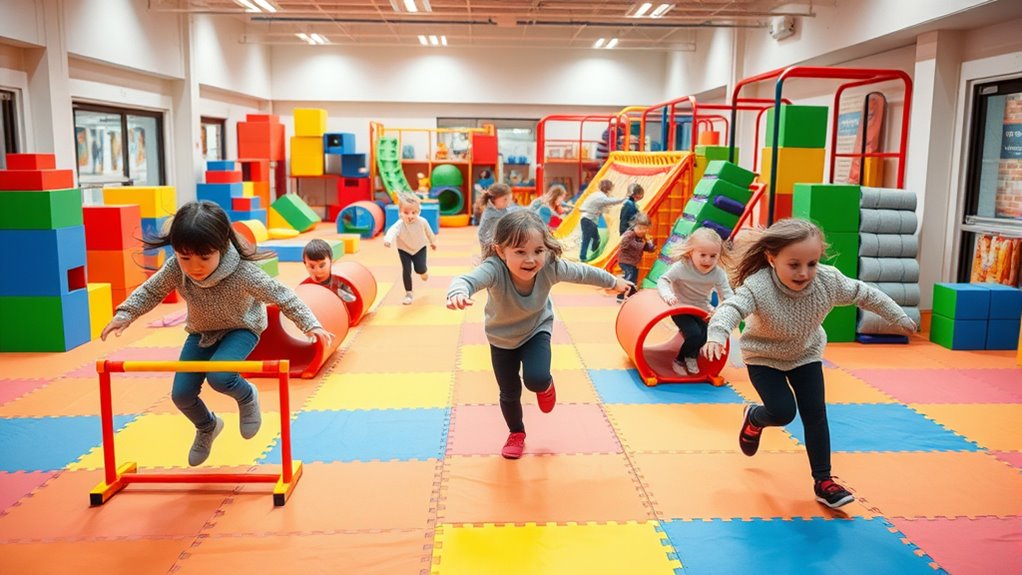
Creating an indoor obstacle course is a fun and engaging way to stay active, especially when outdoor options are limited. When the weather keeps you inside, it’s easy to feel cooped up and restless. That’s where a well-designed obstacle course comes in, turning your space into a dynamic playground that challenges your body and keeps you moving. One of the key elements to include are climbing challenges. These can range from sturdy ropes or climbing walls to a set of stairs or a climbing ladder. Climbing boosts strength and coordination while giving you that sense of adventure. Plus, it encourages problem-solving as you figure out the best way to scale and descend safely. Integrating different heights and textures keeps the course interesting and stimulates your spatial awareness. Ensuring that the equipment used is safe and appropriate is crucial for preventing injuries during active play.
Balance activities are equally essential in creating an effective indoor obstacle course. You want to incorporate elements that test your stability, like balance beams, wobble boards, or even a line of tape on the floor to walk along. These activities enhance your core strength and improve your overall stability, which translates to better coordination and posture in daily life. Balancing tasks can be made more challenging by adding movement, such as walking backward or carrying light objects while balancing. The key is to design these activities to be safe yet sufficiently challenging, so you stay engaged without risking injury. Combining climbing challenges with balance activities creates a well-rounded workout that targets multiple gross-motor skills, including strength, coordination, and spatial awareness.
When setting up your obstacle course, think about variety and progression. Start with simpler challenges and gradually increase difficulty as your skills improve. For example, you might begin with a low balance beam and then move on to a higher, more unstable one. Similarly, you can add more complex climbing challenges as you gain confidence. Keep in mind that safety is paramount; ensure all equipment is secure, and the area is free of sharp or hard objects. Use soft mats or rugs underneath climbing and balancing zones to cushion any falls. Make it a family activity or a solo challenge—either way, the goal is to keep moving and have fun.
Designing an indoor obstacle course with climbing challenges and balance activities makes gross-motor play accessible, even on cold days. It not only helps improve physical skills but also boosts confidence and provides a healthy outlet for energy. With some creativity and safety precautions, you’ll find that staying active indoors can be just as exciting and beneficial as outdoor play. Incorporating vetted safety guidelines ensures that your indoor activities remain both fun and secure.
Frequently Asked Questions
What Safety Precautions Are Recommended for Indoor Obstacle Courses?
You should conduct hazard assessments before setting up the obstacle course to identify potential risks. Make certain constant supervision strategies are in place, so you can quickly address any unsafe behavior or issues. Keep the area clear of sharp objects and guarantee mats or soft padding are used to cushion falls. Regularly inspect equipment for damage and enforce rules to promote safe play, helping prevent injuries during indoor obstacle course activities.
How Can Parents Modify Obstacle Difficulty for Different Age Groups?
You can modify obstacle difficulty by tailoring activities to each child’s age and skill level. For younger kids, simplify tasks like lowering heights or reducing obstacles, focusing on basic gross motor skills. For older children, increase challenge through taller structures or complex movements. Always observe and adjust in real-time, ensuring safety while encouraging development. This way, every child stays engaged and safe, promoting fun and growth at their individual pace.
What Are the Best Materials for Creating Durable Indoor Obstacles?
Did you know that choosing the right materials can make indoor obstacles last up to five times longer? To guarantee obstacle durability, opt for high-density foam, sturdy PVC pipes, and thick, non-slip mats. These materials are safe, resilient, and easy to clean, making them ideal for active kids. Carefully selecting the right materials for your obstacle course keeps it safe, functional, and fun, even after many energetic play sessions.
How Do Indoor Obstacle Courses Benefit Children’s Developmental Skills?
Indoor obstacle courses boost your child’s motor skill development by encouraging them to climb, crawl, and jump, which enhances coordination and strength. They also promote confidence building as children master new challenges and overcome obstacles. By engaging in active play indoors, you help your kid develop essential physical skills while fostering a sense of accomplishment and independence, making play both fun and beneficial for their growth.
Are There Recommended Indoor Obstacle Setups for Small Spaces?
Research suggests that creative obstacle ideas can maximize small space challenges effectively. You can set up a mini obstacle course using items like cushions, chairs, and tape lines for agility and balance. Focus on vertical elements, like hanging items or climbing spots, to save space. Keep it simple yet engaging, ensuring kids stay active while addressing limited room. With imaginative designs, even small areas become exciting, safe environments for gross-motor play.
Conclusion
So, who would’ve thought that battling through cushions and crawling under tables would turn a chilly day into the best adventure? As you dodge pillows and leap over obstacles, you realize indoor fun isn’t just a cozy fallback—it’s the highlight of your day. Ironically, staying warm and dry might just become your favorite reason to embrace chaos indoors. After all, sometimes the coldest days lead to the hottest, most memorable play moments.