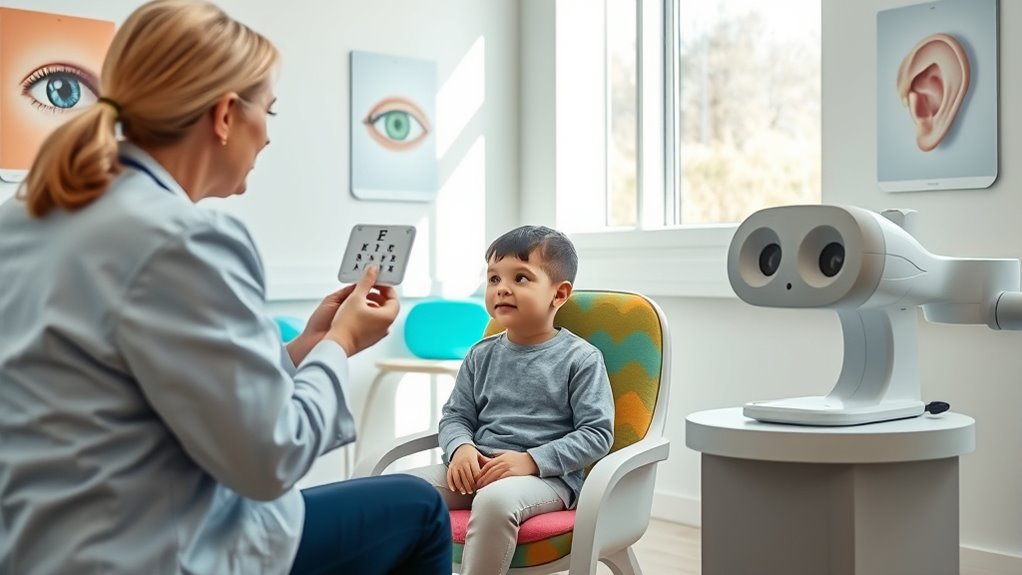

During vision and hearing screenings, you can expect quick, gentle tests that help identify potential issues early. For vision, your child may read letters, names of shapes, or follow moving objects. Hearing tests involve soft sounds or tones, with your child responding when they hear something. Your presence helps keep your child comfortable and engaged. If you’re curious about how to prepare or what to expect next, there’s more helpful information coming up.

Turn the school run and nap time into listening time
- Thousands of audiobooks, podcasts and originals
- Listen on your phone, tablet or Echo — also offline
- Cancel anytime
Key Takeaways
- Screenings are quick, simple, and non-invasive assessments of your child’s vision and hearing abilities.
- Parental presence and involvement help comfort your child and ensure accurate results.
- Expect procedures to include reading charts, identifying shapes, or listening for sounds, tailored to your child’s age.
- Healthcare providers may ask for your observations about your child’s recent sight or hearing changes.
- Early detection through screenings allows timely intervention and supports your child’s overall development.
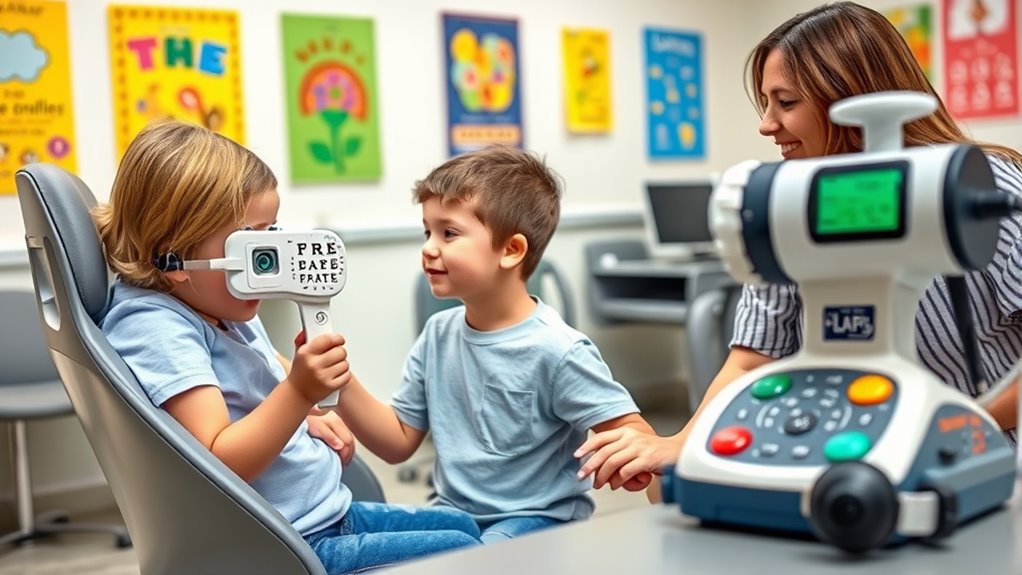
Have you ever wondered why regular vision and hearing screenings are essential for your health? These evaluations are fundamental steps in catching potential issues early, before they develop into more serious problems. When it comes to your child’s health, understanding what to expect during these screenings can help ease any anxiety and guarantee you’re actively involved in their well-being. Screening procedures are designed to be quick, non-invasive, and tailored to different age groups, so you should feel comfortable asking questions and seeking clarification throughout the process. Parental guidance plays a crucial role here; being informed allows you to advocate for your child’s needs and ensure they receive appropriate follow-up care if needed.
During a vision screening, the focus is on evaluating how well your child can see at various distances. The healthcare provider might have your child read letters on a chart, identify shapes, or follow objects with their eyes. These tests are simple and usually completed within a few minutes. For younger children or those unable to communicate effectively, the provider may use picture cards or observe eye movements to appraise visual function. Hearing screenings are similarly straightforward. They involve playing a series of soft sounds or tones through headphones, and your child is asked to respond when they hear a sound. For infants or non-verbal children, the provider may use specialized tests that measure the brain’s response to sound, such as auditory brainstem response testing.
It’s important to note that parental guidance is indispensable during these procedures. Your presence can help comfort your child and make the process smoother. You might be asked to assist in positioning your child or encouraging them to stay still and attentive. Additionally, your insights about your child’s behavior, habits, or any recent changes in sight or hearing can provide valuable context for the healthcare provider. They may also give you tips on how to support your child’s visual and auditory development at home, such as recommended activities or warning signs to watch for.
Products Worth Considering

LEGO Boost Creative Toolbox 17101 Fun Robot Building Set and Educational Coding Kit for Kids

LEGO Icons Tranquil Garden Building Set – Japanese Zen Garden DIY Kit for Adults, 10315

Nanit Display Screen – 8 Touchscreen Dedicated Baby Video Monitor – HD
As an affiliate, we earn on qualifying purchases.
Frequently Asked Questions
How Often Should My Child Undergo Vision and Hearing Screenings?
You should schedule vision and hearing screenings for your child at recommended intervals, typically every one to two years. The screening frequency depends on your child’s age, risk factors, and pediatrician’s advice. Regular checkups help catch issues early, ensuring timely intervention. Keep an eye on any signs of vision or hearing problems, and consult your healthcare provider to determine the best screening schedule tailored to your child’s needs.
Are Screenings Safe for Children With Special Needs?
Screenings are safe for children with special needs when providers use appropriate special needs accommodations. They tailor procedures to your child’s abilities, ensuring comfort and accuracy. You can trust that screening safety is a priority, with trained professionals carefully observing your child’s responses and adjusting as needed. Always communicate your child’s specific needs beforehand, so staff can prepare and provide the most supportive, safe environment for effective vision and hearing assessments.
What Signs Indicate My Child Needs a Screening Earlier Than Scheduled?
If you notice early warning signs like your child consistently rubbing their eyes, squinting, or having trouble hearing, trust your parental concerns and seek a screening sooner. Other indicators include frequent headaches, balance issues, or difficulty understanding speech. Don’t wait for a scheduled appointment if these signs appear; early detection can make a big difference in addressing potential vision or hearing problems promptly.
Can Screenings Detect All Vision or Hearing Problems?
They say, “Don’t put all your eggs in one basket,” and that’s true here. Screenings can identify many issues, but they have limitations, like false positives and missing some problems. No test catches everything, so if your child shows signs of vision or hearing trouble, follow up with a specialist. Regular checkups and open communication help catch issues early, even if screenings aren’t perfect.
How Should I Prepare My Child for the Screening Appointment?
To prepare your child for the screening appointment, focus on screening preparation by explaining what will happen in simple words and reassuring them it’s a quick, easy process. Make sure your child is well-rested and comfortable, which helps reduce anxiety. Bring a favorite toy or blanket for added child comfort, and encourage your child to ask questions. Staying positive and calm yourself will help your child feel more relaxed during the screening.
Conclusion
By understanding what to expect from vision and hearing screenings, you can better support your child’s health. Did you know that about 1 in 10 children has a vision problem, yet many go undiagnosed? Regular screenings catch issues early, helping your child succeed academically and socially. Stay proactive, ask questions, and follow up with specialists if needed. Your involvement makes a big difference in ensuring your child’s clear sight and sound for a bright future.