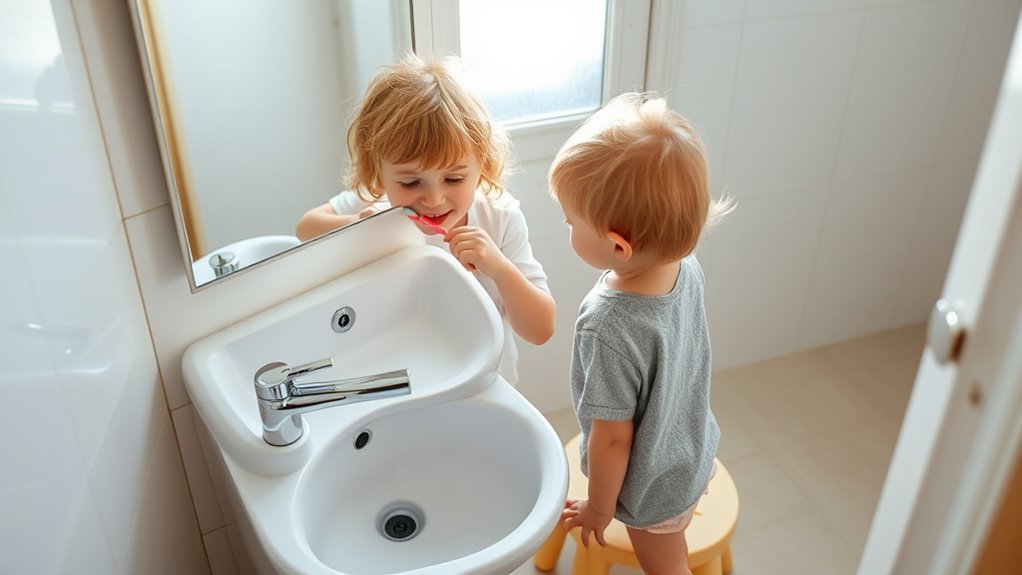

Establishing age-appropriate daily hygiene routines helps you foster independence and maintain good health. Encourage your child to brush their teeth thoroughly, including all surfaces and tongue, for two minutes daily. Support bathing routines by guiding them on washing hair and cleansing the body while gradually reducing assistance. Use patience and visual tools like charts or timers to build confidence. Keep working with your child, and you’ll discover more simple ways to promote lifelong personal care skills.

Turn the school run and nap time into listening time
- Thousands of audiobooks, podcasts and originals
- Listen on your phone, tablet or Echo — also offline
- Cancel anytime
Key Takeaways
- Tailor hygiene tasks to a child’s developmental stage to promote confidence and independence.
- Use visual aids and timers to help children understand and manage their routines effectively.
- Encourage consistent practice of brushing and bathing to build responsibility over time.
- Offer guidance and gentle reminders to reinforce proper techniques and routine adherence.
- Celebrate milestones to boost self-esteem and motivate ongoing engagement in personal care.

Maintaining a daily hygiene routine is crucial for staying healthy and feeling your best. When it comes to caring for yourself, establishing habits like tooth brushing and bathing independence plays a vital role. As you grow, these routines become more than just chores; they’re steps toward personal responsibility and self-confidence. Teaching children to develop these habits early on helps them understand the importance of cleanliness, and encouraging independence ensures they carry these skills into adulthood.
Tooth brushing is a fundamental part of daily hygiene that you should incorporate into your routine. It’s not just about fresh breath—it’s about preventing cavities, gum disease, and other oral health issues. When you’re learning to brush your teeth, focus on doing it thoroughly, covering all surfaces, including your tongue and the back molars. As you gain more independence, you’ll be able to manage this task on your own, selecting your toothpaste and ensuring you brush for the recommended two minutes. This independence not only keeps your teeth healthy but also boosts your confidence to handle other personal care tasks.
Bathing independence is another key aspect of maintaining good hygiene. It involves more than just getting clean; it’s about managing your personal grooming with minimal help. As a child, you might start with supervision, but the goal is to foster confidence in washing your hair, cleansing your body, and drying off properly. Over time, you learn to organize your toiletries, choose suitable clothing, and develop a routine that fits your schedule. Achieving bathing independence means you’re capable of taking care of your hygiene needs without relying heavily on others, which is a significant step toward self-sufficiency. Additionally, understanding the causes and risk factors of poor hygiene can motivate consistent habits to prevent health issues.
Encouraging independence in these areas requires patience and guidance. Offer gentle reminders and demonstrate proper techniques, but allow yourself or your child to practice and take ownership of the routines. Using visual charts or timers can help make the process engaging and manageable. Remember, the goal isn’t perfection but consistency. As you become more comfortable managing your hygiene, you’ll notice a boost in your overall well-being and self-esteem. The sense of accomplishment that comes with caring for yourself fosters a positive attitude toward daily routines, making them feel less like chores and more like essential self-care habits. Ultimately, developing age-appropriate independence in tooth brushing and bathing helps you maintain good health and build lifelong skills for personal care.
children's electric toothbrush with timer
As an affiliate, we earn on qualifying purchases.
As an affiliate, we earn on qualifying purchases.
Frequently Asked Questions
When Should Children Start Brushing Their Teeth Independently?
Children should start brushing their teeth independently around age 6, when they develop better coordination and understanding of oral hygiene. Encourage their independence by guiding them through tooth brushing milestones, like reaching all surfaces and using the right amount of toothpaste. Supervise initially to make sure they’re doing a thorough job, then gradually let them take full responsibility. This balance boosts their confidence and fosters good habits early on.
How Can Parents Encourage Independence in Bathroom Routines?
Imagine guiding your child through a gentle river of toilet training, encouraging them to paddle with growing confidence. To foster independence in bathroom routines, offer positive reinforcement and clear instructions, making pediatric hygiene a natural part of their day. Use visual cues or charts to help them remember steps, and celebrate small successes. Your patience and encouragement turn bathroom routines into a confident, self-reliant adventure.
What Safety Precautions Are Needed During Self-Care Activities?
You should childproof your bathroom by installing safety locks and covering outlets to prevent accidents. Keep hygiene products out of reach to guarantee safety, and choose age-appropriate, non-toxic items. Supervise self-care activities closely until your child demonstrates consistent safety awareness. Regularly check for hazards, teach proper hygiene, and reinforce safety rules, making sure your child understands the importance of safe practices during their routine.
How Do Hygiene Routines Differ for Children With Special Needs?
Imagine a child with sensory sensitivities who struggles with toothbrushes. You adapt by using specialized brushes and sensory-friendly toothpaste, helping them brush comfortably. For children with special needs, hygiene routines often require personalized strategies, like using adaptive tools or gentle techniques, to guarantee safety and independence. Your patience and tailored approaches make daily hygiene manageable, fostering confidence and comfort for the child.
What Are Signs of Developing Independence in Hygiene Practices?
You’ll notice signs of independence in hygiene practices when your child starts completing tasks like brushing teeth or washing hands with minimal help. Look for hygiene milestones such as using soap properly, dressing independently afterward, or managing basic grooming. They might also remind you about hygiene routines or choose their own products. These behaviors show your child is gaining confidence and developing essential self-care skills, fostering their growing independence.
Conclusion
As you guide your child through daily hygiene routines, remember that these moments build independence and confidence. Sometimes, it’s the small habits, like a toothbrush’s gentle swipe or a towel’s soft hug, that leave lasting impressions. Just as a single drop creates ripples, these routines shape their future self-care. Embrace each step, knowing that today’s efforts quietly prepare them for tomorrow’s independence—proof that even the simplest acts hold profound significance.
Fall Picks
fall essentials
As an affiliate, we earn on qualifying purchases.