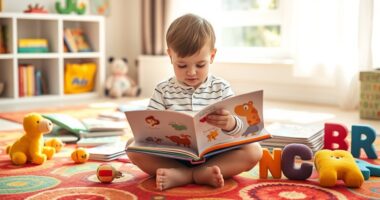
Introducing your baby to two languages early offers numerous benefits. It helps develop their brain’s flexibility, improves pronunciation, and boosts problem-solving skills. Bilingual children also gain a deeper cultural understanding and a stronger sense of identity. Managing two languages enhances their multitasking and executive control. This foundation promotes long-term cognitive, social, and cultural growth, setting them up for success in various environments. Keep exploring to discover how these advantages shape your child’s future.

Turn the school run and nap time into listening time
- Thousands of audiobooks, podcasts and originals
- Listen on your phone, tablet or Echo — also offline
- Cancel anytime
Key Takeaways
- Early bilingual exposure enhances brain adaptability and improves phonetic awareness.
- Managing two languages boosts executive control and cognitive flexibility.
- Bilingual babies develop nuanced understanding of syntax, vocabulary, and context with natural language skills.
- Dual language environments foster better multitasking and problem-solving abilities.
- Early bilingualism promotes cultural awareness, identity, and lifelong cognitive and social advantages.

Have you ever wondered how babies learn to speak multiple languages? It’s a fascinating process that involves more than just mimicking sounds; it’s about shaping their entire understanding of language development and cultural identity. When you introduce two languages early on, your baby’s brain becomes highly adaptable, making it easier for them to distinguish sounds, words, and grammar from each language. This early exposure doesn’t just boost their linguistic abilities—it also enriches their cultural awareness. As they grow, they begin to associate specific sounds and phrases with particular cultural contexts, helping them develop a deeper connection to their heritage. This dual language environment allows your little one to navigate different cultural worlds seamlessly, fostering a strong sense of cultural identity from a young age.
Introducing two languages early enhances your baby’s brain, cultural awareness, and ability to navigate diverse worlds seamlessly.
In terms of language development, babies who grow up bilingual tend to develop better phonetic awareness. They learn to differentiate subtle sound variations that monolingual children might miss. This heightened sensitivity can lead to improved pronunciation skills and a more flexible understanding of language rules. Over time, bilingual babies often outperform their monolingual peers in tasks that require executive control—such as switching between tasks or ignoring distractions—because their brains are constantly managing two sets of linguistic rules. This cognitive flexibility is a significant advantage that can benefit them throughout their lives, especially in problem-solving and multitasking. Additionally, engaging with two languages can promote cultural intelligence, enabling children to better understand and adapt to diverse social environments.
Furthermore, exposing your baby to two languages early on encourages a natural and effortless acquisition of language skills. Their brains are wired to absorb linguistic input, and when they hear two languages consistently, they develop a more nuanced understanding of syntax, vocabulary, and context. This early start also means they’re less likely to experience language delay or confusion, as their brain seamlessly integrates both languages into their daily interactions. Over time, this bilingual environment fosters confidence in using language as a tool for communication, expression, and cultural connection.
Ultimately, when you raise a bilingual baby, you’re giving them a remarkable gift: the ability to think flexibly, communicate across cultures, and develop a strong sense of cultural identity. Their early language development is not just about vocabulary—it’s about shaping their entire worldview. By nurturing their linguistic and cultural growth from the start, you’re helping them build a foundation that supports lifelong learning, empathy, and cross-cultural understanding. It’s a journey that benefits their cognitive development and broadens their horizons in ways that last a lifetime.
As an affiliate, we earn on qualifying purchases.
Frequently Asked Questions
How Early Should a Child Be Introduced to Two Languages?
You might wonder about the ideal age of introduction for bilingualism. Generally, early language exposure is beneficial, so starting around birth or during the first year helps your child develop strong language skills. The age of introduction influences how easily they pick up both languages. The sooner they’re exposed, the better their chances of mastering both languages naturally, fostering bilingual proficiency and cognitive advantages over time.
Can Bilingualism Delay Speech Development in Babies?
You might wonder if bilingualism could cause speech delay or language confusion in babies. The good news is, it rarely does. In fact, with proper exposure, bilingual children often develop language skills on par with their monolingual peers. While some temporary confusion or slower speech might appear initially, this usually resolves quickly. Stay patient and consistent, and you’ll see your child’s language abilities flourish without long-term delays.
What Are the Best Ways to Promote Bilingual Learning at Home?
To promote bilingual learning at home, you should create language immersion opportunities, like speaking both languages regularly and labeling objects around the house. Incorporate reading strategies by reading books in both languages and encouraging your child to repeat words and phrases. Consistency is key; make language practice enjoyable, interactive, and part of daily routines to help your child develop strong bilingual skills naturally.
Do Bilingual Babies Have Different Social Development Needs?
You might notice that bilingual babies have unique social development needs, such as managing code switching challenges and shaping their social identity development. They may sometimes switch languages to fit different social contexts or express themselves better. Supporting their social growth involves encouraging open conversations about language differences and identity, helping them feel confident in their bilingualism. This fosters healthy social skills and a positive sense of self in diverse environments.
How Does Bilingualism Affect a Child’s Emotional Development?
Think of a bilingual child’s emotional development like a garden with many vibrant flowers. You notice that learning two languages helps children strengthen emotional regulation, allowing them to better manage feelings. It also deepens their cultural identity, making them more empathetic and open-minded. Bilingual children often develop a richer emotional understanding, which supports healthier relationships and self-awareness, shaping their emotional growth in unique, meaningful ways.
Conclusion
By introducing your baby to two languages early, you’re giving them a remarkable cognitive edge. For instance, a study of bilingual children showed they excelled in problem-solving and multitasking compared to their monolingual peers. Imagine your little one effortlessly switching between languages, developing enhanced memory and adaptability. Embracing bilingualism isn’t just about communication; it’s about fostering a smarter, more flexible mind that can navigate the world with confidence and creativity.
Halloween Picks
halloween
As an affiliate, we earn on qualifying purchases.