

At work, you have the right to reasonable break time and private space for pumping, thanks to federal laws like the Fair Labor Standards Act. Talk openly with your employer about your needs and create a schedule that fits your workload, using flexible timing when possible. Set up a clean, private space equipped with necessary supplies to make pumping easier. Managing your routine and addressing common challenges helps maintain milk supply and comfort. Keep exploring for more real-world tips and solutions.

Turn the school run and nap time into listening time
- Thousands of audiobooks, podcasts and originals
- Listen on your phone, tablet or Echo — also offline
- Cancel anytime
Key Takeaways
- Federal laws require employers to provide reasonable break time and private, non-bathroom space for pumping.
- Communicate openly with your employer about your pumping needs and preferred schedule to foster support.
- Establish a consistent routine using a designated, comfortable space with organized supplies for effective pumping.
- Use portable pumps and pre-packed kits for convenience during busy workdays and tight schedules.
- Prioritize your comfort and health by ensuring proper flange fit, staying hydrated, and practicing relaxation techniques.
As an affiliate, we earn on qualifying purchases.
Know Your Rights When Pumping at Work
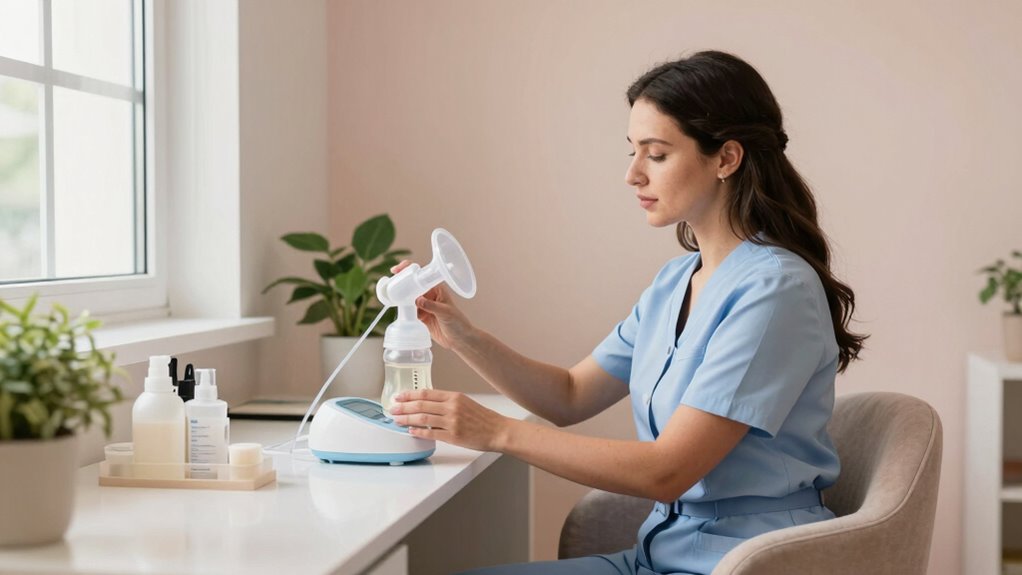
Understanding your rights when pumping at work is essential to guarantee you can do so comfortably and legally. Federal laws, like the Fair Labor Standards Act, require employers to provide reasonable break time and a private space, other than a bathroom, for breastfeeding or pumping. Knowing these rights helps you advocate for yourself and ensure you access the breastfeeding benefits your baby needs. If you’re unsure about your rights, consider a lactation consultation, which can clarify your legal protections and offer tips for communicating with your employer. Staying informed empowers you to create a supportive environment, making pumping at work more manageable. Additionally, being aware of privacy policies can help you understand how your personal data, including health-related information like breastfeeding needs, is protected in the workplace. Recognizing workplace accommodations can ensure your employer provides necessary support for your pumping schedule. Being familiar with employee rights can help you navigate any challenges or concerns that arise related to breastfeeding accommodations. Knowing your rights also enables you to address potential workplace discrimination effectively, ensuring a respectful and supportive environment.
Talk to Your Employer About Your Pumping Needs

Once you’re familiar with your rights to pump at work, talking openly with your employer is the next step. Approach workplace communication with confidence and clarity, emphasizing your need to pump and your commitment to maintaining productivity. When discussing your pumping needs, practice breastfeeding etiquette—be respectful, professional, and straightforward. Share your preferred schedule and any accommodations that will help you succeed without disrupting team workflow. Being transparent fosters understanding and demonstrates that your pumping breaks are essential for your well-being. Remember, a good conversation can lead to a supportive environment where your rights are respected. Keep the tone positive and collaborative, and be prepared to listen and address any concerns your employer might have. Additionally, understanding projector cabling solutions can help in creating a comfortable and efficient workspace for all, especially when considering the setup of home theater projectors to improve your environment. Incorporating energetic alignment principles can also foster a more supportive atmosphere for your needs and promote mutual understanding in the workplace. Exploring water-related workplace wellness programs, such as aquatic therapy options, can further support your health and well-being during this time. Being aware of flexible scheduling options can also make it easier to balance your work responsibilities with your pumping schedule.
Create a Pumping Schedule That Fits Your Workday

Creating a pumping schedule that fits your workday starts with evaluating your daily routine and identifying the best times to pump. Consider your work hours, breaks, and workload to find consistent intervals. Incorporate breastfeeding techniques, like gentle hand expression or using a double pump, to maximize efficiency during limited time. Remember, frequent pumping helps maintain supply and prevents discomfort. Maintaining a long-term structure can help you stay consistent and adapt your routine as needed. After pumping, focus on post-pumping nutrition by staying hydrated and consuming balanced snacks to support milk production. Planning ahead guarantees you can stick to your schedule and avoid unnecessary stress. Keep your schedule flexible enough to accommodate unexpected changes, but consistent enough to establish a routine. With a tailored plan, you’ll balance work demands and your breastfeeding goals effectively.
Set Up a Comfortable, Private Pumping Space at Work

Having a designated, private space at work makes pumping more efficient and comfortable. To create this ideal environment, consider these steps:
- Choose a clean, quiet room with a lock or privacy door, ensuring it’s free from distractions.
- Stock it with essential breast pump accessories like bottles, tubing, and a comfortable chair.
- Keep the space organized to streamline your pumping sessions and reduce stress.
- Follow locker room etiquette by cleaning up after each use and respecting others’ privacy.
A dedicated space helps you relax and focus during pumping, making it easier to maintain your milk supply. Remember, a little preparation goes a long way in creating a positive experience at work.
Manage Pumping Sessions During Your Busy Workday

Balancing pumping sessions with a busy workday can be challenging, but with proper planning, it becomes manageable. Stick to a consistent schedule to maintain milk supply and reduce stress. Use your pumping accessories efficiently—pre-packed kits or portable pumps make it easier to fit sessions into tight windows. Be mindful of breastfeeding etiquette by discreetly communicating your needs to colleagues and choosing a private, comfortable space for pumping. Keep your supplies organized to avoid delays, and set reminders to ensure you don’t forget a session. Remember, staying flexible helps you adapt to unexpected work demands. Incorporating knowledge about environmental impact of tissue paper can inspire you to choose eco-friendly supplies and reduce waste during your breastfeeding journey. Additionally, understanding the seasonal variations in your area can help you plan more effectively around changes in temperature and daylight. Being aware of workplace policies regarding breastfeeding can also empower you to advocate for supportive environments. Considering the ethical sourcing of breastfeeding supplies can further align your choices with environmentally responsible practices. Prioritizing your pumping schedule helps you meet your breastfeeding goals without disrupting your workflow or workplace relationships.
Troubleshoot Common Pumping Challenges

When you encounter issues like leakage, clogs, low supply, or discomfort, it’s important to identify the cause quickly. Troubleshooting these common challenges can help you maintain a smooth pumping routine without frustration. Let’s explore practical solutions to keep your pumping experience comfortable and efficient. Understanding the electric power output of your pump can also help in diagnosing performance issues. Additionally, inspecting airless paint spraying tips and gear, such as hoses and filters, regularly can prevent many common problems before they escalate. Regular maintenance and awareness of your pump’s performance specifications can greatly improve reliability and reduce troubleshooting time. Being familiar with halal traditions related to health and wellness can also provide insights into holistic approaches that support your comfort during pumping routines. Moreover, keeping a troubleshooting checklist handy can streamline diagnosing and fixing issues promptly.
Managing Leakage and Clogs
Leakage and clogs are common issues that can disrupt your pumping routine, but they are often easy to troubleshoot with the right approach. First, check your pumping accessories for proper fit; a loose flange can cause leaks. Second, ensure your valves and membranes are clean and in good condition—dirty or worn parts can lead to obstructions. Third, avoid overfilling your milk storage bottles, which can create backpressure and hinder flow. Fourth, regularly clear any milk buildup in the tubing or connectors to prevent blockages. Remember, using the right accessories and maintaining your equipment keeps milk flowing smoothly and reduces leaks. Staying attentive to these details makes pumping more efficient and less frustrating. Additionally, inspecting for piercing care and hygiene can help prevent irritation that might affect your pumping comfort and routine.
Dealing With Low Supply
Have you noticed a decline in your milk supply during pumping sessions? Low supply can be frustrating, but staying confident is key. First, make certain you’re practicing good breastfeeding etiquette—minimize distractions and relax as much as possible. Check your pumping gear options; a comfortable, well-fitting flange and a reliable pump make a difference. You might also try power pumping—alternating 20 minutes of pumping with 10-minute breaks—to boost supply. Hydrate well and maintain a balanced diet, as nutrition impacts milk production. Some moms find options like breast massage or skin-to-skin contact before pumping helpful. Remember, supply fluctuations are normal, and consistency often yields improvement. Additionally, utilizing relaxation techniques can help optimize your comfort and efficiency during pumping sessions. It’s also beneficial to evaluate your pumping schedule to ensure it aligns with your body’s natural rhythms. Incorporating breastfeeding support from professionals can provide personalized strategies to address low supply concerns. If concerns persist, consult a lactation specialist to identify tailored strategies and guarantee your gear is optimized for your needs.
Overcoming Discomfort and Pain
Discomfort and pain during pumping are common hurdles, but addressing them can make the experience more comfortable and effective. If you’re dealing with breast pain or nipple soreness, try these tips:
- Ensure your flanges fit properly—ill-fitting equipment causes pain.
- Use a gentle, slow suction setting to start, then gradually increase.
- Apply warm compresses before pumping to loosen tissue and reduce soreness.
- Take breaks if you experience sharp pain, and don’t hesitate to consult a lactation specialist.
- Consider incorporating smart home technology like automated reminders or temperature-controlled warming devices to optimize your pumping routine and improve comfort.
- Remember that vetted products and accessories can enhance your pumping experience by providing better fit and comfort, reducing the risk of soreness.
- Always ensure your portable oil radiators are used safely and according to manufacturer instructions to prevent accidents and ensure comfort during use.
- Being aware of early warning signs of breast issues can help you address problems promptly and maintain comfort.
- Monitoring pumping efficiency with modern tools can help identify issues early and improve overall comfort during sessions.
Balance Work Responsibilities and Breastfeeding Goals

Balancing work responsibilities with breastfeeding goals can be challenging, but with careful planning, it’s entirely achievable. Staying motivated to continue breastfeeding requires clear breastfeeding motivation and a supportive mindset. To maintain work-life harmony, schedule regular pumping breaks and communicate your needs with your employer. Prioritize tasks to create space for pumping sessions and avoid unnecessary stress. Use your breaks efficiently—whether that’s relaxing, reviewing feeding goals, or simply taking a moment for yourself. Remember, consistency is key; sticking to your pumping routine helps sustain milk supply and keeps you motivated. By setting boundaries and planning ahead, you can meet your work commitments while honoring your breastfeeding goals, making the entire experience more manageable and rewarding.
Frequently Asked Questions
How Can I Handle Unexpected Work Emergencies While Pumping?
When unexpected work emergencies occur, stay calm and prioritize emergency planning by communicating with your supervisor as soon as possible. Request flexible scheduling options to accommodate pumping needs, and consider having backup supplies ready, like extra bottles or a portable pump. Being proactive helps you manage sudden situations effectively, ensuring you continue to provide breast milk while handling work emergencies without stress or interruption.
Are There Legal Protections for Unpaid or Part-Time Workers Who Pump?
They say, “The law is only as strong as those who enforce it.” Yes, workplace accommodations and legal protections extend to unpaid and part-time workers who pump. Federal laws like the Fair Labor Standards Act (FLSA) and the Affordable Care Act require employers to provide reasonable break time and accommodations. Even part-time workers are protected, so you should feel empowered to request what you need without fear of retaliation.
What Are the Best Portable Breast Pump Options for Work?
The best portable breast pump options for work feature quiet operation, compact size, and adjustable suction settings. Brands like Spectra, Medela, and Elvie offer excellent portable pumps that fit easily into your bag and provide efficient pumping. Look for pumps with rechargeable batteries and customizable settings, so you can pump comfortably and discreetly during breaks. These features make your pumping routine more convenient and manageable while at work.
How Can I Maintain Milk Supply When Working Long Hours?
Balancing long hours and maintaining milk supply feels like juggling, but with the right support, you can succeed. Prioritize regular pumping sessions, even if they’re short, and stay hydrated. Seek breastfeeding support from a lactation consultant to optimize your technique and milk production. Staying consistent and confident helps keep your supply steady, turning long workdays into manageable steps toward your breastfeeding goals.
What Should I Do if My Employer Denies My Pumping Rights?
If your employer denies your breastfeeding rights, you should first review your local workplace accommodation laws. Politely remind them of your rights to breastfeeding accommodations and document your requests. If they still refuse, consider reaching out to your HR department or a legal advisor for support. You can also file a complaint with the appropriate government agency to guarantee your workplace respects your breastfeeding rights and provides necessary accommodations.
Conclusion
Remember, advocating for your pumping rights is like tending a delicate garden—you need the right space, schedule, and support to help it flourish. By knowing your rights and planning ahead, you can nurture your breastfeeding journey without letting work become a stormy sea. Stay confident, communicate openly, and don’t be afraid to ask for what you need. With these tools, you’ll turn the challenge into a smooth, steady flow of success.
Fall Picks
fall essentials
As an affiliate, we earn on qualifying purchases.