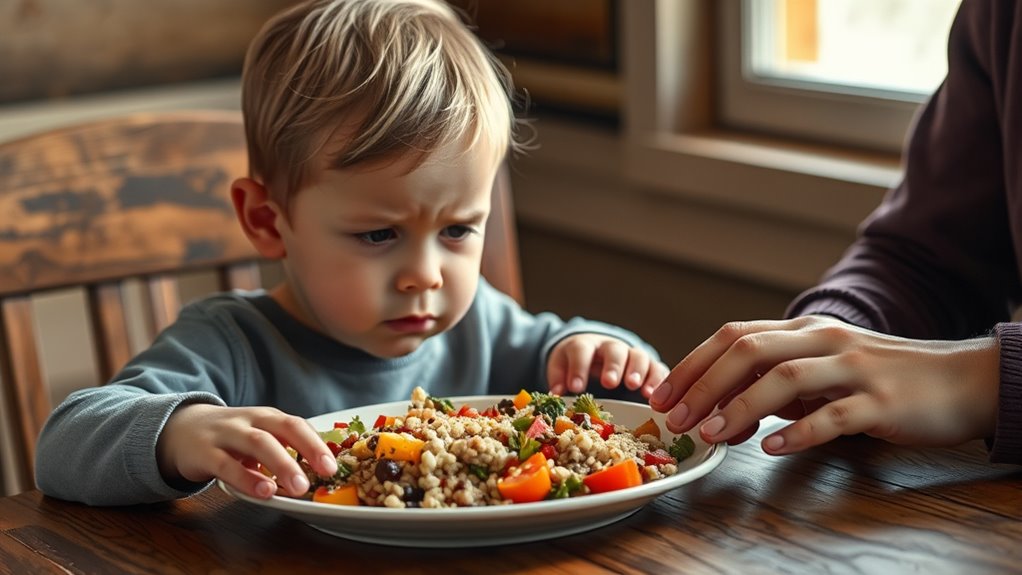

To address picky eating through the division of responsibility, focus on what you control: offering nutritious foods, creating a relaxed mealtime, and respecting your child’s choices. Avoid pressuring them to eat specific foods and instead gently encourage trying new things through repeated exposure. Let your child decide how much to eat within a positive environment to build trust and autonomy. Keep in mind, implementing these strategies can gradually improve their eating habits as you learn more.

Get baby and family essentials delivered free — and shop member deals
- Fast, free delivery on millions of items
- Access to Prime Big Deal Days deals on October 6–7
- Prime Video, Amazon Music and more included
Key Takeaways
- The division of responsibility emphasizes parents offering healthy foods without forcing children to eat specific items.
- Parents control what, when, and where meals are served, while children decide how much and whether to eat.
- Repeated exposure to new foods in a supportive environment encourages picky eaters to accept a variety of options over time.
- Modeling positive eating behaviors and creating a relaxed mealtime environment foster healthy food choices.
- Respecting children’s autonomy and avoiding pressure helps reduce mealtime stress and supports developing healthy eating habits.
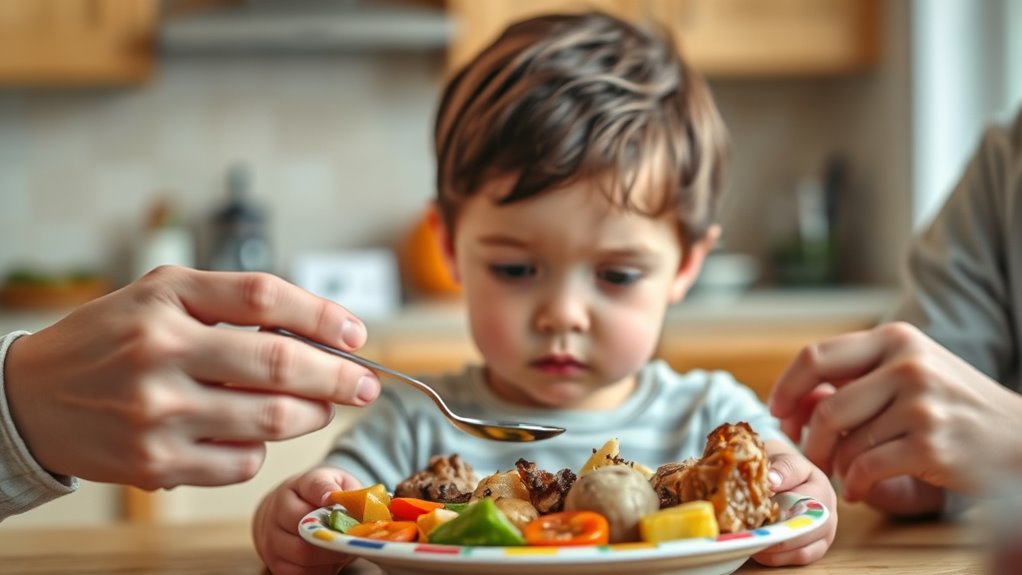
Picky eating isn’t just a phase; it can also be a source of frustration for both children and parents. When your child refuses to try new foods or insists on only a handful of favorites, it’s tempting to push harder or offer bribes. But understanding the division of responsibility in feeding can help reduce stress and foster healthier eating habits. The key lies in implementing effective feeding strategies while clearly defining parental roles, so your child learns to develop independence and trust around food.
In the division of responsibility, you, as the parent, are responsible for what, when, and where your child eats. That means you choose the nutritious meals and snacks, establish regular mealtimes, and create a positive eating environment. Your role isn’t to force your child to eat certain foods or to ensure they finish everything on their plate. Instead, your focus should be on offering a variety of healthy options and allowing your child to decide how much to eat. This approach minimizes power struggles and helps your child listen to their internal hunger cues, which is essential for developing healthy eating habits.
Feeding strategies play a pivotal role here. For example, offering new foods alongside familiar favorites can make trying them less intimidating. Keep portions small and serve foods in different ways—sometimes presentation matters as much as taste. Repeated exposure is also indispensable; it might take several tries before a child accepts a new food. Patience and consistency are your best allies. Avoid pressuring or bribing, as this can backfire by making mealtime stressful or turning food into a battleground. Instead, create a relaxed atmosphere where your child feels safe to explore different tastes without fear of judgment or punishment.
Offer new foods with familiar ones, keep portions small, and be patient through repeated exposures.
Your parental role extends beyond just providing food—it also involves modeling positive behaviors. Eat a variety of healthy foods yourself, and demonstrate enjoyment without making a big deal out of it. Encourage your child with gentle praise and avoid negative comments about their eating choices. Remember, your job isn’t to control your child’s eating but to guide and support their autonomy. Additionally, understanding the importance of refrigerant leaks and mechanical issues in heat pumps can help you maintain a reliable system, reducing unexpected failures that could disrupt your comfort. Over time, their willingness to try new foods and develop healthy habits will increase when they feel respected and empowered during meals.
As an affiliate, we earn on qualifying purchases.
Frequently Asked Questions
How Do I Handle a Child’s Refusal to Try New Foods?
When your child refuses to try new foods, stay calm and patient. Keep mealtime routines consistent and offer a variety of snack options to encourage exploration without pressure. Respect their preferences, but gently introduce small portions of new foods alongside familiar favorites. Avoid forcing or bribing, as this can create negative associations. Over time, their willingness to try new foods may grow naturally within your supportive, stress-free mealtime environment.
What Are Signs My Child Is Genuinely Picky Versus a Health Concern?
You can tell if your child is genuinely picky versus facing a health concern by observing their eating habits and growth. If they’re missing developmental milestones or showing signs of nutritional deficiencies like fatigue or poor growth, consult a healthcare professional. Genuine pickiness usually involves limited food choices but normal growth, while health concerns often cause noticeable issues. Keep track of their behavior and discuss any worries with your child’s doctor.
Can the Division of Responsibility Reduce Mealtime Conflicts?
Yes, the division of responsibility can reduce mealtime conflicts by establishing clear mealtime routines and parenting boundaries. When you focus on providing a variety of healthy foods and let your child decide how much to eat, it minimizes power struggles. This approach creates a calmer environment, helps your child develop self-regulation, and reduces conflicts, making mealtime more enjoyable for both of you.
How Do I Encourage Healthy Eating Without Pressuring My Child?
Think of mealtime routines as a gentle dance—you lead with calm, confident steps. You can encourage healthy eating by offering a variety of nutritious options without pressure, making mealtime enjoyable. Parent modeling is your mirror; children mimic your attitudes and choices. Keep mealtime relaxed, focus on positive interactions, and show your own healthy eating habits. Over time, your child will join in, naturally embracing nutritious foods without feeling pressured.
What Strategies Work for Children With Sensory Food Sensitivities?
You can help your child with sensory food sensitivities by gradually introducing new foods with different textures, using sensory integration techniques. Offer small portions and let them explore food textures at their own pace, avoiding pressure. Incorporate calming activities before meals to reduce anxiety. Focus on positive experiences, and celebrate small successes, so your child feels safe and comfortable trying new foods without feeling overwhelmed by sensory sensitivities.
Conclusion
So, next time your child surprises you with a new favorite food, remember it’s no coincidence. Trust the division of responsibility—by offering variety and respecting their choices, you create an environment where picky eating naturally fades. Sometimes, it’s just about being patient enough to see how small victories add up. After all, those unexpected bites are often the moments that remind you, progress happens when you least expect it.
Halloween Picks
halloween
As an affiliate, we earn on qualifying purchases.