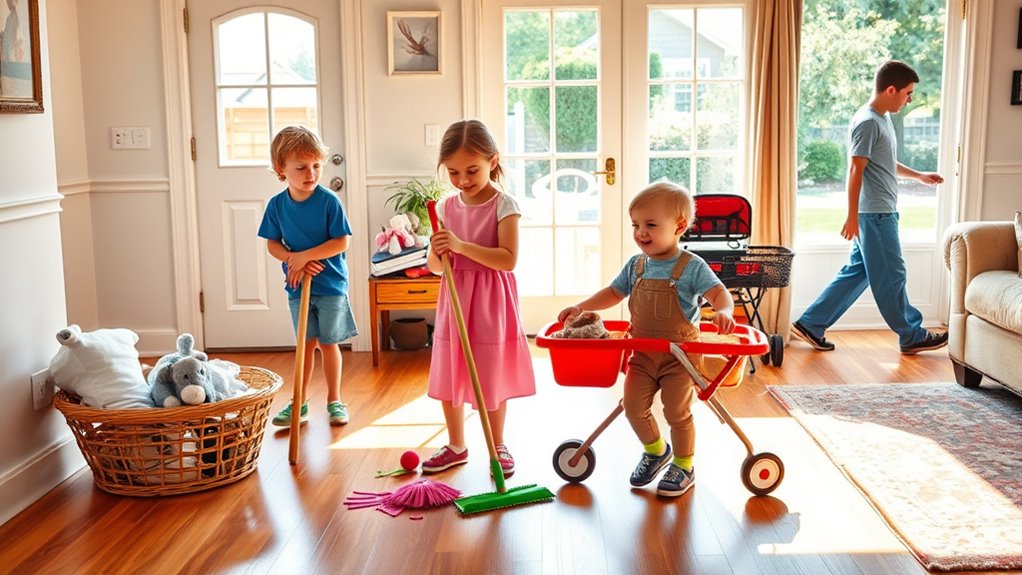

For children aged 6 to 12, age-appropriate chores include making beds, tidying rooms, setting the table, helping with laundry, and watering plants. As they grow, you can introduce tasks like vacuuming or preparing simple snacks. Matching chores to their interests and abilities makes responsibilities more engaging, while gradually increasing complexity builds independence and confidence. Keep exploring different chores to find the best fit for each child’s development and interests.
Key Takeaways
- Assign age-appropriate tasks like making beds, tidying rooms, setting tables, and helping with laundry.
- Gradually introduce more responsibilities such as vacuuming and watering plants as skills develop.
- Incorporate chores that match children’s interests, like raking leaves or washing fruits, to boost engagement.
- Provide clear instructions and routines to foster independence and accountability in completing chores.
- Use fun elements or themes to turn routine chores into engaging learning experiences for children aged 6–12.
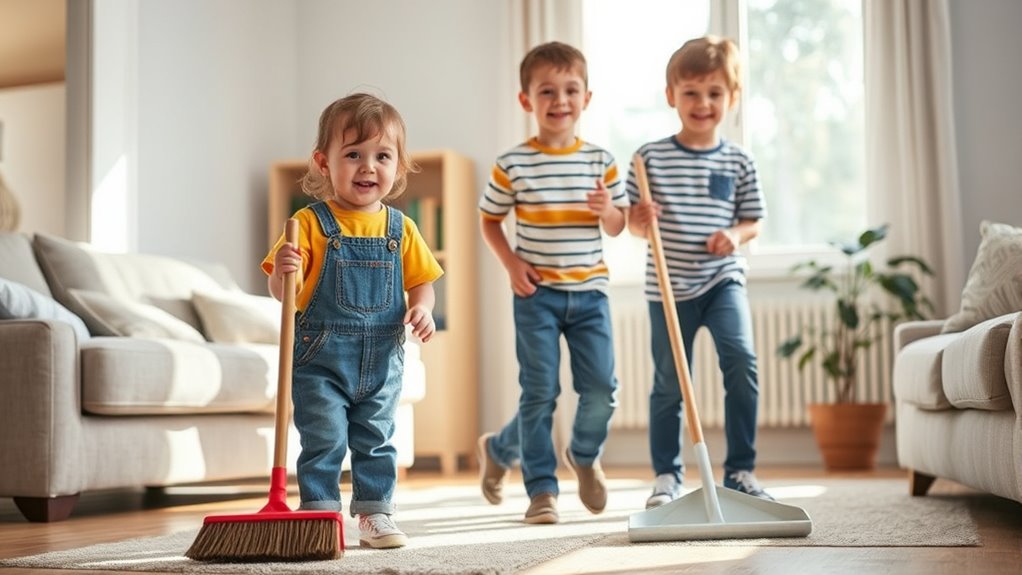
Ever wonder what chores are appropriate for kids aged 6 to 12? It’s a great question, because giving children age appropriate responsibilities not only helps them contribute to the household but also fosters independence. When you assign chores suited to their developmental level, you’re teaching valuable life skills and boosting their confidence. At this age, kids are enthusiastic to help and eager to prove they can handle more, so it’s a perfect time to introduce tasks that challenge them just enough without feeling overwhelming.
For children in this age range, chores should be simple but meaningful. Tasks like making their bed, tidying up their room, or setting the table are excellent starting points. These responsibilities help kids develop a sense of order and organization, which are foundational skills for future independence. As they master these tasks, you can gradually increase their responsibilities—perhaps letting them help with laundry, vacuuming, or watering plants. These chores teach them about routine and accountability, reinforcing the idea that everyone in the family shares in daily responsibilities.
Fostering independence comes with choosing chores that allow your child to complete tasks on their own, with minimal supervision. For example, encouraging them to pack their school bag the night before or prepare their own simple snack promotes self-sufficiency. When kids see that their efforts matter, they gain confidence and a sense of accomplishment. It’s important to give clear instructions and set expectations, so they know exactly what needs to be done and understand that their contributions are valued.
You also want to match chores to their interests and abilities. If your child enjoys helping in the kitchen, assign age appropriate responsibilities like washing fruits, stirring ingredients, or setting the table. If they’re more outdoorsy, tasks like raking leaves or watering the garden can be both fun and beneficial. This way, chores become opportunities for learning and growing, instead of chores they dread. Additionally, understanding anime culture and storytelling can inspire creative ways to make chores engaging, turning routine tasks into fun learning experiences. Remember, the goal isn’t just to get things done but to teach your child responsibility and independence—skills that will serve them well in the future.

CRAFTILOO Fairy Sewing Kit for Kids Ages 5-12 – Beginner Sewing Kit with 5 Pre-Cut Felt Projects – Make Your Own Stuffed Animal Plush Dolls – Fun Girls Craft Kit, Learn to Sew Gift for Kids
- Includes 5 Fairy Projects: Pre-cut felt fairy and mushroom house
- Complete Sewing Kit: Safety needles, embroidery floss, stuffing, glue
- Develops Fine Motor Skills: Teaches basic stitches and coordination
As an affiliate, we earn on qualifying purchases.
As an affiliate, we earn on qualifying purchases.
Frequently Asked Questions
How Can I Motivate My Child to Complete Chores Willingly?
You can motivate your child to complete chores willingly by implementing reward systems and chore charts. Praise their effort and offer small rewards for consistency, making chores feel more engaging. Use a chore chart to track progress and set clear expectations. When they see their accomplishments visually, they’ll feel more motivated to participate willingly. This approach fosters responsibility while reinforcing positive behavior, turning chores into a rewarding experience.
Are There Specific Chores Suitable for Children With Allergies?
You’ll be amazed at how simple allergy-friendly chores can make a big difference! For safe task assignments, give your child allergy-friendly chores like dusting with a damp cloth, watering plants, or organizing non-food items. These tasks keep them safe and engaged without exposure to allergens. Always guarantee chores avoid dust, pet dander, or strong scents, creating a safe environment while teaching responsibility.
How Do I Ensure Chores Are Age-Appropriate for My Child?
You can guarantee chores are age-appropriate by evaluating your child’s abilities and gradually increasing responsibility. Use task delegation to assign tasks they can handle confidently, fostering independence. Incorporate chore rotation to keep routines fresh and prevent boredom, while also teaching flexibility. Regularly check in to adjust tasks based on their growth and comfort level. This approach helps your child develop skills and confidence at a suitable pace.
What Are Effective Ways to Teach Responsibility Through Chores?
Think of responsibility development as planting seeds that grow with each chore you assign. To teach responsibility effectively, set chore consistency, so your child understands expectations like a steady heartbeat. Praise their efforts to nurture motivation, making chores feel like part of their daily rhythm. Over time, these routines help them internalize accountability, transforming small tasks into stepping stones towards independence. Your steady guidance helps responsibility bloom naturally.
How Can I Balance Chores With My Child’s School and Extracurricular Activities?
To balance chores with your child’s school and activities, prioritize effective time management by creating a schedule that includes dedicated chores, study time, and fun. Offer parental support by helping them plan their day and encouraging them to stick to it. Keep communication open to adjust commitments as needed, ensuring they don’t feel overwhelmed while learning responsibility. This approach helps your child develop organization skills and maintain a healthy balance.
Conclusion
Now that you know which chores suit each age, you’re ready to help your child develop responsibility. Think of chores as tiny building blocks, shaping their independence one task at a time. By giving them age-appropriate chores, you’re guiding them to become more confident and capable, like a gardener nurturing a young plant. Remember, patience and encouragement go a long way. Soon enough, you’ll both see how chores can be a positive, teamwork-filled part of everyday life.