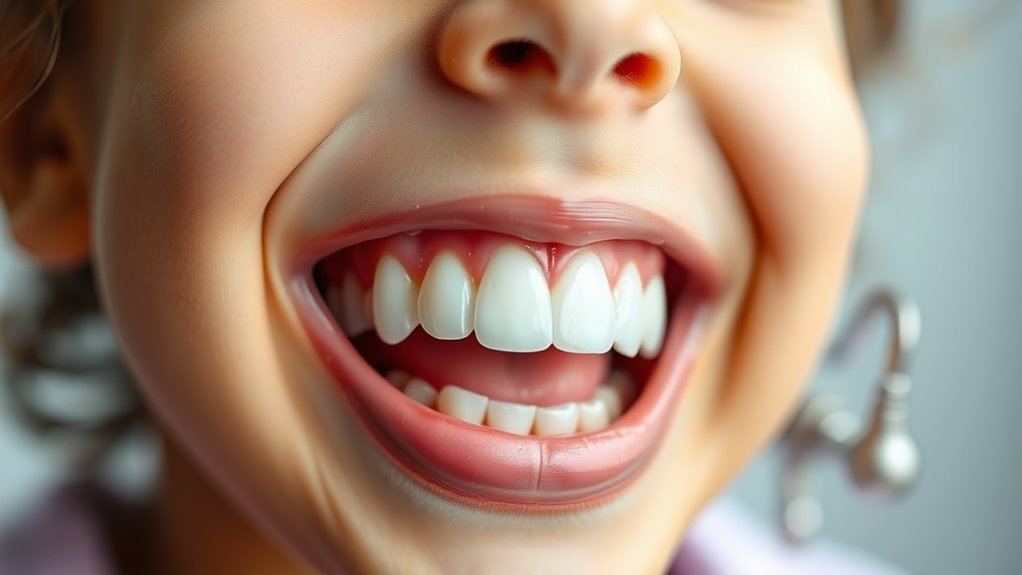

By combining dental sealants with good hygiene practices, you create a strong defense against cavities. Sealants protect your molars’ chewing surfaces, while regular flossing and brushing remove food particles and plaque from between teeth and under the gums. Mouthwash can also help bolster enamel and reduce bacteria. Maintaining routine dental care ensures these protective methods work together effectively. Keep exploring to discover more tips that can keep your smile healthy and cavity-free.
Key Takeaways
- Dental sealants create a protective barrier on molars, preventing food and bacteria from causing cavities.
- Flossing removes plaque and debris from between teeth and below the gumline, reducing decay risk.
- Proper oral hygiene, including flossing, complements sealants by ensuring cleanliness around sealed surfaces.
- Mouthwash with fluoride strengthens enamel and reduces bacterial load, supporting cavity prevention.
- Combining sealants, flossing, and mouthwash offers a comprehensive approach to maintaining cavity-free teeth.

Dental sealants are a simple, effective way to protect your teeth from cavities and decay. They form a protective barrier over the chewing surfaces of your molars and premolars, where food particles and bacteria tend to hide. While sealants are a great preventative measure, maintaining good oral hygiene through proper flossing techniques and the use of mouthwash can considerably boost your defenses against dental issues. Flossing helps remove plaque and food debris from between your teeth and just below the gumline, areas that toothbrushes often miss. When you practice effective flossing techniques, such as gently curving the floss around each tooth and sliding it beneath the gumline, you reduce the risk of cavities forming in those hard-to-reach spots. Regular flossing also prevents the buildup of plaque, a sticky film of bacteria that produces acids damaging your enamel. This is especially important when you have sealants since they cover the chewing surfaces but don’t replace the need for thorough cleaning. Additionally, understanding the importance of lifestyle habits can help you maintain optimal oral health and prevent cavities more effectively.
In addition to flossing, incorporating mouthwash benefits into your routine can further enhance your oral health. Mouthwash can help reach areas that brushing and flossing might miss, reducing bacteria and freshening your breath. An antimicrobial mouthwash, in particular, can decrease the overall bacterial load in your mouth, lowering the chances of plaque formation and cavities. Some mouthwashes contain fluoride, which strengthens your enamel and helps resist decay, complementing the protective effects of sealants. Using mouthwash as part of your daily routine can also assist in maintaining a healthier mouth, especially if you’re prone to cavities or have difficulty flossing regularly.
Combining dental sealants with consistent flossing techniques and mouthwash benefits creates a thorough approach to cavity prevention. Sealants act as a shield against food particles and bacteria on the chewing surfaces, but they don’t cover the sides of your teeth or below the gumline. Proper flossing ensures those areas stay clean, preventing plaque buildup that could lead to decay. Meanwhile, mouthwash benefits serve as an extra layer of defense, reducing bacterial populations and strengthening your enamel. Together, these practices help you maintain a healthier smile, reduce the likelihood of cavities, and extend the longevity of your dental work. Staying committed to these habits means you’re actively protecting your teeth, making dental sealants even more effective over time. Remember, good oral hygiene isn’t just about quick fixes; it’s about consistent, deliberate care that keeps your teeth healthy and strong for years to come.

Dental Sealants: Protecting Teeth, Preventing Decay ADA Patient Education Brochure, 6 Panels, Pack of 50 (W291)
- Country of Origin: United States
- Model Number: W291
- Package Dimensions: 0.75 x 4 x 9 inches
As an affiliate, we earn on qualifying purchases.
As an affiliate, we earn on qualifying purchases.
Frequently Asked Questions
How Long Do Dental Sealants Typically Last Before Replacement?
Dental sealants typically last about 5 to 10 years before needing replacement. The sealant longevity depends on your oral habits and the wear and tear on your teeth. Regular dental check-ups help monitor their condition. If you notice chipping or loss of the sealant, it’s time for replacement. Your dentist can evaluate and determine the appropriate replacement timing to ensure continued cavity protection.
Are Dental Sealants Safe for Children and Teenagers?
Yes, dental sealants are safe for children and teenagers. They are thoroughly tested and approved by dental health authorities, ensuring they contribute positively to children’s dental health. Sealant safety is well-established, and they help prevent cavities without harm. You can confidently have your child’s dentist apply sealants, knowing they’re a proven, safe preventive measure that supports long-term oral health for young patients.
Can Sealants Be Applied if I Have Existing Dental Cavities?
You can’t get sealant application if you have existing dental cavities because it’s like trying to patch a leaky boat without fixing the hole first. Sealants work best on healthy, cavity-free teeth, acting as a barrier against future decay. If you have cavities, your dentist will recommend cavity treatment before applying sealants, ensuring your teeth are properly protected. Don’t skip the cavity treatment—it’s essential for effective, long-lasting prevention.
Do Dental Sealants Require Special Maintenance or Cleaning?
No, dental sealants don’t require special maintenance beyond regular oral hygiene. You should continue with normal brushing and flossing, but remember to include sealant cleaning during your routine dental visits. Your dentist checks the sealant’s condition and performs sealant maintenance if needed. If you notice any chips or wear, prompt sealant repair helps uphold its protective benefits. Proper care ensures your sealants stay effective in preventing cavities.
Are There Any Allergies or Side Effects Associated With Sealants?
You might experience allergic reactions or side effects from dental sealants, though they’re rare. Some people could have a mild sensitivity to the materials used, like resin. If you notice swelling, rash, or difficulty breathing, seek immediate medical attention. To manage side effects, your dentist can recommend allergy testing or alternative options. Regular check-ups help verify any reactions are caught early, keeping your oral health safe and comfortable.
Conclusion
By applying dental sealants and maintaining good hygiene, you protect your teeth from cavities and decay. Yet, even with the strongest sealants, neglecting daily brushing and flossing can undo your efforts. It’s a reminder that prevention isn’t just about quick fixes but ongoing care. Like a fortress, your smile requires both shields and vigilant watch. In this balance, your healthiest, brightest smile truly stands resilient against the inevitable challenges of everyday life.