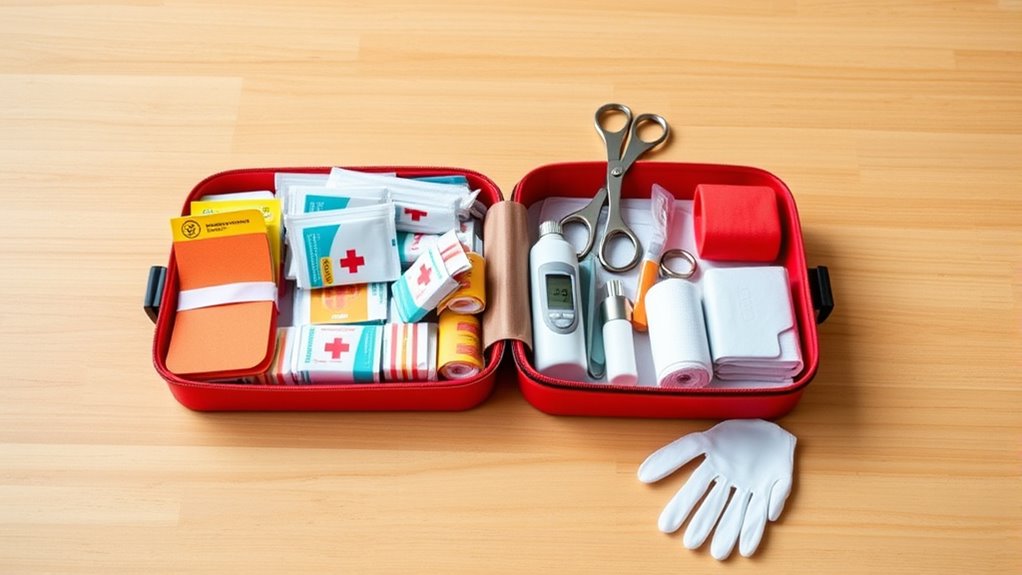

To prepare a family first-aid kit, include various bandages, antiseptic wipes, gauze pads, medical tape, scissors, tweezers, a thermometer, pain relievers, allergy meds, cold packs, burn ointments, disposable gloves, a flashlight, a whistle, and a list of emergency contacts. Keep it in a waterproof container, regularly check supplies, and store it in accessible locations. Learning how to use these items properly guarantees you’re ready for minor injuries and emergencies, and there’s more to discover on best practices and tips.
Key Takeaways
- Include essential supplies like bandages, antiseptic wipes, sterile gauze, medical tape, scissors, and tweezers for comprehensive wound care.
- Add items for common emergencies such as pain relievers, cold packs, allergy medications, and burn ointments.
- Organize supplies in a waterproof container and regularly check for expiration or used items.
- Educate family members on basic first aid procedures and proper kit usage for quick response.
- Keep the kit accessible at home, in the car, and outdoors to ensure readiness for any situation.
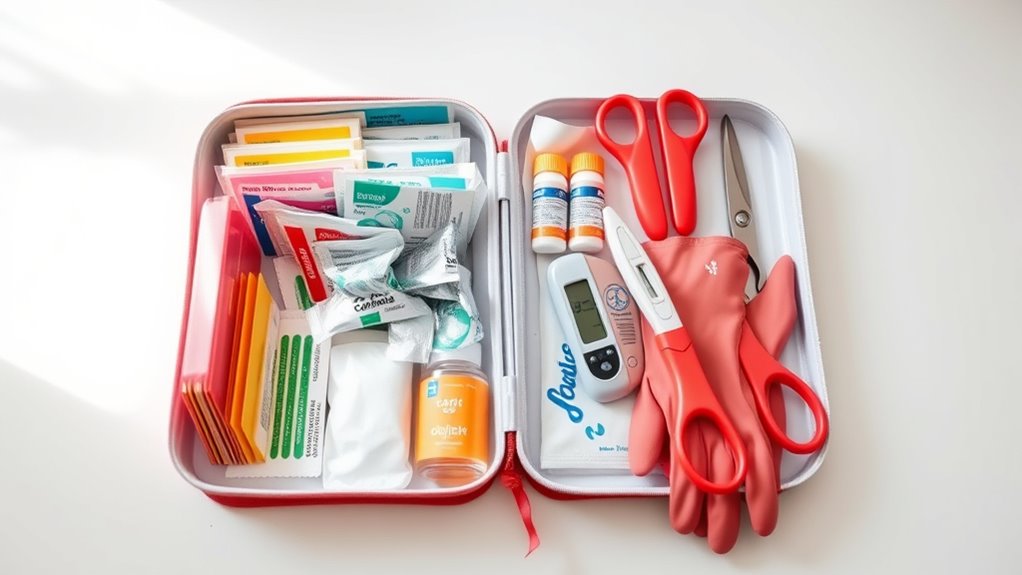
A well-stocked family first-aid kit is vital for handling everyday injuries and emergencies quickly and confidently. When you’re prepared with the right supplies, you can address minor cuts, scrapes, and burns without delay, reducing the risk of infection and discomfort. First aid essentials include bandages, antiseptic wipes, gauze, scissors, and adhesive tape—all of which help you manage wounds effectively. Having these items on hand isn’t just about reacting to injuries; it’s about fostering emergency preparedness, so you’re ready for unexpected situations, whether at home, in the car, or on outdoor adventures.
Start by choosing a sturdy, waterproof container to keep everything organized and accessible. Inside, include a variety of bandages in different sizes to cover small cuts or larger wounds. Antiseptic ointments or wipes are indispensable for cleaning wounds and preventing infection. Sterile gauze pads are essential for covering and protecting more significant injuries, while medical tape ensures they stay in place. Scissors help trim tape or clothing when needed, and tweezers are handy for removing splinters or debris. Don’t forget disposable gloves to maintain hygiene and protect yourself during first aid procedures.
In addition to wound care supplies, include items for managing other common emergencies. Consider adding a digital thermometer to check for fever, pain relievers like acetaminophen or ibuprofen, and allergy medications if necessary. A cold pack can reduce swelling and numb pain, while an instant cold compress is perfect for sprains or bruises. For burns, keep burn ointments or cool packs readily available. Emergency preparedness also involves having a flashlight, a whistle, and a list of emergency contacts in the kit, ensuring you’re ready for various scenarios and can signal for help if needed. Incorporating first aid training or resources can further improve your ability to respond effectively in emergencies.
It’s equally important to regularly check and replenish your first aid essentials. Expired medications or used supplies should be replaced promptly to make sure everything is effective when you need it most. Educate yourself and your family members on basic first aid procedures—knowing how to properly clean a wound, perform CPR, or handle choking can make a critical difference in emergency situations.

Mini First Aid Kit – 150 Piece Small Waterproof Hard Shell Medical Kit
- Complete Emergency Supplies: Over 150 medical and safety items
- Lightweight & Compact: Measures 6.4 x 4.9 x 2.7 inches, 0.73 lbs
- Travel-Friendly Design: Includes zippers and carabiners for portability
As an affiliate, we earn on qualifying purchases.
As an affiliate, we earn on qualifying purchases.
Frequently Asked Questions
How Often Should I Replace Expired Items in My First-Aid Kit?
You should replace expired items in your first-aid kit as soon as you notice their expiration dates have passed. It’s best to follow a regular replacement schedule, checking your kit at least every six months. This guarantees all supplies are effective and safe to use. Don’t forget to review expiration dates during your check, and promptly replace any expired items to keep your kit ready for emergencies.
Can I Customize a First-Aid Kit for Specific Family Needs?
Did you know over 15 million Americans have food allergies? You can definitely customize a first-aid kit for your family’s specific needs. Include special needs supplies like allergy-specific kits, medications, or devices. Tailoring your kit guarantees you’re prepared for unique health concerns, giving you peace of mind. Regularly review and update it to match your family’s evolving needs, so you’re always ready for any emergency.
What Should I Do if a First-Aid Item Is Missing During an Emergency?
If a first-aid item is missing during an emergency, don’t panic. You can use alternative supply sources or improvisation techniques to address the situation. Look for household items that can serve as substitutes, like a clean cloth for bandages or a teaspoon for medication. Stay calm, think creatively, and prioritize safety. Remember, quick thinking and resourcefulness can make a vital difference until proper help or supplies arrive.
Are There Any First-Aid Items Unsuitable for Children?
Think of your first-aid kit as a garden—some plants, or items, are suited for everyone, but others are adult-only, like strong medications or certain ointments. You must be mindful of dietary restrictions and avoid including adult-only items in a child’s kit. Some medicines, antiseptics, or painkillers aren’t safe for children, so always check labels and choose age-appropriate supplies to keep your little ones safe and healthy.
How Can I Ensure All Family Members Know Basic First-Aid Procedures?
You can guarantee all family members know basic first-aid procedures by organizing family training sessions and conducting regular emergency drills. Practice essential skills like CPR, wound care, and choking relief, making sure everyone feels confident. Use hands-on demonstrations and review procedures often, especially with children. These activities reinforce knowledge, improve response times, and prepare everyone to act quickly and effectively during emergencies.
Conclusion
Having a well-stocked family first-aid kit isn’t just smart—it can make a real difference. Did you know that over 20% of injuries happen at home? Being prepared means you can handle minor accidents quickly and confidently, reducing stress for everyone. Keep your kit updated and accessible, so you’re ready when it counts. Remember, a little preparation today can protect your loved ones tomorrow. Stay safe and stay prepared!