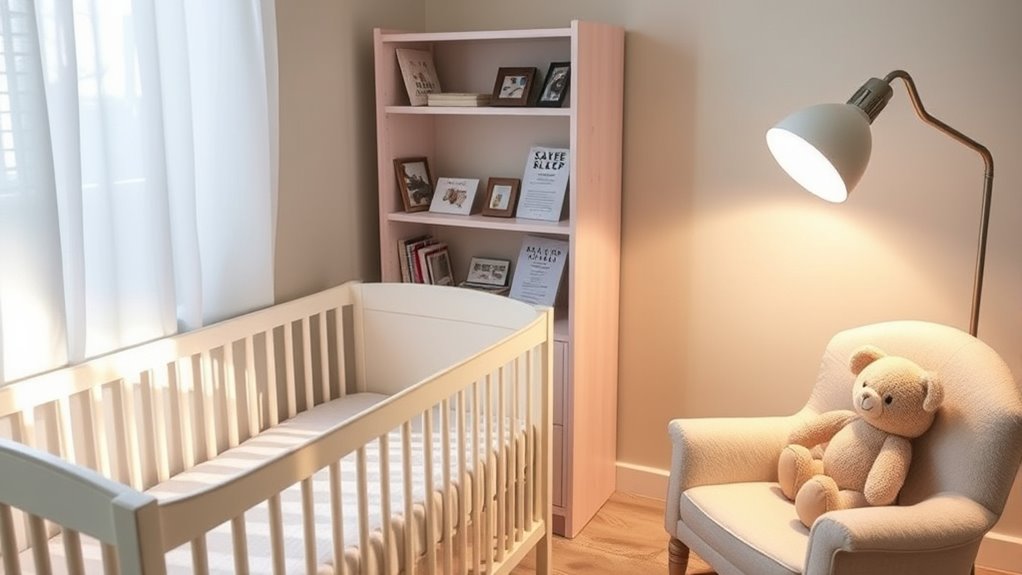

To find reliable safe sleep resources, start with the American Academy of Pediatrics (AAP) for evidence-based guidelines and educational materials. Local health departments and hospitals often offer classes and support groups to help you create a safe sleep environment. Reputable websites and parenting groups share facts and reviews on safe sleep myths and technology, while consulting your pediatrician guarantees personalized guidance. Keep exploring these options to stay informed and confident in providing a secure sleep space for your baby.
Key Takeaways
- Consult the American Academy of Pediatrics (AAP) website for evidence-based safe sleep guidelines and resources.
- Attend local health department or hospital classes on infant sleep safety and practices.
- Use reputable parenting websites and groups that share up-to-date safe sleep information and myth-busting tips.
- Seek advice from your pediatrician regularly to stay informed about safe sleep recommendations and technology options.
- Explore community support groups and local organizations offering guidance and assistance on creating a safe sleep environment.

Are you looking for ways to guarantee your baby sleeps safely? Navigating the world of safe sleep can be overwhelming, especially with so many conflicting opinions and outdated advice. It’s essential to separate fact from fiction, and understanding common safe sleep myths is a good starting point. Many new parents believe, for instance, that placing a pillow or stuffed animal in the crib improves comfort, but these are actually unsafe sleep myths that can increase the risk of suffocation. Similarly, some think that letting babies sleep on their stomachs is safer, but current guidelines recommend placing babies on their backs for every sleep. Learning about these misconceptions helps you make safer choices for your little one.
Fortunately, advancements in safe sleep technology have made it easier to create a secure sleep environment. Devices like breathable crib mattresses, sleep monitors, and wearable technology can alert you if your baby rolls over or leaves a designated sleep zone. These innovations don’t replace safe sleep practices but complement them, giving you peace of mind. Many safe sleep resources now emphasize the importance of a firm sleep surface and a clutter-free crib, and they highlight how technology can support these standards. For example, some monitors now feature temperature sensors to prevent overheating, one of the risks associated with unsafe sleep environments. Staying informed about available safe sleep technology ensures you’re using the best tools to protect your baby.
If you’re unsure where to find reliable information, numerous organizations offer thorough resources on safe sleep. The American Academy of Pediatrics (AAP) provides evidence-based guidelines and educational materials designed to help parents create a safe sleep environment. Local health departments and hospitals often host classes or support groups where you can ask questions and get personalized advice. Many reputable websites and parenting groups share facts about safe sleep myths and review the latest safe sleep technology, ensuring you have access to current, accurate information. Incorporating AI-driven insights into your understanding can further enhance your knowledge of safe sleep practices, especially as technology continues to evolve.
In addition, consulting with your pediatrician regularly helps you stay updated on safe sleep practices and new innovations. They can recommend specific products or techniques suited to your baby’s needs. Remember, no single resource is enough; combining expert advice, trustworthy websites, and community support will give you a well-rounded understanding of safe sleep. The key is to stay informed and vigilant, always prioritizing your baby’s safety. With the right knowledge and tools, you can confidently establish a safe sleep environment that promotes healthy, restful nights for your little one.

ASANEST Dual Sided Baby Breathable Crib Mattress, Infant & Toddler Bed Mattress with Premium Foam, Machine Washable Oeko-TEX Standard 100 Certified Cover, Standard Size 52x28x5 Inch
- Sleep Temperature Regulation: Gel-infused foam for airflow and heat wicking
- Grows With Your Child: Flip between firm and soft sides
- Infant to Toddler Support: Suitable for ages 0-3 years
As an affiliate, we earn on qualifying purchases.
As an affiliate, we earn on qualifying purchases.
Frequently Asked Questions
How Can I Identify a Trustworthy Safe Sleep Resource?
You can identify a trustworthy safe sleep resource by checking for trustworthy certifications and source credibility. Look for organizations endorsed by reputable agencies like the CDC or American Academy of Pediatrics. Verify that the information is current and backed by scientific research. Trustworthy resources will clearly state their credentials and provide contact details for further questions. Always prioritize sources with transparent, evidence-based information to guarantee you’re getting reliable guidance for safe sleep practices.
Are There Local Support Groups for Safe Sleep Education?
Yes, you can find local support groups for safe sleep education through community programs and parent support groups. These groups often host workshops, provide resources, and share experiences to help you learn best practices for your baby’s safety. Check with local hospitals, parenting centers, or community centers to discover upcoming meetings. Joining these groups gives you a supportive environment to ask questions and stay informed about safe sleep guidelines for your little one.
What Are Common Misconceptions About Safe Sleep Practices?
Many caregivers believe myths like placing a baby on their stomach or using pillows in the crib, but myth busting shows these practices increase SIDS risk. Common misconceptions also include thinking sleep position doesn’t matter or that blankets are safe. You should seek caregiver education to stay informed about safe sleep practices, ensuring your baby sleeps safely. Always verify advice through reputable resources to prevent dangerous assumptions and protect your child’s well-being.
How Do I Access Free Safe Sleep Materials?
Think of safe sleep materials as a treasure chest waiting for you. You can access free infant sleep safety resources through local health departments and parenting classes. Many parent education programs also offer these materials at no cost. Check online or contact your healthcare provider to find community programs near you. These resources can help you create a safe sleep environment, giving your baby peace and you peace of mind.
Can Safe Sleep Resources Be Tailored for Special Needs Infants?
Yes, safe sleep resources can be tailored for special needs infants by incorporating adaptive techniques and providing personalized guidance. You should seek out organizations and professionals experienced in caring for infants with unique needs, as they can offer customized strategies to guarantee safe sleep environments. By working with specialists, you’ll receive practical advice that respects your infant’s specific health considerations, helping you create a safe and comfortable sleep setting tailored just for them.
Conclusion
By exploring safe sleep resources, you’re planting seeds of safety and comfort that will grow into a strong foundation for your little one. Think of these resources as a guiding lighthouse, illuminating your path through the sometimes foggy waters of parenthood. With each step you take to learn and seek help, you’re steering your baby toward a safe, restful night’s sleep. Keep nurturing this knowledge—your child’s peaceful sleep is the bright horizon ahead.