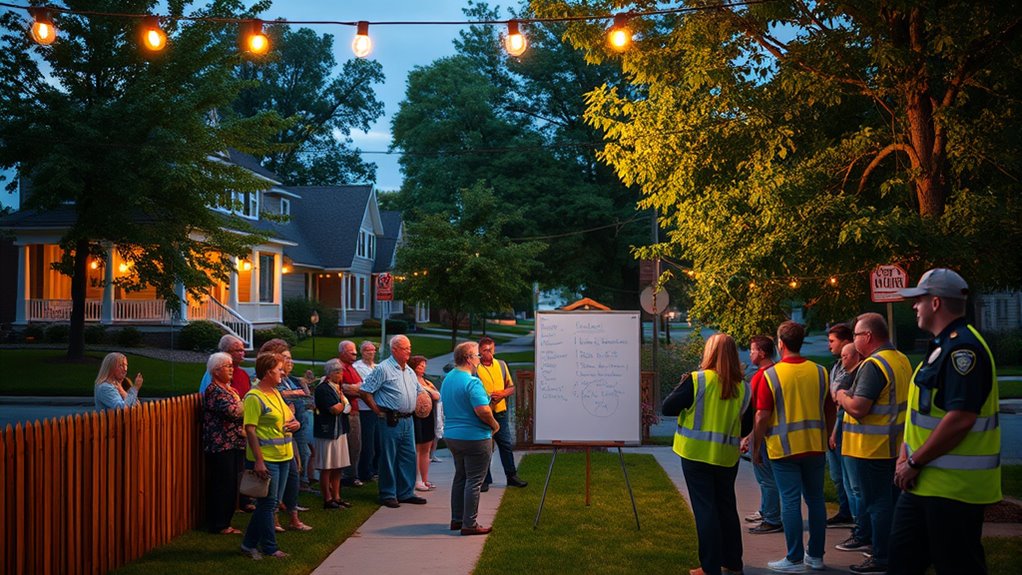

To start a neighborhood watch, gather a group of committed residents and hold an initial meeting to discuss safety concerns and crime trends. Use flyers, social media, or community events to recruit neighbors. Establish communication channels like phone trees or social media groups to share updates quickly. Partner with local police for training and resources. Keep the effort ongoing by encouraging participation and fostering a sense of community—continue here to learn more about building a successful neighborhood watch.
Key Takeaways
- Build a core group of committed residents and organize initial meetings to discuss concerns and crime trends.
- Reach out through flyers, social media, and community meetings to recruit neighbors and promote participation.
- Establish effective communication channels like phone trees, email, or social media for rapid information sharing.
- Collaborate with local police or security agencies for training, resources, and crime prevention advice.
- Maintain ongoing engagement through regular patrols, safety workshops, and community events to sustain the program.
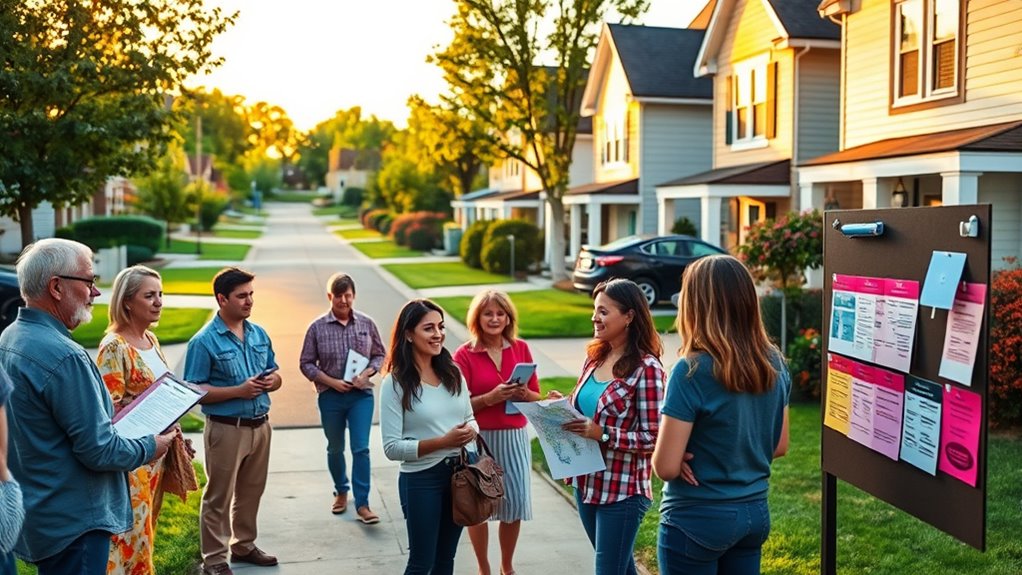
Neighborhood watch programs are a proven way to make your streets safer by encouraging residents to stay vigilant and work together. When you take the initiative to organize a neighborhood watch, you’re not only fostering community engagement but also strengthening home security for everyone involved. A well-run program acts as a deterrent to crime because potential offenders see active residents watching out for each other and their properties. Your efforts can substantially reduce incidents of vandalism, theft, and other crimes, creating a safer environment for families, children, and seniors alike.
Neighborhood watch programs deter crime and enhance safety through community vigilance and collaboration.
Getting started with a neighborhood watch begins with building a core group of committed residents who share your concern for safety. Reach out to neighbors through flyers, social media, or community meetings to gauge interest. Once you have a team, set up a meeting to discuss common concerns, crime trends in your area, and strategies to address them. This initial step is essential for fostering community engagement—residents are more likely to participate if they feel their voice matters and they see tangible benefits. During these meetings, emphasize the importance of home security measures, such as installing proper lighting, securing doors and windows, and keeping valuables out of sight. These small but effective steps can make a big difference in preventing crimes and reinforcing your neighborhood’s resilience.
Communication is the backbone of any successful neighborhood watch. Establish a system—whether it’s a phone tree, email list, or social media group—to quickly share information about suspicious activity or emergencies. Regular check-ins and community patrols can also help maintain a visible presence that discourages criminal activity. Encourage residents to be proactive about reporting incidents to local authorities, which guarantees that law enforcement can respond promptly and appropriately. This collective effort not only enhances home security but also builds trust among neighbors, making the community more cohesive and vigilant. Additionally, understanding newborn sleep patterns and safety guidelines can help parents ensure their children are protected and well-rested, contributing to overall community well-being.
To sustain your neighborhood watch, consider partnering with local police or security agencies. They can provide valuable training, resources, and advice on crime prevention tactics. Hosting safety workshops or seminars can further boost community engagement by educating residents on the latest security techniques and how to recognize suspicious behavior. When neighbors work together, sharing information and supporting each other, you create a safer, more connected neighborhood. Over time, this collective vigilance becomes part of your community’s identity, making your streets less attractive to criminals and more welcoming to everyone who lives there.

2-Pack Neighborhood Watch Sign,12"x 8" .04" Aluminum Reflective Sign Rust Free Aluminum-UV Protected and Weatherproof
- Material: .040 rust-free aluminum
- Reflectivity: High visibility at night
- Weatherproof: UV fade resistant and durable
As an affiliate, we earn on qualifying purchases.
As an affiliate, we earn on qualifying purchases.
Frequently Asked Questions
How Do I Recruit Neighbors Who Are Hesitant to Join?
When recruiting hesitant neighbors, focus on community engagement and trust building. Talk to them personally, listen to their concerns, and share the benefits of a neighborhood watch. Use positive stories to show how safety improves for everyone. Offer clear, simple steps to join, and emphasize that their involvement makes a real difference. By fostering trust and open communication, you’ll encourage more neighbors to participate and strengthen your community.
What Legal Considerations Should I Be Aware Of?
Think of legal considerations as the backbone of your neighborhood watch—without it, everything risks collapsing. You should guarantee legal compliance by understanding local laws, liability concerns, and privacy rights. Get written agreements, avoid patrols that could be seen as law enforcement, and inform members about their responsibilities. Consulting a legal expert can help you navigate these issues, keeping your efforts safe, effective, and well within the law.
How Do I Handle Conflicts Within the Group?
When handling conflicts within your neighborhood watch group, focus on conflict resolution by encouraging open, respectful communication. Actively listen to all perspectives and mediate disagreements calmly. Promote group cohesion by emphasizing shared goals and common interests. If tensions persist, consider involving a neutral third party or facilitator. By fostering understanding and cooperation, you’ll maintain a positive environment that strengthens your group’s commitment to safety and community.
What Communication Tools Are Most Effective?
You should focus on effective communication tools that boost community engagement. Social media platforms like Facebook or Nextdoor are ideal because they facilitate quick updates and foster real-time interaction. These tools help you share safety alerts, organize meetings, and build trust among neighbors. By actively using social media, you create a connected community that stays informed, engaged, and ready to act together for safer streets.
How Can I Secure Funding for Neighborhood Watch Programs?
You can secure funding for your neighborhood watch by exploring grant opportunities from local government, community foundations, or law enforcement agencies. Apply for grants specifically aimed at safety equipment, like cameras or lights, to enhance security. Additionally, consider hosting fundraising events or seeking donations from residents and local businesses. These efforts can provide the necessary resources to establish and maintain an effective neighborhood watch program, ensuring safer streets for everyone.
Conclusion
By coming together, you build a shield of unity that guards your neighborhood like a mighty fortress. Your watchful eyes become lanterns guiding each other through the night, illuminating dangers before they strike. As you weave trust and vigilance into your community’s fabric, safer streets emerge like a sunrise after a long, dark night. Together, you create a haven where neighbors stand strong, turning your neighborhood into a fortress of safety and hope.