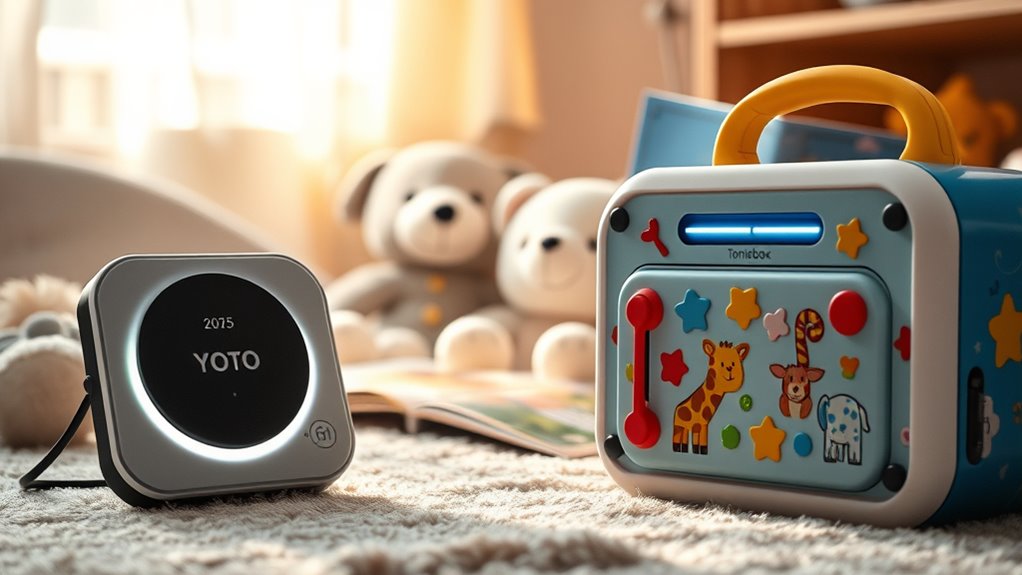

When choosing between the Yoto Player and Toniebox, parents want a durable, easy-to-use device with a rich content library. The Yoto Player excels with its customizable interface and wide content options, while the Toniebox offers a simple, tactile experience with a focus on storytime. The main challenge lies in balancing ease of use, content variety, and price. The best choice depends on your child’s age, tech comfort, and how much control you want over the content. Continue reading for a detailed comparison of these popular options and find the perfect fit for your family.
Open a free Amazon Business account
Business pricing, bulk buying and tax-exempt orders.
Create a free accountAs an affiliate, we earn on qualifying purchases.
Complete the kit


Key Takeaways
- The Yoto Player offers more customization and a broader content library, making it ideal for tech-savvy kids or parents who want control.
- The Toniebox’s tactile design and simple interface make it a better choice for younger children or households seeking minimal setup.
- Price differences are significant; Yoto tends to be more flexible but also more expensive with add-ons, while Toniebox often includes more content upfront.
- Both devices are durable and kid-friendly, but Yoto’s screen-free design and audio-only format appeal to parents concerned about screen time.
- Content management varies: Yoto allows more user control over playlists and downloads, whereas Toniebox relies on physical figurines for content selection.
| YOTO Player (3rd Gen.) + Kids Disney Classics Bundle – Screen-Free, Ages 4+ |  | Best Overall for Versatile Screen-Free Entertainment | Bundle Includes: YOTO Player (3rd Gen.) and 6 Disney story cards | Age Range: Ages 4+ | Battery Life: Up to 16 hours | VIEW ON AMAZON | See Our Full Breakdown |
| YOTO Player (3rd Gen.) + Starter Pack for Little Kids Bundle |  | Best for New Users and Simplicity | Model: 3rd Generation | Content Included: YOTO Player, Starter Pack with audio cards | Display: Pixel display | VIEW ON AMAZON | See Our Full Breakdown |
| YOTO Player (3rd Gen.) – Kids Audio Player, Screen-Free, Ages 3-12 |  | Best for Extended, Independent Play | Audio Output Mode: Stereo | Mounting Type: Tabletop | Internal Memory: 32GB | VIEW ON AMAZON | See Our Full Breakdown |
| Yoto Mini (2024 Edition) + Starter Pack for Little Kids Bundle, Ages 3+ |  | Best Portable, Kid-Friendly Audio Companion | Weight: 160 g | Dimensions: 1.57″D x 2.76″W x 2.76″H | Display Technology: Pixel display | VIEW ON AMAZON | See Our Full Breakdown |
| Yoto Mini (2024 Edition) – Kids Travel Audio Player, Screen-Free, Ages 3-12 |  | Best for Versatile, On-the-Go Audio Adventures | Battery Life: Up to 14 hours | Display: Pixel display | Content: Over 1000 cards including audiobooks, music, podcasts | VIEW ON AMAZON | See Our Full Breakdown |
| YOTO Mini Summer Travel Bundle for Kids – Screen-Free Audio Player, Starter Story Pack, Headphones, Case & Jacket |  | Best Travel Companion for Screen-Free Entertainment | Device: YOTO Mini (2024 Edition) | Content: Starter Story Pack with 6 cards, 1000+ cards of stories, music, activities | Battery Life: Up to 14 hours | VIEW ON AMAZON | See Our Full Breakdown |
| yoto player vs toniebox review | Battery Life | Display |
|---|---|---|
| YOTO Player | Up to 16 hours | — |
| YOTO Player | Up to 16 hours | Pixel display |
| YOTO Player | — | — |
| Yoto Mini | Up to 14 hours | — |
| Yoto Mini | Up to 14 hours | Pixel display |
| YOTO Mini Summer Travel Bundle | Up to 14 hours | Pixel display |
More Details on Our Top Picks
YOTO Player (3rd Gen.) + Kids Disney Classics Bundle – Screen-Free, Ages 4+
This third-generation YOTO Player stands out for its comprehensive features that cater to a wide age range, making it a versatile choice for families seeking a safe, screen-free device. Unlike the smaller Yoto Mini, it offers a larger display, room thermometer, and a more powerful Bluetooth speaker, which enhance its usability and educational value. While the content library depends on additional card purchases, its broad compatibility with over 1000 cards ensures long-term engagement. The inclusion of a nightlight, alarm clock, and sleep sounds makes it a well-rounded device for daily routines. However, it requires charging after extended use, and some features may need app setup, which could pose a learning curve for less tech-savvy parents. Compared to the Yoto Mini, this model provides a richer feature set, but at a higher price point and larger size.
Pros:- Large, vivid display for easy navigation and additional visual content
- Includes a room thermometer and nightlight for practical use
- Over 1000 compatible cards offer extensive content options
- Bluetooth speaker and alarm clock enhance multifunctionality
Cons:- Requires charging after prolonged use, which may interrupt daily routines
- Additional content costs can add up over time
- Some features depend on app updates and setup, potentially complicating initial use
Best for: Families wanting a durable, feature-rich device suitable for older kids and multiple daily functions.
Not ideal for: Parents seeking a compact, highly portable device for travel or quick outings, since its size and setup are less convenient.
- Bundle Includes:YOTO Player (3rd Gen.) and 6 Disney story cards
- Age Range:Ages 4+
- Battery Life:Up to 16 hours
- Features:Vivid pixel display, sleep sounds, nightlight, alarm clock, room thermometer, Bluetooth speaker, headphone compatibility
Our verdict“This model suits families seeking a comprehensive, long-lasting device that combines entertainment and daily routines in one package.”
YOTO Player (3rd Gen.) + Starter Pack for Little Kids Bundle
This starter pack version makes sense for parents new to YOTO, offering a straightforward setup with essential content and controls. It emphasizes safety and ease of use, with a large pixel display and simple dials that are ideal for younger children or beginners. Compared with the Disney bundle, this provides a more generic content selection suitable for a broad age range, including educational and musical options. While the device’s versatility is high, the reliance on physical cards for most content could be a downside if cards are lost. Its battery life of up to 16 hours is comparable to other Yoto models, but the focus on simplicity makes it less feature-dense than the higher-end YOTO Player (3rd Gen.) with more advanced features like a thermometer or Wi-Fi connectivity. This pick is perfect for parents who prioritize straightforward operation and safe, screen-free play.
Pros:- Simple setup and controls ideal for young children
- Includes starter content for immediate use
- Large pixel display makes navigation easy
- Parental controls enhance safety
Cons:- Limited content without additional cards, which may increase costs
- Requires physical cards for most content, risking loss
- Less feature-rich than the YOTO Player (3rd Gen.) with thermometer and Wi-Fi
Best for: Parents new to audio players who want a simple, reliable device for their children without extra frills.
Not ideal for: Families seeking a device with advanced features like Wi-Fi or a large display—this model is more basic and less customizable.
- Model:3rd Generation
- Content Included:YOTO Player, Starter Pack with audio cards
- Display:Pixel display
- Battery Life:Up to 16 hours
Our verdict“This bundle is ideal for parents seeking a beginner-friendly, safe audio device with enough content to start immediate use.”
YOTO Player (3rd Gen.) – Kids Audio Player, Screen-Free, Ages 3-12
This version of the YOTO Player is designed for a broad age range, emphasizing long battery life and extensive content. It offers a more robust construction and a 32GB internal memory, allowing children to access a large library of over 1000 cards, including audiobooks and educational activities. Compared to the smaller Yoto Mini, it provides a more substantial speaker and internal storage, making it better suited for independent play over longer periods. However, it relies entirely on physical cards, which might be misplaced, and it lacks visual or interactive features beyond the pixel display. Its long 24-hour battery life makes it ideal for travel or extended use at home, but the setup complexity and need for physical cards could be hurdles for some parents. This model is best for children who love audiobooks and want a highly capable device for solo listening sessions.
Pros:- Large internal storage (32GB) for extensive content
- Long battery life supports extended use without frequent charging
- Robust build suitable for active children
- Includes practical features like nightlight and room temperature monitoring
Cons:- Dependent on physical cards, which can be lost or misplaced
- Limited to audio content—no visual or interactive elements
- Setup may be complex for less tech-savvy parents
Best for: Parents looking for a durable, long-lasting device that supports a large content library for independent, extended listening sessions.
Not ideal for: Those preferring a device with visual or interactive features, or who dislike managing physical cards.
- Audio Output Mode:Stereo
- Mounting Type:Tabletop
- Internal Memory:32GB
- Battery:24 hours
Our verdict“This model suits families wanting a high-capacity, standalone device for long, independent listening sessions.”
Yoto Mini (2024 Edition) + Starter Pack for Little Kids Bundle, Ages 3+
The Yoto Mini (2024 Edition) emphasizes portability for active kids, making it ideal for travel, bedtime, or on-the-go use. Its compact size and lightweight design are clear advantages over bulkier options like the full-sized YOTO Player, but it sacrifices some features such as a larger display and extensive internal storage. The pixel display helps with navigation, and parental controls keep content safe, but the device relies heavily on physical cards, which could be lost during travel. Its 14-hour battery life is decent but less than the larger models, which may matter on longer journeys. Compared with the more feature-rich YOTO Player (3rd Gen.), it offers fewer smart features but excels in portability and ease of use, especially for small hands and short trips.
Pros:- Compact, lightweight design ideal for travel
- Parental controls and safe content management
- Supports a wide library of audio cards
- Can serve as a clock, alarm, and bedtime storyteller
Cons:- Limited battery life for extended outings compared to larger models
- Requires physical cards, which may be lost or damaged
- No visual or touchscreen interface for navigation
Best for: Parents seeking a lightweight, travel-friendly audio player for children aged 3 and up, especially for short outings or bedtime routines.
Not ideal for: Families wanting a device with a large display or extensive features for home use—this model is optimized for portability and simplicity.
- Weight:160 g
- Dimensions:1.57″D x 2.76″W x 2.76″H
- Display Technology:Pixel display
- Battery Life:Up to 14 hours
Our verdict“This pick is perfect for parents needing a portable, easy-to-use device for active children on the move.”
Yoto Mini (2024 Edition) – Kids Travel Audio Player, Screen-Free, Ages 3-12
This Yoto Mini (2024) is tailored for children who need a versatile device for travel, bedtime, or educational activities. It shares many features with the previous Mini but emphasizes content variety with over 1000 cards, including audiobooks, music, and podcasts. Its design encourages independent use with physical controls and parental safeguards, but its reliance on physical cards remains a potential downside for families concerned about loss or extra costs. The pixel display makes navigation straightforward, and the 14-hour battery life supports long trips. Compared to the larger YOTO Player, this model is less feature-dense but more portable and suited for active children who benefit from a lightweight device. The need to manage physical media makes it less ideal for tech-averse parents but excellent for children who enjoy a broad library of content on the go.
Pros:- Small, lightweight, travel-ready design
- Supports extensive content library with over 1000 cards
- Parental controls and safe listening features
- Includes clock, sleep sounds, and alarm functions
Cons:- Dependent on physical cards, which could be lost
- Limited to audio content without visual or interactive elements
- Battery life of 14 hours may be insufficient for long travel days
Best for: Parents wanting a portable, child-friendly device that supports a wide range of content for travel or bedtime routines.
Not ideal for: Those preferring a device with visual or interactive features beyond audio, or who dislike managing physical cards during travel.
- Battery Life:Up to 14 hours
- Display:Pixel display
- Content:Over 1000 cards including audiobooks, music, podcasts
- Controls:Physical dials and app control
Our verdict“This device is ideal for families needing a portable, content-rich audio player for active children on the go.”
YOTO Mini Summer Travel Bundle for Kids – Screen-Free Audio Player, Starter Story Pack, Headphones, Case & Jacket
This YOTO Mini Summer Travel Bundle is designed for families seeking a compact, all-in-one solution to keep children entertained without screens during travel. Unlike the larger YOTO Player, the Mini offers a portable size, making it ideal for car rides, flights, or vacations. The device’s reliance on physical cards for content can be a double-edged — it encourages interaction but risks losing or damaging cards, especially when on the go. Its multiple functions, including storytelling, sleep sounds, and alarms, provide versatility, but the content library, while extensive, is limited to audio, unlike the visual options some parents might prefer for varied engagement. Its 14-hour battery life supports long trips, and the included accessories enhance portability. However, the need for physical cards and the lack of visual media might be drawbacks for tech-savvy kids or those craving more interactive content. Overall, this pick works well for parents prioritizing screen-free, portable entertainment with a focus on storytelling and calm activities.
Pros:- Compact and portable, perfect for travel
- Multiple functions including stories, sleep sounds, and alarms
- Content library that expands with new cards
- Easy to operate with simple card insertion and app control
Cons:- Limited to audio content, no visual or interactive media
- Physical cards can be lost or damaged, especially on the go
- Battery life, while decent, may require charging during extended trips
Best for: Families traveling frequently with young children who need a lightweight, screen-free option that adapts to different ages and grows with the child’s interests.
Not ideal for: Parents seeking a device with visual content, interactive apps, or for children who prefer more dynamic and visually engaging media experiences.
- Device:YOTO Mini (2024 Edition)
- Content:Starter Story Pack with 6 cards, 1000+ cards of stories, music, activities
- Battery Life:Up to 14 hours
- Display:Pixel display
- Includes:Adventure jacket, wired headphones, travel case
- Age Range:Ages 3+
Our verdict“This bundle is an excellent choice for parents wanting a lightweight, screen-free travel companion that encourages storytelling and calm without the distraction of screens.”
How We Picked
To evaluate these devices, I considered performance, usability, durability, content ecosystem, and value for money. I compared how easy each device is for different age groups, how extensive and flexible their content options are, and how well they stand up to everyday use. The ranking reflects a balance between features and price, prioritizing devices that offer versatility and longevity for families. Devices with limited content or complicated interfaces were ranked lower, as ease of use is vital for children and parents alike.| yoto player vs toniebox review | Battery Life |
|---|---|
| YOTO Player | Up to 16 hours |
| YOTO Player | Up to 16 hours |
| YOTO Player | — |
| Yoto Mini | Up to 14 hours |
| Yoto Mini | Up to 14 hours |
| YOTO Mini Summer Travel Bundle | Up to 14 hours |
Factors to Consider When Choosing Yoto Player Vs Toniebox Review
Choosing between a Yoto Player and Toniebox involves understanding several key factors that impact daily use and long-term value. Beyond initial features, consider how your child interacts with devices, your budget, and the type of content you prefer. Making an informed decision ensures you select a device that will grow with your child and suit your household’s digital habits.Ease of Use and Design
Focus on how intuitive the device is for your child’s age. The Toniebox’s tactile figurines and simple button setup make it ideal for very young children or those new to tech. Conversely, the Yoto Player’s screen and app controls offer more customization, which can be empowering for older kids but potentially overwhelming for younger users. Prioritize a design that aligns with your child’s comfort level and your ability to supervise their use.
Content Library and Control
Assess the variety and management of content. Yoto provides a vast selection of audiobooks, music, and podcasts, with options for parental controls and custom playlists. Toniebox relies on physical figurines to access content, which limits digital control but simplifies selection for kids. Decide if you want to curate content extensively or prefer a straightforward, physical interaction that requires less setup.
Durability and Build Quality
Both devices are designed for children, but differences exist in materials and construction. The Toniebox’s soft, rounded exterior and impact-resistant design make it resilient to rough handling. Yoto’s device is also sturdy but includes a screen that might require more care over time. Consider your child’s activity level and whether a more rugged device suits your household.
Price and Content Costs
Compare upfront costs and ongoing expenses. The Toniebox often comes with a set of figurines and content, offering a more inclusive package. Yoto devices are usually cheaper initially but can incur costs for additional content packs, cards, and accessories. Budgeting for future purchases can influence your choice, especially if you plan to expand content over time.
Growth and Versatility
Think about how each device adapts as your child grows. The Yoto Player’s flexible controls and extensive content make it more suitable for older children who want more autonomy. The Toniebox’s simple setup is perfect for early ages but may feel limiting as kids get older. Select a device that can evolve with your child’s changing interests and tech skills.
Frequently Asked Questions
Can my child use the Yoto Player and Toniebox independently?
Yes, both devices are designed with children in mind, offering simple interfaces for independent use. The Toniebox’s physical figurines make it especially easy for young children to operate without assistance, while the Yoto Player’s screen and app controls are straightforward but may require some initial guidance for very young users. As children grow, they tend to enjoy the flexibility of the Yoto Player more, but both are suitable for independent use depending on your child’s age and comfort level.
Which device offers more content for the price?
The Toniebox often provides more content upfront since it includes several figurines and preloaded stories, making it a good value for families who want immediate access without extra purchases. The Yoto Player typically requires buying additional content packs or cards, which can increase overall costs but also offers a broader and more customizable library. Your choice depends on whether you prefer an all-in-one package or a device that grows with your content purchases.
Is one device more durable than the other?
Both devices are built with children in mind, but the Toniebox’s soft exterior and impact-resistant design make it particularly rugged, suitable for frequent travel or rough handling. The Yoto Player, while sturdy, has a screen that might require more careful handling over time. If durability is your main concern, especially for active households or travel, the Toniebox generally holds up better to drops and knocks.
Do I need Wi-Fi or internet for these devices?
Yes, both devices require Wi-Fi for initial setup and downloading content. The Yoto Player relies on an app for content management and updates, while the Toniebox needs Wi-Fi to access new stories or update existing content. Once set up, both can function offline for previously downloaded or loaded content, making them suitable for travel or areas with limited internet.
Are these devices suitable for very young children?
Yes, both the Yoto and Toniebox are designed with young children in mind, emphasizing simple controls and durable construction. The Toniebox’s physical figurines are especially intuitive for preschoolers, while the Yoto Player’s screen and tactile buttons can be used with supervision to help children develop tech skills. For very early ages, the tactile, straightforward design of the Toniebox often makes it the easier choice.
Conclusion
For families seeking a device that offers extensive content and customization, the Yoto Player stands out as the best overall choice, especially for older children or tech-savvy households. If simplicity and durability are priorities, the Toniebox provides a straightforward, resilient option that works well for preschoolers and young kids. Budget-conscious buyers will appreciate the value of the Toniebox’s all-in-one package, while those wanting a device that can grow with their child might prefer the flexibility of Yoto. For very young children or households emphasizing minimal setup, the Toniebox remains the ideal pick. Meanwhile, families looking for a premium, feature-rich experience may find the Yoto’s broader ecosystem worthwhile.
NFL season / tailgating Picks
team gear
As an affiliate, we earn on qualifying purchases.