When parents search for a premium structured baby carrier, they are usually weighing three things: ergonomic support for long wear sessions, a wide weight range so the carrier grows with the child, and a price that matches real quality. After comparing 15 of the most compelling options on the market, the Ergobaby Omni Classic stands out as the best overall pick thanks to its newborn-to-toddler range and adjustable seat depth without an insert. The LÍLLÉbaby Complete All Seasons earns a close second for its six carry positions and ventilated panel, while the Colugo Lightweight is the pick for parents who want premium simplicity in a lighter package. The main tradeoff in this category is between all-in-one versatility and day-to-day bulk — the most feature-loaded carriers tend to be the heaviest and warmest. Read on for the full breakdown, including who each carrier suits and which ones are better skipped.

Get baby and family essentials delivered free — and shop member deals
- Fast, free delivery on millions of items
- Access to Prime Big Deal Days deals on October 6–7
- Prime Video, Amazon Music and more included
Complete the kit


Key Takeaways
- The Ergobaby Omni Classic won best overall because it is the only carrier here that handles newborns without an insert while still supporting toddlers comfortably, closing the versatility gap that plagues most single-range competitors.
- Weight range claims are misleading on their own: carriers rated 7–45 lbs like the Happy! Original and Momcozy PureHug feel very different at the upper end depending on shoulder strap padding and lumbar support, which separated the top tier from the budget tier.
- Plus-size and taller parents have a genuinely strong option in the WildBird Aerial (L–4XL), which out-fits nearly every adjustable-straps-only carrier in this lineup.
- Hip-seat hybrids like the Momcozy 2-in-1 trade ergonomic simplicity for carrying flexibility — better for short errant sessions than all-day wear.
- Lightweight models (Colugo, Boppy ComfyFit) sacrifice structured lumbar support, making them best as second carriers or warm-weather backups rather than primary daily drivers.
| Momcozy PureHug Ergonomic Baby Carrier, 7–45 lbs |  | Best for Lightweight Everyday Support | Fabric: 65% cotton, 35% viscose | Weight capacity: 7–45 lbs | Adjustment: Three stages | VIEW ON AMAZON | See Our Full Breakdown |
| Momcozy Baby Carrier with Hip Seat, 2-in-1 Forward-Facing Toddler Carrier, Black |  | Best for Carrying Position Variety | Weight capacity: 7–44 lbs | Carrying positions: Six: cradle, hip, forward-facing, facing in, facing out, back carry | Recommended age: Carrier: 5+ months; hip-seat cradle: under 5 months | VIEW ON AMAZON | See Our Full Breakdown |
| Infantino Carry On Active Baby Carrier, Gray | 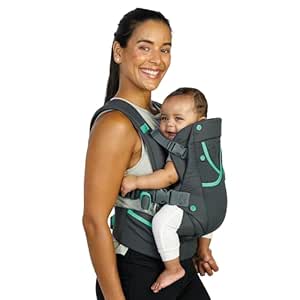 | Best for Hands-Free Errands | Weight range: 8–40 lbs | Color: Gray | Shoulder straps: Padded | VIEW ON AMAZON | See Our Full Breakdown |
| Colugo Lightweight Ergonomic Baby Carrier |  | Best for Sun-Shaded Outings | Carry positions: Inward, outward, and back | Waistband fit: 28–54 inches | Sun protection: UPF 50 sunshade | VIEW ON AMAZON | See Our Full Breakdown |
| Osprey Poco Soft Convertible Baby Carrier for Newborns |  | Best for Travel and Longer Wear | Model number: 10006177 | Item weight: 1.7 lbs | Dimensions: 25.6H × 17.7W × 3.5D inches | VIEW ON AMAZON | See Our Full Breakdown |
| Ergobaby Omni Classic Baby Carrier (Newborn to Toddler, 0-48 Months) |  | Best Long-Term Investment | Age Range: 0-48 months | Carrying Positions: 4 (inward-facing, outward-facing, back carry, hip carry) | Support Features: Patented bucket seat, adjustable back panel, 3-way head and neck support, lumbar support | VIEW ON AMAZON | See Our Full Breakdown |
| Ergonomic 4-in-1 Baby Carrier for Newborn to Toddler |  | Best for Plus-Size Parents | Weight Capacity: 7-35 lbs | Carrying Positions: 4-in-1 | Ergonomic Support: M-position hip and spine support | VIEW ON AMAZON | See Our Full Breakdown |
| Boppy ComfyFit Adjust Baby Carrier – Secure Hybrid Wrap, Newborn to Toddler |  | Best Travel and Compact Pick | Outer Fabric: 88% Polyester / 12% Spandex | Certification: JPMA Certified | Weight Capacity: 8-35 lbs | VIEW ON AMAZON | See Our Full Breakdown |
| GROWNSY Baby Carrier with Head Support, Beige Houndstooth (7-44 lbs) |  | Best for Newborn Head and Neck Support | Weight Capacity: 7-44 lbs | Age Range: 0-36 months | Carry Positions: Facing inward (0-6 months), front facing (6+ months) | VIEW ON AMAZON | See Our Full Breakdown |
| Infantino Flip Luxe 4-in-1 Baby Carrier, Onyx |  | Best Budget-Friendly Structured Option | Carrying Positions: 4 | Weight Range: 7-35 lbs | Seat: Ergonomic seat | VIEW ON AMAZON | See Our Full Breakdown |
| WildBird Aerial Buckle Baby Carrier, Large (L–4XL), Acadian |  | Best for Plus-Size Caregivers | Material: Breathable linen | Baby weight range: 7–45 lbs | Age range: 2–24 months | VIEW ON AMAZON | See Our Full Breakdown |
| LÍLLÉbaby Complete All Seasons Ergonomic 6-in-1 Baby Carrier, Infant to Toddler (7-45 lbs), Charcoal & Silver |  | Most Versatile Premium Pick | Weight Capacity: 7–45 lbs | Carry Positions: 6 | Facing Options: Inward & Outward | VIEW ON AMAZON | See Our Full Breakdown |
| Momcozy WeeSnug Newborn Baby Carrier, 7–25 lbs |  | Best Newborn-Stage Pick | Brand: Momcozy | Model: WeeSnug | Suitable weight: 7–25 lbs | VIEW ON AMAZON | See Our Full Breakdown |
| Happy! Original Lightweight Ergonomic Baby Carrier, 7–45 lbs |  | Best Lightweight Everyday Pick | Weight range: 7–45 lbs | Material: Linen | Carry positions: Front and back | VIEW ON AMAZON | See Our Full Breakdown |
| Mabē Monarch Ergonomic Baby Carrier, Soft Structured Cotton Carrier, Newborn to Toddler, 3 Carry Positions (Ivory) |  | Best Blend of Comfort and Easy Care | Material: 90% Cotton, 10% Linen | Weight Capacity: 9–46 lbs | Carry Positions: 3 (Front Facing In, Front Facing Out, Back Carry) | VIEW ON AMAZON | See Our Full Breakdown |
More Details on Our Top Picks
Momcozy PureHug Ergonomic Baby Carrier, 7–45 lbs
The PureHug keeps its focus on a breathable, lightweight build and support through a broad 7–45 lb range. Its three-stage adjustment is meant to adapt as a baby grows, while the EVA waist support and X-shaped back spread carrying load across the wearer. Compared with the Momcozy Baby Carrier with Hip Seat, it gives up multiple carry positions and a detachable seat in favor of a simpler carrier design. That makes it a more direct choice for caregivers who mainly want a structured everyday carry rather than a position-changing system. Padded leg openings and the ergonomic M position add useful comfort details, but the provided specifications do not describe sun protection, storage, or fit range for the waistband. Choose it for lightweight basics; skip it if you want more carrying configurations.
Pros:- Cotton and viscose blend is described as breathable and lightweight
- Three-stage adjustment accommodates growth across the stated 7–45 lb range
- EVA waist support and X-shaped back are designed to distribute carrying load
- Padded leg openings and an ergonomic M position add comfort-focused support
Cons:- Fewer carrying options are specified than on the Momcozy hip-seat carrier
- No waistband fit range or sunshade is provided in the product data
Best for: Caregivers seeking a breathable, lightweight structured carrier for regular inward carrying as their baby grows
Not ideal for: Families who want a detachable hip seat, several defined carry positions, or documented waistband sizing
- Fabric:65% cotton, 35% viscose
- Weight capacity:7–45 lbs
- Adjustment:Three stages
- Back design:X-shaped
- Waist support:EVA support
- Leg openings:Padded
- Baby position:Ergonomic M position
Our verdict“Choose the PureHug for a lightweight, growth-adjusting everyday carrier; choose the Momcozy hip-seat model if position variety matters more.”
Momcozy Baby Carrier with Hip Seat, 2-in-1 Forward-Facing Toddler Carrier, Black
The defining advantage of this 2-in-1 carrier is flexibility: its detachable hip seat and six listed positions cover cradle, hip, forward-facing, inward, outward, and back carry. That range makes it more adaptable to changing routines than the simpler Momcozy PureHug, which emphasizes lightweight everyday support. An X-structure and 3D contoured waist support are intended to spread pressure across the wearer, while the one-person wear design can make setup more manageable. There are practical limits: the carrier is listed for waist sizes up to 45 inches, and the hip-seat cradle is recommended for babies under five months rather than use as a full carrier. Its 7–44 lb range also ends slightly below the PureHug’s stated upper limit. Pick this when carry options matter; pass if your fit exceeds the stated waist limit.
Pros:- Six listed positions provide more flexibility than the PureHug
- Detachable hip seat offers a distinct carrying setup
- X-structure and 3D contoured waist support are designed to distribute pressure
- Listed weight capacity spans 7–44 lbs
Cons:- Waist fit is limited to a maximum of 45 inches
- Hip-seat cradle is recommended for babies under five months, while the carrier is recommended from five months
- The 44 lb upper limit is lower than the PureHug’s stated 45 lb limit
Best for: Caregivers who want one structured system for switching among inward, outward, hip, and back carries
Not ideal for: Wearers with waist sizes over 45 inches or families who prefer a lightweight, uncomplicated carrier
- Weight capacity:7–44 lbs
- Carrying positions:Six: cradle, hip, forward-facing, facing in, facing out, back carry
- Recommended age:Carrier: 5+ months; hip-seat cradle: under 5 months
- Maximum waist size:45 inches
- Cushion thickness:10 mm
- Material:Breathable, skin-friendly fabric
- Color:Black
Our verdict“Choose this Momcozy model if you expect to use several carry positions and fit within its 45-inch waist limit.”
Infantino Carry On Active Baby Carrier, Gray
The Carry On Active is aimed at caregivers who want essentials close at hand while carrying: multiple pockets, a lumbar storage belt, and a pacifier or toy loop give it a practical organization advantage over the Colugo Lightweight Ergonomic Baby Carrier, whose listed strengths center on low weight and a sunshade. Padded shoulder straps and a supportive waist belt address load distribution, and its stated 8–40 lb range covers much of the baby-to-toddler period. The tradeoff is a narrower range than the Momcozy PureHug’s 7–45 lb capacity, and the provided product data does not specify carry positions, fabric, or fit measurements. That leaves less guidance for shoppers comparing fit and versatility. I’d shortlist it for walks and errands where storage is useful, but look elsewhere if position choice or detailed fit information is a priority.
Pros:- Multiple pockets keep small essentials within reach
- Lumbar storage belt combines support and storage
- Padded shoulder straps and supportive waist belt are designed to distribute weight
- Stated weight range reaches 40 lbs
Cons:- Listed weight range starts at 8 lbs, above the PureHug’s 7 lb starting point
- Maximum listed capacity is lower than the 44 lb Momcozy hip-seat carrier
- Product data does not specify carry positions or waistband fit measurements
Best for: Caregivers who run errands or take walks and want pockets and a toy loop built into their carrier
Not ideal for: Buyers who need a stated newborn-range fit, multiple documented carry positions, or detailed waistband sizing
- Weight range:8–40 lbs
- Color:Gray
- Shoulder straps:Padded
- Waist belt:Supportive
- Storage:Lumbar storage belt and multiple pockets
- Accessory loop:Pacifier or toy loop
Our verdict“Choose the Carry On Active for built-in storage during outings, and favor another option if carry-position details are central to your decision.”
Colugo Lightweight Ergonomic Baby Carrier
At 1.5 lbs, the Colugo has a clear case for caregivers who want a lightweight structured carrier with a built-in answer to sunny walks: its UPF 50 sunshade. Inward, outward, and back carry give it more specified position variety than the Infantino Carry On Active, whose product data does not list carry positions. The adjustable 28–54-inch waistband also supplies fit guidance that the Infantino listing lacks. Its materials are machine washable, which can make routine cleanup simpler. The tradeoff is that the listing gives no weight range, so it is harder to judge how long the carrier will suit a growing child compared with the Momcozy PureHug’s stated 7–45 lb capacity. Choose the Colugo when light weight, sun coverage, and a broad stated waistband range lead your checklist; seek clearer capacity details if longevity is your priority.
Pros:- Weighs 1.5 lbs
- Three listed positions include inward, outward, and back carry
- UPF 50 sunshade is included
- Machine-washable construction supports routine cleanup
Cons:- No child weight range is provided in the supplied product data
- Polyester and nylon construction may not suit buyers seeking a cotton blend like the PureHug
Best for: Caregivers who take outdoor walks and want a lightweight carrier with sun protection and a broad stated waistband range
Not ideal for: Shoppers who need a stated child weight range to compare fit over time
- Carry positions:Inward, outward, and back
- Waistband fit:28–54 inches
- Sun protection:UPF 50 sunshade
- Weight:1.5 lbs
- Materials:100% polyester and nylon
- Care:Machine washable
Our verdict“Choose the Colugo for lightweight outdoor use with sun coverage, provided its unspecified weight range meets your needs.”
Osprey Poco Soft Convertible Baby Carrier for Newborns
The Osprey Poco Soft is the most outdoor-oriented pick here, pairing a deployable UPF 50 sunshade with a breathable 3D mesh child seat and ventilated shoulder straps. An extra-wide padded hipbelt is designed to spread support over longer carries, making this a stronger match for travel and hiking than the Infantino Carry On Active, which emphasizes pockets and an accessory loop. It offers facing-in, forward-facing, and back carry, with a stated age range from newborn to 36 months. The recycled, bluesign-approved fabric is another differentiator. There are tradeoffs: forward-facing use is limited to infants up to about 16 months, and the supplied product data says careful manual reading may be needed to select positions correctly. Compared with the Colugo, the Osprey provides more detailed age and material information, though both include UPF 50 coverage.
Pros:- Three listed positions cover inward, forward-facing, and back carry
- Ventilated shoulder straps and an extra-wide padded hipbelt are designed for carrying comfort
- Deployable UPF 50 sunshade supports outdoor use
- Uses bluesign-approved, 100% recycled fabric
Cons:- Forward-facing carry is limited to infants up to about 16 months
- Position use may take careful manual reading
- At 1.7 lbs, it is heavier than the 1.5 lb Colugo
Best for: Families seeking a soft structured carrier for travel, hikes, and longer outings with a child from newborn to toddler age
Not ideal for: Caregivers who want a minimal setup or expect to use forward-facing carry beyond about 16 months
- Model number:10006177
- Item weight:1.7 lbs
- Dimensions:25.6H × 17.7W × 3.5D inches
- Age range:Newborn to 36 months
- Carry positions:Facing-in, forward-facing, back carry
- Material:bluesign-approved, 100% recycled 210 high-tenacity fabric
- Sun protection:Deployable UPF 50 sunshade
- Closure:Buckle
- Strap type:Adjustable
Our verdict“Choose the Poco Soft for outdoor trips and extended carries where ventilation, hip support, and a sunshade matter more than the lightest listed weight.”
Ergobaby Omni Classic Baby Carrier (Newborn to Toddler, 0-48 Months)
This option stands out for its unmatched 0-48 month range, meaning a single purchase can carry a child from birth well into the preschool years. Where the GROWNSY tops out at 36 months and the Boppy ComfyFit stops at 35 lbs, the Omni Classic keeps going, which is why it earns the long-haul slot despite a higher tier of premium pricing. The four carrying positions, including hip and back carry, give it a versatility advantage over the Infantino Flip Luxe’s similar four-position setup thanks to the patented bucket seat and adjustable back panel that adapts as baby grows. Cross-back or H-back strap options let parents tune the fit for longer sessions.
Pros:- Genuine 0-48 month usable range, the longest in this lineup
- Four positions including hip and back carry for real flexibility
- Patented bucket seat with adjustable back panel grows with the child
- Hip-healthy certified and passes an 80-point safety inspection
Cons:- Privacy hood, drool bib, and carrier cover cost extra and add up
- Premium build comes at a premium price point compared with simpler four-position rivals
Best for: Parents who want one carrier from birth through toddlerhood without buying replacements or inserts along the way
Not ideal for: Budget-conscious buyers, since the extras that complete the experience — privacy hood, drool bib, carrier cover — are all sold separately
- Age Range:0-48 months
- Carrying Positions:4 (inward-facing, outward-facing, back carry, hip carry)
- Support Features:Patented bucket seat, adjustable back panel, 3-way head and neck support, lumbar support
- Strap Options:Cross-back or H-back
- Certification:Hip-healthy (International Hip Dysplasia Institute)
- Safety Testing:80-point safety inspection
- Optional Accessories:Privacy hood, drool bib, carrier cover (sold separately)
Our verdict“Buy this if you plan to use one carrier for years rather than months and are willing to pay for accessories separately.”
Ergonomic 4-in-1 Baby Carrier for Newborn to Toddler
What separates this model from the rest of the lineup is its fully adjustable fit across all body shapes, explicitly including plus-size parents — something most structured carriers only accommodate as an afterthought (the WildBird Aerial in L–4XL is the only other option here designed for larger frames). The X-shaped back design pulls weight toward the torso rather than letting it hang off the shoulders, and the M-position seat supports healthy hip development comparable to the Ergobaby Omni Classic at a friendlier level of the market. Compared with the GROWNSY, the padded leg openings add real comfort during long naps-on-the-go. The tradeoff is breathability — this carrier runs warm — and limited finish options.
Pros:- Fully adjustable fit that genuinely accommodates plus-size parents
- X-shaped back design shifts weight off the shoulders
- M-position seat supports healthy hip and spine development
- Padded shoulder straps and leg openings for long-wear comfort
Cons:- Traps heat during extended use in warm weather
- Limited style and color options compared with styled rivals like the GROWNSY Beige Houndstooth
Best for: Plus-size parents or caregivers who have struggled to get a secure, comfortable fit with standard-sized structured carriers
Not ideal for: Families in hot climates or who babywear through summer, since the padding and fabric run warm during extended wear
- Weight Capacity:7-35 lbs
- Carrying Positions:4-in-1
- Ergonomic Support:M-position hip and spine support
- Back Design:X-shaped weight distribution
- Padding:Padded shoulder straps and leg openings
- Adjustability:Fully adjustable for all body shapes, including plus-size
Our verdict“This pick makes the most sense for larger-framed caregivers who need an inclusive fit without paying boutique prices.”
Boppy ComfyFit Adjust Baby Carrier – Secure Hybrid Wrap, Newborn to Toddler
The ComfyFit Adjust wins its slot on portability and simplicity: it packs into its own pouch, tosses in the washing machine, and needs no infant insert from day one. Compared with the Ergobaby Omni Classic, you give up back and hip carry entirely — this is front-carry only — but in exchange you get a lighter, softer hybrid-wrap feel that disappears into a diaper bag in a way bulkier structured carriers never will. The stretch-blend fabric with adjustable straps and a padded waist belt fits a wider range of bodies than fixed-webbing designs like the Infantino Flip Luxe, though the spandex content means careful laundering and no ironing.
Pros:- Packs into its own pouch for genuine travel portability
- No infant insert required from 8 lbs upward
- Machine washable for easy cleanup after messes
- Adjustable straps and padded waist belt fit a wide range of body types
Cons:- Front carrying only; no back or hip positions at all
- Care restrictions — no ironing or dry cleaning — and spandex blends can wear faster than rigid structured fabric
Best for: Travelers and urban parents who want a machine-washable, packable carrier for occasional use from newborn through toddlerhood
Not ideal for: Parents of heavier toddlers or anyone who needs back-carry options, since front-only carrying gets tiring past 25 lbs
- Outer Fabric:88% Polyester / 12% Spandex
- Certification:JPMA Certified
- Weight Capacity:8-35 lbs
- Carrying Positions:3 (newborn front face-in, baby front face-in legs out, front face-out)
- Infant Insert Required:No
- Care:Machine washable, non-chlorine bleach, tumble dry low, no ironing
- Storage:Packs into its own pouch
Our verdict“Choose this if packability and easy washing matter more to you than carrying-position variety.”
GROWNSY Baby Carrier with Head Support, Beige Houndstooth (7-44 lbs)
Where most carriers in this roundup treat newborn support as an afterthought, GROWNSY builds around it: the foldable head and neck support protects a floppy newborn cervical spine and then tucks away once baby has control. That feature, plus a 7-44 lb capacity, puts it in rare territory alongside the LÍLLÉbaby Complete and Happy! Original — nearly double the range of the Boppy or Infantino Flip Luxe. The EVA waist support and X-shaped back do honest work against parental fatigue, and the 30-second buckle design is a genuine kindness to sleep-deprived new parents. The tradeoff is positional: only inward and front-facing carry, no back or hip option.
Pros:- Foldable head and neck support specifically protects newborn cervical spine
- 7-44 lb weight range covers newborn through heavy toddler
- EVA waist support and widened straps reduce shoulder and back fatigue
- Quick 30-second, 4-step buckle design suits first-time parents
Cons:- Only two carry positions; no back or hip carry
- Can run warm in hot weather despite the breathable fabric claims
Best for: New parents prioritizing infant head and neck protection who also want a carrier that lasts to 44 lbs
Not ideal for: Caregivers who want back-carry for hikes or household tasks, since the two-position design limits you to front carrying
- Weight Capacity:7-44 lbs
- Age Range:0-36 months
- Carry Positions:Facing inward (0-6 months), front facing (6+ months)
- Head Support:Foldable head and neck support
- Back Support:EVA waist support, X-shaped back support
- Material:Soft, breathable, skin-friendly fabric
- Design:Beige Houndstooth print
- Setup:4-step buckle design, ~30 seconds
Our verdict“This is the pick for families whose first priority is newborn head support with room to grow, not carrying-position variety.”
Infantino Flip Luxe 4-in-1 Baby Carrier, Onyx
The Flip Luxe earns its place by delivering four carrying positions at a lower tier of pricing than premium rivals like the Ergobaby Omni Classic — and by adding features Infantino’s own Carry On Active doesn’t include, namely a lumbar support belt that makes longer sessions noticeably easier on the lower back. The easy-clean herringbone fabric is a practical touch for drool and spit-up realities that the GROWNSY’s light Beige Houndstooth would betray quickly. The ergonomic seat keeps baby’s hips in a healthy position, though adjustability for very small or very large-framed parents is more limited than the fully inclusive fit of the Ergonomic 4-in-1.
Pros:- Four carrying positions from newborn through toddler
- Lumbar support belt eases lower-back strain on longer outings
- Soft herringbone fabric wipes clean easily after messes
- Adjustable shoulder straps for a customizable fit
Cons:- Weight range caps at 35 lbs, well short of the GROWNSY or Ergobaby Omni Classic
- Less inclusive fit range than carriers designed for all body shapes
Best for: Budget-minded parents who want four carrying positions and lumbar support without paying premium-brand prices
Not ideal for: Plus-size or very petite caregivers who need extensive strap adjustability, and anyone wanting the longest usable age range
- Carrying Positions:4
- Weight Range:7-35 lbs
- Seat:Ergonomic seat
- Support:Lumbar support belt
- Straps:Adjustable shoulder straps
- Fabric:Soft herringbone, easy to clean
- Color:Onyx
Our verdict“A sensible entry point if you want four-position flexibility and lumbar support while spending less than premium brands demand.”
WildBird Aerial Buckle Baby Carrier, Large (L–4XL), Acadian
Most structured carriers quietly assume a mid-size torso and waistband, leaving larger caregivers with straps that dig and webbing that runs out too soon. The WildBird Aerial in Large solves that with a waist fit spanning 35–53.5 inches, something the standard-adjustment Momcozy PureHug simply doesn’t match. Compared with the LÍLLÉbaby Complete All Seasons, the Aerial trades away carry-position versatility — it’s inward-facing and back carry only — in exchange for a cleaner, lighter build in breathable linen with padded cross straps and genuine lumbar support. That breathability matters for long outdoor wear where heavier multi-position carriers run hot. The tradeoff is real, though: no outward-facing option means babies who crave a view will outgrow its appeal, and the size minimum of 35 inches makes it a poor fit for smaller parents.
Pros:- Sized specifically for L–4XL caregivers with a 35–53.5 inch waist range
- Breathable linen keeps both wearer and baby cooler than padded polyester builds
- Padded cross straps plus lumbar support distribute weight well for long carries
- Front and back carry options cover the core ergonomic positions
Cons:- Front carry is inward-facing only, with no outward-facing option
- Large size has a 35-inch minimum waist, excluding smaller caregivers
Best for: Plus-size or broad-shouldered caregivers who want a premium, breathable carrier that fits properly out of the box
Not ideal for: Caregivers with waists under 35 inches, or parents who want an outward-facing position for curious babies
- Material:Breathable linen
- Baby weight range:7–45 lbs
- Age range:2–24 months
- Size:Large (L–4XL)
- Waist fit:35–53.5 in
- Carry positions:Front inward-facing and back
- Straps:Padded cross straps
- Additional features:Lumbar support, removable chest clip
Our verdict“Buy this if standard carriers never fit your frame — it’s the rare premium structured carrier genuinely designed for larger bodies.”
LÍLLÉbaby Complete All Seasons Ergonomic 6-in-1 Baby Carrier, Infant to Toddler (7-45 lbs), Charcoal & Silver
If carry-position flexibility is the deciding factor, this model is the one to beat. With six ergonomic positions including outward-facing, it out-flexes both the WildBird Aerial (two positions, inward only in front) and the Mabē Monarch (three positions). The standout feature is the zip-down mesh panel, which lets you vent heat mid-walk without unbuckling anyone — a genuine advantage over fixed-fabric carriers like the Happy! Original for unpredictable weather. The two-way straps let you switch between crossed and backpack styles depending on load, and the extendable torso grows with your child from 7 to 45 pounds. All that capability comes at a cost: this is one of the bulkiest options here, and first-time wearers should expect a learning curve getting each position adjusted correctly before it feels effortless.
Pros:- Six carry positions including outward-facing, more than any other pick here
- Zip-down mesh panel provides on-the-fly temperature control
- Two-way straps allow crossed or backpack-style wearing
- 7–45 lbs range plus extendable torso eliminates the need for an infant insert
Cons:- Bulker and heavier than simpler carriers like the Happy! Original
- Adjusting between six positions has a real learning curve for beginners
Best for: Parents who want one carrier to cover every stage and position from infancy through toddlerhood, in any season
Not ideal for: Minimalists and travelers — the bulk and adjustment complexity outweigh the versatility if you mostly do quick front carries
- Weight Capacity:7–45 lbs
- Carry Positions:6
- Facing Options:Inward & Outward
- Material Feature:Breathable mesh zip-down panel
- Straps:Two-way (front or backpack style)
- Extras:Lumbar support, large storage pocket, removable sleeping hood, extendable torso
- Color:Charcoal & Silver
Our verdict“The right choice if you’d rather master one feature-rich carrier than buy two simpler ones across your baby’s first three years.”
Momcozy WeeSnug Newborn Baby Carrier, 7–25 lbs
Most carriers in this roundup are built to last into toddlerhood, which usually means a wider seat and more structure than a newborn actually needs. The WeeSnug flips that logic: its narrower frame and 100% cotton body are shaped around the floppy-necked 7-pound infant, giving a snugger, more womb-like fit than the roomier Ergobaby Omni Classic. The adjustable waistband creates a proper M-shaped seat from day one, and the streamlined buckle design means no wrapping or tying — a real advantage over hybrid wraps like the Boppy ComfyFit for sleep-deprived new parents. The tradeoff is lifespan: the 25-pound ceiling means most babies outgrow it within the first year, and proper ergonomic positioning depends entirely on careful adjustment each wear. This is a stage-one tool, not a long-term one.
Pros:- Soft 100% cotton is gentle on newborn skin and fully breathable
- No wrapping or tying — quicker than hybrid wrap carriers
- Adjustable waistband supports a correct M-shaped ergonomic seat
- Lightweight and compact for the fourth-trimester stage
Cons:- 25 lb weight ceiling means a second carrier purchase is likely within a year
- Safe hip positioning depends on careful adjustment every wear
Best for: New parents prioritizing a gentle, no-tie carrier specifically for the newborn and early-infant months
Not ideal for: Anyone wanting a single carrier through toddlerhood — the 25 lb limit ends usefulness around the first birthday for most babies
- Brand:Momcozy
- Model:WeeSnug
- Suitable weight:7–25 lbs
- Material:100% cotton
- Design:Adjustable waistband, cross-back straps, padded waist support
- Carry style:Structured buckle carrier, no wrapping required
Our verdict“A smart newborn specialist if you accept buying again later — skip it if you only want one carrier total.”
Happy! Original Lightweight Ergonomic Baby Carrier, 7–45 lbs
Sometimes the best carrier is the one you actually grab on the way out the door. The Happy! Original wins on portability and simplicity: it folds down small, weighs little thanks to its linen build, and covers the full 7–45 pound range without requiring an infant insert — unlike carriers that need an add-on for newborns. Compared with the LÍLLÉbaby Complete All Seasons, it sacrifices the mesh zip panel and four extra carry positions, but many parents never use those anyway. Its petite-through-plus-size adjustable fit is broader than most single-size designs, and the discreet pocket handles a phone and keys. The honest caveat is that this is a less-established brand with limited real-world track record compared with Ergobaby or LÍLLÉbaby, so long-term durability and wearer comfort under a 30+ pound toddler remain an open question rather than a confirmed strength.
Pros:- Covers 7–45 lbs with no infant insert needed
- Lightweight linen breathes well and packs down compactly
- Adjustable fit spans petite through plus-size caregivers
- Front and back carry plus a discreet storage pocket
Cons:- Limited brand track record makes long-term durability harder to judge
- Less padded than premium rivals, which may show during extended heavy-toddler carries
Best for: Parents who want a light, packable, fuss-free carrier for everyday errands and travel from birth through toddlerhood
Not ideal for: Buyers who prioritize a proven long-term track record for heavy toddler carrying or extensive customer support
- Weight range:7–45 lbs
- Material:Linen
- Carry positions:Front and back
- Fit:Adjustable for petite through plus-size caregivers
- Infant insert required:No
- Storage:Discreet pocket
Our verdict“A compelling low-friction choice for daily use if you value portability over brand pedigree and maximum padding.”
Mabē Monarch Ergonomic Baby Carrier, Soft Structured Cotton Carrier, Newborn to Toddler, 3 Carry Positions (Ivory)
The Mabē Monarch sits in a sweet spot between the minimal Happy! Original and the feature-loaded LÍLLÉbaby: three carry positions, a hip-healthy deep M seat, and a premium 90/10 cotton-linen blend that feels softer against skin than all-polyester builds. Its 9–46 pound range edges out every other carrier here at the top end, giving the longest toddler runway of the batch. Being machine washable is a genuine differentiator — most structured carriers demand hand-washing — though the fine print recommends spot cleaning to preserve the Ivory fabric, which undercuts the convenience somewhat. Position timing is another constraint: outward-facing and back carry both wait until six months, and the carrier starts at three months minimum, so true newborns need the Momcozy WeeSnug or an Ergobaby Omni instead.
Pros:- Highest weight capacity in the lineup at 9–46 lbs
- Deep M-position seat supports healthy hip development
- Breathable cotton-linen blend is softer than synthetic alternatives
- Machine washable and adjustable to fit all caregivers including plus sizes
Cons:- No newborn use — minimum age is 3+ months, with facing-out and back carry waiting until 6+ months
- Spot cleaning recommended for longevity, complicating the washable claim
- Light Ivory color shows stains quickly
Best for: Style-conscious parents who want a soft, washable, hip-healthy carrier that carries comfortably into the late-toddler years
Not ideal for: Parents of newborns under 3 months, who will need a different carrier for the first stage
- Material:90% Cotton, 10% Linen
- Weight Capacity:9–46 lbs
- Carry Positions:3 (Front Facing In, Front Facing Out, Back Carry)
- Minimum Age:3+ months
- Hip-Healthy Design:Yes (‘M’ position seat)
- Care Instructions:Machine washable cold, gentle cycle in garment bag
- Color:Ivory
Our verdict“Pick the Monarch if you’re starting at three months or later and want premium fabric, easy care, and the longest usable lifespan of the group.”

How We Picked
I evaluated each carrier against the criteria that actually determine long-term satisfaction: ergonomic support (seat width, knee-to-knee positioning, lumbar belt quality), fit adjustability across caregiver body sizes, weight range honesty — whether the carrier genuinely stays comfortable near its upper limit — and everyday usability like buckle access, strap adjustment, and how easily one caregiver can put it on solo. Build quality and washability mattered too, because a premium carrier should survive daily use and frequent laundering without fraying or losing shape.
The ranking logic is straightforward: carriers that combine a true newborn-to-toddler range with real load-bearing support rank highest, since they replace two or three purchases with one. Specialized carriers — extended sizing, lightweight frames, or hip-seat hybrids — are ranked within their niche rather than against the all-rounders, and I flag exactly who each one is for and who should pass. Where a lower-ranked carrier beats a higher one on a specific trait, I say so directly, because no single carrier wins every category.
Factors to Consider When Choosing Premium Baby Carrier Structured
A premium structured carrier is one of the most-used pieces of baby gear you will own, often worn for hundreds of hours. These are the factors that separate a carrier you love from one that gathers dust in a closet.Weight Range Versus Real Comfort Range
Manufacturers print impressive weight ranges, but the usable comfort range is always narrower. A carrier rated to 45 lbs may still work at 35 lbs, yet cheap shoulder padding and a thin waistbelt make it painful well before the limit. The tell is in the structure: a wide, firm lumbar belt transfers the child’s weight to your hips, which is what makes extended wear possible. Check whether newborn use requires an insert or built-in adjustment — inserts add cost and fiddle, while carriers like the Omni Classic adjust the seat panel itself. A common mistake is buying for the newborn stage and discovering the carrier is outgrown by 18 months, forcing a second purchase. If your budget only stretches to one carrier, prioritize the upper end of the range, because newborns can always be managed with a wider seat cinched down.
Caregiver Fit and Body Size
Most carriers are advertised on the baby’s size, but your body determines daily comfort more than your baby’s. Standard webbing-based adjustability works fine for average builds, but taller parents may find shoulder straps sitting awkwardly high, and plus-size caregivers often hit strap limits before the carrier feels secure. The WildBird Aerial exists precisely because one-size-fits-most frequently does not. If two caregivers of very different sizes will share the carrier, look for memory-fit buckles or magnetic clips that let you switch users without re-threading everything. A related mistake: buying a carrier online without checking the strap range, then discovering it cannot be cinched small enough for a petite partner. Fit is the single most common reason premium carriers get abandoned.
Carry Positions and Hip Health
Most structured carriers offer front-inward, front-outward, hip, and back carries, but the positions that matter depend on your child’s age and temperament. Forward-facing is popular around 5–6 months but should be time-limited, since it places more strain on your back and does not support the ideal M-shaped leg position. Back carries are the game-changer most parents underestimate — they become invaluable once a baby exceeds roughly 20 lbs. Look for carriers with a wide, adjustable seat panel rather than a fixed narrow one, because knee-to-knee support is what keeps a baby’s hips in a healthy position during long sessions. Any carrier certified as hip-healthy by the International Hip Dysplasia Institute gives extra peace of mind.
Climate, Fabric, and Everyday Wear
Heat buildup is the most ignored factor in carrier buying and one of the top reasons for summer abandonment. Breathable mesh panels or zip-down ventilation — as on the LÍLLÉbaby All Seasons — dramatically change warm-weather usability compared with dense cotton canvas. Fabric also determines maintenance: soft structured cotton like the Mabē Monarch feels luxurious against a newborn’s skin but shows staining and takes longer to dry, while synthetic blends clean easily and wick moisture. Check whether the carrier is machine washable or spot-clean only, because drool, milk, and diaper incidents are guaranteed. If you live somewhere hot or plan to wear the carrier on walks through summer, prioritize airflow over plush padding.
Feature Creep Versus Simplicity
More carry positions and add-ons sound like better value, but every feature adds buckles, weight, and cognitive load. A 6-in-1 carrier that takes ten minutes to reconfigure will simply not be reconfigured, whereas a simpler carrier that goes on in seconds gets used daily. The Boppy ComfyFit and Colugo succeed because they strip the category down to essentials, while the LÍLLÉbaby earns its complexity by making each mode genuinely accessible. Ask yourself honestly which positions you will use: most parents rely on front-inward for the first year and back carry after. Paying extra for positions you will never try is a common premium-carrier mistake, and simpler designs are usually lighter and cooler as a bonus.
When to Pay More — and When Not To
Stepping up in price genuinely buys better lumbar support, denser foam, stronger stitching, and longer usable life — that is where premium tiers earn their keep. Where extra money stops paying off is in fashion prints, branding, and features duplicating gear you already own, like an integrated sunshade when you own a hat and umbrella. A higher price tier is justified when you will wear the carrier daily or share it across multiple children; for occasional use, mid-tier models like the Infantino options deliver most of the function. Also weigh resale: well-built carriers from established brands hold value and sell easily secondhand, which effectively lowers the true cost of ownership. Budget models are false economy only when they fail the fit test — an uncomfortable carrier at any price is a wasted purchase.
Frequently Asked Questions
Do I need a newborn insert, or should I buy a carrier that works from birth without one?
Carriers that adjust down to newborn size without an insert — like the Ergobaby Omni Classic or LÍLLÉbaby Complete — cost more upfront but save you roughly the price of an insert and remove a step from every wear session. Inserts also add warmth, which matters in summer, and create a gap period where you must remember to remove them at the right developmental stage. That said, if you already own an insert-compatible carrier or plan to babywear only occasionally in the newborn months, an insert is a perfectly workable solution. Parents expecting subsequent children benefit most from insert-free designs because the carrier stays simpler and faster for years. If budget is tight, prioritize the toddler end instead and use a wrap for the fragile first months.
Are hip-seat carriers like the Momcozy 2-in-1 a good substitute for a full structured carrier?
Hip-seat carriers excel at short, flexible use — quick errands, feeding support, and letting a toddler face outward — but they distribute weight differently, concentrating more load on your shoulders and waist without the full-body support of a structured panel. For sessions under 30 minutes they feel wonderfully convenient, and many parents love them as a second carrier for the toddler stage. As a primary all-day carrier, most caregivers find them fatiguing once a baby passes roughly 20 lbs. The Boppy ComfyFit sits in similar territory: faster and lighter, but not built for marathon wear. If you can only buy one, a full structured carrier covers more ground; if you can own two, a hip-seat model is a genuinely useful complement.
Which carrier in this lineup works best for plus-size or tall caregivers?
The WildBird Aerial in L–4XL is the clear answer, because it was designed from the ground up for larger frames rather than adjusted afterward with longer webbing. Standard adjustable carriers often work for moderately plus-size caregivers, but the difference shows up in shoulder strap placement and waistbelt coverage — straps that dig under the arms or a belt that cannot cinch past the hips undermine an otherwise excellent carrier. Taller caregivers should also check torso length, since a fixed panel can sit too low on the chest. If you and a partner have very different body types, memory-adjust buckles or dual-side adjustments matter more than raw size range. Fit problems, not feature gaps, are the top reason carriers go unused, so verify measurements before ordering.
Can one premium carrier really last from newborn to toddler, or will I end up buying two?
A genuinely well-designed all-in-one — the Omni Classic, LÍLLÉbaby Complete, or Momcozy PureHug — can carry a child from roughly 7 to 45 lbs, which covers birth to age three or four for most kids. The catch is that the experience at each end differs: newborn mode relies on cinching the seat narrow, and toddler mode relies on load transfer through the waistbelt, so adjustability quality is everything. Parents who report needing two carriers usually bought a narrow newborn-specific model first, then discovered it was outgrown within a year. The more common real-world upgrade is not size-related but comfort-related: adding a lighter or cooler second carrier for summer or travel. If you start with a strong all-rounder, a second carrier is a want, not a need.
How much does breathability actually matter, or is mesh a marketing gimmick?
Breathability is one of the most physically noticeable differences between carriers, not a gimmick — a dense cotton carrier in summer can turn both wearer and baby sweaty and irritable within twenty minutes. Zip-down ventilation panels, as on the LÍLLÉbaby All Seasons, let one carrier adapt across seasons, which is why that model ranks so well for year-round use. Mesh panels like the Colugo’s keep airflow high but trade away some structure, so the sweet spot depends on your climate and how long your typical wear sessions run. If you live somewhere warm or walk daily in summer, treat ventilation as a primary criterion rather than a bonus. In cold climates, the calculation flips and thicker fabric becomes an advantage worth paying for.
Conclusion
For most families, the Ergobaby Omni Classic is the best overall choice — it covers newborn to toddler without an insert, distributes weight well, and eliminates the need for a second carrier. If value is the priority, the Happy! Original and Infantino Flip Luxe deliver the core structured experience at a friendlier price, with the tradeoff of simpler padding and fewer refinements. The LÍLLÉbaby Complete All Seasons is the best premium pick for parents who want maximum carry positions and true four-season ventilation, while the WildBird Aerial is the clear choice for plus-size caregivers that standard carriers fail. Beginners will get the fastest, least intimidating start with the Boppy ComfyFit or Colugo Lightweight, both of which trade all-day support for simplicity. For specific needs: choose the Momcozy WeeSnug for the newborn window only, the Momcozy Hip Seat 2-in-1 for toddler errands and feeding support, and the Mabē Monarch if soft, natural cotton against your baby’s skin is a priority. Whatever you pick, fit comes first — a perfectly average carrier that fits your body will outperform a premium one that does not.
Halloween Picks
halloween
As an affiliate, we earn on qualifying purchases.