Shopping for kids puzzle books means balancing three things: puzzle variety, the right difficulty level for your child’s age, and how long the book will actually keep them busy. My top overall pick is the Ultimate Puzzle Challenge!: 125+ Brain Games for Kids, because it mixes logic puzzles, hidden pictures, and word games in one thick volume that stretches across a wide skill range. For younger kids, the Word Search Puzzle Book for Kids Ages 4–8 keeps things simple and confidence-building, while The Great Big Book of Really Hard Puzzles is the one to grab for advanced puzzlers who breeze through everything else. Budget buyers and party planners should also know that multi-book value packs exist but trade durability and curation for sheer quantity. Read on for the full breakdown of all 15 titles.

Turn the school run and nap time into listening time
- Thousands of audiobooks, podcasts and originals
- Listen on your phone, tablet or Echo — also offline
- Cancel anytime
Complete the kit


Key Takeaways
- The Highlights titles (Ultimate Puzzle Challenge and the Hidden Pictures series) beat competitors on paper quality and answer-key clarity, which matters most for younger kids who erase and retry often.
- Single-focus books like Totally Awesome Mazes and the Word Search book for ages 4–8 excel at building one skill, but they burn out faster than mixed-activity books of the same page count.
- The Hardest Hidden Pictures Book Ever and The Great Big Book of Really Hard Puzzles were the only two titles that genuinely challenged kids over 10 — most books labeled ‘ultimate‘ or ‘tricky’ plateau around age 9.
- The Elfew 20-pack delivers the lowest cost per book in the lineup but sacrifices themed curation and cohesive difficulty progression, making it a party-favor pick rather than a main gift.
- Story-driven options like The Codebreakers Club kept reluctant puzzlers engaged longest, suggesting narrative framing matters as much as puzzle count for kids who resist traditional workbooks.
| Ultimate Puzzle Challenge!: 125+ Brain Games for Kids (Highlights Jumbo Books & Pads) |  | Best Overall | Puzzle Count: 125+ | Puzzle Types: Mazes, brain teasers, word searches, crosswords, Sudoku, logic puzzles | Series: Highlights Jumbo Books & Pads | VIEW ON AMAZON | See Our Full Breakdown |
| Ultimate Activity Book for Kids Ages 8–12 |  | Best Value for Older Kids | Age Range: 8–12 years | Page Count: 100 pages | Activities: Mazes, dot-to-dot, word searches, crosswords | VIEW ON AMAZON | See Our Full Breakdown |
| Silliest Hidden Pictures Puzzles Ever: Search-and-Find Book for Kids Ages 6 and Up | 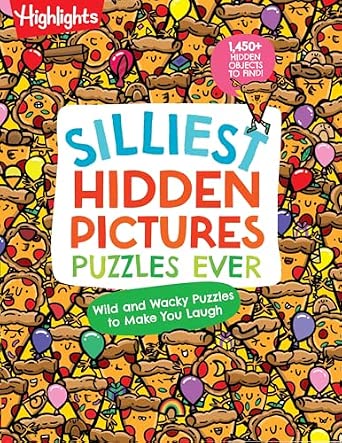 | Best for Younger Kids and Road Trips | Format: Search-and-find puzzle book | Age Range: 6 and up | Hidden Objects: Over 1,000 | VIEW ON AMAZON | See Our Full Breakdown |
| Ultimate Activity Book for Kids Ages 6-8: 100 Pages of Mazes, Dot-to-Dot, Word Search, and Crossword Puzzles |  | Best for Early Elementary | Recommended Age: 6–8 years | Page Count: 100 pages | Activities: Mazes, dot-to-dot, word searches, crosswords | VIEW ON AMAZON | See Our Full Breakdown |
| The Ultimate Activity Book for Smart Girls: Tricky Brain Teasers, Mind Games and Logic Puzzles for Girls 8-12 |  | Best Brain-Teaser Focus | Recommended Age: 8–12 years | Activity Types: Brain teasers, mind games, logic puzzles | Format: Paperback activity book | VIEW ON AMAZON | See Our Full Breakdown |
| The Great Big Book of Really Hard Puzzles |  | Best Long-Lasting Challenge | Pages: 256 | Recommended Age: 8 and up | Puzzle Types: Mazes, logic games, hidden-picture puzzles | VIEW ON AMAZON | See Our Full Breakdown |
| brainPLAY: Trickiest Puzzles Ever — Brain Teasers, Logic Puzzles, and Games for Kids 7+ |  | Best for Building Logic Skills | Recommended Age: 7 and up | Number of Games: Over 200 | Content Types: Brain teasers, logic puzzles, games | VIEW ON AMAZON | See Our Full Breakdown |
| brainPLAY Funniest Puzzles Ever: Over 200 Super Silly Brain Games, Wacky Activities and Hilarious Puzzles |  | Best for Reluctant Puzzlers | Recommended Age: 7 years and up | Number of Puzzles/Activities: 200+ | Content Types: Brain games, wacky activities, puzzles | VIEW ON AMAZON | See Our Full Breakdown |
| The Codebreakers Club: Solve the Mystery of the Missing Puzzle Professor: 150+ Logic Puzzles |  | Best Story-Driven Puzzling | Puzzle Count: 150+ | Format: Logic puzzle book with mystery storyline | Content Type: Logic puzzles | VIEW ON AMAZON | See Our Full Breakdown |
| The Hardest Hidden Pictures Book Ever: Ultra-Challenging Seek-and-Find Puzzles for Kids Ages 8–12 |  | Best Deep-Focus Seek-and-Find | Age Range: 8–12 years | Hidden Objects: Over 1,500 | Puzzle Type: Seek-and-find hidden pictures | VIEW ON AMAZON | See Our Full Breakdown |
| Word Search Puzzle Book for Kids Ages 4–8 |  | Best for Building Early Word Skills | Puzzle count: 100+ | Recommended age: 4–8 years | Puzzle type: Word search | VIEW ON AMAZON | See Our Full Breakdown |
| Elfew Small Activity Books for Kids, 20-Pack |  | Best Value for Groups and Travel | Quantity: 20 books | Total games: 280 | Book size: 7.1 × 5.1 inches | VIEW ON AMAZON | See Our Full Breakdown |
| Totally Awesome Mazes and Puzzles: Over 200 Brain-Bending Challenges |  | Best Maze Pick for Problem-Solvers | Format: Paperback | Number of puzzles: 200+ | Type: Activity book | VIEW ON AMAZON | See Our Full Breakdown |
| Jumbo Book of Hidden Pictures: Puzzle Activity Book for Kids |  | Best Jumbo Format for Long-Term Use | Activities: More than 200 hidden-picture puzzles and seek-and-find challenges | Recommended age: 6 and up | Format: Jumbo activity book | VIEW ON AMAZON | See Our Full Breakdown |
| Best Hidden Pictures Puzzles Ever: 144-Page Puzzle Book with Over 1,500 Hidden Objects |  | Best Portable Hidden-Pictures Value | Page count: 144 pages | Hidden objects: Over 1,500 | Recommended age: 6 and up | VIEW ON AMAZON | See Our Full Breakdown |
| kids puzzle book | Format | Recommended Age |
|---|---|---|
| Ultimate Puzzle Challenge!: 12 | Paperback activity book | — |
| Ultimate Activity Book for Kid | Paperback activity book | — |
| Silliest Hidden Pictures Puzzl | Search-and-find puzzle book | — |
| Ultimate Activity Book for Kid | Paperback activity book | 6–8 years |
| The Ultimate Activity Book for | Paperback activity book | 8–12 years |
| The Great Big Book of Really H | Paperback activity book | 8 and up |
| brainPLAY: Trickiest Puzzles E | Paperback puzzle book | 7 and up |
| brainPLAY Funniest Puzzles Eve | Paperback puzzle book | 7 years and up |
| The Codebreakers Club: Solve t | Logic puzzle book with mystery storyline | — |
| The Hardest Hidden Pictures Bo | Puzzle book | — |
| Word Search Puzzle Book for Ki | Activity book | 4–8 years |
| Elfew Small Activity Books for | Multi-book set | 4–8 years |
| Totally Awesome Mazes and Puzz | Paperback | — |
| Jumbo Book of Hidden Pictures: | Jumbo activity book | 6 and up |
| Best Hidden Pictures Puzzles E | Standard paperback activity book | 6 and up |
More Details on Our Top Picks
Ultimate Puzzle Challenge!: 125+ Brain Games for Kids (Highlights Jumbo Books & Pads)
Of everything in this roundup, this is the pick I’d hand to a parent who wants one book that covers everything. The variety here — mazes, Sudoku, crosswords, logic puzzles, brain teasers — means a kid who tires of one format can pivot to another without a new purchase, something single-format books like Totally Awesome Mazes and Puzzles can’t match. Compared with The Great Big Book of Really Hard Puzzles, this one skews toward a broader difficulty band, so mixed-age households get more mileage from a single copy.
The tradeoff is difficulty inconsistency: younger kids may hit frustration walls on the logic sections, and the paperback binding gives up quickly under heavy backpack use. Still, as an all-around value, it earns the top slot.
Pros:- Broadest puzzle-type variety in this batch
- 125+ activities stretch value over months of use
- Backed by Highlights’ decades of children’s publishing expertise
- Builds multiple skills: logic, vocabulary, and spatial reasoning
Cons:- Difficulty jumps around, which frustrates beginners
- Paperback cover and binding wear out under rough handling
Best for: Parents of kids roughly 7–12 who want maximum puzzle variety and longevity from a single book
Not ideal for: Families with kids under 6 — the logic puzzles and Sudoku will be too difficult without adult help
- Puzzle Count:125+
- Puzzle Types:Mazes, brain teasers, word searches, crosswords, Sudoku, logic puzzles
- Series:Highlights Jumbo Books & Pads
- Publisher:Highlights
- Format:Paperback activity book
- Focus:Problem-solving and logic development
- Difficulty:Mixed, spanning mid-elementary and up
Our verdict“If you’re buying just one puzzle book, this is the safest, most versatile choice for elementary-age kids.”
Ultimate Activity Book for Kids Ages 8–12
Where the Highlights Ultimate Puzzle Challenge! goes wide on formats, this book plays it straight: 100 pages of the classics — mazes, dot-to-dot, word searches, crosswords — tuned for the 8–12 crowd. That narrower scope is the point. Older kids who just want familiar puzzle styles at a steady difficulty will burn through these pages faster than a mixed-format book, and the dot-to-dot inclusion is a nice tactile change of pace that pure word-puzzle books skip.
The honest tradeoff: it lacks the brain teasers and logic challenges that make The Ultimate Activity Book for Smart Girls or The Codebreakers Club feel genuinely tricky. Think of it as a reliable workhorse, not a mind-stretcher — best for kids who like puzzles but resist being pushed.
Pros:- Four familiar puzzle formats kids already understand
- Solid 100-page count for the price
- Well-matched to the 8–12 range with no confusing instructions
- No screens required — works well for travel and quiet time
Cons:- No brain teasers or logic challenges, limiting replay value for strong solvers
- Generic presentation offers less visual charm than Highlights titles
Best for: Budget-conscious buyers shopping for 8–12 year olds who prefer classic, low-frustration puzzle formats
Not ideal for: Advanced puzzlers who crave a challenge — the content leans easy for the upper end of its age range
- Age Range:8–12 years
- Page Count:100 pages
- Activities:Mazes, dot-to-dot, word searches, crosswords
- Format:Paperback activity book
- Difficulty:Standard, geared to the stated age range
- Focus:Logic, vocabulary, and fine-motor skills
Our verdict“A dependable, budget-friendly pick for older kids who want volume and familiarity over difficulty.”
Silliest Hidden Pictures Puzzles Ever: Search-and-Find Book for Kids Ages 6 and Up
This one solves the roundup’s youngest-buyer problem. Where the Hardest Hidden Pictures Book Ever targets sharp-eyed 8–12 year olds, this book flips the formula: over 1,000 hidden objects at a friendlier difficulty, padded out with jokes, riddles, and road trip games. That makes it the strongest pick in this batch for car rides and waiting rooms, because the humor breaks up the visual searching and keeps a six-year-old from stalling out.
Compared with the Jumbo Book of Hidden Pictures, the sillier tone and bonus content give it more personality, though puzzle-focused older kids may find the searching itself too gentle. It’s entertainment first, skill-building second — a different job than the logic-heavy titles here, and a job it does well.
Pros:- Over 1,000 hidden objects provide exceptional content volume
- Jokes, riddles, and road trip games add variety beyond searching
- Accessible entry point for early readers and pre-readers
- Humor keeps reluctant puzzlers engaged longer
Cons:- Search-and-find is the only puzzle type — no mazes, crosswords, or logic
- Light on the skill-building depth of logic-focused titles
Best for: Parents of kids 6 and up who need screen-free travel entertainment with a low frustration floor
Not ideal for: Kids 10 and up wanting a real visual challenge — the objects are comparatively easy to spot
- Format:Search-and-find puzzle book
- Age Range:6 and up
- Hidden Objects:Over 1,000
- Additional Content:Road trip games, jokes, and riddles
- Puzzle Type:Hidden pictures / seek-and-find only
- Tone:Silly, humor-forward
- Focus:Visual attention and entertainment
Our verdict“The go-to choice for younger kids and long car trips, as long as you’re buying fun rather than a challenge.”
Ultimate Activity Book for Kids Ages 6-8: 100 Pages of Mazes, Dot-to-Dot, Word Search, and Crossword Puzzles
This book occupies the gap between the Silliest Hidden Pictures pick and the harder 8–12 titles. Aimed squarely at ages 6–8, it introduces all four major puzzle formats at a difficulty level first and second graders can actually finish — which matters, because handing a six-year-old the Highlights Ultimate Puzzle Challenge! usually ends in frustration. The dot-to-dot pages double as pencil-control practice, a quiet bonus for kids still developing handwriting stamina.
The catch is the flip side of that accessibility: it’s a short-lived book for fast learners. A sharp eight-year-old will finish it in a weekend, and the word searches won’t grow with them the way the mixed-difficulty Great Big Book of Really Hard Puzzles would.
Pros:- Difficulty genuinely matched to the 6–8 range
- Four puzzle formats build variety into a single book
- Dot-to-dot pages support fine-motor and pencil control
- 100 pages of quiet, screen-free content for the price
Cons:- Too easy for kids at the top of the stated range
- Narrow difficulty band means limited room to grow
Best for: Parents of 6–8 year olds who want a gentle, confidence-building first puzzle book
Not ideal for: Strong readers and advanced puzzlers — the content sits below their ability and finishes too fast
- Recommended Age:6–8 years
- Page Count:100 pages
- Activities:Mazes, dot-to-dot, word searches, crosswords
- Format:Paperback activity book
- Difficulty:Beginner, age-calibrated
- Focus:Logic, vocabulary, and problem-solving
Our verdict“A smart first puzzle book for early elementary kids, provided you buy it for the right age window.”
The Ultimate Activity Book for Smart Girls: Tricky Brain Teasers, Mind Games and Logic Puzzles for Girls 8-12
Unlike the two general activity books in this batch, this one commits to actual brain teasers and logic puzzles rather than filler formats. For a kid who finds mazes and dot-to-dot too easy — the main weakness of the Ultimate Activity Book for Kids Ages 8–12 — the mind-game emphasis here offers real thinking work in the same age band. It also competes with brainPLAY: Trickiest Puzzles Ever, trading that book’s polish and scale for a more focused, girl-targeted presentation.
The honest caveat: this is a newer title with little published detail about page count or structure, so buyers are taking something of a chance compared with established Highlights titles. And the gendered framing is pure packaging — the puzzles themselves are standard logic fare, so consider it a style choice rather than a content difference.
Pros:- Leans into brain teasers and logic rather than easy busywork
- Well-suited to kids who breeze through standard activity books
- Gift-friendly presentation for the stated audience
- Fully screen-free educational entertainment
Cons:- Minimal published detail on page count and puzzle count makes value hard to gauge
- Gendered framing is cosmetic — comparable logic books cover the same ground
- Lacks the track record of established publishers like Highlights
Best for: Buyers seeking a gift-style logic book for girls 8–12 who have outgrown easy activity pages
Not ideal for: Shoppers who want proven, well-documented content — sparse product details make this a bit of a gamble
- Recommended Age:8–12 years
- Activity Types:Brain teasers, mind games, logic puzzles
- Format:Paperback activity book
- Difficulty:Challenge-oriented
- Focus:Critical thinking and logic
- Target Audience:Girls 8–12
Our verdict“A solid choice for logic-loving 8–12 year olds, best bought when gift presentation matters more than brand pedigree.”
The Great Big Book of Really Hard Puzzles
Most kids’ puzzle books run out of steam in a weekend, but this one is built for the long haul with 256 pages of genuinely tough content. The mix of mazes, logic games, and hidden-picture puzzles keeps the format from going stale, which is where single-genre books like Totally Awesome Mazes and Puzzles can lose momentum. Compared with The Hardest Hidden Pictures Book Ever, which leans entirely on seek-and-find, this option stretches more parts of a child’s reasoning. The difficulty is real for the 8-and-up crowd, which is exactly the point — but that same toughness means younger siblings will bounce off it quickly.
Pros:- 256 pages of content offers far more value per book than slimmer alternatives
- Mixes three puzzle types so kids don’t burn out on one format
- Genuinely challenging rather than padded with easy filler
- Written for the 8+ range, so it grows with the child for a couple of years
Cons:- Difficulty curve may frustrate kids who like quick wins
- No storyline or characters, so kids who need narrative motivation may stall out
Best for: Parents of kids 8+ who want one thick book that survives weeks of use without repeat purchases
Not ideal for: Families with kids under 8 or sensitive puzzlers who frustrate easily when answers don’t come fast
- Pages:256
- Recommended Age:8 and up
- Puzzle Types:Mazes, logic games, hidden-picture puzzles
- Difficulty:Advanced / challenging
- Format:Paperback activity book
- Best Suited For:Independent readers and seasoned puzzlers
Our verdict“This pick makes the most sense for older kids who treat puzzles as a serious hobby and need a book that keeps up with them.”
brainPLAY: Trickiest Puzzles Ever — Brain Teasers, Logic Puzzles, and Games for Kids 7+
Where The Great Big Book of Really Hard Puzzles goes broad with mazes and hidden pictures, this book goes deep on pure logic. With over 200 brain teasers and games, it trains the kind of step-by-step reasoning that pays off in math class, not just in downtime. The 7+ starting age makes it a full year more accessible than the harder 8+ titles in this roundup, which matters if your child is just crossing into real puzzle-solving. The tradeoff is that kids who love visual searching or silly humor — the crowd that gravitates to brainPLAY Funniest Puzzles Ever — may find the tone a bit dry here.
Pros:- Over 200 games gives substantial depth for the price of one book
- Logic-focused content builds transferable reasoning skills
- Lower entry age of 7 makes it accessible a year earlier than most challenge books
- Brain teasers work well for short car rides or waiting rooms
Cons:- Narrower puzzle variety than multi-format books like the Great Big Book of Really Hard Puzzles
- Some teasers may still be too tricky for the youngest 7-year-olds without adult help
Best for: Parents who want screen-free time to double as logic-skill practice for kids 7 to 10
Not ideal for: Kids who puzzle primarily for laughs or pictures — the tone is focused, not playful
- Recommended Age:7 and up
- Number of Games:Over 200
- Content Types:Brain teasers, logic puzzles, games
- Focus:Logic and reasoning
- Format:Paperback puzzle book
- Series:brainPLAY Puzzle Books
Our verdict“This option stands out for families who see puzzle books as quiet skill-building rather than pure entertainment.”
brainPLAY Funniest Puzzles Ever: Over 200 Super Silly Brain Games, Wacky Activities and Hilarious Puzzles
Some kids won’t touch a puzzle book unless it makes them laugh, and this is the pick built for them. The humor-first approach lowers the barrier to entry so that reluctant puzzlers keep turning pages instead of setting the book down. Compared with brainPLAY: Trickiest Puzzles Ever, which shares the same series and game count, this one trades difficulty for engagement — a fair swap if your child currently avoids “hard” books on principle. The paperback construction is a real weak point under heavy use, and kids ready for serious challenge, like fans of The Hardest Hidden Pictures Book Ever, will outgrow it.
Pros:- Humorous themes draw in kids who normally avoid puzzle books
- 200+ activities provide plenty of variety in one volume
- Wide 7-and-up range works for mixed-age households
- Strong gift option for birthdays and party favors
Cons:- Humor-focused content sacrifices genuine difficulty
- Paperback format wears out faster with heavy or repeated use
Best for: Kids 7 and up who resist traditional puzzle books and need comedy as the hook
Not ideal for: Advanced puzzlers seeking genuine difficulty — the silliness comes at the cost of challenge
- Recommended Age:7 years and up
- Number of Puzzles/Activities:200+
- Content Types:Brain games, wacky activities, puzzles
- Tone:Humorous and silly
- Format:Paperback puzzle book
- Series:brainPLAY Puzzle Books
- Gift Suitability:High — funny, giftable format
Our verdict“This model is better suited to entertaining hesitant puzzlers than training them — buy it for the kid who laughs first and solves second.”
The Codebreakers Club: Solve the Mystery of the Missing Puzzle Professor: 150+ Logic Puzzles
This is the only book in this lineup that wraps its puzzles inside a mystery storyline, and that framing changes who it works for. Kids who abandon standalone puzzle pages will happily work through 150+ logic puzzles when each one moves the missing-Puzzle-Professor plot forward. Compared with brainPLAY: Trickiest Puzzles Ever, it offers fewer puzzles but stronger motivation — a reasonable trade for narrative-minded kids. Against bigger volumes like The Great Big Book of Really Hard Puzzles, it finishes faster, so heavy readers may burn through it in a week. It also demands sustained reading comprehension, so it skews toward confident readers.
Pros:- Mystery storyline gives every puzzle a purpose, boosting persistence
- Logic puzzles build genuine reasoning skills within the narrative
- 150+ puzzles provide solid content despite the story format
- Ideal for kids who enjoy detective and mystery books
Cons:- Fewer puzzles than competing 200+ game books
- Requires strong reading skills, limiting younger or struggling readers
Best for: Story-loving kids 8 and up who need a plot to stay motivated through logic puzzles
Not ideal for: Volume seekers — fewer than 200 puzzles means it won’t last long for daily puzzlers
- Puzzle Count:150+
- Format:Logic puzzle book with mystery storyline
- Content Type:Logic puzzles
- Framing Device:Solve-the-mystery narrative
- Skill Focus:Logic, deduction, reading comprehension
- Best Suited For:Confident readers who enjoy mysteries
Our verdict“This pick makes the most sense for kids who read mysteries for fun and will solve puzzles only when a story depends on it.”
The Hardest Hidden Pictures Book Ever: Ultra-Challenging Seek-and-Find Puzzles for Kids Ages 8–12
If your child has already demolished easier search-and-find books, this is the escalation they need. With over 1,500 hidden objects packed into a tight 8–12 age band, it demands the kind of patient, sustained focus that easier titles never ask for. Compared with Best Hidden Pictures Puzzles Ever, which carries a similar object count, this version pushes difficulty as its defining trait rather than accessibility. It’s also single-discipline by design — unlike The Great Big Book of Really Hard Puzzles, there are no mazes or logic games here, so it serves one mood only. The narrow 8–12 range means younger kids should start with gentler alternatives.
Pros:- Over 1,500 hidden objects delivers exceptional content density
- Ultra-challenging difficulty fills a gap most hidden-picture books leave open
- Tight 8–12 age targeting keeps puzzles appropriately hard
- Long solving time per page rewards patient, focused kids
Cons:- Single puzzle type limits appeal for kids who want variety
- High difficulty can frustrate children used to easier seek-and-find books
Best for: Detail-oriented kids 8–12 who love visual searching and have outgrown standard hidden-picture books
Not ideal for: Kids under 8 or children who prefer puzzle variety — this is seek-and-find only
- Age Range:8–12 years
- Hidden Objects:Over 1,500
- Puzzle Type:Seek-and-find hidden pictures
- Difficulty:Ultra-challenging
- Format:Puzzle book
- Skill Focus:Visual scanning and sustained attention
Our verdict“This option stands out as the go-to upgrade for experienced seek-and-find fans who want the hardest version available.”
Word Search Puzzle Book for Kids Ages 4–8
Most puzzle books in this roundup mix activity types, but this one commits to a single format: the word search. That focus pays off for pre-readers and early readers, because repeated word-recognition practice is exactly what the 4–8 age band needs. With more than 100 puzzles spread across multiple difficulty levels, the book grows with a child instead of being mastered in a weekend.
Compared with the Elfew 20-Pack, which offers variety but shallow coverage of each puzzle type, this option delivers sustained reading-adjacent practice. The tradeoff is obvious: kids who crave variety — mazes, hidden pictures, dot-to-dot — will get restless. It also lacks the portability of the Elfew mini books, since it’s a standard-format single volume rather than a travel-sized set.
Pros:- Over 100 puzzles provide weeks of activity from a single purchase
- Multiple difficulty levels let the book stay relevant as reading skills improve
- Word search format directly reinforces spelling and word recognition
- Narrow 4–8 age targeting means content fits preschoolers and early graders alike
Cons:- Single puzzle type offers little variety for easily bored children
- Word searches require letter recognition, so the youngest 4-year-olds may need help
Best for: Parents of early readers (ages 4–8) who want repeatable word-recognition practice rather than general busywork
Not ideal for: Kids who bore quickly with one puzzle format and prefer mixed activities like mazes or seek-and-find
- Puzzle count:100+
- Recommended age:4–8 years
- Puzzle type:Word search
- Difficulty levels:Multiple
- Format:Activity book
- Skill focus:Word recognition and spelling
Our verdict“This is the pick for families who see puzzle time as stealth reading practice rather than pure entertainment.”
Elfew Small Activity Books for Kids, 20-Pack
Twenty books for the price of one is the whole pitch here, and for the right buyer it’s a genuinely smart one. Each 5.1-inch book slips into a backpack pocket or party bag, and the 280 games across five formats — word searches, mazes, spot-the-difference, dot-to-dot, and hidden object — give kids the variety that the single-format Word Search Puzzle Book for Kids Ages 4–8 can’t match.
The tradeoff is depth. Where Totally Awesome Mazes and Puzzles delivers one thick, curated book of 200+ challenges, the Elfew set spreads thinner material across many small volumes, and individual book contents aren’t specified, so you can’t predict which puzzle types each child receives. For birthday favors, classroom prize bins, and road trips, that hardly matters. For a child who wants to sit and work through a serious puzzle book, it will feel light.
Pros:- 20 separate books work perfectly as party favors or classroom rewards
- Compact size makes these ideal companions for cars, planes, and restaurants
- Five different game types keep short attention spans engaged
- 280 total games across the set adds up to substantial content
Cons:- Individual book contents aren’t specified, so puzzle mix is a surprise
- Ages 4–8 ceiling means older siblings will outgrow it quickly
- Small format means brief puzzles rather than deep challenges
Best for: Teachers, party planners, and parents stocking up for road trips who need many small books at low per-unit cost
Not ideal for: Families wanting one substantial, progressively harder puzzle book for a single child
- Quantity:20 books
- Total games:280
- Book size:7.1 × 5.1 inches
- Recommended age:4–8 years
- Game types:Word search, maze, find the difference, dot-to-dot, hidden object
- Best use:Party favors, classroom activities, travel
- Format:Multi-book set
Our verdict“Buy this set when you need quantity and portability, not when you need one meaty puzzle book.”
Totally Awesome Mazes and Puzzles: Over 200 Brain-Bending Challenges
This Woo! Jr. Kids Activities volume leans hard into mazes and logic-style challenges, and that emphasis makes it the strongest option here for kids who genuinely like to grind through a problem rather than scan a page for pictures. With 200+ challenges, it has the content volume to rival the Jumbo Book of Hidden Pictures, but the cognitive demand runs higher — mazes build planning and spatial reasoning in a way seek-and-find simply doesn’t.
Compared with brainPLAY: Trickiest Puzzles Ever, which targets kids 7 and up with brain teasers, this book casts a wider net, and that’s both its strength and its weakness: difficulty swings from page to page, so younger children may hit frustrating walls while older ones breeze through sections. It’s also a single-format-leaning book in a lineup where variety-focused options like the Elfew set exist for lighter appetites.
Pros:- 200+ puzzles offer outstanding longevity for devoted puzzlers
- Mazes and logic challenges build planning and spatial reasoning skills
- Published by Woo! Jr., a recognized kids-activities brand with teacher-tested material
- Fully screen-free entertainment that works for quiet time at home
Cons:- Uneven difficulty can frustrate younger or less confident solvers
- Maze-heavy mix has less variety than general activity books
Best for: Kids ages 6–10 who love mazes and logic challenges and want a thick book that lasts months
Not ideal for: Preschoolers or easily frustrated kids, since difficulty varies noticeably between challenges
- Format:Paperback
- Number of puzzles:200+
- Type:Activity book
- Publisher:Woo! Jr. Kids Activities
- Puzzle emphasis:Mazes and brain-bending challenges
- Skill focus:Problem-solving and spatial reasoning
Our verdict“This is the maze-lover’s choice — skip it if your child prefers visual seek-and-find over route-solving.”
Jumbo Book of Hidden Pictures: Puzzle Activity Book for Kids
This jumbo-format Highlights title takes the classic hidden-picture concept and scales it up — more than 200 puzzles in one oversized book that’s built to live on a shelf and get returned to for months. That durability of content is what separates it from the Best Hidden Pictures Puzzles Ever: it’s the depth-first choice for a household with one dedicated puzzler, while the smaller 144-page sibling works better as a grab-and-go option.
The 6-and-up age rating sits a notch above the Elfew 20-Pack’s 4–8 range, meaning the seek-and-find scenes assume stronger visual scanning and patience. The flip side of a jumbo book is physical: it’s heavier and less travel-friendly than pocket-sized competitors, and hidden-picture-only content means kids wanting mazes or word games will need a second book. For pure seek-and-find volume at home, though, it’s hard to beat.
Pros:- More than 200 hidden-picture and seek-and-find puzzles in a single volume
- Jumbo format suits long-term home use and repeated returns
- Trusted Highlights-style hidden-picture material that rewards patience and attention to detail
- Age 6+ targeting matches the visual maturity the puzzles require
Cons:- Large format makes it awkward for car rides and travel bags
- One puzzle style throughout — no mazes, word games, or logic challenges
Best for: Families with a dedicated seek-and-find fan ages 6+ who want maximum puzzles in one durable home reference
Not ideal for: Travel use and younger kids under 6, since the jumbo size is cumbersome and the puzzles demand solid visual-scanning skills
- Activities:More than 200 hidden-picture puzzles and seek-and-find challenges
- Recommended age:6 and up
- Format:Jumbo activity book
- Puzzle type:Hidden pictures and seek-and-find
- Skill focus:Visual scanning and attention to detail
- Best setting:Home use
Our verdict“Pick this when seek-and-find is the mission and home is the venue; travelers should grab the smaller 144-page alternative instead.”
Where the Jumbo Book of Hidden Pictures goes big, this 144-page volume goes efficient: over 1,500 hidden objects packed into a standard-format book that actually fits in a travel bag. That density is the headline — a child gets Highlights-caliber seek-and-find plus dedicated travel activities without carrying a coffee-table-sized book around.
Compared with the jumbo edition, you trade raw puzzle count for portability and a tighter price of admission, which makes this the smarter first hidden-pictures purchase for families testing the waters. Compared with The Hardest Hidden Pictures Book Ever, which targets ages 8–12, this one stays comfortably within a 6-and-up skill band — engaging but not punishing. The limitation is the same as any single-format pick: it’s seek-and-find and nothing else, so kids wanting mazes or word games, like those in Totally Awesome Mazes and Puzzles, will finish and move on rather than switch gears within the book.
Pros:- Over 1,500 hidden objects deliver exceptional content density for 144 pages
- Standard size makes it genuinely travel-friendly unlike jumbo alternatives
- Combines classic hidden-picture puzzles with purpose-built travel activities
- Age 6+ difficulty hits a sweet spot that isn’t intimidating
Cons:- Single puzzle category limits replay value for variety-seekers
- Not challenging enough for experienced puzzlers ages 9 and up
Best for: Families seeking a travel-ready hidden-pictures book with dense content for kids 6 and up
Not ideal for: Kids who want mixed puzzle types or older puzzlers ready for the ultra-hard 8–12 seek-and-find tier
- Page count:144 pages
- Hidden objects:Over 1,500
- Recommended age:6 and up
- Activities:Hidden-picture puzzles and travel activities
- Format:Standard paperback activity book
- Puzzle type:Search-and-find
- Best setting:Travel and on-the-go
Our verdict“This is the smart default hidden-pictures buy for trips and waiting rooms — choose the jumbo edition only if size doesn’t matter.”

How We Picked
I evaluated each book against four buyer-relevant criteria: puzzle variety (does the book mix mazes, hidden pictures, logic, and word games, or repeat one format?), age-appropriate difficulty with room to grow (are the early pages accessible while later pages still challenge?), build and usability (paper weight, perforated pages, readable answer keys, and whether the layout frustrates or invites), and value per page (total puzzle count and replayability relative to the book’s length). I paid close attention to how each book handles the erase-and-retry cycle, since kids rarely solve everything on the first pass.
The ranking order reflects a simple logic: books that serve the broadest range of ages and skills rank highest, followed by books that do one format exceptionally well, with single-audience or budget-multipack titles placed lower despite their strengths in specific scenarios. A book that frustrates a six-year-old or bores a ten-year-old lost points even with a high puzzle count, because engagement per page matters more than pages per dollar.
Factors to Consider When Choosing Kids Puzzle Books
Before picking a specific title, it helps to understand what actually separates a puzzle book your child finishes from one that sits half-used on a shelf. These are the factors I weighed most heavily, and the mistakes I saw buyers make repeatedly.Match Difficulty to Skill, Not Age Labels
Publishers age labels are notoriously inconsistent — one brand’s ‘ages 8–12’ book may be solvable by an average seven-year-old, while another’s ‘6 and up’ label hides puzzles that stump adults. The safer approach is to buy one level up from your child’s comfort zone rather than exactly at it, because books that are too easy get abandoned in a weekend. Watch for books that ramp difficulty internally, starting easy and getting harder across chapters, since these grow with your child instead of being outgrown. If your child is a confident reader who finishes workbooks quickly, ignore age labels entirely and look at the publisher’s difficulty descriptors like ‘challenging’ or ‘hardest ever.’ A common mistake is buying a multi-age sibling gift at the youngest child’s level, which guarantees the older kid loses interest.
Variety Versus Depth: Which Failure Mode Can You Live With?
There are two types of puzzle books, and choosing wrong is the number-one reason books go unfinished. Mixed-activity books (mazes plus hidden pictures plus word games) suit kids with shorter attention spans or uncertain preferences, because a frustrating puzzle type never blocks progress — they just flip the page. Single-format books build a skill faster and suit kids with a known obsession, but if your child tires of mazes by page 40, a 200-maze book becomes dead weight. My advice for a first purchase is always the mixed format; buy single-format books only after you’ve observed which puzzle type your child voluntarily returns to. Also check whether the variety is genuinely interleaved or just grouped into separate sections, since grouped layouts create the same burnout problem as single-format books.
Paper Quality, Answer Keys, and Reusability
This is the most overlooked factor and the one most likely to cause daily frustration. Thin paper means ink bleeds through, ruining the puzzle on the next page, and markers become unusable — check whether the book specifies heavyweight paper if your child prefers anything beyond pencil. Answer-key placement matters too: keys printed at the bottom of the same page spoil puzzles accidentally, while keys crammed eight-to-a-page in the back are hard to read for kids checking their own work. Perforated edges are a quiet luxury that lets you tear out individual pages for restaurants, flights, or waiting rooms, effectively turning one book into a portable activity system. Finally, wipe-clean or laminate-friendly formats exist but sacrifice page count, so decide whether reusability or volume matters more for your household.
Quantity Packs Versus Curated Singles
Multi-book value packs look like obvious wins until you open them. The typical tradeoff is quantity over curation: packs often contain thin 20–30 page booklets with generic clip-art styling, no difficulty progression, and inconsistent puzzle quality between volumes. They shine as party favors, classroom rewards, or travel grab-bags where individual booklets get lost or gifted anyway. A single thick, well-curated book almost always delivers better engagement per dollar for a main gift or a rainy-day investment. If you do buy a pack, check the per-booklet page count — anything under 20 pages per booklet is closer to a coloring-sheet bundle than a real puzzle book.
Theming, Humor, and the Reluctant Puzzler
For kids who resist anything resembling a workbook, presentation does the heavy lifting. Silly-themed books, gross-out humor, and story-driven mystery formats consistently outperform neutral puzzle collections with this audience, even when the underlying puzzles are identical in type and difficulty. Look for books where the theme is woven into the puzzles themselves (jokes revealed by solving, a mystery advanced by each logic puzzle) rather than just slapped on the cover. Gendered and character-themed books can work as engagement hooks but risk narrowing the puzzle range to fit the theme. The litmus test: flip through a few pages and ask whether your child would want to show you a solved puzzle — if the payoff is just a checked answer key, reluctant puzzlers will drift.
Independent Versus Shared Solving
Think honestly about when and where the book will be used. Books meant for independent quiet-time play need self-explanatory instructions, readable fonts, and forgiving difficulty, because a child who gets stuck alone abandons the book. Books meant for shared parent-child time can handle harder logic puzzles and cryptic instructions, and honestly, the hardest titles in this category are far better as family activities than solo ones. Travel use adds another filter: compact formats with lay-flat bindings beat thick jumbo volumes in a car seat or plane tray. And if you’re buying for siblings close in age, look for books with parallel difficulty tracks or enough page count that two kids can work different sections without competing for the same answers.
Frequently Asked Questions
What’s the best puzzle book for a child who gives up easily when things get hard?
For low-frustration-tolerance kids, start with a mixed-activity book rather than a single-format one, because the ability to skip a hard maze and flip to a hidden-pictures page keeps momentum alive. Humor-driven titles like the Silliest Hidden Pictures or brainPLAY Funniest books work especially well here, since the silly payoff motivates kids to persist past difficulty. Look for books that open with genuinely easy pages even if the cover promises challenges — a confidence-building first ten minutes predicts whether the book survives the week. Avoid anything with ‘hardest’ or ‘challenging’ in the title as a first purchase, and avoid story-driven mystery formats until your child already enjoys puzzle-solving, since getting stuck mid-mystery feels worse than getting stuck on a random page.
Are big multi-book packs actually a good deal for kids?
They can be, but only for the right use case. Packs like the Elfew 20-pack deliver the lowest per-book cost in this category and are unbeatable as party favors, classroom prizes, or travel kits where booklets will get lost or traded. The tradeoff is that pack booklets are typically short, stylistically generic, and lack the difficulty progression of a curated single volume, so a child working through them sequentially will hit a quality ceiling fast. If you’re buying one main gift for a child who genuinely loves puzzles, a thick single title like Ultimate Puzzle Challenge or the Jumbo Book of Hidden Pictures delivers far more engagement per dollar. The smart move for many families is one quality book per child plus a pack in the closet for rainy-day swaps and unexpected gifts.
How do I know if a puzzle book is too easy or too hard before buying?
Use the publisher’s difficulty language rather than age ranges — words like ‘trickiest,’ ‘hardest ever,’ or ‘really hard’ signal genuine challenge, while ‘first,’ ‘silly,’ or ‘fun’ usually indicate accessible content. As a rule of thumb from this comparison, most mainstream puzzle books plateau around a nine-year-old’s skill level, so a sharp ten-or-older needs an explicitly hard title like The Hardest Hidden Pictures Book Ever or The Great Big Book of Really Hard Puzzles. For a quick pre-purchase check, look at the preview pages: if the sample hidden-pictures spread looks visually dense and cluttered, or the sample logic puzzle takes you more than a minute, it’s a real challenge book. When in doubt, buy one notch harder than you think — kids skip easy books entirely but will ask for help with hard ones, and that help request is engagement, not failure.
Which puzzle book type is best for actual learning — mazes, hidden pictures, or logic puzzles?
They train different skills, so the answer depends on your goal. Hidden pictures build visual discrimination and sustained attention, which quietly supports reading readiness in younger kids. Mazes develop fine motor control and planning, making them the best pre-handwriting choice for ages 4–7. Logic puzzles and code-breaking are the strongest for genuine reasoning growth in ages 8 and up, and formats like The Codebreakers Club add reading comprehension into the bargain. Word searches sit lowest educationally but are excellent for letter recognition and low-stress confidence building. If learning is the priority, choose the skill your child needs most — and know that mixed books give you coverage of all four at the cost of depth in any one.
What age is too old for kids puzzle books — should I move to adult puzzle books instead?
Roughly age 11 or 12 is where standard kids titles stop delivering, but jumping straight to adult books usually backfires — adult puzzle books assume vocabulary, trivia knowledge, and patience that tweens don’t have yet, and the humor-free presentation kills motivation. The better bridge is the hardest tier of kids books: The Hardest Hidden Pictures Book Ever and The Great Big Book of Really Hard Puzzles are genuinely difficult for adults on some pages while keeping kid-friendly themes. Another good bridge is the brainPLAY line for ages 7 and up, whose upper-end puzzles skew older than the label suggests. Save adult puzzle books for ages 13-plus, and even then, humor-forward adult-adjacent titles transition more smoothly than newspaper-grade crosswords.
Conclusion
After comparing all 15 titles, here’s how the field shakes out by buyer type. For best overall, the Ultimate Puzzle Challenge!: 125+ Brain Games for Kids wins on variety, difficulty range, and Highlights’ consistent quality — it’s the safest single purchase for most families. The best value pick is the Jumbo Book of Hidden Pictures, which pairs a massive hidden-object count with a proven format kids return to, while the Elfew 20-pack takes the value crown only if you need quantity for parties or classrooms. For beginners and young kids, the Word Search Puzzle Book for Kids Ages 4–8 builds confidence without frustration, with the Ultimate Activity Book for Ages 6–8 as the step-up once word searches click.
For advanced puzzlers, The Great Big Book of Really Hard Puzzles and The Hardest Hidden Pictures Book Ever are the only titles that genuinely stretch ages 10 and up. Best for reluctant puzzlers goes to The Codebreakers Club, whose mystery narrative keeps story-minded kids solving, with the brainPLAY Funniest volume as the humor-first alternative. Whatever you choose, match the book to your child’s actual stamina and frustration tolerance rather than the age on the cover — that single adjustment separates the puzzle books that get finished from the ones that gather dust.
Halloween Picks
halloween
As an affiliate, we earn on qualifying purchases.