
For families looking for a game that balances easy rules, kid-friendly play, and replay value, The Uzzle 3.0 Board Game is my best overall pick, while Hedbanz stands out for lively group guessing and Candy Land for younger children. The biggest tradeoff is between games that teach in minutes and those with more variety or interaction for older kids. Quick card games are easy to bring out, while board and action games can offer a more shared, hands-on experience. Age range, patience for turn-taking, and tolerance for luck all shape which choice will work at your table. Read on for how all 15 options compare and which one best suits your family.

Turn the school run and nap time into listening time
- Thousands of audiobooks, podcasts and originals
- Listen on your phone, tablet or Echo — also offline
- Cancel anytime
Complete the kit


Key Takeaways
- The Uzzle 3.0 leads the roundup for families seeking a puzzle-centered game, while its challenge-based play may suit some ages and play styles better than others.
- Candy Land is the clearest starting point for younger children, but older kids may prefer games with more active choices or faster interaction.
- Hedbanz and Do You Really Know Your Family? put conversation and guessing at the center, making them better fits for social groups than families who want quiet, focused play.
- Taco Cat Goat Cheese Pizza and Point Games Double Dip offer a card-game alternative to larger setups; their quick, reactive play can be less suited to players who dislike speed or noisy rounds.
- Jenga with Digital Die, Mouse Trap, and Pigs on Trampolines bring physical or spectacle-driven play, but setup, dexterity, and how much players enjoy action matter more than in traditional turn-based games.
| The Uzzle 3.0 Board Game |  | Best for Flexible Ages | Age range: 4 years and up | Players: 1–4 | Challenges: 100 unique puzzles | VIEW LATEST PRICE | See Our Full Breakdown |
| Hasbro Gaming Trouble Board Game |  | Best for Simple Family Races | Age range: 5 years and up | Players: 2–4 | Edition: Classic Edition | VIEW LATEST PRICE | See Our Full Breakdown |
| Spin Master Hedbanz Picture Guessing Game (2nd Edition) |  | Best for Lively Group Play | Age range: 6 years and up | Players: 2–6 | Edition: 2nd Edition | VIEW LATEST PRICE | See Our Full Breakdown |
| Do You Really Know Your Family? Card Game for Kids, Teens, and Adults |  | Best for Family Conversation | Age range: 8 years and up | Players: 3–8 | Type: Card game | VIEW LATEST PRICE | See Our Full Breakdown |
| Jenga Game with Digital Die |  | Best for Active Hands-On Play | Age range: 6 years and up | Players: 1 or more | Material: Hardwood | VIEW LATEST PRICE | See Our Full Breakdown |
| Regal Games 6-Deck Classic Card Game Set for Kids |  | Best for Variety in a Compact Set | Included games: Go Fish, Crazy 8’s, Old Maid, Slap Jack, War, and Silly Monster Memory Match | Players: 2–6 | Recommended age: 4–12 years | VIEW LATEST PRICE | See Our Full Breakdown |
| Hasbro Connect 4 Game, 2025 Edition |  | Best for Two-Player Strategy | Edition: 2025 Edition | Players: 2 | Recommended age: 6 years and up | VIEW LATEST PRICE | See Our Full Breakdown |
| Pigs on Trampolines Board Game |  | Best for Active, Hands-On Play | Players: 2–3 | Age range: 6 years and up | Material: Plastic | VIEW LATEST PRICE | See Our Full Breakdown |
| Hasbro Gaming Candy Land Board Game for Kids, Ages 3 and Up |  | Best for Preschool Beginners | Players: 2–4 | Recommended age: 3 years and up | Estimated playing time: 15 minutes | VIEW LATEST PRICE | See Our Full Breakdown |
| Taco Cat Goat Cheese Pizza Card Game | 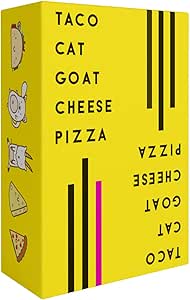 | Best for Fast, Larger-Group Fun | Players: 2–8 | Age range: 7 years and up | Play time: 10–15 minutes | VIEW LATEST PRICE | See Our Full Breakdown |
| Sorry! Board Game for Kids Ages 6 and Up |  | Best for Competitive Mixed-Age Families | Brand: Hasbro Gaming | Age range: 6 years and up | Players: 2–4 | VIEW LATEST PRICE | See Our Full Breakdown |
| Creature Crash – The Capybara Balancing Game |  | Best Quick-Play Dexterity Pick | Brand: Relatable (What Do You Meme?) | Model number: TOP4108 | Recommended age: 6+ years | VIEW LATEST PRICE | See Our Full Breakdown |
| Point Games Double Dip Card Game |  | Best for Fast, Lively Group Play | Brand: Point Games | Players: 3–6 | Age range: 8+ | VIEW LATEST PRICE | See Our Full Breakdown |
| Mouse Trap Board Game for Kids Ages 6 and Up |  | Best for Building and Cause-and-Effect Play | Brand: Hasbro Gaming | Age range: 6 years and up | Players: 2–4 | VIEW LATEST PRICE | See Our Full Breakdown |
| Hasbro Twister Classic Board Game |  | Best for Active Family Game Nights | Brand: Hasbro Gaming | Age range: 6+ years | Players: 2–4 | VIEW LATEST PRICE | See Our Full Breakdown |
| family board games for kid | Players | Age range | Included components |
|---|---|---|---|
| The Uzzle 3.0 Board Game | 1–4 | 4 years and up | — |
| Hasbro Gaming Trouble Board Ga | 2–4 | 5 years and up | — |
| Spin Master Hedbanz Picture Gu | 2–6 | 6 years and up | — |
| Do You Really Know Your Family | 3–8 | 8 years and up | — |
| Jenga Game with Digital Die | 1 or more | 6 years and up | Blocks, digital die, stacking sleeve, instructions |
| Regal Games 6-Deck Classic Car | 2–6 | — | — |
| Hasbro Connect 4 Game | 2 | — | Grid and tray, 42 discs (21 red and 21 yellow), and game rules |
| Pigs on Trampolines Board Game | 2–3 | 6 years and up | 6 rubber pigs, 3 trampolines, 7 mud pies, pig pen, and instructions |
| Hasbro Gaming Candy Land Board | 2–4 | — | Gameboard, 4 gingerbread pawns, card deck, and instructions in English and Spanish |
| Taco Cat Goat Cheese Pizza Car | 2–8 | 7 years and up | Cards |
| Sorry! Board Game for Kids Age | 2–4 | 6 years and up | Gameboard, 12 pawns, 45 cards, instructions |
| Creature Crash | 2 or more | — | 1 balance plate, 1 stand, 24 characters, 1 die |
| Point Games Double Dip Card Ga | 3–6 | 8+ | 150 Donut Category Cards, instruction sheet, storage box |
| Mouse Trap Board Game for Kids | 2–4 | 6 years and up | — |
| Hasbro Twister Classic Board G | 2–4 | 6+ years | — |
More Details on Our Top Picks
The Uzzle 3.0 Board Game
Four difficulty levels give The Uzzle 3.0 a useful range for a family with children at different stages: younger players can start with simpler patterns while older kids and adults take on tougher puzzles. Its flip, spin, and merge challenges make it more spatial and puzzle-focused than Hasbro Gaming Trouble, which centers on a shared race around the board. The larger blocks are easier for small hands to manipulate, and the rules are quick to pick up. Solo play also gives a child something to work on when the family isn’t ready to play together. The tradeoff is that racing to solve patterns may frustrate players who find the harder levels tough; it also offers less conversation and shared storytelling than Hedbanz.
Pros:- 100 challenges span four difficulty levels, giving families room to adjust the challenge.
- Larger blocks are easier for young players to handle.
- Supports solo play as well as groups of up to four.
- Quick rules make it easy to start a short game.
Cons:- Higher difficulty puzzles may be too challenging for some children and adults.
- The pattern-solving race may feel less social than question-based games such as Hedbanz.
- Play is limited to indoor settings.
Best for: Families with children of different ages who want a quick puzzle game that can also be played solo.
Not ideal for: Families looking for a conversational party game or a gentle, luck-driven race; the harder pattern challenges can frustrate some players.
- Age range:4 years and up
- Players:1–4
- Challenges:100 unique puzzles
- Difficulty levels:4
- Blocks:4 sets of 10 blocks
- Material:Plastic
- Dimensions:8 × 8 inches
- Item weight:1.7 pounds
Our verdict“Choose The Uzzle 3.0 if your family wants a compact, adjustable pattern puzzle that works for solo play and group challenges.”
Hasbro Gaming Trouble Board Game
Tactile, easy-to-follow play is Trouble’s main draw for families with younger kids. Players press the Pop-O-Matic bubble to roll, then move pegs around the board, so there’s no loose die to chase and little setup to explain. Compared with the pattern challenges in The Uzzle 3.0, Trouble asks less of a child’s spatial reasoning and leans more on luck and the excitement of racing. Power Up spaces offer an alternate mode for families ready for a small change to the classic rules. That simplicity has a limit: older children may want more decisions than Trouble provides, and a peg sent back to start can be upsetting for younger players. Families seeking cooperative or conversation-led play may prefer Hedbanz.
Pros:- Pop-O-Matic roller keeps the die contained and adds a tactile element.
- Straightforward rules and setup suit young players.
- Classic and Power Up modes provide two ways to play.
- Race format gives the whole family a clear shared goal.
Cons:- A player’s pegs can be bumped back to the start, which may frustrate young children.
- Limited strategic depth may not hold older kids’ interest.
- Designed for two to four players, so it does not suit larger groups.
Best for: Families with children aged five and up who want a familiar, easy-to-teach race for two to four players.
Not ideal for: Older kids seeking strategic choices, or younger players who take setbacks like returning a peg to start hard.
- Age range:5 years and up
- Players:2–4
- Edition:Classic Edition
- Model number:A5064
- Gameboard:Included
- Pop-O-Matic game unit:Included
- Pegs:16
- Manufacturer:Hasbro
Our verdict“Pick Trouble for a straightforward family race with satisfying dice-rolling action, rather than a game built around deeper strategy.”
Spin Master Hedbanz Picture Guessing Game (2nd Edition)
Asking yes-or-no questions makes Hedbanz a lively choice for families who want kids to talk, listen, and reason together rather than take turns moving pieces around a track. With room for up to six players, it can include more of the family than Trouble, which is limited to four. The picture cards and headbands give younger players a visual prompt, while the guessing format lets adults join without a separate rules lesson. Updated themes add variety, but the game’s appeal depends on players enjoying questions and performing in front of one another. Its timer, headbands, and scoring pieces also make it less grab-and-go than a small card game such as Do You Really Know Your Family?, and groups larger than six need another option.
Pros:- Question-based play encourages deduction and conversation.
- Visual picture cards offer an accessible prompt for children.
- Accommodates up to six players, more than Trouble.
- Updated themes and illustrations add variety to the cards.
Cons:- The player limit of six excludes larger family groups.
- The timer and multiple components make it less portable than a simple card game.
- Timed guessing may not suit children who feel pressure when put on the spot.
Best for: Families with children aged six and up who enjoy asking questions and want a social game for up to six players.
Not ideal for: Very large groups, players who dislike timed guessing, or families wanting a small, easy-to-pack card game.
- Age range:6 years and up
- Players:2–6
- Edition:2nd Edition
- Model year:2023
- Headbands:6
- Picture cards:69
- Timer:Included
- Scoring badges:16
Our verdict“Choose Hedbanz for a talkative family group that enjoys guessing games and can gather six or fewer players.”
Do You Really Know Your Family? Card Game for Kids, Teens, and Adults
Family stories and silly challenges are the focus here, making this a better fit for a relaxed gathering than a race like Trouble or a timed guessing round of Hedbanz. The questions give children aged eight and up a way to share preferences and learn how relatives think, while physical challenges break up the conversation. Its tin is easy to pack, and the 3–8 player range suits families that are too large for Hedbanz. The tradeoff is that this game needs at least three people, so it won’t work for a parent and child playing alone. Its cardstock cards may also wear with repeated handling, and the experience depends more on a group’s willingness to chat than on board-game strategy.
Pros:- Prompts conversation and sharing across ages.
- Combines trivia-style questions with physical challenges.
- Accommodates up to eight players, more than Hedbanz.
- Tin packaging makes it convenient to store and carry.
Cons:- Requires at least three players.
- Cardstock may show wear with frequent handling.
- Its appeal depends on players enjoying conversation and group challenges.
Best for: Families with at least three players, including children aged eight and up, who want prompts for conversation and lighthearted challenges.
Not ideal for: Small households of one or two players, or families looking for tactical board play rather than questions and social activities.
- Age range:8 years and up
- Players:3–8
- Type:Card game
- Material:Cardstock
- Container:Tin
- Dimensions:2 × 4.7 × 6.7 inches
- Language:English
- Power source:Manual; no battery required
Our verdict“Pick this card game for a family of three to eight that wants shared stories and playful prompts more than board strategy.”
Jenga Game with Digital Die
Physical tension and careful movement set this version of Jenga apart from the board races in Trouble and Do You Really Know Your Family?. Players build and remove a tower of 54 wooden blocks, while the digital die adds six challenge modes, such as using thumbs only or racing against a clock. Those prompts can refresh a familiar activity for children aged six and up, and the stacking sleeve helps with setup and storage. The main compromise is the digital element: using the die requires a smartphone or another device to download and run the app, which adds a screen to an otherwise tactile game. Families who want traditional, screen-free play may prefer a non-digital option.
Pros:- Wooden blocks create an active, tactile challenge.
- Six digital die modes add variations such as limited-hand play and timed rounds.
- Stacking sleeve supports tower setup and storage.
- Listed for solo play or groups.
Cons:- The digital die requires a smartphone or other device and an app.
- App-based play may distract from the blocks and screen-free appeal.
- Tower play may not suit children who prefer structured board-game turns.
Best for: Families with children aged six and up who enjoy careful hands-on play and are comfortable using a device for added challenges.
Not ideal for: Families who want an entirely screen-free game or prefer turn-taking around a board with less emphasis on steady hands.
- Age range:6 years and up
- Players:1 or more
- Material:Hardwood
- Wooden blocks:54
- Digital die modes:6
- Included components:Blocks, digital die, stacking sleeve, instructions
- Model name:JENGA REFRESH
- Model number:G1499
Our verdict“Choose this Jenga edition if your family wants a hands-on stacking game and welcomes app-based challenge modes.”
Regal Games 6-Deck Classic Card Game Set for Kids
Families who want several familiar games in one box get the most flexibility here: the set includes six classic card games, from Go Fish to Slap Jack, so players can switch activities without bringing out another board. Its oversized cards are easier for young children to hold than standard cards, and the mix offers practice with colors, numbers, and memory. Compared with Candy Land, this set gives families more game choices, but it asks players to learn or follow different rules rather than matching colors along one simple path. The tin and lightweight build suit travel, though the plastic cards may feel less familiar than paper ones. It works best indoors, and the specific game selection may vary, so check the contents if one title matters to your family.
Pros:- Six games offer variety without requiring separate game boxes
- Oversized cards are easier for young hands to hold
- Games provide practice with colors, numbers, and memory
- Lightweight set comes in a tin for portable storage
Cons:- The plastic cards may lack the familiar feel of paper cards
- The included game selection may vary between sets
- The listed use is limited to indoor play
Best for: Families with children ages 4–12 who want several short, familiar card games in a portable set.
Not ideal for: Buyers seeking one consistent, very simple game for preschoolers, or families who prefer the feel of traditional paper cards.
- Included games:Go Fish, Crazy 8’s, Old Maid, Slap Jack, War, and Silly Monster Memory Match
- Players:2–6
- Recommended age:4–12 years
- Material:Plastic
- Weight:8 ounces
- Dimensions:0.6 x 9.25 x 8.12 inches
- Container:Tin
Our verdict“Choose this set for a portable collection of familiar card games, rather than a single game with one simple ruleset.”
Hasbro Connect 4 Game, 2025 Edition
Connect 4 is the clearest pick in this group for a head-to-head game that gives kids a little more to think about than matching or racing. Players drop discs into the grid and try to line up four, so each turn creates a choice about building a row or blocking an opponent. Compared with Candy Land, it offers more direct strategy and more ways to affect the other player’s plan, but it is limited to two players rather than serving a family group. The 2025 edition folds into a handled case and stores all 42 discs in the tray, making setup and cleanup more manageable than loose-piece games such as Pigs on Trampolines. Its rules are quick to learn; still, younger children below the stated age or players wanting a cooperative, everyone-in game should look elsewhere.
Pros:- Simple rules make it quick to learn
- Two-player format supports direct strategic choices
- Grid and tray fold into a handled carrying case
- Tray stores all 42 discs, and score trackers record rounds
Cons:- Only two players can play at a time
- The recommended age starts at 6 years
- Its head-to-head format may not suit families seeking cooperative group play
Best for: Families with a child age 6 or older who want a quick, competitive two-player game for siblings or parent-child play.
Not ideal for: Larger families looking for one game that includes everyone at once, or children younger than 6.
- Edition:2025 Edition
- Players:2
- Recommended age:6 years and up
- Included components:Grid and tray, 42 discs (21 red and 21 yellow), and game rules
- Storage:Discs store in the tray; grid and tray fold into a carrying case with a handle
- Score tracking:Sliding score trackers
- Model number:G1500
Our verdict“Pick Connect 4 for a portable, two-player strategy game; skip it if your family needs a game for a larger group.”
Pigs on Trampolines Board Game
For children who would rather aim, bounce, and laugh than sit through a card-drawing game, Pigs on Trampolines brings movement into family game time. Players bounce rubber pigs off mini trampolines toward a mud puddle, turning hand-eye coordination and cause-and-effect into the main challenge. That makes it more physical than Connect 4, which is a calmer two-player contest, and more hands-on than the quick verbal-and-reflex pattern of Taco Cat Goat Cheese Pizza. The tradeoff is a smaller group: it is designed for just 2–3 players, so it will not include a whole family around the game at once. It also has several small pieces and requires some assembly for the pig pen, making careful storage part of the routine.
Pros:- Bouncing mechanics encourage hand-eye coordination
- Physical play offers a livelier change from card and grid games
- Simple rules suit children ages 6 and up
- Includes pigs, trampolines, mud pies, and a pig pen for hands-on play
Cons:- Designed for only 2–3 players
- Pig pen component requires some assembly
- Small plastic parts can be misplaced during storage
Best for: Families with children age 6 or older who enjoy active, dexterity-based games and usually play in a group of two or three.
Not ideal for: Larger families who want everyone playing simultaneously, or households that prefer games with few pieces and no assembly.
- Players:2–3
- Age range:6 years and up
- Material:Plastic
- Included components:6 rubber pigs, 3 trampolines, 7 mud pies, pig pen, and instructions
- Brand:PlayMonster
- Model number:23119
- Release year:2023
Our verdict“Choose this for a small group that wants an active aiming challenge, not for a larger family game night.”
Hasbro Gaming Candy Land Board Game for Kids, Ages 3 and Up
Candy Land earns its place as the easiest entry point for young children: players match cards and move gingerbread pawns along a colorful path, with no reading required. That makes it more accessible for preschoolers than Connect 4, whose strategy and stated age range suit older children, and less physically demanding than Pigs on Trampolines. Its short, listed 15-minute play time and support for two to four players also make it a practical choice when attention spans or schedules are limited. The simplicity has a clear cost, though: movement depends on the cards drawn, leaving little room for strategy or control. Older kids who want tactical choices or active play may outgrow it quickly, while its color matching and turn-taking are the main learning focus.
Pros:- No reading is needed to play
- Color matching offers an accessible first-game format
- Supports color recognition, matching, and turn-taking
- Listed play time is 15 minutes, and the game supports 2–4 players
Cons:- Card draws determine movement, leaving little player control
- Simple gameplay may not hold older children’s interest
- The main challenge is color matching rather than strategy
Best for: Families with children age 3 or older who need a short, reading-free first board game for two to four players.
Not ideal for: Families with older children seeking strategic decisions, active challenges, or more control over game outcomes.
- Players:2–4
- Recommended age:3 years and up
- Estimated playing time:15 minutes
- Included components:Gameboard, 4 gingerbread pawns, card deck, and instructions in English and Spanish
- Skills:Color recognition, matching, and turn-taking
- Brand:Hasbro Gaming
Our verdict“Choose Candy Land as a straightforward first board game for young children, but look to Connect 4 for more strategic play as they grow.”
Taco Cat Goat Cheese Pizza Card Game
Taco Cat Goat Cheese Pizza suits families who want a quick game with room for a crowd: it supports 2–8 players and its rounds run about 10–15 minutes. Players recite the game’s name while placing cards, then race to slap the pile when the spoken word matches the card, so timing and reflexes matter more than planning. Compared with the six-game Regal Games card set, this is less about choosing among familiar games and more about one energetic group challenge. It also accommodates more players than Pigs on Trampolines, though the fast physical response can put some children or adults at a disadvantage. The rules are easy to learn and the cards travel well, but limited strategic depth may make repeated rounds feel similar.
Pros:- Supports groups of 2–8 players
- Short 10–15-minute rounds suit quick game sessions
- Simple rules make the central pattern easy to learn
- Compact card format works well for travel
Cons:- Fast slapping can disadvantage players with slower reflexes or limited dexterity
- Limited strategic depth may make repeated play feel repetitive
- Recommended age is 7 and up, so it is not suited to the youngest children in this roundup
Best for: Families with children age 7 or older who want a portable, short card game for a group of up to eight.
Not ideal for: Players who have difficulty with fast hand movements, or families looking for strategic decisions and slower-paced turns.
- Players:2–8
- Age range:7 years and up
- Play time:10–15 minutes
- Included components:Cards
- Manufacturer:Dolphin Hat Games
- Model number:73626
Our verdict“Pick this for fast, lively group play with older kids, but skip it if your family prefers a slower or more strategic game.”
Sorry! Board Game for Kids Ages 6 and Up
Sorry! suits families who enjoy direct competition: card draws send pawns racing, sliding, or back to the start, so the lead can change quickly. That swing makes turns lively and gives younger players a chance against older siblings, though luck matters more than careful planning. Compared with Hasbro Gaming Trouble, Sorry! gives players more ways to disrupt an opponent, but that can also make setbacks feel personal. Its familiar race-to-home goal is easy to explain, and variable cards help keep repeat games from following the same path. The tradeoff is pacing: the listed playtime is 120 minutes, which may stretch beyond a young child’s attention span. Choose it for families who welcome a long, occasionally frustrating contest; skip it if your group prefers short rounds or low-conflict play.
Pros:- Card-driven moves create changing opportunities and encourage quick decisions.
- A straightforward race-to-home objective is accessible to mixed-age groups.
- Variable card draws give repeat games different outcomes.
- Compact component set is easy to set up for a family game session.
Cons:- Listed playing time of 120 minutes may be too long for many younger players.
- Sending opponents back can frustrate children who are close to finishing.
- Card luck can outweigh strategic choices.
Best for: Families with children six and older who enjoy playful rivalry, changing fortunes, and a longer game together.
Not ideal for: Families with younger children or short game-night windows, and players who dislike being sent back to the start by an opponent.
- Brand:Hasbro Gaming
- Age range:6 years and up
- Players:2–4
- Playing time:120 minutes
- Genre:Family board game
- Included components:Gameboard, 12 pawns, 45 cards, instructions
Our verdict“Choose Sorry! for a family that enjoys lengthy, competitive swings, but pick Trouble for a more straightforward race.”
Creature Crash – The Capybara Balancing Game
Creature Crash is the quickest fit here for families who want a simple, hands-on challenge rather than a long board-game session. Players roll a die and add capybaras to a wobbling plate, making each turn easy to follow but physically precise. Compared with Mouse Trap, it skips a lengthy contraption build and gets to the balancing tension faster; the tradeoff is that it offers less construction and cause-and-effect play. Its compact set also works well for parties or travel, though the repeated stacking challenge may feel samey over a longer evening. The small figures and need for steady hands suit children who can place pieces carefully, not every child just reaching the recommended age. I’d choose this as a short, social opener, rather than the main event for a full game night.
Pros:- Simple dice-and-stacking rules are quick for children to learn.
- Compact components are practical for travel and parties.
- Balancing creates an immediate shared challenge for children and adults.
- Plastic characters are suited to repeated handling.
Cons:- Steady hands and fine motor control are needed to place pieces successfully.
- The stacking loop may become repetitive during extended play.
- Small character pieces pose a choking hazard for children under six.
Best for: Families with children six and older who want a portable, quick-to-teach dexterity game for gatherings or trips.
Not ideal for: Households with children under six who may mouth small pieces, or players who find careful stacking frustrating.
- Brand:Relatable (What Do You Meme?)
- Model number:TOP4108
- Recommended age:6+ years
- Players:2 or more
- Material:Plastic
- Included components:1 balance plate, 1 stand, 24 characters, 1 die
Our verdict“Pick Creature Crash for portable, short bursts of family play, not for a varied or strategy-heavy game night.”
Point Games Double Dip Card Game
Double Dip turns category prompts into a race to shout answers, so everyone stays involved instead of waiting through long turns. Its 150 cards provide variety, while matching donut symbols trigger the quick verbal challenge. Compared with Taco Cat Goat Cheese Pizza, this is more about finding category answers than reacting to a repeated sequence; that gives word-loving kids a different kind of speed test. The tradeoff is that players need to be comfortable speaking up, and the shouting can overwhelm a quiet room. It also requires at least three players, so it cannot fill the same two-player role as Sorry! or Mouse Trap. The listed age of eight and up makes it a better match for older children who can think of answers quickly, rather than a broad pick for families with preschoolers.
Pros:- Rules are quick to explain, helping groups start without a long setup.
- All players participate at once, limiting downtime between turns.
- 150 category cards bring variety to repeated sessions.
- Small box is convenient for travel, camping, and parties.
Cons:- Requires at least three players.
- Shouting can be disruptive in quiet environments.
- Fast verbal responses may be harder for younger or more reserved players.
Best for: Families with children eight and older who regularly have at least three players and enjoy fast verbal games.
Not ideal for: Two-player households, quieter settings, or younger children who may find rapid category answers difficult.
- Brand:Point Games
- Players:3–6
- Age range:8+
- Playtime:15–30 minutes
- Card count:150
- Dimensions:4.5 × 8.5 × 1.45 inches
- Included components:150 Donut Category Cards, instruction sheet, storage box
Our verdict“Choose Double Dip for lively groups of three to six older kids and adults; skip it if your family needs a quiet two-player option.”
Mouse Trap Board Game for Kids Ages 6 and Up
Mouse Trap is the pick for families who want the game itself to include a construction project. Players assemble a Rube Goldberg-style mechanism, then use it to try to trap rivals, giving children a visible lesson in how one part can set another in motion. Compared with Creature Crash, it offers more building and cause-and-effect interest, but it takes longer to get ready and has more pieces to manage. The listed 30-minute playtime is more approachable than Sorry!’s stated two hours, though setup adds time before play begins. The mechanism is the main attraction and the main weakness: younger children may need help assembling it, and the physical parts can be tricky to keep in place. Its four-player limit also makes it less suited to larger family groups.
Pros:- The chain-reaction trap gives construction and cause-and-effect ideas a physical form.
- Assembly provides fine-motor practice alongside the game.
- Listed 30-minute playtime is shorter than Sorry!’s stated duration.
- Instructions are available in English and Spanish.
Cons:- Building the mechanism adds setup time before play.
- The multi-part setup may be difficult for younger children to assemble or manage independently.
- A maximum of four players may exclude larger family groups.
Best for: Families with children six and older who enjoy assembling mechanisms and want a hands-on game with cause-and-effect play.
Not ideal for: Large families, children who want to start playing immediately, or younger kids who need a simpler setup they can manage alone.
- Brand:Hasbro Gaming
- Age range:6 years and up
- Players:2–4
- Playing time:30 minutes
- Languages:English and Spanish
- Skills developed:Counting, cooperation, construction, cause and effect, decision-making
- Components:Game board, 4 plastic mice, 2 metal marbles, 25 trap-building parts, 52 cheese pieces
Our verdict“Choose Mouse Trap when building the contraption is part of the appeal, but pick a simpler game if quick setup matters more.”
Hasbro Twister Classic Board Game
Twister Classic is the clearest choice here when kids need to get up and move: the spinner calls out colors and body parts, turning balance and coordination into the whole game. Unlike the seated card and board options such as Double Dip or Sorry!, Twister adds physical activity and can make a family gathering feel more like a party. Its rules are simple, but the play is not equally comfortable for everyone. Players need room to spread out, and balancing, twisting, or reaching can be difficult for anyone with mobility limits. The mat can also become slippery or dirty with heavy use, so it needs a suitable playing surface and care. With only two to four players, this is better for a small group taking turns than for a large family playing all at once.
Pros:- Gets children and adults moving rather than sitting around a board.
- Simple color-and-spinner instructions are easy to learn.
- Combines balance, coordination, and color recognition.
- Vinyl mat can be used indoors or outdoors.
Cons:- Physical poses may not work for players with mobility limitations.
- The mat can become slippery or dirty with heavy use.
- Limited to four players at a time.
Best for: Families with children six and older who have space to play and want an active alternative to seated games.
Not ideal for: Players with mobility limitations, households without clear floor space, or larger groups that want everyone playing at once.
- Brand:Hasbro Gaming
- Age range:6+ years
- Players:2–4
- Components:1 Twister mat, 1 spinner, instructions
- Mat material:Vinyl
- Skills:Balance, coordination, color recognition
Our verdict“Choose Twister for an active small-group gathering with enough floor space, but not for seated play or inclusive movement needs.”
How We Picked
I compared these family board games for kids by how clearly they match real household needs: age accessibility, rule-learning time, length and rhythm of play, interaction between players, and the likelihood that different ages can enjoy the same session. I also looked at the kind of engagement each game asks for—puzzle solving, conversation, luck, quick reactions, or physical dexterity—because those differences often matter more than the box format.
The ranking favors options with a clear family use case, approachable play, and appeal that can extend beyond a single age or occasion. A game aimed at very young children can still be a strong recommendation, but it ranks differently from one suited to mixed-age groups or repeat play. I weighed practical drawbacks too, including reliance on speed or coordination, potential for uneven skill levels, and setup or component demands. Since family preferences vary, the order reflects breadth of fit rather than a claim that one game is right for every household.
Factors to Consider When Choosing Family Board Games For Kids
Choosing well starts with matching the game to the way your family actually plays, not simply choosing the broadest age range on a box. These factors can help narrow the field before you decide between a classic board game, a quick card game, or something more physical.
Match the Game to the Youngest Player’s Real Abilities
Age labels are useful starting points, but children of the same age can differ in reading confidence, patience, and comfort with competition. Look at what a child must do each turn: recognize pictures, read prompts, remember rules, wait, or make quick decisions. A game may be technically playable for a younger child yet leave an adult managing every move. Avoid choosing only for the youngest player if older siblings will be bored; seek a format where younger players can participate meaningfully while older ones still have a challenge. If your age range is wide, cooperative help or flexible teams can reduce the gap without changing the game.
Choose the Right Kind of Interaction
Family games create different social experiences: some reward conversation, others focus attention on a puzzle, and some ask players to react quickly or move around. Ask whether your household prefers talking together, playful competition, or a quieter activity before choosing. High-energy games can be a hit at gatherings but may frustrate children who need more time to respond. Conversation games can bring everyone in, though personal questions may not suit every family or occasion. A useful rule is to select the style you want for most sessions, then keep a contrasting option for a change of pace.
Think Beyond the Box’s Play-Time Claim
A short stated play time does not always mean a game is easy to fit into a busy evening; teaching rules, setting up pieces, and resolving disputes add time. For weeknight use, prioritize games with a quick start and a natural stopping point. Longer or more involved games may be a better match for weekends, holidays, or a family that enjoys settling into one activity. Also ask whether a session can end early without leaving the game unfinished. This prevents a common mismatch: buying an entertaining game that rarely reaches the table because the family cannot spare the full session.
Balance Luck, Skill, and Mixed-Age Fairness
Games driven mostly by luck can help younger players compete with adults, but repeated random outcomes may leave older children feeling that their decisions do not matter. Skill-heavy challenges can be satisfying for practiced players yet create a steep gap for beginners. Before buying, decide whether your family wants an even playing field, room to improve, or a playful contest where the outcome is unpredictable. Dexterity and speed add another layer: they can make turns exciting but may disadvantage players with different coordination or reaction times. For mixed-age groups, flexible teams or casual house rules can help, as long as they do not turn every round into an adult-led exercise.
Consider Setup, Storage, and Repeat Use
The best game for your family is one you will actually bring out. Large boards, many small pieces, or a mechanism that needs setup can be worthwhile when the activity itself is a major attraction, but they may be a poor fit for a small table or limited storage. Card games are easier to carry and put away, though quick rounds can mean you need several games in a row to fill an evening. Check whether pieces are easy for children to handle and whether the game depends on keeping a full set together. If you want one versatile choice, favor a game that suits more than one occasion rather than a novelty you expect to use only once.
Pay for the Experience Your Family Will Use
A higher-cost or more elaborate game is most worthwhile when its special components, variety, or presentation solve a real need for your household. Do not pay extra for complexity if your children mainly want short, familiar rounds. On the other hand, a simple game can become a staple if it is easy to explain and works across several ages. Think about how often you expect to play, whether the game replaces an activity you already use, and whether its format fits your available space. Buying a range of styles can be more useful than owning several games that all depend on the same kind of attention or energy.
Frequently Asked Questions
Which game in this roundup is the best starting point for a family with younger kids and older siblings?
Candy Land is the most straightforward entry point for younger children, while The Uzzle 3.0 offers a different direction for families looking for puzzle challenges. For a wide age spread, choose based on whether your group prefers simple turn-taking or problem-solving rather than assuming one game will suit every child equally. Older siblings may want a game with more choices, while younger players may need support with rules or turns. Playing in teams can make a mixed-age session more welcoming without requiring the youngest child to keep pace alone.
Should I choose a board game or a card game for a busy weeknight?
Card games such as Taco Cat Goat Cheese Pizza and Point Games Double Dip can be easier to set out and put away, which suits households with limited time or table space. A board game may be a better choice when your family wants a more settled, shared activity. The deciding factor is not only the length of play but also how quickly the rules make sense to your group. If children are tired or easily frustrated, a fast-reaction format may not feel relaxing even when rounds are brief. Choose the game that matches your family’s energy at the time you expect to play.
Are fast-reaction games a good choice for children who dislike losing?
They can be fun, but quick play may make mistakes and losses feel especially immediate. Games built around speed, including Taco Cat Goat Cheese Pizza, are a better fit when children enjoy energetic rounds and can treat errors lightly. If competition is a sensitive issue, consider taking turns informally, playing in teams, or starting with a less reactive game. Adults can also model treating a missed move as part of the humor rather than a serious setback. Match the game to the child’s temperament, not just the suggested age.
How can I tell whether a game will hold older kids’ interest?
Look for decisions, changing challenges, or social interaction that give older players something to engage with beyond waiting for a turn. Simple luck-driven play may be welcoming at first but can feel repetitive to older children who want more control. A puzzle-focused option such as The Uzzle 3.0 or a guessing game such as Hedbanz can offer a different kind of involvement, depending on your group. Check whether the game remains enjoyable when players know the rules, not only during the first session. If possible, choose a game that supports variation through different prompts, challenges, or ways of playing.
What should I prioritize if the game will be used at family gatherings?
At a gathering, favor rules that are easy to explain, turns that keep the group involved, and a format that works with the number of people likely to join. Conversation-led games such as Hedbanz or Do You Really Know Your Family? can make the group itself part of the entertainment, while action-focused choices may suit a more energetic crowd. Check the player count and whether people can join or leave without disrupting play. Consider noise, space, and whether the prompts feel comfortable for different ages. A game that needs quiet focus may be less successful in a busy room than it is at home.
Conclusion
For the broadest recommendation, choose The Uzzle 3.0 Board Game if your family enjoys puzzle-centered play; it is my best overall pick in this comparison. For best value in versatility, the Regal Games 6-Deck Classic Card Game Set gives families several familiar card-game options, though it is less of a single, guided game experience. If you want a more elaborate, hands-on activity, consider Mouse Trap as the best premium-style choice, with setup and space as tradeoffs. For beginners and younger children, Candy Land keeps the entry point simple. Choose Hedbanz for social guessing, Taco Cat Goat Cheese Pizza for fast rounds, or Jenga with Digital Die for physical play; the best fit depends on whether your household values conversation, speed, or dexterity most.


