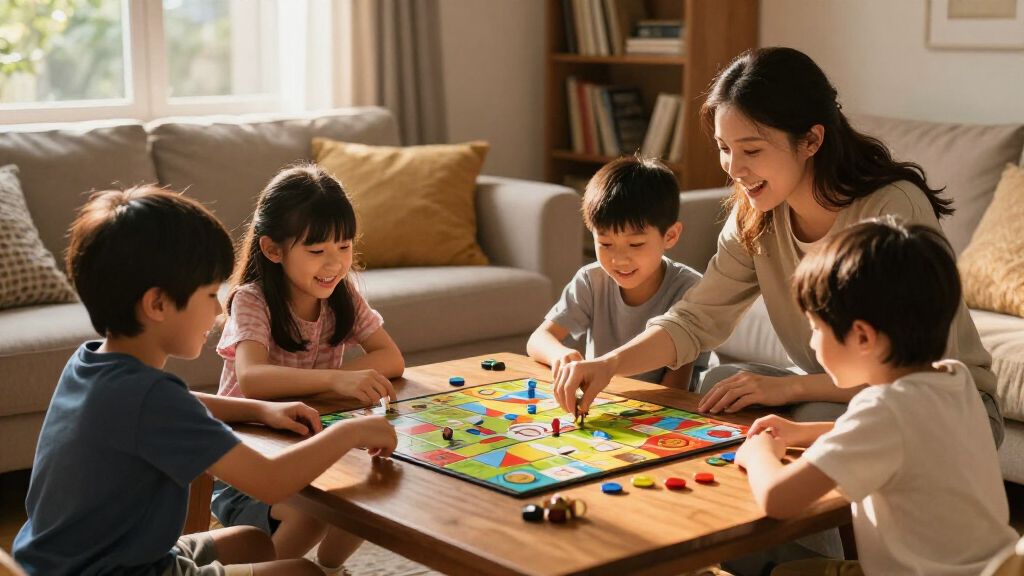

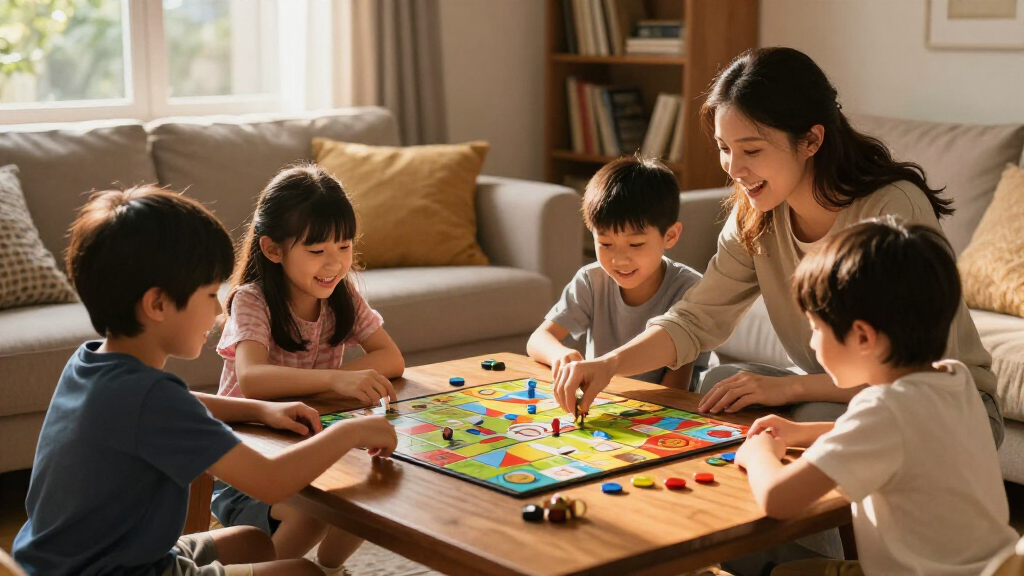
The best family activity board game depends less on quality and more on who is sitting at your table — a 4-year-old, a 9-year-old, and a teen rarely want the same game. Trouble earns my best overall pick because its Pop-o-Matic dice, simple race format, and 5-and-up age rating hit the widest family sweet spot. Candy Land is the standout for preschool families, while Herd Mentality wins for households with teens and adults who find classic kids’ games tedious. The main tradeoffs in this category are age accessibility versus lasting challenge and simplicity versus replay value — games easy enough for a kindergartner often get outgrown within a couple of years. Read on for the full breakdown, including which picks work best for mixed-age groups, travel, and large gatherings.

Turn the school run and nap time into listening time
- Thousands of audiobooks, podcasts and originals
- Listen on your phone, tablet or Echo — also offline
- Cancel anytime
Complete the kit


Key Takeaways
- Games with a built-in physical gimmick — Trouble’s Pop-o-Matic, Twister’s mat, Tapple’s timer — held attention across the widest age range, which pushed them above equally classic but drier games like standard Tic Tac Toe.
- The biggest split in this lineup is age ceiling: Candy Land and Sorry! shine for ages 3–7 but get abandoned by older kids, while Scrabble and Herd Mentality exclude anyone under 8.
- Do You Really Know Your Family? and Herd Mentality proved the strongest picks for mixed groups of kids, teens, and adults, because they generate conversation rather than requiring skill parity.
- Two products in this roundup are effectively duplicates of games you may already own — Tic Tac Toe and the 3-in-1 checkers set — and only make sense if the oversized or portable format adds value for you.
- Party-style games (Herd Mentality, Hedbanz, Tapple) consistently support 4+ players, while classic board games like Connect 4 and Scrabble cap at 2–4, a hard limit for larger families.
| Sorry! Board Game for Kids Ages 6 and Up |  | Best Classic Family Racer | Ages: 6 and up | Pawns per Player: 4 | Game Type: Race/luck-based family board game | VIEW LATEST PRICE | See Our Full Breakdown |
| Hasbro Gaming Candy Land Kingdom of Sweet Adventures Board Game |  | Best for Preschoolers | Players: 2 to 4 | Ages: 3 and up | Includes: 4 gingerbread pawns, gameboard, card deck, instructions | VIEW LATEST PRICE | See Our Full Breakdown |
| Tic Tac Toe Board Game, Classical Family Game |  | Best Travel Pick | Players: 2 | Estimated Playing Time: 5 minutes | Board Size: 15 x 15 cm | VIEW LATEST PRICE | See Our Full Breakdown |
| Hasbro Twister Party Classic Board Game | 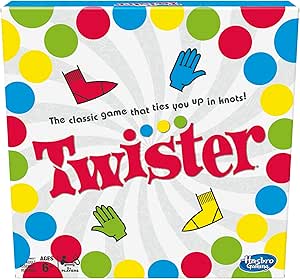 | Best Physical Party Game | Players: 2 to 4 | Ages: 6 and up | Includes: Vinyl mat, spinner, instructions | VIEW LATEST PRICE | See Our Full Breakdown |
| Hasbro Gaming Trouble Board Game for Kids Ages 5 and Up |  | Best for Youngest Independent Players | Ages: 5 and up | Players: 2 to 4 | Game Modes: Standard and Power Up | VIEW LATEST PRICE | See Our Full Breakdown |
| 3-in-1 Vintage Giant Checkers, Tic Tac Toe, Reversible Mat |  | Best for Backyard Play | Number of Players: 2 | Set Type: 3-in-1 Classic Games Set | Included Components: Giant checkerboard, 24 checkers (12 red, 12 black) | VIEW LATEST PRICE | See Our Full Breakdown |
| Hedbanz Picture Guessing Game (2nd Edition) |  | Best for Younger Kids | Number of Players: 2-6 | Ages: 6 and up | Includes: 6 headbands, 6 headplates, 16 scoring badges, 1 timer, 69 picture cards, 3 sample question cards, instructions | VIEW LATEST PRICE | See Our Full Breakdown |
| Official Hasbro Connect 4 Game (2025 Edition) |  | Best Travel Pick | Ages: 6+ | Players: 2 | Includes: Storage case, score trackers | VIEW LATEST PRICE | See Our Full Breakdown |
| Do You Really Know Your Family? |  | Best for Family Bonding | Age Range: 8 years and up | Item Type: Card game | Included Components: Question and challenge cards | VIEW LATEST PRICE | See Our Full Breakdown |
| Herd Mentality Party Board Game |  | Best for Big Groups | Number of Players: 4-20+ | Age Range: 10+ years | Estimated Playing Time: 20 minutes | VIEW LATEST PRICE | See Our Full Breakdown |
| Hasbro Gaming Scrabble Board Game, Classic Word Game for Kids Ages 8 and Up |  | Best for Building Vocabulary | Number of Players: 2-4 | Ages: 8 and up | Includes: 100 wooden letter tiles, wooden tile racks | VIEW LATEST PRICE | See Our Full Breakdown |
| USAOPOLY The Original TAPPLE |  | Best Fast-Paced Word Game | Age Range: 8+ | Included Components: 144 Fun Categories (36 cards), Instructions, Portable Tapple Wheel | Edition: Standard Edition | VIEW LATEST PRICE | See Our Full Breakdown |
| family activity board game | Ages | Game Type | Brand |
|---|---|---|---|
| Sorry! Board Game for Kids Age | 6 and up | Race/luck-based family board game | Hasbro |
| Hasbro Gaming Candy Land Kingd | 3 and up | Color-recognition race game | Hasbro Gaming |
| Tic Tac Toe Board Game | — | — | — |
| Hasbro Twister Party Classic B | 6 and up | Physical party/coordination game | Hasbro |
| Hasbro Gaming Trouble Board Ga | 5 and up | Race/luck-based family board game | Hasbro Gaming |
| 3-in-1 Vintage Giant Checkers | — | — | — |
| Hedbanz Picture Guessing Game | 6 and up | Picture guessing | — |
| Official Hasbro Connect 4 Game | 6+ | — | — |
| Do You Really Know Your Family | — | — | — |
| Herd Mentality Party Board Gam | — | — | Big Potato |
| Hasbro Gaming Scrabble Board G | 8 and up | Classic crossword word game | Hasbro Gaming |
| USAOPOLY The Original TAPPLE | — | — | — |
More Details on Our Top Picks
Sorry! Board Game for Kids Ages 6 and Up
Sorry! earns its place here as the purest “anyone can win” game in the lineup — no reading, no complex rules, just card-drawn luck punctuated by satisfyingly mean pawn-sending. Compared with Trouble, which shares the race-home premise, Sorry! offers more decision-making: players choose which of four pawns to move, so kids feel like they’re strategizing even when luck dominates. The catch is the same one that plagues Trouble — older kids and adults will outgrow it quickly, and the take-that mechanics can spark real sibling tears when a lucky card sends a pawn all the way back to start. This pick makes the most sense for mixed-age families who want a short, low-stakes game where a six-year-old genuinely has a shot at beating a parent.
Pros:- Simple rules that kids grasp in one round
- Genuine strategic choices about which pawn to move
- Works across a wide age range
- Fast rounds fit short attention spans
Cons:- Take-that mechanics can upset younger or sensitive players
- Luck dominates, so adults may find it repetitive
Best for: Families with kids ages 6-10 who want a quick, luck-based game where young children can beat adults
Not ideal for: Families with teens or strategy-focused players — the luck-heavy card draws will feel shallow after a few rounds
- Ages:6 and up
- Pawns per Player:4
- Game Type:Race/luck-based family board game
- Setup:Minimal, board and cards
- Skill Required:No reading required
- Brand:Hasbro
Our verdict“Choose Sorry! if your family wants a nostalgic, low-conflict-learning race game that six-year-olds can win fair and square.”
Hasbro Gaming Candy Land Kingdom of Sweet Adventures Board Game
Candy Land is the only game in this roundup a three-year-old can truly own from the first play, and that’s exactly why it’s here. Where Sorry! asks players to choose between pawns and Trouble adds Power Up rules, Candy Land strips everything down to drawing a card and moving — zero reading, zero counting, zero strategy. That simplicity is its superpower for ages 3-5 and its ceiling for everyone else: older siblings will be bored within minutes, so it’s not a whole-family pick the way Twister is. Compared with the Tic Tac Toe board, Candy Land better suits solo-turn learning because each child plays independently rather than directly blocking an opponent. Tradeoffs include a short shelf life — most kids outgrow it by age 6 — and small pawn pieces that need supervision around toddlers.
Pros:- No reading or counting required
- Teaches colors and turn-taking naturally
- Bright, engaging artwork for young kids
- Quick rounds suit preschool attention spans
Cons:- Kids typically outgrow it by age 6
- Contains small pawns that pose a choking risk for toddlers
Best for: Parents of preschoolers ages 3-5 who want a first board game that teaches turn-taking and color recognition
Not ideal for: Families whose youngest child is 7 or older — the pure-luck gameplay won’t hold anyone’s interest
- Players:2 to 4
- Ages:3 and up
- Includes:4 gingerbread pawns, gameboard, card deck, instructions
- Instructions Languages:English and Spanish
- Reading Required:None
- Game Type:Color-recognition race game
- Brand:Hasbro Gaming
Our verdict“Buy Candy Land as a first game for a preschooler, not as a game the whole family will return to for years.”
Tic Tac Toe Board Game, Classical Family Game
This Tic Tac Toe board wins on portability in a way nothing else in the roundup can match — at 15 x 15 cm, it slides into a bag for restaurants, road trips, and waiting rooms. Compared with the 3-in-1 Vintage Giant Checkers and Tic Tac Toe mat, it sacrifices the oversized backyard-play fun but gains genuine grab-and-go convenience, and unlike Candy Land it actually teaches real logic: kids learn blocking, anticipating, and pattern recognition in five-minute bursts. The honest tradeoff is that it’s a two-player game only — this can’t anchor a family game night the way Twister or Herd Mentality can — and adults will find the underlying game trivially solvable. This option stands out as a patience-preserver for parents, not a centerpiece for the game shelf.
Pros:- Extremely compact and lightweight for travel
- Teaches early strategy and pattern recognition
- Rounds finish in about 5 minutes
- Durable single-piece design, no loose dice or cards
Cons:- Two-player limit excludes the rest of the family
- Adults will find the game solved and repetitive
Best for: Parents who need a pocket-sized, screen-free time-killer for travel, restaurants, and waiting rooms
Not ideal for: Families of four or more looking for a group game night activity — it’s strictly a head-to-head format
- Players:2
- Estimated Playing Time:5 minutes
- Board Size:15 x 15 cm
- Minimum Age:36 months
- Material:Eco-friendly resin plastic
- Genre:Strategy
- Package Type:Flat Free Package (FFP)
Our verdict“Grab this as a travel distraction for two kids, not as a family game night main event.”
Hasbro Twister Party Classic Board Game
Twister is the roundup’s answer to the “my kids won’t sit still” problem — it’s the only pick here where the game is the exercise. While Sorry! and Trouble keep everyone seated around a board, Twister turns game night into a giggling tangle of limbs that works equally well for a birthday party or a rainy afternoon. Compared with Herd Mentality, which handles bigger groups of 4-20 around a table, Twister caps out at four players on the mat — a real limit if you’re hosting. The tradeoffs are physical: balance-challenged players fall, and falls near other players can mean bumped heads, so it needs floor space and maybe a soft rug. Older grandparents should sit this one out. Setup, on the plus side, is one mat and one spinner.
Pros:- Gets kids physically active, not just seated
- Works indoors and outdoors with seconds of setup
- Genuinely funny for all ages, adults included
- Simple spinner rules need no explanation
Cons:- Four-player maximum on the mat
- Falls and tangles can cause minor bumps or collisions
Best for: Energetic families and party hosts with kids 6+ who want a physical game that burns energy and gets everyone laughing
Not ideal for: Families with mobility-limited adults or very tight living spaces — the mat requires open floor and real flexibility
- Players:2 to 4
- Ages:6 and up
- Includes:Vinyl mat, spinner, instructions
- Game Type:Physical party/coordination game
- Play Settings:Indoor and outdoor
- Setup Time:Under a minute
- Brand:Hasbro
Our verdict“Pick Twister when your family game night needs movement and laughs rather than quiet strategy.”
Hasbro Gaming Trouble Board Game for Kids Ages 5 and Up
Trouble splits the difference between Candy Land’s preschool simplicity and Sorry!’s slightly older skew: kids as young as five can play independently thanks to the Pop-o-Matic bubble, which eliminates dice-rolling chaos (and lost dice) with one satisfying pop. The Power Up variant adds a light layer of choice that Candy Land lacks, giving it slightly more staying power with early-elementary kids. But the ceiling is low — older siblings will drift toward Connect 4 or Scrabble within a year or two — and like most race games here it caps at four players. The board also demands flat table space, which matters less than Twister’s floor requirement but more than the pocket-sized Tic Tac Toe. This pick makes the most sense as a child’s first “real” board game they can run themselves.
Pros:- Pop-o-Matic bubble keeps dice contained and fun
- Kids can learn, set up, and run it entirely on their own
- Power Up mode adds a small strategic layer
- Quick setup for spontaneous play
Cons:- Older kids outgrow the simple mechanics fast
- Four-player cap limits larger families
Best for: Parents of 5-7 year olds who want a first game kids can set up and play without adult help
Not ideal for: Families with kids 9 and up — the luck-driven gameplay gets stale quickly once children can handle richer strategy
- Ages:5 and up
- Players:2 to 4
- Game Modes:Standard and Power Up
- Die Mechanism:Pop-o-Matic bubble
- Game Type:Race/luck-based family board game
- Setup:Quick, flat surface recommended
- Brand:Hasbro Gaming
Our verdict“Trouble is the best first "big kid" board game for a five-year-old who wants to play without help — and little else.”
3-in-1 Vintage Giant Checkers, Tic Tac Toe, Reversible Mat
Most games in this roundup live on a tabletop, but this set earns its spot by moving the action outdoors. The oversized checkers and reversible mat make it a natural fit for lawns, patios, and birthday parties — something indoor-only picks like Connect 4 can’t match. Three games in one box (checkers, tic-tac-toe, and the reverse side of the mat) gives it more versatility than a single-title purchase, and the non-toxic, BPA-free materials mean toddlers can safely wander into the game zone. The tradeoff is structural: it’s a two-player experience at heart, so unlike Hedbanz or Herd Mentality, it won’t entertain a crowd. The oversized pieces also demand real floor or yard space, and smaller children may struggle to grip them.
Pros:- Three classic games in one affordable set
- Oversized pieces work well on grass, patios, and driveways
- Non-toxic and BPA-free, safe for children as young as 3
- Reversible mat doubles the gameplay value
Cons:- Only two players can participate at a time
- Requires a large flat space to play properly
- Giant checkers can be awkward for small hands
Best for: Families with outdoor space who want a durable, toddler-safe game for parties and backyard afternoons
Not ideal for: Apartment dwellers or large gatherings — it needs floor space and caps out at two players
- Number of Players:2
- Set Type:3-in-1 Classic Games Set
- Included Components:Giant checkerboard, 24 checkers (12 red, 12 black)
- Material:Non-toxic, BPA-free
- Recommended Age:36 months and up
- Play Environment:Indoor and outdoor
Our verdict“Buy this if you have yard space and want a party-friendly classic; skip it if your game nights involve more than two players at a time.”
Hedbanz Picture Guessing Game (2nd Edition)
Hedbanz fills the gap between preschool titles like Candy Land and more demanding games like Scrabble. The yes/no question format teaches logical deduction without any reading-heavy rules, which makes it the strongest pick in this lineup for the 6-8 age range. Where Connect 4 is a quiet two-player duel, Hedbanz turns game night into a noisy group activity for up to six, with headbands and a timer that keep energy high. The second edition refreshes the character art, so decks bought years apart won’t feel identical. Be honest about the ceiling, though: teens and adults will outgrow the challenge quickly, and everyone has to actively participate or the round stalls.
Pros:- Easy to learn with no complex rules or heavy reading
- Supports 2-6 players for real group play
- Updated characters and illustrations in the 2nd edition
- Physical headbands and timer keep kids actively engaged
Cons:- Too simple for older kids and adults seeking strategy
- Falls flat if any players refuse to actively participate
- Caps at six players, limiting bigger gatherings
Best for: Families with elementary-aged kids who want an energetic, no-reading-barrier group game
Not ideal for: Households with mostly teens and adults — the guessing gets too easy and repetitive
- Number of Players:2-6
- Ages:6 and up
- Includes:6 headbands, 6 headplates, 16 scoring badges, 1 timer, 69 picture cards, 3 sample question cards, instructions
- Edition:2nd Edition
- Game Type:Picture guessing
- Win Condition:Collect 3 scoring badges
Our verdict“The go-to pick for families whose youngest players are 6-8 years old; families with older kids should look toward Herd Mentality instead.”
Official Hasbro Connect 4 Game (2025 Edition)
This 2025 refresh solves the classic Connect 4 complaint: lost pieces. The all-in-1 storage case and foldable grid make it the most portable board in this roundup — you can toss it in a backpack for vacations or restaurants in a way the giant checkers mat simply doesn’t allow. Built-in score trackers add a competitive layer for best-of-three matches, and rounds run about five minutes, so kids get quick wins without long attention demands. The limitations are inherent to the format: it’s strictly two players, and the fast rounds mean longer game sessions will need repeated rematches. Compared with Trouble, another quick Hasbro classic, this version wins on portability but loses on group flexibility.
Pros:- Foldable grid and storage case make it genuinely travel-ready
- Built-in score trackers support competitive multi-round play
- Setup and rules take under a minute to grasp
- Short rounds suit younger attention spans
Cons:- Limited to two players only
- Rounds last around 5 minutes, too short for long game sessions
Best for: Families who game on the go — road trips, restaurants, vacations, and grandparents’ houses
Not ideal for: Families of four or more who want everyone playing at once — it’s strictly head-to-head
- Ages:6+
- Players:2
- Includes:Storage case, score trackers
- Design:Foldable grid with storage tray
- Round Length:Approximately 5 minutes
- Edition:2025 Edition
Our verdict“The clear choice if portability matters most; families wanting group play should pick Hedbanz or Herd Mentality.”
Do You Really Know Your Family?
Where Herd Mentality rewards guessing what a crowd thinks, this card game goes the opposite direction: it’s built to make family members reveal things about themselves. The mix of questions and silly challenges generates conversation rather than competition, which is why it works so well as a screen-free family night anchor. It’s compact enough to travel like Connect 4, but its real value is at the dinner table with kids, teens, and adults playing together — a wider age bridge than the 10+门槛 of Herd Mentality. The tradeoffs are real: questions repeat with frequent play, the silliness won’t land with every personality, and it’s frankly awkward to bring to a group of non-relatives. Think of it as a conversation tool that happens to be a game.
Pros:- Bridges a wide age range from kids 8 and up through adults
- Questions and challenges genuinely spark conversation and laughter
- Card-only format is compact and travel-friendly
- Rules take minutes to learn with no strategy barrier
Cons:- Question cards become repetitive with frequent play
- Awkward or pointless with non-family players
- Silly challenges may annoy more serious players
Best for: Families with kids 8 and up who want a low-pressure game that sparks real conversation
Not ideal for: Game groups of friends or coworkers — the questions only make sense among actual family members
- Age Range:8 years and up
- Item Type:Card game
- Included Components:Question and challenge cards
- Material:Cardstock
- Manufacturer:ASM Holdings LLC
- Model Number:91533
Our verdict“Buy it as a family-bonding tool for your own household, not as a party game for mixed company.”
Herd Mentality Party Board Game
Nothing else in this roundup scales like Herd Mentality. With support for 4 to 20+ players, it turns a holiday gathering into a single shared game — while Hedbanz tops out at six and Connect 4 at two. The mechanic is simple: write an answer, match the majority, win a cow. That low barrier makes it a better icebreaker than Do You Really Know Your Family?, which depends on players actually knowing each other. Rounds move fast at around 20 minutes total, and the included bonus questions extend replay value. The honest downside: there’s zero strategy here, so players who enjoy the planning of Scrabble will find it fluffy, and the guessing loop can wear thin after several sessions with the same group.
Pros:- Scales from 4 to 20+ players, the widest range in this roundup
- Rules take two minutes to explain to any age group
- Games finish in about 20 minutes
- Bonus question content adds replay value
Cons:- Almost no strategic depth for serious gamers
- Guess-the-majority mechanic feels repetitive over repeated plays
- Needs at least 4 players to function at all
Best for: Hosts of large family reunions, holidays, and parties who need one game everyone can join
Not ideal for: Strategy-focused players or small households of 2-3 — the group mechanic is the whole point
- Number of Players:4-20+
- Age Range:10+ years
- Estimated Playing Time:20 minutes
- Genre:Family, Party
- Brand:Big Potato
- Set Name:Herd Mentality – Main Game + Bonus Content
Our verdict“The obvious pick once your group exceeds six people; smaller or strategy-minded families should pass.”
Hasbro Gaming Scrabble Board Game, Classic Word Game for Kids Ages 8 and Up
While most games in this roundup reward speed or luck, Scrabble stands apart as the one that quietly teaches while everyone plays. The textured gameboard and wooden tiles give it a heft and durability that flimsier cardboard options like Trouble or Sorry! can’t match, and the score-multiplier squares introduce genuine strategy rather than pure chance. Compared with USAOPOLY Tapple, also a word game, Scrabble flips the formula: instead of racing a timer, players slow down and calculate. That slower pace is exactly its tradeoff — a full game can stretch past an hour, which won’t hold the attention of younger kids raised on quick party rounds. It also caps out at four players, making it a poor fit for the big-family energy of something like Herd Mentality, which handles up to twenty.
Pros:- Timeless gameplay enjoyed by multiple generations, so grandparents and kids can compete on more even footing than luck-based games
- High-quality wooden tiles and racks feel durable enough to survive years of family play
- Genuinely educational — builds vocabulary and spelling without feeling like homework
- Textured board with premium score-multiplier squares adds real strategic depth
Cons:- Strategic scoring and long play sessions can lose younger children quickly
- Hard limit of 2-4 players excludes larger families or party-style gatherings
Best for: Families with school-age kids (8+) who want a calmer, skill-building game night that reinforces spelling and vocabulary
Not ideal for: Families with children under 8 or groups larger than four — the strategy demands and player cap make it frustrating for mixed-age or big-group play
- Number of Players:2-4
- Ages:8 and up
- Includes:100 wooden letter tiles, wooden tile racks
- Gameboard:Textured with premium score-multiplier squares
- Game Type:Classic crossword word game
- Brand:Hasbro Gaming
Our verdict“This pick makes the most sense for families who want their game night to sharpen minds rather than just fill an hour.”
USAOPOLY The Original TAPPLE
Where Scrabble rewards patience and calculation, Tapple rewards thinking on your feet — and that contrast defines who should buy which. This pick is built around a built-in timer and category wheel, so rounds finish in minutes, not evenings. The 144 categories keep replay value high, and the portable wheel stores its own cards, a convenience none of the boxed classics like Connect 4 or Hedbanz offer — you can genuinely toss it in a bag for vacations. Compared with Herd Mentality, it handles smaller family groups better while keeping the party energy alive. The tradeoff: the ticking clock creates real pressure, and players who freeze under time constraints — or very young kids still building vocabulary — will find it more stressful than fun. It’s also lighter on strategy than anything else in the word-game space here.
Pros:- Rounds take minutes, making it ideal for weeknights when a full Scrabble session isn’t realistic
- Portable wheel with built-in card storage makes it genuinely travel-friendly
- 144 categories deliver strong replayability for a compact game
- Award-winning party format keeps larger family gatherings engaged
Cons:- Timer pressure can be genuinely stressful for slower thinkers and younger players
- Thin strategy layer — repetitive for players who prefer depth over speed
Best for: Busy families and frequent travelers who want quick, high-energy rounds that work anywhere without long setup
Not ideal for: Players who crumble under time pressure or families with kids under 8 — the countdown timer and rapid word recall can turn fun into anxiety
- Age Range:8+
- Included Components:144 Fun Categories (36 cards), Instructions, Portable Tapple Wheel
- Edition:Standard Edition
- Item Type:Party Game
- Manufacturer:USAOPOLY
- Model Year:2022
- Gameplay:Fast-paced category word game with built-in timer
Our verdict“This model is better suited to families who want explosive, quick-hit energy on game night rather than the slow burn of a classic word battle.”
How We Picked
I judged each game against four criteria: age range and accessibility (can a mixed-age family actually play together?), playtime and setup (does a round fit into a school night?), replay value (does the game stay interesting after ten plays, or is it a novelty?), and group size flexibility (how many people can join without the experience degrading). Because these are mass-market titles with decades of history, I also weighed how each format compares to its closest alternative — Trouble versus Sorry! are nearly the same game on paper, so the differences in dice mechanics and age floor decide between them.
The ranking order reflects a simple philosophy: games that work for the most family configurations rank highest, while games excelling in only one scenario (travel, large parties, preschool) slot lower but earn a specific role. I favored games where losing feels fair to young children, since tears at the table end game night faster than any design flaw. Price factored in as a tiebreaker rather than a primary driver — most of these games sit under $25, so a few dollars rarely justifies a worse fit for your family.
| family activity board game | Game Type | Brand |
|---|---|---|
| Sorry! Board Game for Kids Age | Race/luck-based family board game | Hasbro |
| Hasbro Gaming Candy Land Kingd | Color-recognition race game | Hasbro Gaming |
| Tic Tac Toe Board Game | — | — |
| Hasbro Twister Party Classic B | Physical party/coordination game | Hasbro |
| Hasbro Gaming Trouble Board Ga | Race/luck-based family board game | Hasbro Gaming |
| 3-in-1 Vintage Giant Checkers | — | — |
| Hedbanz Picture Guessing Game | Picture guessing | — |
| Official Hasbro Connect 4 Game | — | — |
| Do You Really Know Your Family | — | — |
| Herd Mentality Party Board Gam | — | Big Potato |
| Hasbro Gaming Scrabble Board G | Classic crossword word game | Hasbro Gaming |
| USAOPOLY The Original TAPPLE | — | — |
Factors to Consider When Choosing Family Activity Board Games
Before picking a specific game, it helps to understand what actually makes family game nights succeed or fail. These are the factors I weighed most heavily, plus the mistakes I see buyers make repeatedly.Match the Game to Your Youngest Player, Not Your Oldest
The single most common mistake is buying for the age you want at the table rather than the age you have. A game rated 8+ like Scrabble will exclude a 5-year-old entirely, while a preschool game like Candy Land will bore a 10-year-old into sabotaging the session — and one bored kid can end the night for everyone. The practical rule: the youngest player’s reading level and attention span set the ceiling for complexity, not the box’s suggested age. If your ages span more than four years, favor games with team play or guessing mechanics (Hedbanz, Herd Mentality) where a younger child can contribute without competing on equal footing. Also check whether the game requires reading — several titles in this space are marketed broadly but quietly assume literacy. Buying one game the whole table can play beats owning three games that each exclude someone.
Replay Value: Novelty Games versus Evergreen Games
Some games entertain for a month; others survive a decade of family gatherings. The difference usually comes down to whether the game has meaningful decisions or just random outcomes. Pure luck races like Candy Land and Sorry! are great for young children precisely because anyone can win, but older players notice their choices don’t matter and drift away. Games like Connect 4 and Scrabble invert this: skill dominates, which keeps adults engaged but can demoralize younger kids who lose every round. The best compromise for families is a game with light strategy and heavy social interaction — guessing, bluffing, or laughing at answers — because the fun comes from people, not the board. When in doubt, ask whether the game would still be fun if you lost badly. If the answer is no, it will have a short shelf life in your house.
Player Count and Turn Downtime
Check the player range honestly, not just the number on the box. A game that technically supports six players but leaves each person waiting five minutes between turns creates restlessness, especially with kids. Turn downtime matters more than maximum player count — simultaneous-play games like Twister or quick-answer games like Tapple keep everyone engaged at once, which is why they excel at parties. Classic two-player abstracts like Connect 4 and checkers are fantastic one-on-one bonding games but useless for a family of five on the same night. If you regularly have more than four people playing, prioritize party formats with 4–20 player ranges or plan to run a rotation tournament. Families with an odd number of players should also watch for games where a three-player mode feels like an afterthought.
Physical Durability and Piece Count
Family games get dropped, stepped on, and left on floors, so build quality is a real buying factor. Card-based games like Herd Mentality and Hedbanz survive abuse better than games with long boards and small pegs, where one lost piece can render the whole set unplayable. Twister’s mat is the classic casualty — cheaper knockoffs tear at the spinner seam, so the official version is worth the premium here. Check how many components a game has before buying for children under 6; a game with 100 tokens will be scattered under the couch within a week. Giant-format games like the 3-in-1 checkers mat trade storage convenience for visibility and outdoor durability, which is a worthwhile swap only if you’ll genuinely use the bigger format. Replacement parts availability varies by brand, with Hasbro being the most reliable source.
Where and When You’ll Play
A game that’s perfect at the kitchen table can be useless on a road trip. Portability comes down to board size, piece count, and whether play survives interruption — Tapple’s self-contained unit travels brilliantly, while Twister needs floor space and Scrabble needs a stable, flat surface for an hour. If your game nights happen away from home (grandparents’ houses, vacations, restaurants), favor compact, self-contained games where a paused round can be resumed. Outdoor play introduces wind and uneven surfaces, which kills anything with cards or lightweight tokens but suits the giant checkers mat fine. Also think about noise: games with timers, buzzers, or shouting (Tapple, Herd Mentality) are poor picks for late nights with sleeping siblings. Matching the game to your real playing context beats matching it to an idealized version of your family.
Frequently Asked Questions
Sorry! or Trouble — which is better for young kids?
They’re both luck-based race games, but the difference is in the physical experience and frustration level. Trouble’s Pop-o-Matic bubble eliminates lost dice and gives young kids something satisfying to punch every turn, and its simpler board means a 5-year-old can play with minimal help. Sorry! adds card draws and the ability to send opponents back to start, which introduces a bit more strategy but also more conflict — some young children take getting “sorry’d” personally. If your players are 5–6 years old or prone to meltdowns over setbacks, Trouble is the safer pick. For families with kids 7 and up who enjoy a little competition and revenge, Sorry! stays interesting longer. Trouble ranks higher in this lineup because its age floor is lower and its gimmick genuinely aids accessibility.
What’s the best game when my kids range from 6 to 14 years old?
Big age gaps are the hardest scenario in this category, and pure strategy games fail here because the teenager wins every time. Your best options are games where success doesn’t depend on skill parity: Hedbanz works because a 6-year-old and a 14-year-old can both ask questions and silly wrong answers are the point, and Do You Really Know Your Family? works because it’s about conversation, not competition. Herd Mentality is the step up once everyone is 8 or older — matching answers with the majority is age-agnostic, so a kid can beat a parent on any given round. Avoid Connect 4 and Scrabble for this scenario unless you set up handicaps. The honest answer is that mixed-age families should own one conversation game and one team game rather than forcing a single title to serve everyone.
Is the giant 3-in-1 checkers set worth it over a regular board?
It depends entirely on where you’ll use it. The giant mat’s real value is outdoor and floor play — it works on patios, at picnics, and in living rooms where kids can sit on the board itself, and the reversible design gives you checkers plus oversized tic tac toe in one purchase. As a pure game experience, though, it offers nothing a $10 standard board doesn’t: checkers is checkers. The mat also needs to be smoothed flat before play, and the large chips are easier for toddlers to grab but bulkier to store — you’re trading closet space for versatility. If your game nights are exclusively at a table, skip it. If you play outside, at camps, or with kids who squirm at tables, the format genuinely changes how the game gets used.
Which game in this lineup is best for a family that’s new to board games?
Candy Land is the classic entry point for a reason: zero reading, no strategy to explain, and a full game in 15 minutes, so a new family can learn it in one round. The tradeoff is that it’s an entry point only — families with kids over 7 will outgrow it fast, and adults will find it mindless. For a first game that has more staying power, Trouble adds just enough interaction while staying accessible to non-gamers. If your family is older (8+) and new to modern games, start with Herd Mentality or Tapple instead, because they teach in under two minutes and generate laughs on the first play, which is what converts hesitant families into regular game-night households. The mistake to avoid is starting with Scrabble — it’s a great game but a terrible icebreaker, since slower spellers feel exposed immediately.
How many of these games do I actually need?
A well-rounded family shelf needs about three types, not twelve titles. Get one luck-based race game (Trouble or Sorry!) for young kids and quick school-night rounds, one social or party game (Herd Mentality, Hedbanz, or Tapple) for groups and mixed ages, and one strategy game (Connect 4 or Scrabble) for one-on-one time and older players. That covers essentially every family scenario this roundup addresses. Beyond three, you’re collecting rather than filling needs, and games that don’t get played still cost shelf space and cleanup goodwill. The overlap in this lineup is real — Sorry!, Trouble, and Candy Land serve overlapping niches, and owning all three mostly means redundant experiences. Buy to fill a gap in your rotation, not because a game is a classic.
Conclusion
If you want one game that covers the widest range of families, Trouble is my best overall pick — it’s accessible from age 5, fast, durable, and the Pop-o-Matic keeps even adults entertained. For best value, Candy Land delivers the lowest cost per play of anything here for families with preschoolers, though you’ll outgrow it. The best premium-feel option is the 3-in-1 giant checkers and tic tac toe mat, which justifies its higher price only if you’ll use it outdoors or on floors. For beginners — either young children or families new to game night entirely — start with Candy Land and graduate to Trouble within a couple of years.
For specific needs: Do You Really Know Your Family? and Herd Mentality are the picks for households with teens and adults in the mix; Tapple wins for travel and quick rounds; Twister is unmatched for burning off physical energy on rainy days; Connect 4 is the best one-on-one parent-child game; and Scrabble suits families with confident readers who want real challenge. Whatever you choose, match the game to your youngest player and your real playing context — that single decision separates game nights that stick from games that gather dust.
Halloween Picks
halloween
As an affiliate, we earn on qualifying purchases.