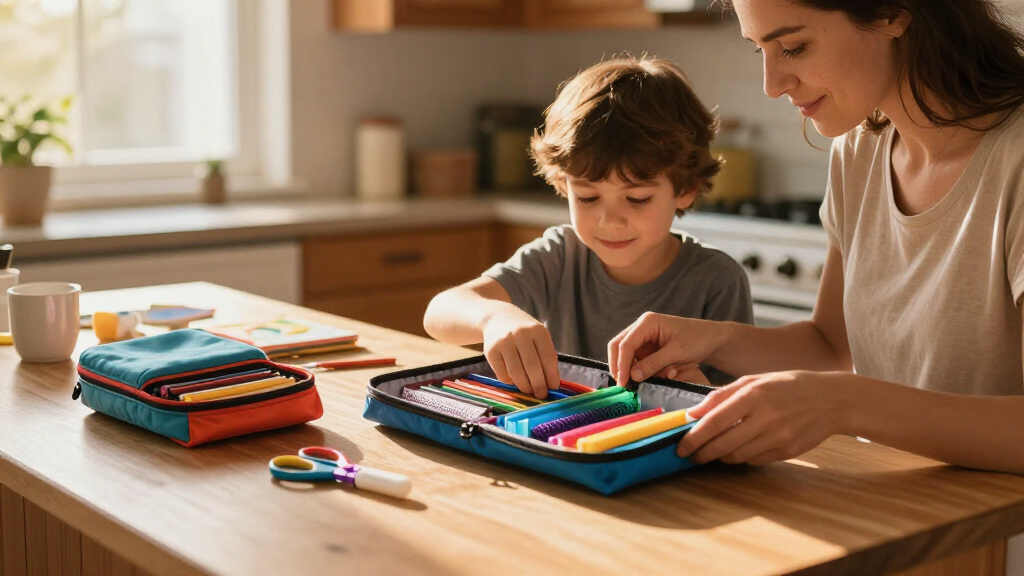

Kids’ school supply organizers come in two basic shapes: portable boxes that travel between home and school, and desktop caddies that keep supplies visible and grabbable. The Amazon Basics 4-Pack Pencil Cases earned my best overall pick for sheer practicality — four durable boxes for the price of one fancy caddy, enough for every subject or sibling. For a homework desk, the GAMENOTE Rotating Art Supply Organizer stands out because spinning storage means kids actually put things back, while the budget-friendly SITAKE pen holder set spreads storage across a desktop without clutter. The main tradeoff in this category is capacity versus portability, and clear-lidded boxes versus open caddies for visibility. Keep reading for the full breakdown of all 11 options.

Turn the school run and nap time into listening time
- Thousands of audiobooks, podcasts and originals
- Listen on your phone, tablet or Echo — also offline
- Cancel anytime
Complete the kit


Key Takeaways
- Multi-packs (Amazon Basics, SITAKE) delivered the best cost-per-storage, making them smarter for families with several kids or multiple classrooms.
- Rotating caddies (GAMENOTE, MeCids, the 8.6″ Lazy Susan) consistently beat static holders for one reason: kids return supplies when spinning is involved.
- Lidded, stackable boxes like the TERGOO containers and Citylife 17QT won on transport and long-term storage but lost on everyday accessibility.
- The Learning Resources Create-a-Space and Desktop Tote proved best for younger kids because open, compartmentalized beats zippered or latched for small hands.
- Clear plastic was a quiet differentiator across the lineup — visibility drove usage, which is the whole point of an organizer.


| kids’ school supply organizer | Material |
|---|---|
| Amazon Basics 4-Pack Large Pen | Polypropylene |
| MeCids Rotating Desk Organizer | ABS plastic |
| TERGOO 2 Layer Plastic Storage | High-quality plastic |
| Desktop Tote and Organizer for | Polyester 600D |
| TERGOO 12-inch 3-Layer Plastic | Polypropylene |
| GAMENOTE Rotating Art Supply O | Plastic |
| SITAKE Pen Pencil Holder Organ | Wheat straw |
| Learning Resources Create-a-Sp | High-quality plastic |
| Kids Art Supply Storage Organi | Plastic |
| Citylife 17QT Clear Craft Orga | BPA-free polypropylene |
| Tiawudi Multipurpose Caddy Org | Plastic |
More Details on Our Top Picks
Amazon Basics 4-Pack Large Pencil Cases, Storage Organizer, Durable Plastic School Supply Box, Multi-Color
Four sturdy boxes for the price of one boutique organizer makes this the best value pick in the roundup, especially for families with several students. Each case holds roughly 82 cubic inches of supplies — enough for a full pencil-and-marker load for one child — and the secure snap closure survives being crammed into a backpack daily. Compared with the SITAKE Pen Pencil Holder Organizer set, these boxes close completely, so nothing spills in transit; the SITAKE holders are open-topped and desk-bound. The tradeoff is simplicity: a single compartment per box means smaller items like erasers and sharpeners rattle around loose, and there’s nothing like the compartmentalization of the TERGOO 3-Layer Craft Organizer. This set makes the most sense for buyers who need backpack-ready basics in bulk rather than desktop sophistication.
Pros:- Four boxes in one set at a low per-unit cost
- Durable polypropylene that survives backpack abuse
- Secure closure keeps supplies contained in transit
- Ready to use out of the box with no assembly
Cons:- Single compartment per box offers no internal organization
- No dividers, pockets, or accessory features
Best for: Parents buying separate supply boxes for multiple kids or for an entire classroom on a budget
Not ideal for: Buyers who need internal compartments to separate small loose items like beads, erasers, or sharpeners
- Material:Polypropylene
- Dimensions:8.4 x 5.5 x 2.4 inches
- Capacity:82.37 cubic inches per box
- Item Weight:3.2 ounces
- Number of Items:4
- Shape:Rectangular
Our verdict“Buy this set if you need rugged, no-frills supply boxes for more than one student without spending much.”
MeCids Rotating Desk Organizer for Kids Art Supplies
The 360° spinning base is the whole point here: a child seated at a desk can reach every marker and crayon without knocking anything over, which is exactly the behavior parents are trying to encourage. Its rainbow color scheme and child-safe ABS construction make it more kid-focused than the Learning Resources Create-a-Space Storage Center, which skews toward classrooms and costs more. Compared with the Kids Art Supply 8.6-inch Rotating Lazy Susan Caddy, the MeCids is larger, so it holds more but eats more desk real estate — a real problem on a compact homework station. The bright plastic also clashes with adult decor, so this is not a pick that will blend into a shared home office. This option stands out for independent access: kids can find and put away supplies themselves, which cuts cleanup friction.
Pros:- 360° rotation gives kids access to every supply without reaching across
- Cheerful rainbow design kids actually want to use
- Sturdy, child-safe ABS plastic
- Ample storage in a single footprint
Cons:- Too large for cramped desks or small study nooks
- No lid or cover, so supplies collect dust
- Limited color options for style-sensitive buyers
Best for: Elementary-school kids with a dedicated art or homework desk who need to grab supplies quickly
Not ideal for: Small desks or shared workspaces, since the 12-inch footprint and loud rainbow design dominate a surface
- Brand:MeCids
- Material:ABS plastic
- Size:12 inches
- Color:Rainbow
- Rotation:360° rotating tray
- Model Number:LS001
Our verdict“Choose this if you want a fun, spin-anywhere caddy that makes cleanup something kids will actually do.”
TERGOO 2 Layer Plastic Storage Containers with Lids, Multipurpose Clear Stack & Carry Box, Portable Craft Organizers (Blue)
When supplies need to travel — to a grandparent’s house, a co-op class, or just from the craft closet to the kitchen table — this latched, handled, lidded box does what open desk caddies can’t. The two stacked 8-quart layers plus a carry handle mean one trip instead of armfuls, and the clear walls let a child find the glitter glue without dumping everything out. Compared with the Citylife 17QT Clear Craft Organizer, the TERGOO splits capacity into layers rather than one deep bin with a tray, which keeps heavier items from crushing light ones. The tradeoff is friction: the latches can be stiff, and younger kids may struggle to open the lid without help — the opposite of the grab-and-go MeCids spinner. Stacking is a genuine space-saver, but the 13.8-inch footprint is bulky for a nightstand or small shelf.
Pros:- Two stackable 8QT layers with a total of 16 quarts of capacity
- Secure latches and a carry handle make transport genuinely easy
- Clear plastic lets kids identify contents without opening
- Doubles for sewing, makeup, or household storage beyond school supplies
Cons:- Lid can be difficult to open, especially for small hands
- Large footprint when stacked on a desk or shelf
- Limited color options
Best for: Families who transport craft supplies between rooms, cars, or homes and need protected, lidded storage
Not ideal for: Younger kids who need independent access — the tight lid and latches require hand strength and patience
- Capacity:8QT per box (16QT total)
- Dimensions:13.8 x 10.4 x 7.5 inches
- Material:High-quality plastic
- Color:Blue
- Number of Layers:2
- Features:Stackable, carry handle, secure latches
Our verdict“This is the pick for families whose supplies live in more than one place and need to move safely between them.”
Desktop Tote and Organizer for Arts, Books, Stationery, and Makeup
Most organizers in this roundup are rigid plastic, but this soft-sided polyester tote fills a different job: corralling oddly shaped items like notebooks, workbooks, and craft paper alongside stationery. The five external pockets give markers and scissors a home while the roomy main compartment swallows bulk that would never fit in the Amazon Basics pencil boxes or the TERGOO layer boxes. Two stitched handles make it genuinely portable, closer to a teacher’s carry-all than a desktop caddy. The tradeoffs are real, though: the rigid bottom panel limits where you can squash it, there’s no lid, and nothing is waterproof — a juice-box accident will soak through. Compared with the Tiawudi plastic caddy, this tote trades wipe-clean surfaces for capacity and flexibility, so think about whether your kids’ messes are wet or dry.
Pros:- Large main compartment fits books and papers, not just small supplies
- Five external pockets keep frequently used items visible
- Carry handles make it easy for kids to move their own supplies
- Durable 600D polyester construction
Cons:- Hard bottom limits flexibility in tight storage spots
- No lid or water resistance against spills and dust
- Small loose items can get lost in the deep main compartment
Best for: Households that need one grab-and-go bag holding books, papers, and art supplies together rather than separated into rigid bins
Not ideal for: Buyers who need dust-proof or spill-proof protection — the open, fabric design offers neither
- Material:Polyester 600D
- Overall Size:13.6 x 5.7 x 8.7 inches
- Handles:2 carry-away handles
- Storage:Large main compartment with 5 external pockets
- Portability:Soft-sided with carry handles
Our verdict“Pick this if your child’s supplies include bulky books and papers that rigid plastic boxes simply can’t hold.”
TERGOO 12-inch 3-Layer Plastic Craft Organizer and Storage Box, Pink
Where the Amazon Basics boxes dump everything into one cavity, this three-layer box with adjustable dividers and 11 compartments actually sorts — beads here, crayons there, pencil sharpeners somewhere findable. At 16 ounces it’s light enough for a child to carry by the handle to a homework spot, and the transparent lid means no rummaging. Compared with its sibling, the TERGOO 2-Layer 8QT box, this model trades raw capacity for granular organization, so it suits a careful sorter more than a bulk hauler. The compromises matter: there’s no latch or lock, so a tipped-over box can spill a sorted mess, and the 12 x 7 inch interior only fits small items — full-size scissors or rulers won’t fit comfortably. The handle is serviceable but thin, so extended carrying gets uncomfortable. This pick makes the most sense for kids with lots of tiny supplies that need dedicated slots.
Pros:- 11 compartments across 3 layers with adjustable dividers
- Lightweight at 16 ounces despite a 25-pound load rating
- Transparent lid for quick content identification
- Compact 12-inch size fits most shelves and desks
Cons:- No locking mechanism — contents can spill if tipped
- Too small for larger tools and supplies
- Handle is uncomfortable for prolonged carrying
Best for: Kids or crafters with many small items — beads, pom-poms, crayons — who benefit from dedicated sorted compartments
Not ideal for: Anyone storing oversized items like rulers, full scissors, or workbooks, or who needs a locking lid
- Dimensions:12 x 7 x 6 inches
- Capacity:25 pounds
- Weight:16 ounces
- Number of Compartments:11
- Material:Polypropylene
- Color:Pink
- Layers:3
Our verdict“This is the right buy when the goal is keeping dozens of tiny supplies sorted rather than storing bulk.”
GAMENOTE Rotating Art Supply Organizer, Lazy Susan Caddy, Large
When two or three kids work at the same table, a static organizer forces someone to reach across the whole surface. The GAMENOTE’s 360° spinning base solves that — one twist brings any of the seven cups to whoever needs it. Compared with the Learning Resources Create-a-Space, the GAMENOTE trades rounded classroom-friendly looks for larger individual containers (5″ × 4.5″), so it swallows thick markers and full pencil sets without cramming. The anti-slip base keeps the whole unit planted during enthusiastic spinning, which matters more than you’d think with younger kids. The tradeoff is footprint: at 11″ × 11″, it claims serious desk real estate, and the plastic won’t shrug off a drop off the table the way metal would.
Pros:- 360° spin base gives every kid at the table equal access
- Seven large removable cups hold thick markers and full pencil sets
- Anti-slip bottom keeps the unit stable during use
- Sturdy enough for daily classroom or playroom handling
Cons:- 11″ × 11″ footprint takes up substantial desk space
- Plastic build is less durable than metal alternatives
- Cups only lift out from the top, which slows cleaning
Best for: Families with multiple kids sharing one homework or craft table who fight over supplies
Not ideal for: Small desks or cramped playrooms — the 11-inch footprint eats too much workspace
- Craft center size:11″ × 11″ × 5″
- Cup dimensions:5″ × 4.5″
- Number of cups:7
- Rotation:360° lazy Susan base
- Base:Anti-slip bottom
- Material:Plastic
Our verdict“Buy this if siblings or classmates share one surface and need supplies that come to them — skip it if desk space is tight.”
SITAKE Pen Pencil Holder Organizer, Set of 4, Multi-Color
Rather than one central hub, the SITAKE set spreads organization across four separate holders — one per kid, per subject, or per desk zone. That’s a fundamentally different approach than the GAMENOTE rotating caddy: instead of everyone sharing one spinning unit, each child gets ownership of their own color-coded holder, which tends to reduce the ‘who took my red marker’ arguments. The wheat straw construction is an eco-friendly touch and holds up better to daily handling than you might expect from the price. With 16 total slots across the set, capacity is respectable for standard pencils and pens. Just don’t expect versatility — bulky scissors, glue bottles, or oversized erasers simply won’t fit in these narrower compartments.
Pros:- Four separate holders let each kid keep their own supplies
- Eco-friendly wheat straw material is surprisingly durable
- Bright colors make desk zones easy to assign and identify
- Very low cost per holder in a multi-pack
Cons:- Narrow slots can’t fit bulky items like scissors or glue bottles
- Dry organizational use only — no liquids
Best for: Budget-conscious families or teachers buying for several kids who each need their own holder
Not ideal for: Anyone organizing bulky craft supplies like scissors, glue, or oversized crayon boxes
- Number of pieces:4
- Colors:4
- Material:Wheat straw
- Total slots:16
- Use case:Pens, pencils, art supplies, office accessories
Our verdict“This makes sense when you need to divide supplies among multiple kids on a budget, not when you want one central station.”
Learning Resources Create-a-Space Storage Center
The Create-a-Space is built around a classroom reality: supplies get shared, passed around, and pilfered between desks. Its nine removable compartments let a teacher hand a single container to a table group instead of moving the whole unit — a workflow the GAMENOTE can’t match as smoothly, since its cups are larger but fewer. The round 12-inch design fits neatly on a counter or supply table, and Learning Resources’ reputation for classroom durability shows in the construction. It’s also the best pick here for building student independence, because kids can see, grab, and return exactly what they need without adult help. The catch is that it’s a stationary hub — it doesn’t rotate, and the compartments run small, so taller scissors or fat glue sticks can jam.
Pros:- Nine removable containers can be handed out to table groups individually
- Rugged plastic survives daily classroom handling
- Round footprint fits standard classroom counters and shelves
- Designed to build kids’ independence in retrieving and returning supplies
Cons:- Compartments are small — taller scissors and fat glue sticks may not fit
- No rotating base, so it works best against a wall
Best for: Elementary and middle school teachers who need shareable, pass-around supply stations
Not ideal for: Homes with only one child — the shareable-compartment design is overkill for a single desk
- Diameter:12 inches
- Compartments:9 removable containers
- Material:High-quality plastic
- Design:Round, space-efficient hub
- Best environment:Elementary and middle school classrooms
Our verdict“The clear choice for shared classroom supply management, especially where containers get passed between students.”
Kids Art Supply Storage Organizer with Dividers – 8.6″ Rotating Lazy Susan Caddy
Think of this as the GAMENOTE’s smaller sibling. At 8.6 inches, it delivers the same 360° rotating access and seven color-coded bins, but on a footprint small enough for a single kid’s desk or a homework corner. The colorful bins and removable dividers make sorting crayons from markers intuitive even for younger children, and the carry handle means it can travel from bedroom to kitchen table without everything spilling. The tradeoffs follow directly from the size: capacity is tight, the plastic feels lighter-duty than the Learning Resources unit, and anything beyond slim art supplies — scissors, glue, paint pots — won’t fit. This pick makes the most sense for one child with a modest supply collection who wants everything within arm’s reach.
Pros:- Compact 8.6″ footprint fits small desks and tables
- Rotating base gives access from every side
- Colorful bins with removable dividers teach easy sorting
- Carry handle makes it portable between rooms
Cons:- Small capacity limits it to slim supplies like crayons and pencils
- Lighter plastic build won’t survive rough handling or classroom wear
Best for: Parents setting up a single child’s desk or homework corner with limited space
Not ideal for: Families with big art supply collections or heavy-duty classroom use — it’s too small and light for that
- Size:8.6 inches
- Number of bins:7
- Material:Plastic
- Rotating base:Yes
- Removable dividers:Yes
- Carry handle:Yes
Our verdict“The right spinner for one child’s desk; families with shared or large collections should size up to the GAMENOTE.”
Citylife 17QT Clear Craft Organizers and Storage Box with Removable Tray
Every other pick here keeps supplies on display; the Citylife box does the opposite — it closes, latches, and travels. That makes it the natural companion to a desktop caddy: the caddy holds daily-use pencils while this 17-quart box stores the overflow of craft foam, beads, and spare markers, either on a shelf or in a closet. The clear walls and removable tray mean you can see contents at a glance and lift out the top layer without excavating everything underneath, a clear step up from opaque bins like the TERGOO stack-and-carry when identification matters. Compared with open organizers, though, it adds friction — unlatching and opening a lid every time a kid needs a crayon gets old fast. Weight capacity is also lean at about 2 pounds per compartment, so it’s for light supplies, not tool storage.
Pros:- Clear walls let kids and parents identify contents without opening
- Removable tray creates two accessible layers of storage
- Secure lid makes it safe to stack and transport between rooms
- BPA-free polypropylene is food-contact safe and easy to wipe clean
Cons:- Lid adds a step compared with open caddies for daily-use items
- Roughly 2-pound per-item weight limit rules out heavy or bulky supplies
Best for: Families who rotate craft supplies between rooms or store overflow supplies on shelves and in closets
Not ideal for: Everyday desk use — the lid makes grabbing a pencil mid-homework a hassle
- Capacity:17 quarts
- Dimensions:15.94″L × 11.61″W × 7.28″H
- Compartments:5
- Material:BPA-free polypropylene
- Tray:Removable
- Lid:Yes, secure closing
- Color:White/clear
Our verdict“Choose this for stowing and moving supply collections, and pair it with an open caddy for the items kids reach for daily.”
Tiawudi Multipurpose Caddy Organizer, Plastic Caddy with Handle, Stackable Desk Organizer for Stationery, Office Supplies
Not every school supply organizer lives on a desk — some need to travel between the kitchen table, the bedroom, and the homework spot down the hall. That’s where the Tiawudi Multipurpose Caddy earns its place. Unlike the Learning Resources Create-a-Space Storage Center, which is built to stay put on one surface, this caddy’s easy-grip handle makes it a true grab-and-go station: a child can carry pencils, scissors, glue sticks, and erasers to wherever the work happens. The five compartments with a removable divider give enough separation to keep crayons from mingling with markers, though it offers less fine-grained sorting than the GAMENOTE Rotating Art Supply Organizer with its multiple cups. It also stacks with additional units, so a growing supply collection can expand vertically rather than sprawl across a shelf.
The tradeoffs are real, though. Compartments only fit medium-sized items, so oversized rulers or chunky paint bottles won’t fit, and the stacking lacks a locking mechanism, which means an ambitious toddler can send the tower tumbling. Compared with the TERGOO 2 Layer Storage Container, there’s no lid, so nothing here is dust-proof or spill-proof. This pick makes the most sense for families who value portability over sealed, protective storage.
Pros:- Handle makes it genuinely portable for kids moving between homework locations
- Removable divider adds flexibility to reconfigure compartments as supplies change
- BPA-free, durable plastic holds up to rough handling
- Stackable design lets storage grow without consuming more shelf footprint
Cons:- No lid, so supplies are exposed to dust and can slide out if tipped
- Compartments too small for oversized items like rulers or large paint bottles
- Stacking has no locking mechanism, so stacked units can topple easily
Best for: Families with multiple homework spots who need a kid-friendly caddy that moves from room to room without supplies getting lost
Not ideal for: Households needing sealed, protected storage — the open design exposes supplies to dust and spills, and large items like rulers simply won’t fit
- Dimensions:9-7/8″ x 6-1/8″ x 4-3/8″
- Compartments:5 with removable divider
- Material:Plastic
- Handle:Yes
- BPA Free:Yes
- Stackable:Yes
- Lid:No
Our verdict“Buy this if your kid’s supplies need to travel — skip it if you want sealed, stationary desktop organization.”
How We Picked
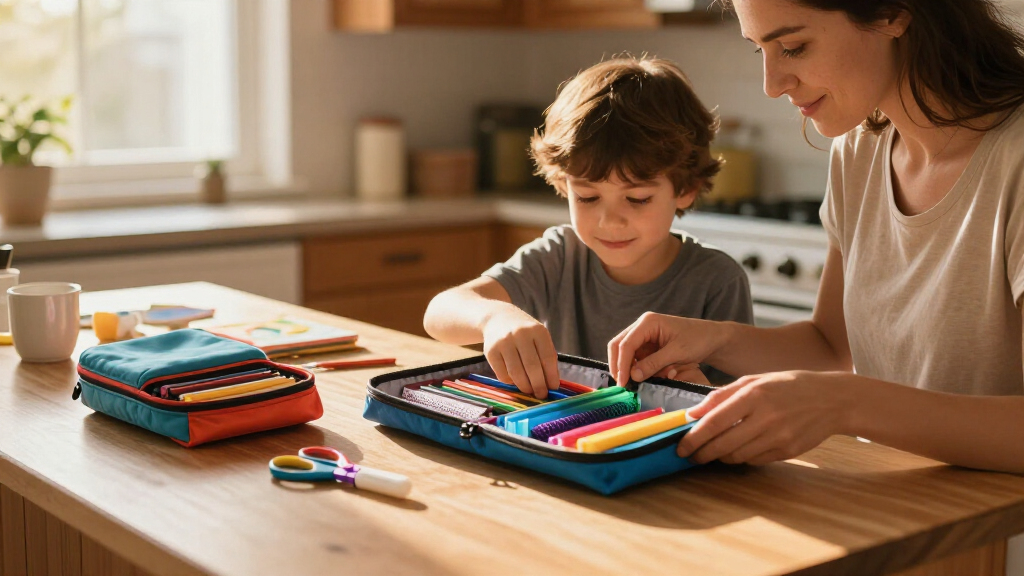
I evaluated these organizers the way a parent actually uses them: can a six-year-old open it, does it survive a backpack, and does it still look organized after two weeks. Durability came first, because kids’ organizers live hard lives in cubbies and backpacks. Accessibility came second — an organizer a child can’t open one-handed will end up empty while supplies scatter across the desk. Capacity and flexibility mattered for families storing craft supplies versus a single pencil set.
Finally, I weighed value per piece, which is why multi-packs ranked high despite being unglamorous. Rotating caddies ranked by spin smoothness and compartment count, while storage boxes ranked by latch quality and stackability. Products rose or fell based on who they serve: a traveler, a crafter, or a homework-desk kid.
Factors to Consider When Choosing Kids’ School Supply Organizers
Before picking an organizer, think about where it will live and who will use it. The right choice for a backpack is very different from the right choice for a craft corner.Portable Box or Desktop Caddy?
This is the single biggest decision, and buying the wrong type is the most common mistake. A lidded box like the TERGOO or Citylife protects supplies in transit but adds a step every time a child reaches for a pencil — and that step is where tidiness dies. An open caddy removes friction entirely, which is why teachers gravitate toward them, but it can’t ride in a backpack. Many families end up needing one of each: a caddy at the homework desk and boxes for school. Decide where the mess actually happens before you spend anything.
Age and Motor Skills
Small latches, tight lids, and zippers that require real grip strength will frustrate kindergartners and get abandoned. Younger kids do better with open compartments and chunky, grabbable bins — the Learning Resources Create-a-Space was designed with exactly this in mind. Older kids can handle latched craft boxes with removable trays, and they benefit from the finer compartmentalization those offer. A common misstep is buying a sophisticated multi-layer box for a five-year-old who just needs a place to dump crayons. Match the mechanism to the hands.
Rotation: Gimmick or Game-Changer?
Lazy Susan-style organizers cost more than static holders, and I’d argue the premium is justified — but only for shared spaces. The spin matters because it turns cleanup into something interactive, and supplies stay visible from any seat at the table. For a single child at a single desk facing one direction, rotation adds little. Where rotating caddies earn their price is at kitchen tables and craft stations where two or more kids sit at different angles. Skip the spin for solo use; pay for it in shared spaces.
Clear Versus Colored Plastic
Visibility drives usage. When kids can see the markers, they use the markers; when supplies are hidden in opaque bins, they’re effectively forgotten. Clear organizers like the Citylife box also let parents spot the dried-out glue sticks before the night before a project is due. Colored cases win on personality — kids are more likely to claim and care for an organizer they chose — so multi-color packs aren’t just about telling siblings’ supplies apart. The strongest setup combines both: clear storage at home, a colored case for school identity.
Capacity Creep and Overbuying
Bigger is not better here. An oversized organizer invites kids to fill it with non-supply clutter, and half-full giant boxes look messier than full small ones. Measure what your child actually owns — most elementary kids need space for a dozen pencils, a few markers, scissors, and glue, which fits comfortably in a standard pencil box. Craft-heavy households are the exception, and they should look at multi-layer boxes with dedicated compartments. Buying for the supplies you have, not the ones you imagine, saves money and shelf space.
When to Pay More
Spend extra on smooth rotation, sturdy latches, and reinforced handles — those are the failure points on cheap organizers. Don’t spend extra on branding or themed graphics, which fade in appeal within a school year and cost two to three times the plain equivalent. Mid-priced caddies in the fifteen-to-twenty-five dollar range hit the sweet spot for durability without premium pricing. Basic pencil boxes are a commodity; there’s no reason to pay above roughly three dollars per box. Reserve real budget for the one organizer anchoring your homework station.
Frequently Asked Questions
How many organizers does one child actually need?
Most kids need two: one portable case that travels to school and one stationary solution at the homework spot. The school case should be compact, durable, and easily identified — which is why multi-packs like the Amazon Basics four-pack work well, since siblings or subjects can each claim a color. At home, a single caddy or divided organizer holds the overflow of markers, crayons, and craft supplies that won’t fit in a backpack. Adding a third organizer for pure craft storage makes sense only if your child genuinely does regular art projects.
Are rotating organizers worth the higher price?
They are, if the organizer serves a shared or multi-position space. The rotation means a child never has to walk around the table or reach across a sibling to grab scissors, and that convenience is what keeps supplies returned to their slots. Compared with a static pen holder set like the SITAKE, a rotating caddy typically costs two to three times more but holds more items and serves multiple seats. For a single child at a fixed desk, save the money and buy static holders. The spin only pays off when it solves a reachability problem.
What’s the best organizer type for a kindergartner?
Open, compartmentalized, and unlatched. Five-year-olds struggle with tight lids and small clasps, so options like the Learning Resources Create-a-Space — with its big central cup and surrounding open bins — let them grab and return supplies independently. A basic pencil box is fine for school if the latch is simple, but avoid multi-layer craft boxes at this age; the layers end up dumped rather than slid. The goal at this stage is building the habit of returning items, and any mechanism that slows that down works against you.
Can craft storage boxes double as school supply organizers?
Yes, and they often do it better for older kids. Boxes like the TERGOO 3-layer or Citylife 17QT with removable trays were built for beads and sewing kits, but the compartment layout maps neatly onto erasers, sharpeners, washi tape, and highlighters. The tradeoff is portability and access: these boxes are bulkier than pencil cases and require opening a lid for every item, so they work best as home-base storage rather than backpack gear. If your child’s supplies have outgrown a pencil box but don’t need desk visibility, a craft box is the more economical upgrade.
How do I keep an organizer from becoming a junk pit within a month?
Choose compartments over open space — a single cavernous bin invites mixed clutter, while divided sections create a natural home for each supply type. Involve your child in the initial setup, because kids maintain systems they helped design far longer than imposed ones. Pair the organizer with a monthly five-minute sort, ideally at homework reset time rather than as a punishment. Finally, size matters: if every compartment is chronically overflowing, the organizer is too small and the system will collapse regardless of good intentions.
Conclusion
Best overall goes to the Amazon Basics 4-Pack Pencil Cases — no other option matches its durability, versatility, and value across multiple kids and contexts. For best value, the SITAKE pen holder set covers a whole desktop for the price of a single premium caddy. The GAMENOTE Rotating Art Supply Organizer takes best premium for its capacity and smooth spin at a shared table. For beginners and young kids, the Learning Resources Create-a-Space is the friendliest entry point thanks to its open, latch-free design. Specific needs: choose the Citylife 17QT or TERGOO boxes for bulk craft and transport storage, the MeCids or 8.6-inch rotating caddies for compact craft corners, and the Tiawudi caddy or Desktop Tote for carrying supplies between rooms. Match the organizer to where the mess happens, and the tidiness tends to follow.
Fall Picks
fall essentials
As an affiliate, we earn on qualifying purchases.