
To create easy-to-clean sensory play setups, use shallow trays or containers with textured materials like rice, pasta, or fabric, and include household items like shakers or bells. Choose non-toxic, washable items that can be quickly wiped or shaken out. Place setups on mats or plastic covers to catch spills, and consider containers with lids for mess containment. If you want to discover more tips, keep exploring how to make sensory play both fun and tidy.
Key Takeaways
- Use shallow trays or containers to contain materials and simplify cleanup.
- Opt for washable or wipeable surfaces like mats or plastic tablecloths under setups.
- Choose non-toxic, household materials that are easy to disinfect and manage.
- Incorporate lids or covers on containers to prevent spills and facilitate tidying.
- Combine tactile and auditory elements in sensory bins for engaging play with minimal mess.

Sensory play, engaging children’s senses through hands-on activities, is essential for their development. When you create setups that focus on tactile textures and auditory stimulation, you give kids the opportunity to explore different sensations while also keeping things simple and manageable for you. These activities help children develop fine motor skills, improve their focus, and foster curiosity. The key is to choose materials and arrangements that provide rich sensory input without creating a huge cleanup afterward.
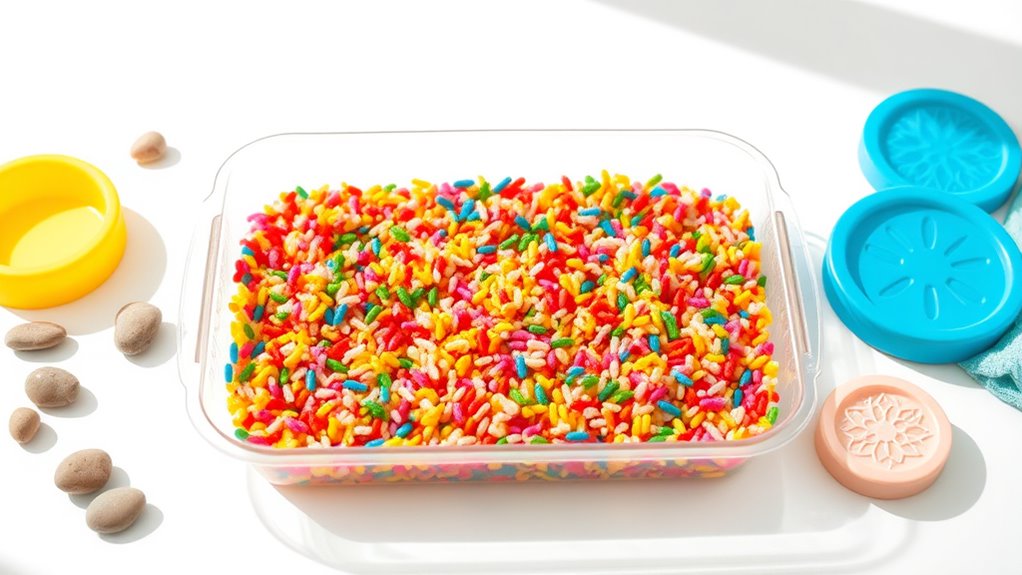
Start by selecting tactile textures that are safe, versatile, and easy to clean. Think about using materials like textured fabric, silicone mats, or even simple household items like rice or pasta. These textures allow children to feel different surfaces—smooth, rough, bumpy, or soft—which encourages tactile exploration. To make cleanup easier, consider placing these materials inside shallow trays or containers. This way, when playtime ends, you can simply lift out the tray, shake off excess bits, or wipe it down quickly. Using washable or wipeable surfaces makes it even more manageable, especially if you’re concerned about mess. Additionally, choosing safe and non-toxic materials ensures a worry-free sensory experience for children.
Choose safe, easy-to-clean textures like fabric or rice in trays for stress-free sensory play.
Auditory stimulation is another critical component of sensory play. Incorporate items that produce interesting sounds, such as shakers, bells, or DIY instruments made from household objects. For example, filling a small container with beans and sealing it tightly creates a simple shaker that offers both tactile and auditory feedback. When children shake these objects, they experience the vibrations and sounds simultaneously, enhancing their sensory integration. To keep cleanup straightforward, opt for instruments that are easy to wipe down and store. Avoid overly complicated setups that require extensive washing or drying afterward.
Creating setups that combine tactile textures with auditory stimulation is especially effective. For instance, you could set up a sensory bin filled with rice or beans, and hide small shakers or bells inside. Children can explore different textures with their hands and then discover the sounds hidden within. Keep in mind that using containers with lids or covers can contain spills and make tidying up faster. You might also want to include a mat or a plastic tablecloth underneath these setups to catch any stray bits, which can be easily cleaned or discarded.

10 Pack Plastic Art Trays: 8 Color Sensory Trays for Kids Crafts & DIY Projects
🌸 Colorful Tray:You will get 10 plastic art trays in 8 different colors including orange,yellow,red,green,dark blue,purple,1 each color,black,light…
As an affiliate, we earn on qualifying purchases.
As an affiliate, we earn on qualifying purchases.
Frequently Asked Questions
What Materials Are Safest for Sensory Play Setups?
You should choose non-toxic materials and hypoallergenic options for sensory play setups to guarantee safety. Look for items like organic fabrics, BPA-free plastics, and natural fibers, which are gentle on skin and free from harmful chemicals. Avoid anything with strong fragrances or dyes. Always check labels for safety certifications, and test small areas first. This way, you create a safe, enjoyable environment that minimizes allergy risks and keeps playtime worry-free.
How Can I Prevent Messes During Sensory Activities?
Think of sensory activities as a gentle rain shower—you want to enjoy it without getting soaked. To prevent messes, use a designated play area with clear boundaries, like a tray or mat, to contain spills and splashes. Keep comfort considerations in mind by choosing materials that are easy to clean and non-toxic. This way, you’ll enjoy the fun while keeping mess containment and safety at the forefront.
Are There Sensory Setups Suitable for Outdoor Use?
Yes, outdoor sensory ideas include weatherproof sensory setups like waterproof bins filled with sand, water, or textured materials. You can also use outdoor-safe paints, natural elements, or textured mats that withstand weather. Keep setups simple and portable, and use waterproof covers to protect your supplies. This way, you create engaging, mess-minimized sensory experiences outside that are easy to maintain and clean afterward.
How Do I Clean Sensory Play Tools Effectively?
To clean sensory play tools effectively, you should follow simple cleaning tips that prioritize sensory play safety. Use warm water and mild soap to wash toys thoroughly, paying attention to small crevices. Rinse well and let them air dry completely before next use. For added safety, disinfect plastic items with a diluted vinegar solution or mild disinfectant, ensuring they’re safe for children and free of harmful bacteria.
What Age Groups Are Best Suited for Specific Sensory Setups?
You should tailor sensory setups to specific age groups to maximize developmental benefits and guarantee age-appropriate activities. For infants, simple tactile experiences like soft fabrics promote sensory exploration, while preschoolers benefit from more complex setups like water tables or textured materials that develop fine motor skills. Always consider safety and developmental milestones, adjusting activities to suit the child’s age, ensuring they enjoy engaging, beneficial, and safe sensory play.

Creativity for Kids Sensory Bin Outer Space – Child Craft Activity for Boys and Girls (Ages 3+)
OUTER SPACE SENSORY BIN: Blast off on a intergalactic mission with a galaxy sensory bin filled with glowing…
As an affiliate, we earn on qualifying purchases.
As an affiliate, we earn on qualifying purchases.
Conclusion
Now that you know the simple setups for sensory play, you’re ready to create nurturing, neat, and mess-free moments. With easy-to-clean containers, clever clutter control, and cheerful, creative cues, you can confidently craft engaging, clean experiences. So, seize the sensory setup, stay organized, and enjoy the joy, journey, and discovery that delightful, dirt-free play brings. Your little one will love learning, exploring, and engaging in this easy, enjoyable adventure!

Silly Foam, Creative Modeling Foam Beads, 1-Pack of 6 Primary Colors, Easy Clean Up, Perfect for Preschool and Kids, Arts & Crafts, Sensory Play, STEM, Travel Toy, Holiday Gifts, Non-Toxic (Age 3+)
CREATIVE PLAYTIME: 6 vibrant colors to keep little hands busy with imaginative play; shape, squish, and mix to…
As an affiliate, we earn on qualifying purchases.
As an affiliate, we earn on qualifying purchases.

Vtopmart 6 Qt Plastic Storage Bins with Lids, Clear Sensory Bins, Arts Crafts Organizers and Storage, Stackable Containers for Home Office and School Supplies, 4 Pack
【Suitable Size】The size is 14.25 inches x 10.51 inches x 2.83 inches, which is easy to move and…
As an affiliate, we earn on qualifying purchases.
As an affiliate, we earn on qualifying purchases.