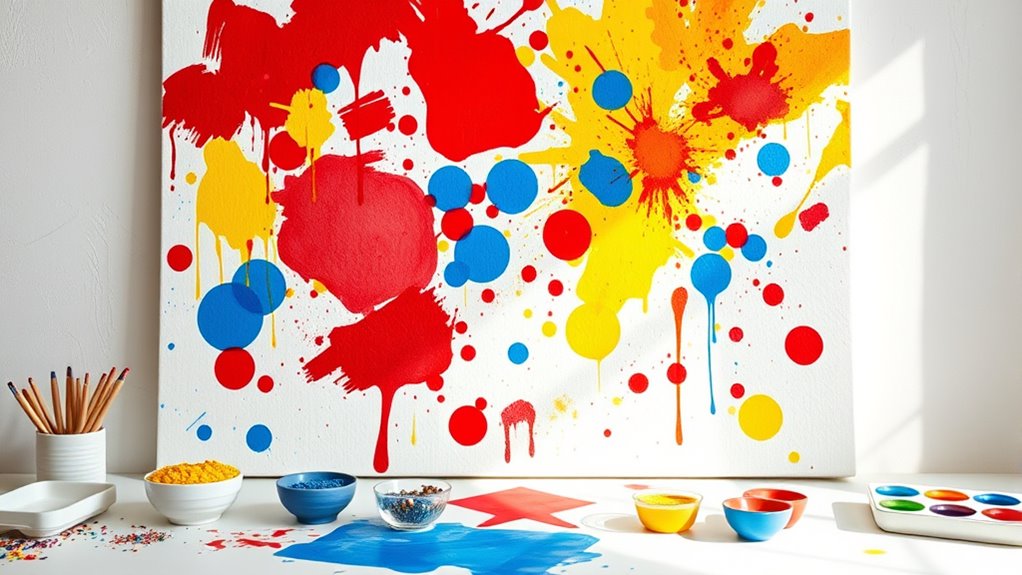

When you focus on process art with toddlers, you emphasize their exploration and self-expression rather than perfect results. Let them experiment freely with materials like paint, clay, and fabric, fostering their curiosity and confidence. Keep the environment relaxed and encourage their senses and decision-making skills. Celebrate their uniqueness and avoid pressure for perfection. If you want to learn how to create joyful, stress-free art experiences that nurture lifelong creativity, keep exploring these simple strategies.
Key Takeaways
- Emphasize the experience of creating over achieving a perfect final product to foster confidence and curiosity.
- Use open-ended materials like paint, clay, and textured paper to encourage exploration and personal expression.
- Focus on sensory engagement and decision-making, highlighting that there are no right or wrong ways to create.
- Adult involvement should be supportive and non-directive, modeling a relaxed attitude toward experimentation.
- Prioritize joyful, stress-free processes to nurture lifelong love for exploration and creativity in toddlers.
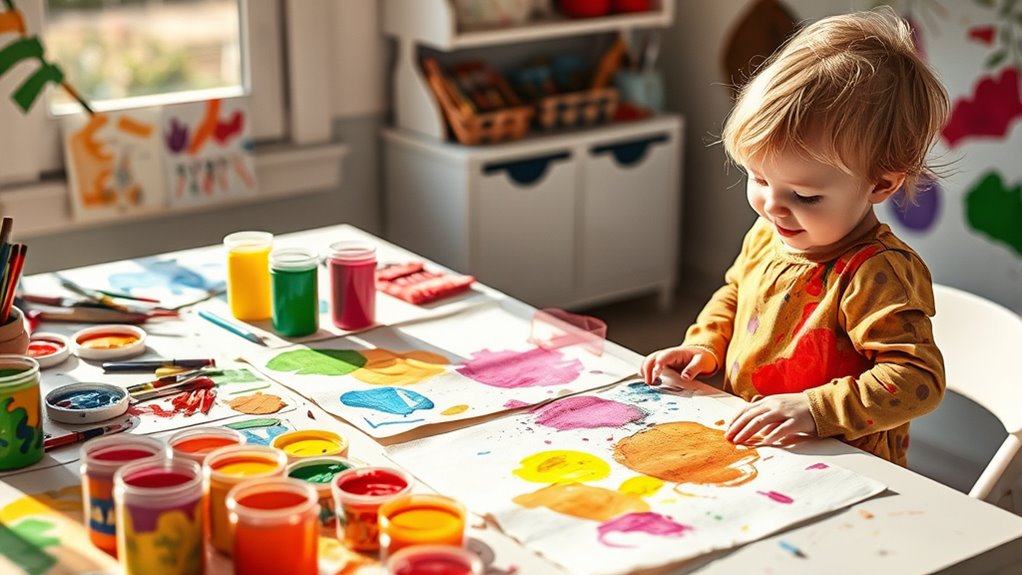
Have you ever wondered how to make art activities both fun and developmentally beneficial for your toddler? The key is to focus on process art, which emphasizes the experience of creating rather than the final product. When you encourage your toddler to explore with their senses, you open the door to rich sensory exploration. This kind of play allows them to touch, feel, see, and even smell different textures and materials. As they experiment freely, they learn about their environment and develop their fine motor skills without the pressure of producing a perfect picture or craft. By emphasizing open-ended creativity, you give your child the freedom to express themselves authentically, fostering confidence and curiosity. Instead of guiding them toward a specific outcome, you provide various safe materials—like paint, clay, fabric scraps, or textured paper—and let them decide how to use them. This approach helps your toddler develop decision-making skills and an understanding that there’s no right or wrong way to create. Engaging in sensory exploration also supports their overall development and helps build neural connections that enhance learning. When you set up a process art activity, it’s important to keep the environment relaxed and inviting. Use low-pressure language, and emphasize the fun of experimenting. For example, instead of asking, “What are you making?” you might say, “Show me what you’re creating,” or “Tell me about the colors you’re using.” This shifts the focus from perfection to personal expression. Remember, the goal isn’t to produce a masterpiece but to give your child the chance to explore their senses and ideas freely. As they manipulate different materials, they build confidence in their abilities and develop important skills like hand-eye coordination, color recognition, and tactile awareness. You should also be prepared to participate in their process, not direct it. Sit beside them, offer encouragement, and ask open-ended questions like, “What does this feel like?” or “How does this color make you feel?” These questions invite them to reflect on their experience and deepen their sensory understanding. It’s about celebrating their unique way of creating, not analyzing their craft. Over time, this focus on process nurtures their natural curiosity and love for exploration. When you prioritize sensory exploration and open-ended creativity, you help your toddler develop essential skills while ensuring they have a joyful, stress-free experience with art. This approach lays a foundation for lifelong confidence in their ability to imagine, create, and express themselves freely.

Arts & Crafts Supplies Kits & Materials Set for Kids, Toddler – Carl & Kay
ALL INCLUSIVE CRAFT KIT: Looking for a fun one-stop, ready-for-anything craft supply bundle that covers all the basics?…
As an affiliate, we earn on qualifying purchases.
As an affiliate, we earn on qualifying purchases.
Frequently Asked Questions
How Do I Choose Safe Materials for Toddler Process Art?
To choose safe materials for toddler process art, always opt for non-toxic paints and washable supplies. Check labels carefully to make certain everything is free from harmful chemicals. Avoid small items that pose choking hazards, and select age-appropriate tools. You should also test new materials beforehand. By prioritizing non-toxic, washable options, you create a safe, fun environment where your toddler can explore and express their creativity without worries.
What Are Some Inexpensive Supplies for Toddler Art Activities?
Like finding hidden treasures, you can gather inexpensive supplies for toddler art by exploring recycled materials and natural supplies. Use cardboard boxes, egg cartons, and bottle caps for fun, eco-friendly projects. Incorporate leaves, sticks, and stones for natural textures. These supplies are budget-friendly, readily available, and inspire endless creativity, making art time both exciting and sustainable for your little one.
How Can I Encourage Toddlers to Explore Without Fear of Mess?
You can encourage toddlers to explore without fear of mess by emphasizing mess encouragement as part of the learning process. Use washable supplies, provide aprons, and create designated art areas to boost their exploration confidence. Let them know that making a mess is okay and part of discovering new textures and colors. Praise their effort over perfection, helping them feel safe and excited to experiment freely.
What Are Age-Appropriate Process Art Projects for Toddlers?
You can introduce age-appropriate process art projects like finger painting, sensory collages, or dough modeling that promote sensory exploration. Use open-ended prompts such as “What colors do you see?” or “How does this feel?” to encourage creativity without focusing on a perfect outcome. These activities allow toddlers to experiment freely, develop their senses, and enjoy expressing themselves while learning through tactile experiences.
How Do I Handle Cleanup After Toddler Art Sessions?
Did you know that effective cleanup routines can reduce your post-art session stress by 50%? To handle cleanup after toddler art sessions, focus on mess containment by using washable mats and aprons. Encourage toddlers to help with cleanup to foster independence. Keep supplies organized in accessible containers, and set a timer to make cleanup a quick, routine part of your art time. This approach keeps chaos manageable and fun!

Yowlieu 10 Pcs Wooden Sensory Bin Tools for Toddlers & Preschool Children, Montessori Sensory Wooden Toys Fine Motor Learning Pretend Play Sensory Tools for Kids
Complete Montessori Sensory Bin Tools Kit: 10 Sensory Tool Toys + 1 storage bag for supply all-in-one convenience,…
As an affiliate, we earn on qualifying purchases.
As an affiliate, we earn on qualifying purchases.
Conclusion
Now that you’ve seen how process art fuels your toddler’s creativity and confidence, imagine what’s next. Will they surprise you with a masterpiece or a messy masterpiece? The possibilities are endless when you prioritize the journey over the perfect result. Keep exploring, experimenting, and encouraging their unique expressions. Because in this world of art, the real magic happens when you let go of perfection and embrace the beautiful chaos ahead. Ready to see where their imagination leads?

MuseLuxe Air Dry Clay – 32 Colors Modeling Clay Kit with 3 Sculpting Tools,Safe & Non-Toxic,DIY Magic Gifts Toys for Boys,Girls,Kids
VIBRANT CLAY KIT – Our air dry clay kit includes 32 different colors,3 sculpting tools,and extra sealing bags.You…
As an affiliate, we earn on qualifying purchases.
As an affiliate, we earn on qualifying purchases.

Spring Breeze Valley Aqua Puffs, Magic Foam Texture Painting Kit, Stocking Stuffers, Magic Puffy Paint, Including 30 Pcs Foam Texture Paper, 12 Colors Brush Tip Acrylic Paint Markers
MAGIC FOAM TEXTURE PAINTING KIT!: Aqua Puffs Just color your design, then just add water and watch your…
As an affiliate, we earn on qualifying purchases.
As an affiliate, we earn on qualifying purchases.