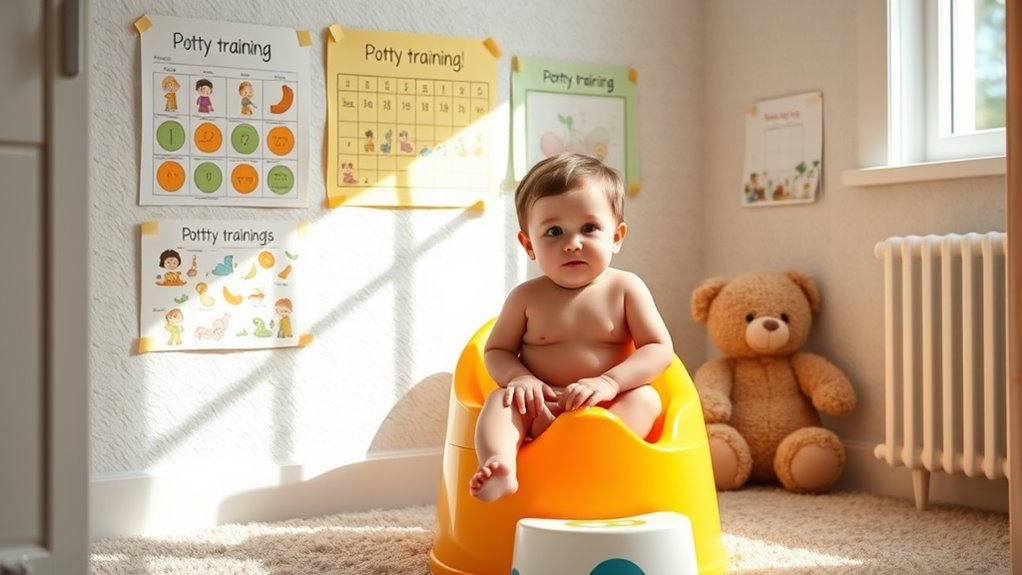

Recognizing when your child is ready for potty training involves observing signs like squirming or fussing during bathroom needs, curiosity about the toilet, and ability to follow simple instructions. They should show some control over their bladder and bowel movements and be able to sit on the potty independently. Create consistent routines and a supportive environment. If you want to learn what else to look for and how to start, there’s more to discover below.
Key Takeaways
- Look for behaviors like squirming, fussing, or gestures indicating bathroom needs.
- Check if your child can follow simple instructions and participate in routines.
- Observe signs of physical readiness, such as staying dry and controlling bladder and bowel movements.
- Notice cognitive cues, including interest in the toilet or mimicking toileting behaviors.
- Ensure a supportive environment with consistent routines and accessible potty facilities.
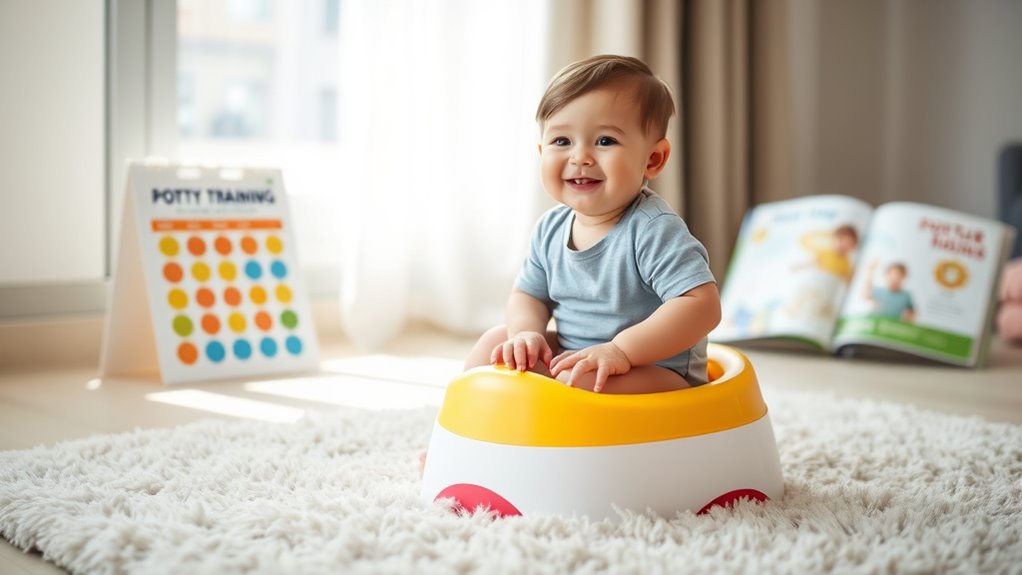
Are you wondering if your child is ready to start potty training? Recognizing the signs can make the process smoother for both of you. One of the key indicators is observing behavior cues. Does your child show signs of awareness when they need to go, like squirming, holding their genital area, or fussing? These behaviors suggest they’re beginning to understand the sensations associated with needing a bathroom break. Additionally, if your child starts expressing interest in using the toilet or copying older siblings or adults, it’s a promising sign they’re ready to learn. Pay attention to their ability to communicate, whether through words, gestures, or facial expressions, as these cues often precede physical readiness.
Another important aspect is their participation in established toileting routines. If they’re already familiar with simple bathroom habits, such as pulling their pants up and down or sitting on a potty, they’re likely more prepared to shift. Children who show curiosity about the toilet or ask questions about it are often eager to engage in toileting routines. Consistency in these routines at home can also help your child feel more confident and secure when starting potty training. Creating a predictable schedule—like sitting on the potty after meals or before bed—helps reinforce the habit and gives your child a sense of normalcy.
It’s also useful to think about their physical readiness. Most kids are ready for potty training between 18 and 24 months, but every child develops at their own pace. Look for signs that they can stay dry for longer periods, like during naps, and have the motor skills necessary to get on and off the potty independently. If they can follow simple instructions, such as “sit down” or “bring me your underwear,” it’s a positive sign that they’re developing the cognitive skills needed. Additionally, ensuring their vacuums are effective at cleaning up accidents can help create a supportive environment for potty training success.

Munchkin® Sturdy™ Potty Training Seat, Grey
Portable toddler potty seat perfect for potty training boys and girls
As an affiliate, we earn on qualifying purchases.
As an affiliate, we earn on qualifying purchases.
Frequently Asked Questions
How Long Does Potty Training Typically Take?
Potty training usually takes about 3 days to several weeks, but age milestones and individual readiness vary. Don’t fall for potty training myths that it should happen quickly; each child progresses differently. You might see some signs of readiness around age 2, but patience is key. Stay consistent, encouraging, and supportive, and remember, the timeline depends on your child’s unique development rather than strict age expectations.
What if My Child Resists Using the Potty?
Ever wonder if resisting potty training is just a phase? If your child pushes back, stay patient and avoid potty training myths that it should happen overnight. Remember, age milestones vary, and some kids need more time. Make potty time fun, offer reassurance, and let them explore at their own pace. Does your child feel safe and comfortable? That’s key to overcoming resistance and building confidence.
Are There Specific Signs of Readiness for Boys and Girls?
You’ll notice that boys and girls show different signs of readiness for potty training. Girls often demonstrate awareness of bodily functions and can follow simple instructions earlier, while boys may show interest through imitation and muscle control. Keep an eye on developmental milestones like staying dry for longer periods and expressing discomfort with dirty diapers. Recognizing these gender differences helps you support your child’s unique potty training journey effectively.
When Should I Consider Professional Help?
You should consider professional help if you notice persistent toileting delays despite consistent efforts or if your child shows signs of discomfort or resistance. A professional assessment can identify underlying issues, like physical or developmental factors, that might be hindering progress. If your child’s toileting habits aren’t developing normally by age 4 or if you’re feeling unsure, consulting a healthcare provider guarantees you get personalized guidance and support.
How Can I Prevent Accidents During Training?
To prevent accidents during potty training, establish diaper-free zones and keep potty training accessories nearby. Encourage regular bathroom visits and watch for signs your child needs to go. Praise successes to boost confidence and reduce accidents. Consistency helps your child learn faster, so stick to a routine. Remember, patience is key—accidents happen, but with time and encouragement, your child will become more independent and accidents will decrease.

Fisher-Price™ 3-in-1 Toddler Toilet Training Potty Chair and Step Stool, with Removable Toilet Ring
Training potty with 3 stages in 1: potty chair, potty ring, and stepstool
As an affiliate, we earn on qualifying purchases.
As an affiliate, we earn on qualifying purchases.
Conclusion
Now that you know the signs and starter plans, you’re practically a potty training superhero! With patience, humor, and a little bit of magic, you’ll turn those tiny bladders into potty pros in no time. Remember, every accident is just a tiny step toward victory—like winning the lottery of independence! So keep going, stay positive, and soon enough, you’ll be celebrating a bathroom breakthrough that’s even better than finding extra fries at the bottom of the bag!

Potty Training Seat, SKYROKU Upgrade Toddler Toilet Seat for Kids Boys Girls, 2 in 1 Potty Training Toilet, Splash Guard Anti-Slip Pad Step Stool,New Sector-Shape Stabilized Base (8899+Grey)
Perfect Fit & Unshakable Stability – Engineered with 6 adjustable heights, our toddler potty training seat fits securely…
As an affiliate, we earn on qualifying purchases.
As an affiliate, we earn on qualifying purchases.

Hadley Designs Potty Training Chart for Toddlers Girls -10 Sticker Potty Chart for Toddlers Girls, 8.5×11" Potty Training Sticker Charts for Toilet Success, Unicorn Toddler Reward Chart for Kids
If You’re Looking To Get Your Little One Excited About Potty Training; Then you need this potty reward…
As an affiliate, we earn on qualifying purchases.
As an affiliate, we earn on qualifying purchases.