
As your toddler moves from parallel play to organized playdates, they develop essential social skills like understanding personal boundaries, sharing, and resolving conflicts. Through these interactions, they learn to communicate their feelings, respect others’ space, and handle disagreements calmly. Caregivers play a key role by modeling respectful behavior and guiding their child through challenges. Keep exploring how these steps lay a strong foundation for your child’s social confidence and emotional intelligence.
Key Takeaways
- Transition from parallel play to organized playdates fosters essential social skills like sharing and cooperation.
- Children learn boundaries and respecting others’ personal space during early social interactions.
- Conflict resolution develops as children practice communicating feelings and negotiating turns.
- Caregivers play a vital role by modeling respectful behavior and guiding children through disputes.
- Early social experiences build confidence and emotional intelligence for more complex relationships later.
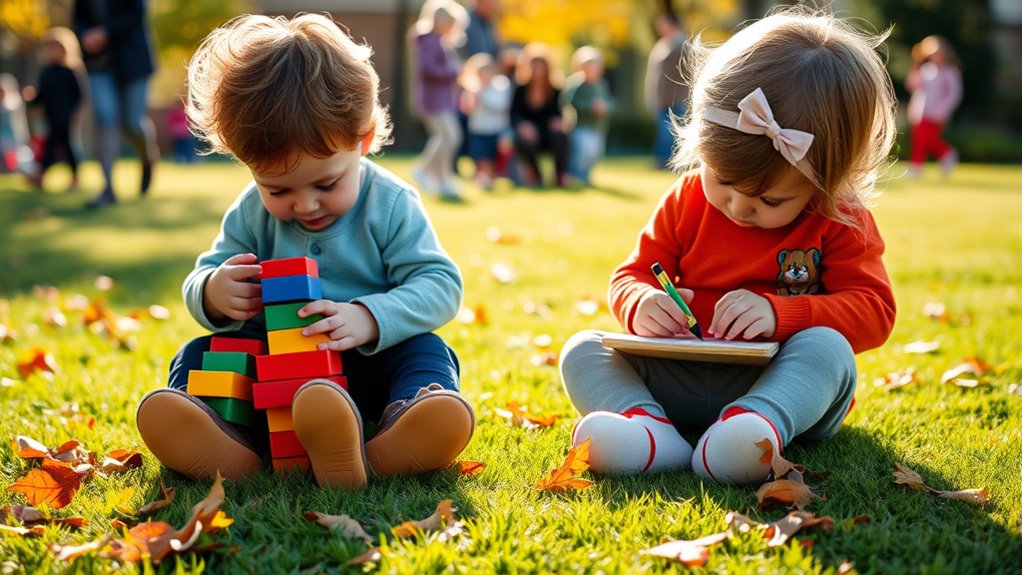
As children grow, their social interactions evolve from simple parallel play to engaging in organized playdates, marking a significant step in developing social skills. During this stage, your child begins to understand the importance of sharing boundaries and resolving conflicts, both essential for healthy relationships. As they navigate these early social settings, you’ll notice them experimenting with boundaries—deciding what they’re comfortable sharing and how much space they need from others. This is a natural part of learning to respect others’ boundaries, which helps prevent misunderstandings and fosters mutual respect. You can support this process by gently guiding your child to recognize when they’re overstepping or when someone else feels uncomfortable.
Children learning to respect boundaries foster mutual respect and prevent misunderstandings.
Conflict resolution becomes a vital skill in playdates. When disagreements arise—whether over toys, turns, or personal space—your child learns to communicate their feelings and listen to others. You might see them initially respond with frustration or tears, but over time, they start understanding that conflicts can be resolved through words rather than physical actions. Encourage your child to use phrases like “Can I have a turn?” or “I don’t like that,” which helps them express their needs clearly. Reinforcing that it’s okay to disagree and helping them find compromises teaches them to navigate social friction constructively. With consistent practice, your child develops patience and empathy, understanding that others have feelings just like theirs.
As playdates become more organized, your child’s ability to cooperate and share becomes more refined. They learn that sharing isn’t just about giving up toys but about respecting others’ desires and establishing boundaries that make everyone feel safe. For example, if someone is playing with a favorite toy, your child might need to learn to wait or offer alternatives, which promotes patience and understanding. During these interactions, you play an important role by modeling respectful behavior and guiding your child through conflicts without taking sides or rushing to resolve issues. Instead, you help them develop problem-solving skills, encouraging them to suggest solutions or take turns. Supporting this development fosters emotional intelligence, an essential aspect of social skill growth.
Over time, these experiences teach your child that social skills are a foundation for friendships. They start to recognize cues from others about boundaries and feelings, and they learn that conflicts are natural but manageable. By fostering an environment where sharing boundaries and conflict resolution are discussed openly, you help your child build confidence in their social abilities. This early exposure to organized play and peer interactions lays the groundwork for more complex relationships later on, making social navigation smoother as they grow older.

Learning Resources All About Me Feelings Activity Set – Emotional Regulation Tools for Kids, Preschool Classroom Must Haves, Social Skills Activities, People Figurines, Toddler Emotions Gifts
EMOTIONAL INTELLIGENCE DEVELOPMENT – Help children identify and express their feelings with 36 colorful figurines representing 6 key…
As an affiliate, we earn on qualifying purchases.
As an affiliate, we earn on qualifying purchases.
Frequently Asked Questions
How Can Parents Encourage Social Skill Development at Home?
You can encourage social skill development at home by practicing parental modeling, showing your child how to share and take turns. Engage in activities that promote encouraging sharing, like playing with toys together and praising cooperative behavior. Set up playdates with peers to give your child real-life practice. Remember, your consistent example and positive reinforcement help your little one develop essential social skills for future interactions.
What Are Signs of Social Skill Delays in Toddlers?
Think of social skills as a garden that needs nurturing—if certain plants don’t sprout, it’s a sign. You’ll notice your toddler struggles with sharing milestones, avoids eye contact, or doesn’t respond to their name. Recognizing delays early helps you intervene, encouraging social interaction. If your child shows persistent difficulties with turn-taking, playing alongside others without engaging, or seems overly shy, it’s time to consult a specialist.
How Do Cultural Differences Influence Social Play?
Cultural norms and play customs shape how your child engages with others during social play. In some cultures, group activities and communal play are emphasized, encouraging sharing and cooperation early on. In contrast, other cultures may prioritize individual exploration or structured play. By understanding these differences, you can support your child’s social development, respecting their cultural background, and helping them navigate diverse social settings confidently.
When Should Parents Seek Professional Help for Social Challenges?
You should seek professional help if your child shows persistent social challenges, like difficulty engaging in play or forming friendships. Consider diagnostic assessments to identify underlying issues, and explore therapy options such as social skills groups or behavioral therapy. If these concerns persist despite your efforts, consulting a specialist guarantees your child receives tailored support to improve their social interactions and overall development.
How Does Screen Time Impact Social Interactions in Young Children?
Screen time can markedly impact your child’s social development by reducing opportunities for face-to-face interactions. Excessive screen use might hinder their ability to develop essential social skills like sharing, empathy, and communication. To promote healthy social growth, set limits on screen time and encourage your child to engage in playdates, group activities, and real-world interactions. This helps foster stronger social skills and better emotional understanding.

JOYIN Learning Toys Play Food Set for Toddlers, Cutting Food for Preschool Activities, Play Kitchen Accessories, Educational Toys, Color Sorting Set for Boys & Girls, Easter Basket Stuffers
Engaging Learning Toy Set: Our comprehensive learning toys for toddlers set includes fun and vibrant play kitchen food…
As an affiliate, we earn on qualifying purchases.
As an affiliate, we earn on qualifying purchases.
Conclusion
So, as you watch your little one master parallel play, you might think social skills are just around the corner. Turns out, the real surprise is that their first true playdate might be the biggest test yet—where they learn to share, compromise, and actually play together. Ironically, those quiet moments of parallel play are setting the stage for the messy, wonderful world of real friendships. Who knew that silent cooperation could be so powerful?

Junior Learning 6 Conflict & Resolution Games
Games include: Are You a Bully? Sharks, Jellyfish, Turtles, Compromise Burgers, Persuasion Pot, Keep Calm Meter, A Spinning…
As an affiliate, we earn on qualifying purchases.
As an affiliate, we earn on qualifying purchases.
Sharing Time (Toddler Tools® Board Books)
Used Book in Good Condition
As an affiliate, we earn on qualifying purchases.
As an affiliate, we earn on qualifying purchases.