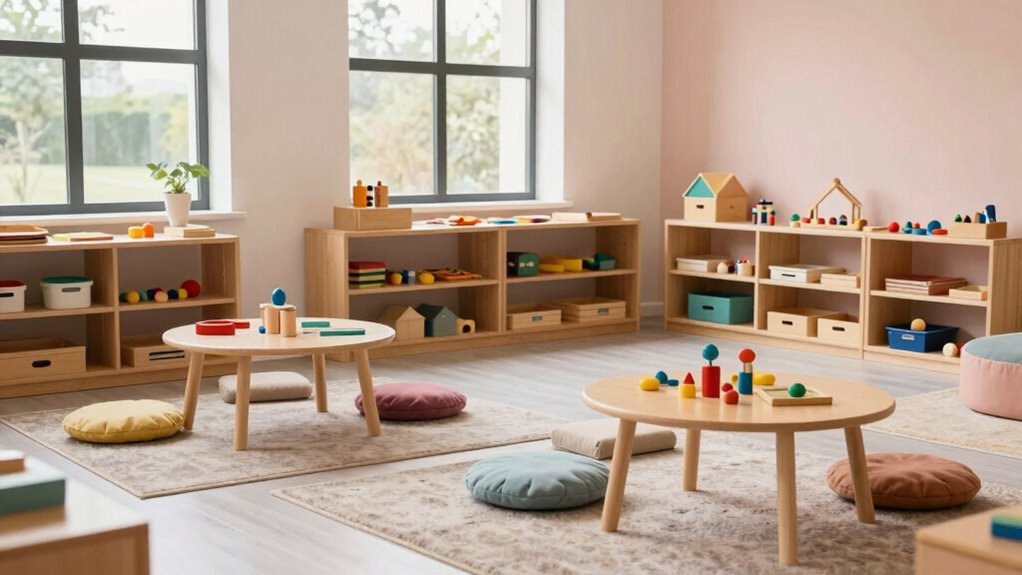

To create a Montessori playroom that calms chaos, focus on thoughtful layout and organization. Use low shelves and clear storage to make materials accessible and encourage independence. Design distinct, inviting zones for different activities, and keep clutter minimal with labeled containers and routines for tidying. Incorporate natural light, soothing colors, and adaptable furniture to foster a peaceful atmosphere. Keep these principles in mind, and you’ll discover more tips for a serene, empowering space.

Turn the school run and nap time into listening time
- Thousands of audiobooks, podcasts and originals
- Listen on your phone, tablet or Echo — also offline
- Cancel anytime
Key Takeaways
- Design clearly defined, accessible zones with low shelves and visual boundaries to promote independence and reduce distraction.
- Use organized storage solutions like labeled bins and rotation to minimize clutter and sensory overload.
- Incorporate natural light, calming colors, and soft furnishings to create a peaceful, inviting atmosphere.
- Arrange materials at child height to encourage autonomy and easy self-directed play.
- Maintain routines and visual cues to reinforce order and support focus and emotional well-being.
As an affiliate, we earn on qualifying purchases.
What Are the Core Montessori Principles for a Playroom?
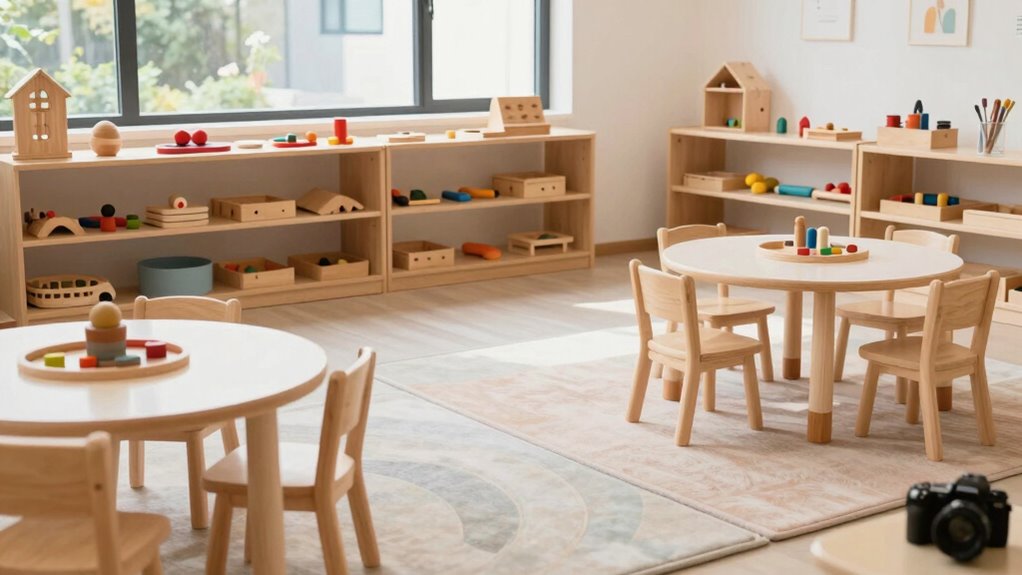
To create an effective Montessori playroom, you need to understand its core principles. One key idea is promoting hands-on learning through sensory activities that engage children’s senses and foster exploration. These activities help children develop focus, coordination, and independence. Incorporating sensory activities can significantly enhance engagement and learning outcomes. Another principle emphasizes outdoor play, which allows kids to connect with nature, refine motor skills, and satisfy their natural curiosity. The environment should be accessible, organized, and inviting, encouraging children to choose activities independently. You want to create a space that nurtures their innate desire to learn by providing materials that are safe, beautiful, and appropriately sized. Incorporating educational performance parts such as well-designed materials can enhance the developmental benefits of the environment. Creating a calm atmosphere within the playroom can further support children’s concentration and emotional well-being. Additionally, understanding the importance of environmental design can help you optimize the layout for both safety and ease of movement, fostering independence. Paying attention to indoor air quality can also contribute to a healthier, more comfortable environment conducive to learning. By focusing on sensory experiences and outdoor play, you set the foundation for a calming, stimulating, and developmentally supportive Montessori playroom.
How to Design Play Zones That Encourage Independence?
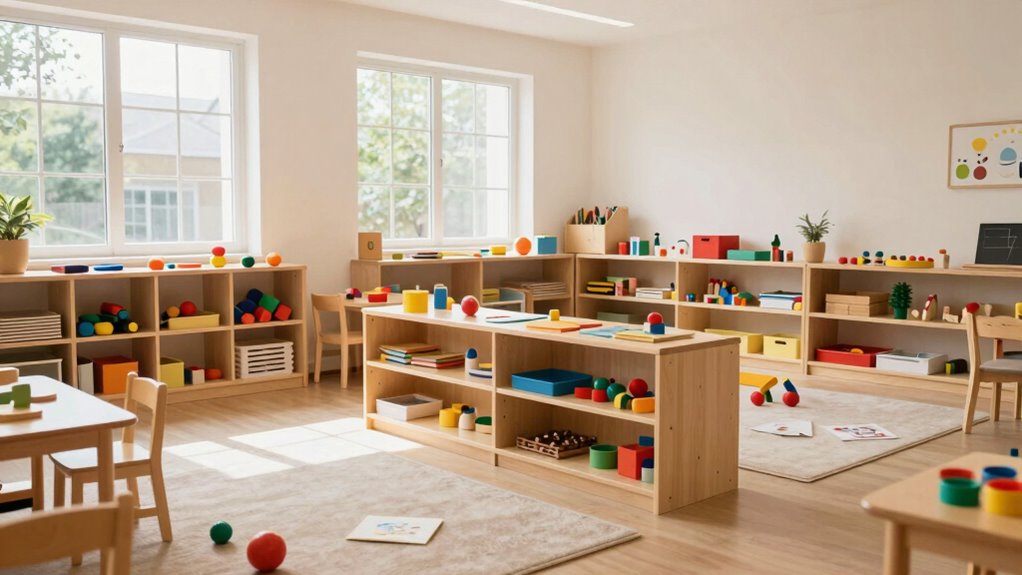
Designing play zones that foster independence involves creating clearly defined, accessible areas where children can make choices and manage activities on their own. To encourage exploration, set up dedicated spaces for sensory activities that children can engage with independently, helping develop their focus and self-regulation. Incorporate art stations that are easy to reach, enabling kids to express creativity freely without constant adult guidance. Use low shelves and labeled containers so children can select and return materials easily. Consider arranging zones in a way that minimizes distractions while promoting autonomy. When zones are thoughtfully designed, children learn to navigate their environment confidently, building independence and decision-making skills. Additionally, ensuring proper cookie management and screen visibility can create a calm visual environment that supports focus. Incorporating unique and wicked planters can add a playful touch to sensory or art areas, making the environment more engaging for children. Paying attention to natural light and wellness touches in the layout can further enhance a peaceful atmosphere conducive to self-directed learning. Creating a calm environment by reducing clutter and visual noise helps children feel more secure and focused, supporting their growth. These simple adjustments make your Montessori playroom a calming space that nurtures self-directed learning.
Organizing Toys and Materials to Keep Things Calm and Tidy?
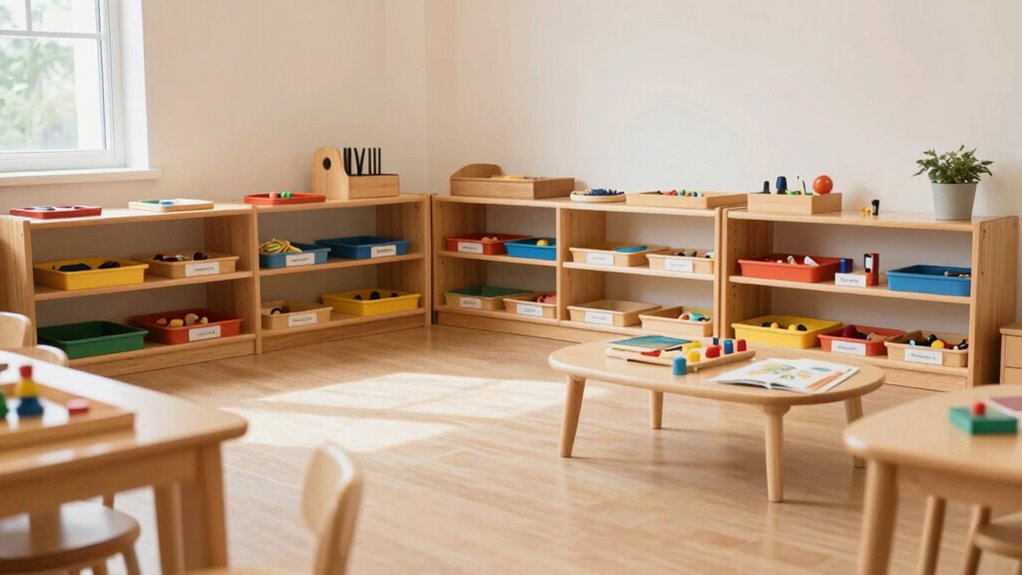
Keeping toys and materials organized is essential for maintaining a calm and tidy Montessori playroom. Implementing effective storage solutions helps children find and return items easily, fostering independence. To prevent overwhelm, practice toy rotation: display only a few toys at a time, storing the rest out of sight. Visual cues guide children in selecting toys and tidying up. Imagine this setup:
| Toy Type | Storage Solution | Accessibility |
|---|---|---|
| Art supplies | Clear bins on low shelves | Easy for children to reach |
| Puzzles | Labeled baskets | Promotes organization |
| Small toys | Stackable drawers | Encourages tidy play |
This system keeps chaos at bay and encourages responsibility, creating a calm environment for focused learning. Proper organization enhances the overall effectiveness of a Montessori space. Additionally, incorporating visual cues can significantly aid children in understanding where items belong and how to maintain order. Using child-friendly storage options tailored to their size and abilities further promotes independence and responsibility. Employing consistent routines for tidying up can help children develop good habits and maintain a peaceful play environment. Incorporating appropriate storage solutions backed by educational principles can further optimize organization and learning outcomes.
Layout Tips to Promote Calm and Focused Play?
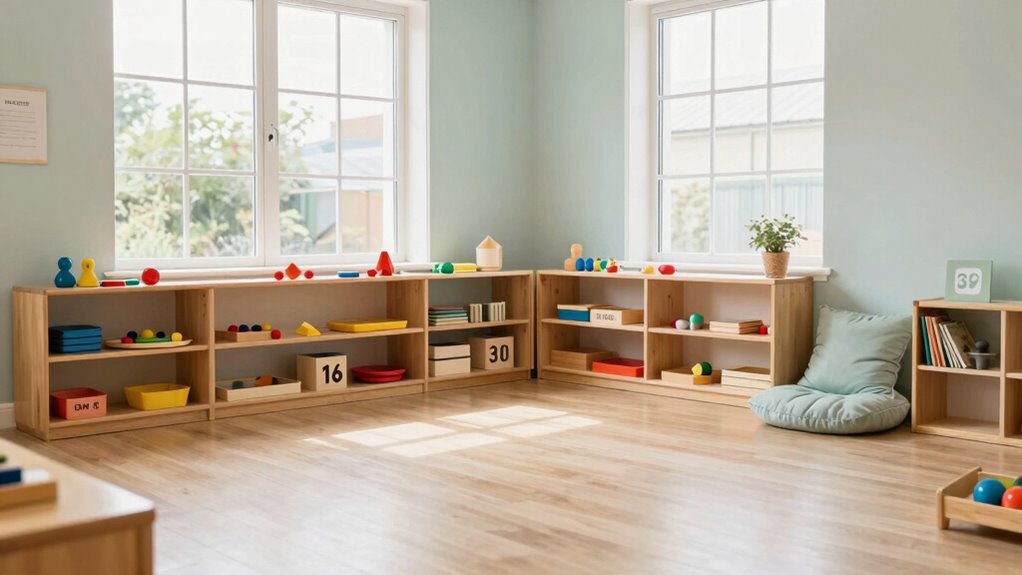
Creating clear zones in your playroom helps children understand where activities happen and stay focused. Keep shelves low and accessible so kids can choose and put away materials independently. Also, reducing visual clutter allows your child to concentrate better and feel more at ease during play. Incorporating visual clutter reduction into your space can encourage children to develop an understanding of value and financial literacy from an early age. Using ergonomic handles on storage units can further improve accessibility and comfort for children when organizing their toys. Implementing consistent design principles can further support a calming environment that promotes focus and wellbeing. Recognizing the importance of spatial organization can help in designing a play area that minimizes distractions and enhances focus.
Clear Zone Definitions
How can clear zone definitions in a Montessori playroom help children stay calm and focused? By establishing visual boundaries and designated areas, you create a predictable environment that reduces distractions and promotes independence. Clear zones help children understand where specific activities belong, minimizing chaos and encouraging organization. When each area is distinctly marked, children can easily shift between tasks without confusion. Visual boundaries guide children in developing spatial awareness and self-regulation. Properly defined zones foster a sense of order, making it easier for kids to concentrate on their work. This structure supports a calm atmosphere where children feel safe and in control. Using visual cues and designated areas, you set the foundation for focused, peaceful play and learning. Incorporating sensory-rich elements into zone design can further enhance children’s ability to self-regulate and remain engaged.
Low Shelving Accessibility
Placing shelves at low heights makes materials easily accessible, encouraging children to choose and return items independently. This child-centered design empowers kids to develop a sense of control over their environment, fostering independence and responsibility. Keep sensory-friendly elements in mind by selecting shelves made from natural, smooth materials that are gentle to touch. Use open shelving to display a variety of materials clearly, so children can quickly find what interests them. Guarantee items are organized in a way that invites exploration without overwhelming the senses. Consistent playroom organization helps maintain a calm atmosphere and supports ongoing routines. By maintaining low shelves, you create an inviting space that promotes calm, focused play while supporting your child’s natural curiosity and autonomy. This layout helps cultivate a sense of order and tranquility in the playroom. Child-centered design encourages active participation and helps children develop important life skills. Additionally, incorporating appropriate storage solutions can further reduce clutter and create a more serene environment conducive to focused play. Integrating organization principles can also enhance the overall calmness and functionality of the space. To further promote a peaceful environment, consider incorporating visual cues that reinforce routines and expectations, helping children navigate their play area with confidence.
Minimize Visual Clutter
By keeping shelves and surfaces tidy and free of excess items, you help your child focus better during play. Minimizing visual clutter reduces sensory overload, allowing your child to concentrate on their activities without distraction. Too many toys or decorative items can overwhelm their senses, making it hard to stay engaged. Regularly cleaning and drying your rug and flooring helps prevent water damage that can lead to mold growth and long-term deterioration. Proper vehicle protection can also maintain the integrity of playroom furniture and flooring, reducing the need for costly repairs. Additionally, selecting appropriate storage solutions ensures a more organized and calming environment. Incorporating inclusive design principles can make the space more welcoming and accessible for all children. These simple steps create a calm environment, encouraging focus and independence. Less visual clutter not only promotes a peaceful play space but also helps your child develop better concentration skills, making playtime more enjoyable and productive.
How Light and Colors Can Make Your Playroom More Tranquil?

Choosing soft color palettes and calming color combinations can create a peaceful atmosphere in your playroom. Natural lighting enhances this tranquility by making the space feel open and inviting. By carefully selecting light and colors, you can help your child feel more relaxed and focused during play.
Soft Color Palettes
A soft color palette can transform your Montessori playroom into a calming oasis. Gentle hues like pastels and neutrals create a soothing environment that encourages focus and relaxation. These colors support art therapy by reducing overstimulation and help with sensory integration, making it easier for children to process their feelings and sensations. When you choose calming shades, you foster a peaceful space where kids can explore and learn comfortably. To enhance tranquility, consider incorporating:
- Muted tones for walls and furniture
- Subtle accent colors for accessories
- Smooth, matte finishes to avoid glare
- Coordinated color schemes for visual harmony
Natural Lighting Choices
Natural light plays an essential role in creating a tranquil Montessori playroom, as it naturally enhances the soothing atmosphere you aim to build. Maximize natural light by choosing window treatments that let sunlight filter softly into the space, such as sheer curtains or light blinds. These options reduce glare and prevent overstimulation, helping children feel calm and focused. Avoid heavy drapes or dark curtains that block light and create a closed-off feeling. Instead, opt for simple, unobtrusive window coverings that allow daylight to flow freely. Proper natural lighting not only brightens the room but also supports your goal of a peaceful environment where children can explore and learn comfortably. Remember, the right window treatments are key to balancing light and tranquility.
Calm Color Combinations
Have you ever noticed how certain colors and lighting can instantly create a sense of calm? Choosing the right soothing paint schemes and pastel color schemes can transform your Montessori playroom into a tranquil space. Soft hues help children feel relaxed and focused, reducing overstimulation. To achieve this, consider using gentle shades like mint green, blush pink, or light blue. Incorporate natural light with sheer curtains to enhance the calming effect. Carefully selected colors foster a peaceful environment where kids can explore and learn comfortably.
- Use muted, earthy tones for walls and furniture
- Incorporate pastel accents for visual interest
- Avoid bright, jarring colors that can cause overstimulation
- Balance color schemes with plenty of natural light
Keeping Your Montessori Playroom Flexible and Simple Over Time?
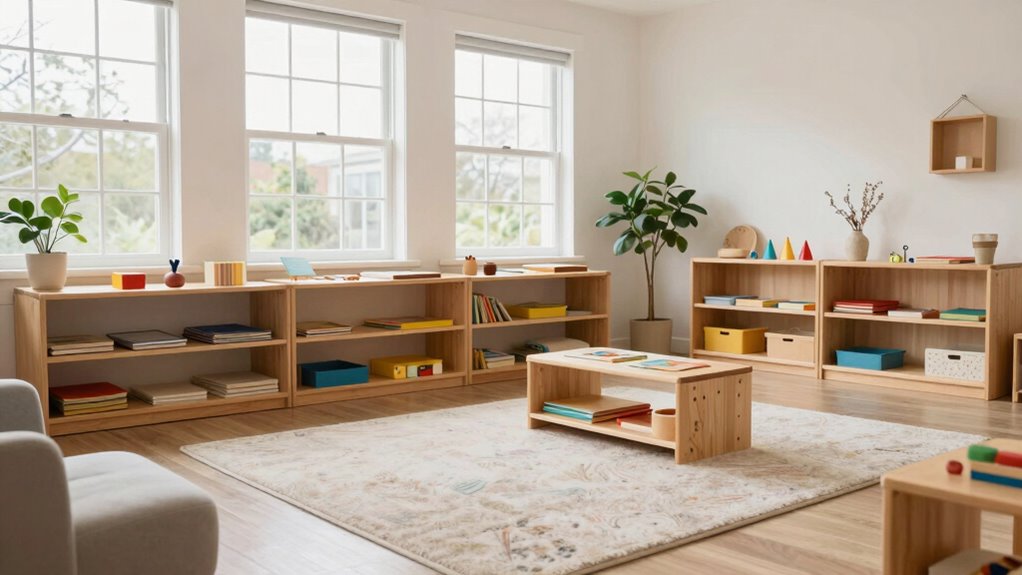
To keep your Montessori playroom flexible and simple over time, focus on maintaining a clutter-free environment that adapts to your child’s changing needs. Invest in multifunctional furniture that serves multiple purposes, reducing the need for excess items and making the space more versatile. Incorporate adjustable storage solutions, like modular shelves or containers, so you can easily reorganize as your child’s interests evolve. Regularly evaluate what’s in the room and remove items that no longer serve a purpose, keeping the space open and inviting. This approach allows your playroom to grow with your child, supporting independence and exploration without becoming overwhelming. Staying intentional with furniture and storage choices ensures your Montessori environment remains calm, functional, and adaptable over time.
Frequently Asked Questions
How Can I Personalize the Playroom to Suit My Child’s Interests?
You can personalize your child’s playroom by incorporating personalized decor that reflects their interests, like favorite colors, themes, or artwork. Use customized learning materials tailored to their current passions and developmental stage, making activities more engaging. Arrange the space to highlight these elements, creating a cozy, inviting environment where your child feels connected. This approach encourages exploration, fosters independence, and makes the playroom uniquely theirs.
What Safety Features Are Essential in a Montessori Playroom?
Think of your playroom as a fortress for your child’s adventures. You need essential safety features like child-proofing outlets and cabinets, ensuring curious hands stay safe. Prioritize furniture stability; secure shelves and tables to prevent tipping. Remove sharp objects and small parts that pose choking hazards. By creating a secure environment, you let your child’s exploration flourish, knowing they’re protected while learning and playing freely.
How Often Should I Update or Rotate Toys and Materials?
You should update or rotate toys and materials every 2 to 4 weeks to keep your playroom engaging and revitalizing. Regular toy rotation helps prevent boredom and encourages new learning opportunities. Keep an eye on the condition of materials and replace worn or broken items promptly. By consistently refreshing your toy selection, you create an inviting environment that promotes independence, curiosity, and focused play for your child.
What Are Cost-Effective Ways to Create a Montessori-Inspired Play Environment?
To create a cost-effective Montessori-inspired play environment, you can try DIY projects and upcycling ideas. Repurpose household items into educational tools, like turning old jars into sorting containers or wooden crates into low shelves. These methods save money and add unique charm. Plus, involving children in upcycling fosters their creativity and responsibility, making the space both affordable and enriching. Focus on simplicity, natural materials, and hands-on activities to keep it calming and educational.
How Do I Involve Children in Maintaining the Playroom’s Organization?
You can turn organization into a game by involving children in child-led organization and responsibility-building activities. Give them specific tasks, like tidying up their space or choosing where items go, making them feel like guardians of their environment. Encourage independence with simple routines, and celebrate their efforts. When kids actively participate, they develop pride and a natural desire to keep the playroom orderly, fostering a harmonious space for everyone.
Conclusion
Think of your Montessori playroom as a gentle stream—calm, clear, and flowing naturally. By applying these principles, you create a space where chaos melts into serenity, allowing your child’s curiosity to blossom freely. When your playroom is thoughtfully designed, it becomes a sanctuary of focus and independence. Embrace simplicity and flexibility, and watch your child’s confidence grow like a steady current—calm, strong, and beautifully unstoppable.
Fall Picks
fall essentials
As an affiliate, we earn on qualifying purchases.