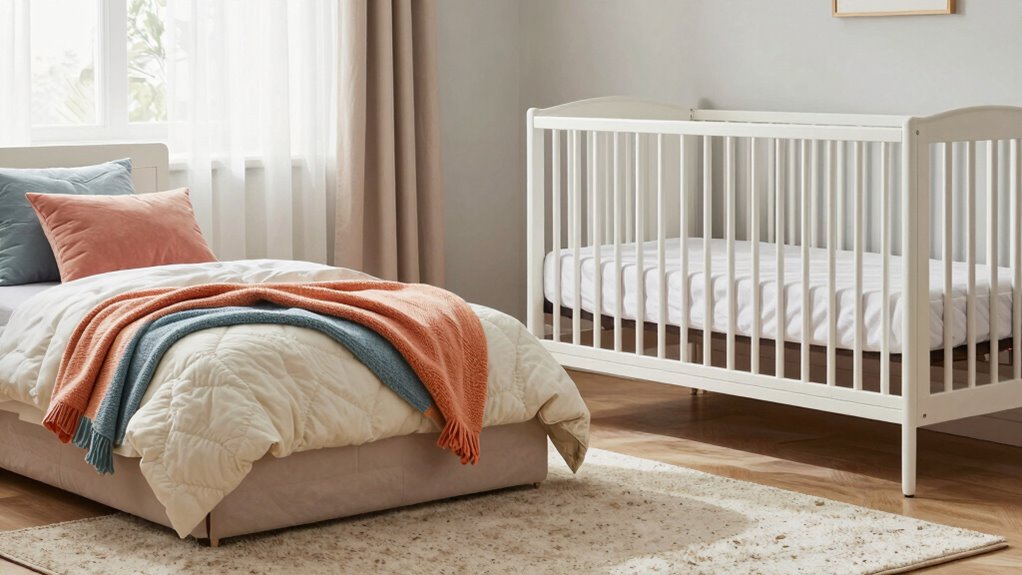

Choosing between floor beds and cribs depends on your child’s needs and your family’s lifestyle. Cribs provide a secure, enclosed space that helps with sleep safety and training, while floor beds encourage independence and easy access. Both can promote good sleep when designed thoughtfully, but each has pros and cons regarding safety, comfort, and convenience. To find out which setup suits your family best and how to make it safe and cozy, keep exploring more insights.

Get baby and family essentials delivered free — and shop member deals
- Fast, free delivery on millions of items
- Access to Prime Big Deal Days deals on October 6–7
- Prime Video, Amazon Music and more included
Key Takeaways
- Both cribs and floor beds can promote restful sleep when designed with calming colors, lighting, and routines.
- Floor beds encourage independence, which may lead to easier self-soothing and longer sleep durations.
- Cribs provide a secure, enclosed environment that can reduce sleep disruptions and improve sleep consistency.
- Transitioning from crib to floor bed depends on child development; readiness affects sleep quality.
- Proper safety measures and supervision are essential for both options to ensure children sleep safely.
As an affiliate, we earn on qualifying purchases.
What Are Floor Beds and Cribs : and How Do They Differ?

Floor beds and cribs serve the same purpose: providing a safe place for your child to sleep. A crib is a traditional, enclosed structure with slats, offering a clear boundary and often fitting into specific decor styles. In contrast, a floor bed is simply a mattress placed directly on the floor, encouraging independence and easier access. When choosing between them, consider decorative themes—floor beds can be customized with fun bedding and decor to match your room’s style, while cribs often have a more classic look. Both options influence sleep training; cribs can feel more secure, while floor beds promote self-soothing and exploration. Understanding these differences helps you decide which best supports your child’s sleep habits and room aesthetic.
Is a Floor Bed Safer Than a Crib? Safety Tips and Considerations

While both floor beds and cribs are designed to keep your child safe during sleep, it’s vital to evaluate which option offers better safety for your child’s age and development stage. Sleep safety involves considering risks like falls, suffocation, and entrapment. Floor beds can reduce the risk of suffocation since there’s no high sides, but they also increase the chance of falls if your child moves around freely. Cribs, with proper slat spacing and secure hardware, provide a safe, enclosed environment for younger babies. Child comfort is essential; ensure the sleeping surface is firm, free of loose bedding, and appropriate for your child’s size. Regularly inspect and maintain your sleep setup to promote safety and comfort as your child grows. Additionally, understanding safe sleep guidelines can help you make informed decisions about your child’s sleep environment. For optimal safety, it’s also important to consider age-appropriate sleep setups that align with your child’s developmental needs. Safety features like slat spacing are critical in preventing entrapment and ensuring a secure sleep space. Remember that sleep environment safety is a critical factor in reducing sleep-related risks, and staying informed about current safety recommendations can further enhance your child’s sleep safety.
Which Sleep Setup Promotes Better Sleep Quality for Your Child?

Choosing the right sleep setup can profoundly impact your child’s ability to rest peacefully and wake refreshed. A well-designed nursery can enhance sleep quality by creating a calming environment that promotes relaxation. When considering sleep training, a setup that minimizes disruptions is key. Incorporating thoughtful architecture details such as door swings and stair proportions can also improve the overall nursery comfort and safety. Think about: – The overall nursery design for comfort and tranquility – The ease of shifting between sleep environments – How your child responds to different setups – Your ability to maintain consistent sleep routines. Additionally, considering safe sleep practices can further support healthier sleep habits and reduce risks. Floor beds can encourage independence and ease sleep training, while cribs offer a secure, familiar space. Both options influence sleep quality, but a setup that aligns with your child’s needs and your nursery design can lead to more restful nights for everyone. Proper nursery layout can also facilitate easier nighttime care and reduce sleep disturbances, especially when planned with ergonomic principles in mind.
Are Floor Beds Right for Your Child? Pros and Cons Explained

You need to consider safety when deciding if a floor bed is suitable for your child, as it can reduce the risk of falls but may pose other hazards. On the plus side, floor beds encourage independence, helping your child feel more in control of their sleep environment. Weighing these safety aspects and independence benefits will help you determine if a floor bed is the right choice. Additionally, understanding investment options in an IRA can help parents make informed financial decisions to support their child’s future education and expenses. For example, selecting the right toxin-free sleep environment can significantly contribute to your baby’s health and safety during sleep. Incorporating childproofing measures can further enhance safety, ensuring a secure sleep area. Being aware of safe sleep practices can also reduce sleep-related risks and promote a healthier sleep routine. Considering sleep safety guidelines can give you peace of mind and better prepare you to create a safe sleeping space.
Safety Considerations
Safety is a primary concern when considering whether a floor bed is suitable for your child. You need to evaluate potential risks, especially related to nighttime hazards and bedding safety. To keep your child safe, consider these points:
- Ensure the area around the bed is clear of sharp objects or heavy items.
- Use a breathable, fitted mattress and avoid loose bedding that could cause suffocation.
- Regularly check for hazards like gaps or spaces where your child could become trapped.
- Supervise your child until you’re confident they can navigate the space safely.
- Sleep safety should be a top priority when choosing between a floor bed and a crib, as it directly impacts your child’s well-being.
- Additionally, understanding childproofing techniques can help you create a safer sleeping environment for your little one.
- Creating a childproofed space involves securing furniture and removing choking hazards to reduce potential accidents.
- Proper bedroom safety measures are essential to prevent falls and injuries during sleep.
While floor beds can promote independence, they also require vigilance to prevent injuries. Staying aware of bedding safety and nighttime hazards helps you make an informed decision about whether a floor bed is right for your little one.
Independence Benefits
Ever wondered if a floor bed can help your child develop independence? With a floor bed, your child gains more control over their environment, promoting child independence. They learn to get in and out of bed on their own, fostering a sense of autonomy. This setup encourages them to make choices about when to sleep, get up, or play, which can boost confidence and decision-making skills. Sleep autonomy increases as children feel less confined and more in charge of their bedtime routine. Additionally, child safety** should be carefully monitored to ensure the space remains secure. Creating a safe sleep environment is essential to support their autonomy while minimizing risks. Proper piercing care and hygiene practices can also serve as an example of maintaining cleanliness and responsibility. Understanding child development stages can help you tailor the sleep setup to best support your child’s growth and independence. Furthermore, incorporating age-appropriate safety measures** can ensure that your child’s independence is nurtured safely. Overall, a floor bed can support your child’s independence by giving them ownership over their sleep environment, helping them become more confident and self-reliant.
What Are the Advantages and Disadvantages of Traditional Cribs?

Traditional cribs offer a secure and familiar sleeping environment that many parents trust. They create a safe space for your baby to rest and help establish routine. One advantage is the variety of nursery decor options, allowing you to match the crib with your overall theme. Bedding options are also plentiful, making it easy to find comfortable and safe sheets. However, there are some disadvantages. Cribs can be bulky and take up space in your nursery. They may also limit your child’s movement, potentially affecting sleep quality. Additionally, safety concerns like slats or mattress height can require close monitoring. Ultimately, traditional cribs often come with higher costs and require ongoing maintenance, such as cleaning and replacing bedding for hygiene. Incorporating floating on water concepts into nursery decor can create a calming atmosphere that promotes better sleep.
How Do Flexibility and Movement Influence Your Child’s Sleep Patterns?

Flexibility and movement play essential roles in shaping your child’s sleep patterns. A flexible sleep environment allows your child to move naturally, which can help them feel more secure and reduce bedtime resistance. When children have the freedom to shift positions, their bodies can regulate temperature and comfort better, promoting deeper sleep. Parental flexibility is also key—you might need to adapt bedtime routines or sleep setups as your child’s needs change. For example, a floor bed offers more freedom of movement, encouraging self-soothing and independence. Conversely, a crib’s limited movement can sometimes lead to restlessness if your child feels confined. Understanding how movement influences sleep helps you create an environment that supports your child’s natural sleep rhythms, leading to more restful nights for everyone. Incorporating creative storytelling into bedtime routines can also make the experience more engaging and calming for your child. Recognizing the importance of child safety ensures that flexibility does not compromise your child’s well-being as they explore different sleep positions. Additionally, ensuring that the sleep environment is free of hazards can help your child feel secure while moving freely. Being aware of child development stages can guide you in choosing the most appropriate sleep setup for your child’s age and abilities. Moreover, understanding the impact of multi-unit setups can help you tailor the sleep environment as your child grows and their needs evolve.
How Do You Prepare a Safe and Comfortable Sleep Environment?
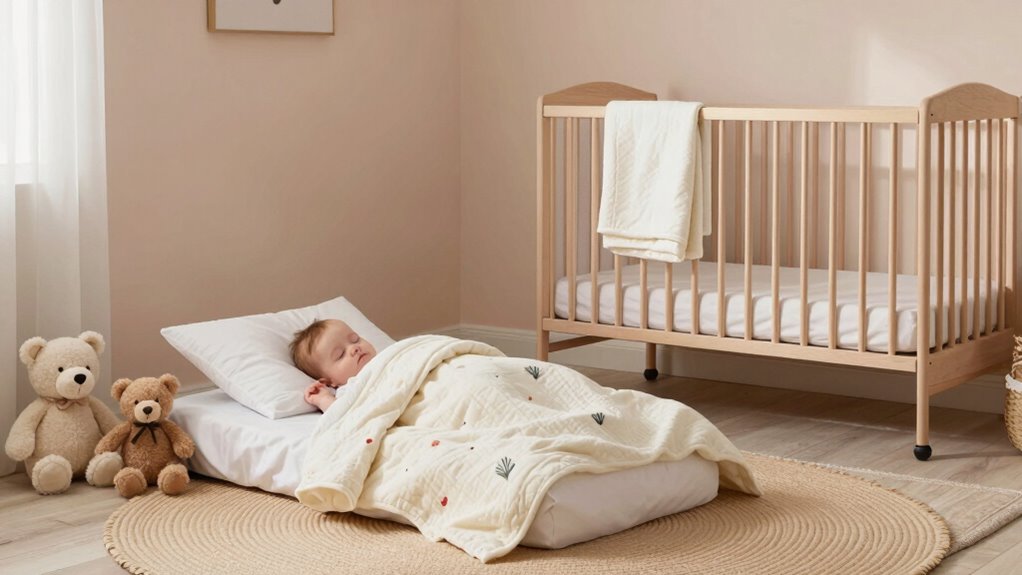
Creating a safe and comfortable sleep environment is key to helping your child settle peacefully and develop healthy sleep habits. Start with nursery decor that’s soothing—soft colors, gentle lighting, and minimal clutter promote relaxation. Keep the sleep area free of pillows, blankets, and stuffed animals to reduce suffocation risk. Use a firm, snug mattress for safety and comfort. Incorporate calming elements like blackout curtains to block out light and white noise machines to drown out disruptions. Consistent sleep training routines paired with a cozy space help your child associate the environment with rest. Remember, a well-prepared nursery fosters security and ease, making it simpler for your child to drift off and stay asleep through the night. Additionally, free floating design principles can help create a more open and calming atmosphere in your child’s sleeping area.
When Should You Transition From a Crib to a Floor Bed?
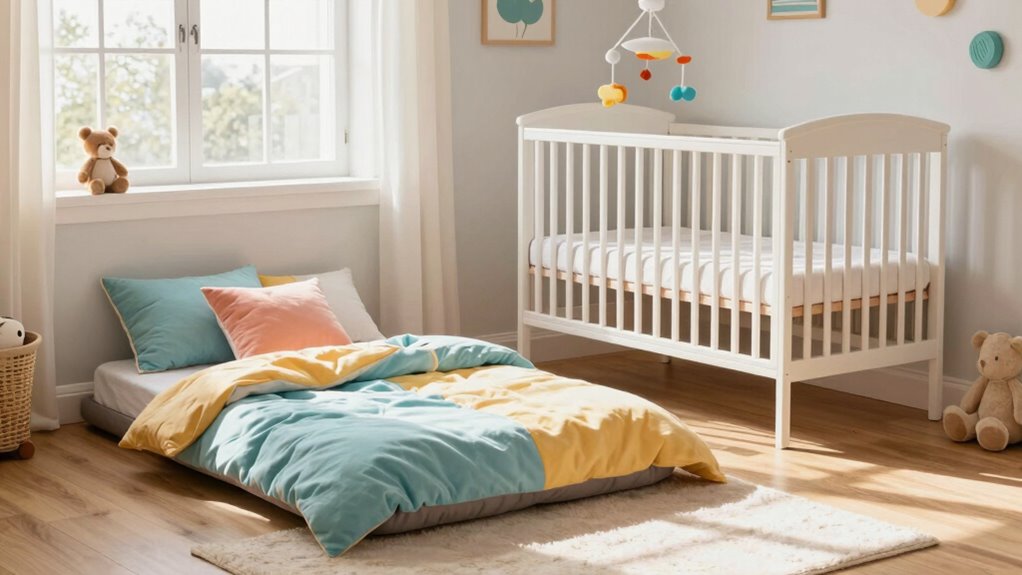
Knowing when to shift your child from a crib to a floor bed depends on their developmental stage and readiness for increased independence. Look for signs like climbing out or showing curiosity about their surroundings. This changeover can also be a great opportunity to update nursery decor, making the space feel inviting and safe. Keep in mind, moving to a floor bed may impact sleep training; your child might take longer to settle or explore their new environment. It’s best to wait until they’re physically and emotionally prepared for the change. A smooth transition involves setting clear boundaries and ensuring the room remains a secure, comforting space. When your child is ready, a floor bed can promote independence while still supporting restful sleep.
What Are the Cost and Maintenance Differences Between Cribs and Floor Beds?
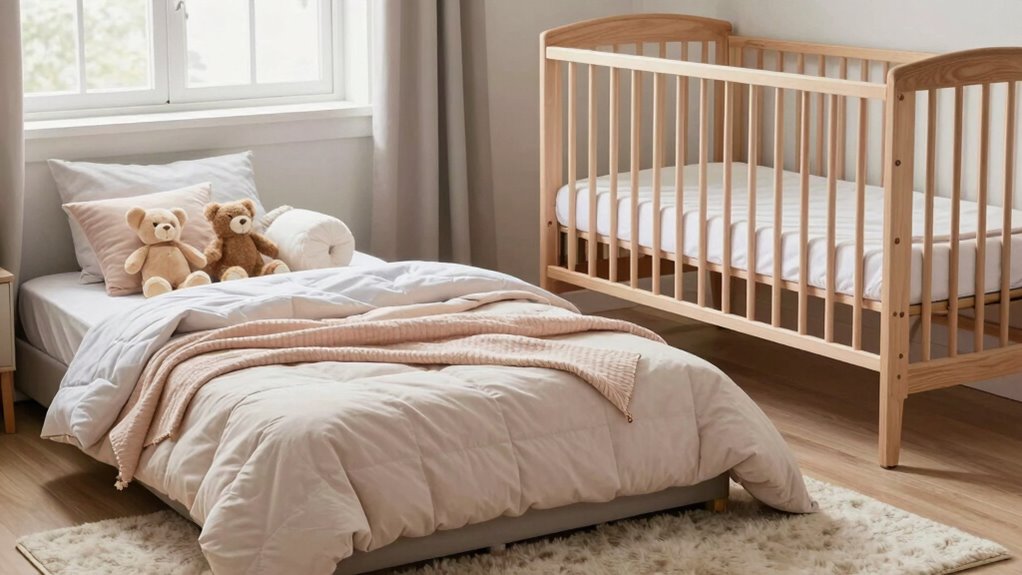
You’ll notice that cribs typically cost more upfront than floor beds, but maintenance costs can vary over time. Floor beds often need fewer safety accessories and less ongoing upkeep, saving you money in the long run. However, safety equipment like bed rails or mats may add to expenses with either option.
Purchase Cost Differences
Are cribs or floor beds more budget-friendly upfront and over time? When considering cost comparison, floor beds often have a lower initial price. They eliminate the need for a crib, which can be expensive. Additionally, they typically require fewer accessories and less ongoing maintenance. Here’s what to keep in mind:
- Cribs usually cost more upfront but are more durable.
- Floor beds are cheaper to purchase initially.
- You might spend less on bedding and safety gear with a floor bed.
- Long-term, cribs may require repairs or replacements, affecting budget considerations.
Long-Term Maintenance Needs
While floor beds often save you money upfront, understanding how they compare to cribs regarding long-term maintenance is important. Floor beds typically require less ongoing upkeep because they lack hardware like drop rails or adjustable parts. However, you’ll need to regularly check and clean the bedding materials to ensure safety and hygiene, especially since they’re more exposed. In contrast, cribs may involve occasional hardware inspections and replacing worn-out bedding or mattress covers. When it comes to nursery decor, floor beds offer flexibility, but you might need to invest in different bedding materials as your child grows. Overall, floor beds tend to be lower maintenance over time, but you’ll want to stay vigilant about cleaning and updating bedding to keep the space safe and comfortable.
Safety Equipment Expenses
When comparing safety equipment expenses, it’s clear that cribs generally require a higher initial investment and ongoing maintenance costs than floor beds. Cribs often involve childproofing expenses like securing hardware, replacing worn slats, and ensuring the mattress fits properly. You’ll also spend more on bedding accessories such as fitted sheets and waterproof covers. Floor beds, on the other hand, tend to have lower costs because they don’t need hardware or complex safety features. They also reduce the need for extensive childproofing measures around rails or barriers. Basic safety checks, like ensuring the area is free of hazards, are simple and inexpensive. Overall, floor beds can save you money on both the upfront safety equipment and ongoing childproofing expenses.
Which Sleep Solution Fits Your Family’s Lifestyle and Needs?
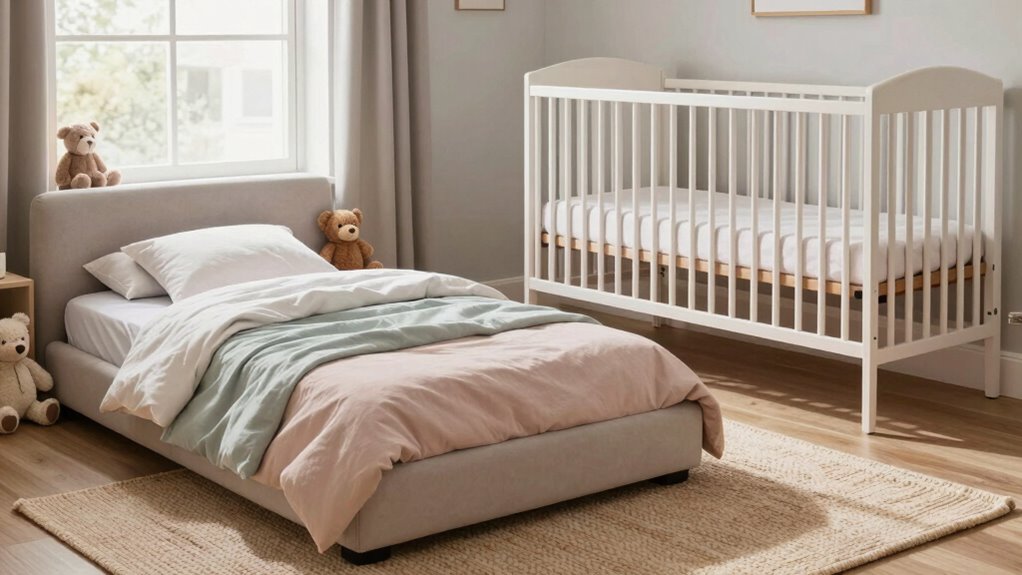
Choosing the right sleep solution depends on your family’s unique lifestyle and daily routines. If you prioritize baby sleep and sleep safety, consider how each option fits into your home environment. Floor beds promote independence and easy access, making them ideal if your child needs frequent comfort or prefers a more flexible setup. Cribs, on the other hand, offer a secure, designated space that helps maintain sleep safety standards and minimizes risks like falls. Think about your daily schedule, your home layout, and your comfort level with supervision. If you value closeness and adaptable sleep routines, a floor bed might suit your family. For those seeking a traditional, safer sleep environment, a crib could be the better choice. Ultimately, choose what aligns best with your values and your child’s well-being.
Frequently Asked Questions
How Do Floor Beds Impact a Child’s Independence and Exploration?
You’ll notice that floor beds boost your child’s independence and encourage exploration. They can get in and out easily, fostering confidence and decision-making skills. With a floor bed, your kid feels more in control of their space, which promotes curiosity and independence. This setup encourages safe exploration, helping your child develop self-reliance while allowing you to observe and support their growth naturally.
Are There Specific Age Recommendations for Switching From Crib to Floor Bed?
You should consider shifting from a crib to a floor bed around age 2 to 3, following general age guidelines. Watch for signs your child is ready, like climbing out or showing interest in independent sleep. The transition timing varies based on your child’s development and safety needs. It’s best to make the switch when they’re physically and emotionally prepared, ensuring a smooth and secure transition.
What Are the Most Common Safety Hazards Associated With Floor Beds?
Think of the floor bed as a tempting open sea, where hazards lurk beneath the waves. Common safety risks include falls, suffocation, or bumps from nearby furniture. To prevent these hazards, you should implement safety precautions like securing furniture, using guardrails, and keeping the area clutter-free. Regular hazard prevention checks help create a safe environment where your child can explore freely without risking injury.
How Do Cleaning and Maintenance Differ Between Cribs and Floor Beds?
Cleaning and maintaining floor beds differs from cribs mainly in bedding material and cleaning frequency. You should regularly vacuum or wipe down the floor bed to remove dust and dirt, especially since bedding is often softer and closer to the floor. Unlike cribs, which require periodic sheet changes, floor beds may need more frequent cleaning of the bedding material to keep it hygienic and safe for your child.
Can Floor Beds Be Used for Co-Sleeping Arrangements?
Yes, you can use floor beds for co-sleeping arrangements. They create a safe and accessible sleep environment, encouraging toddler independence while allowing easy supervision. With a floor bed, your child can comfortably get in and out, promoting autonomy. Just make certain the space is safe, clear of hazards, and set up to support a secure sleep environment for both you and your child.
Conclusion
So, whether you choose a cozy crib or a free-range floor bed, remember—your child’s sleep might just depend on how much chaos you’re willing to accept. Ironically, the bed that promises independence could turn your peaceful nights into a wild adventure. In the end, it’s all about finding what works best for your family’s lifestyle—because nothing’s more comforting than knowing your little one is sleeping soundly, even if it’s amidst a sea of toys and scattered blankets.
Fall Picks
fall essentials
As an affiliate, we earn on qualifying purchases.