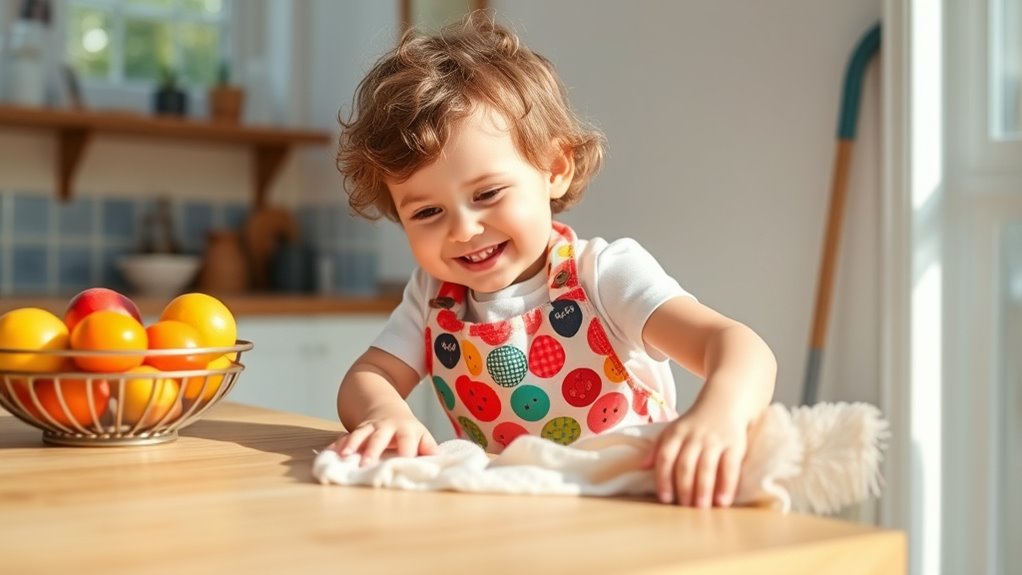

Start by involving your toddler in simple chores like putting away toys, wiping tables, or helping set the table with plastic dishes. Use clear instructions, praise their efforts, and make tasks fun with stickers or charts. These small responsibilities build independence, confidence, and routine. As your child grows more comfortable, you can introduce slightly more complex tasks. Keep helpful routines light and enjoyable to foster a positive attitude—if you keep going, you’ll discover even more effective ways to teach practical skills.
Key Takeaways
- Start with simple tasks like putting toys away to build responsibility.
- Use visual aids and stickers to make chores engaging and motivate toddlers.
- Keep chores age-appropriate, such as wiping tables or helping set the table.
- Provide immediate praise and small rewards to reinforce positive effort.
- Incorporate chores into a fun routine to develop skills and foster independence early.
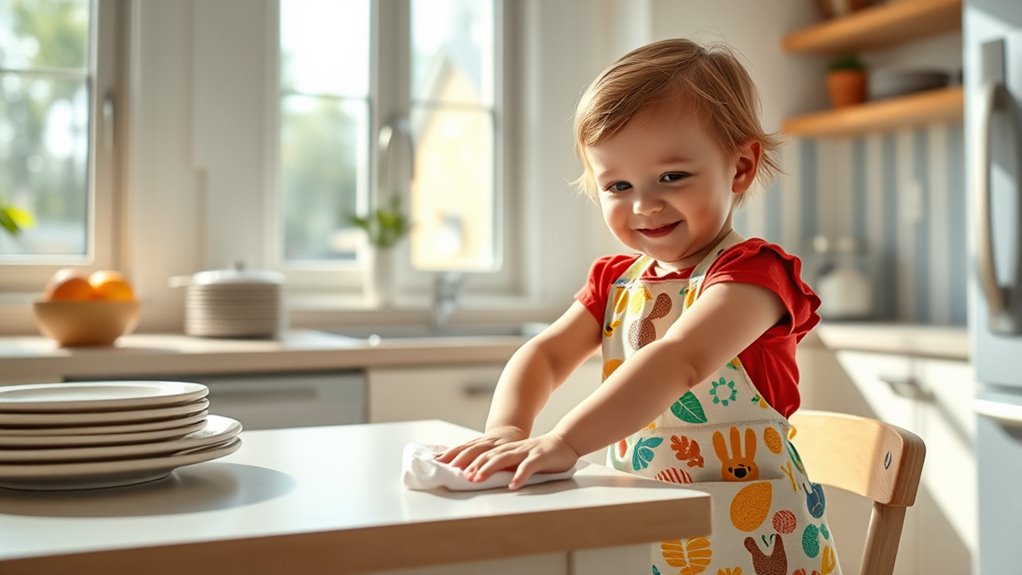
Getting your toddler involved in chores might seem early, but it’s a great way to teach responsibility and build independence. Introducing simple tasks helps your child feel capable and valued while establishing routines that will serve them well in the future. To make chores more engaging, many parents find reward systems effective. These can be as simple as praise, stickers, or small treats that motivate your toddler to participate willingly. Consistency is key, so using a chore chart can help track their progress and give them a visual reminder of their responsibilities. Chore charts with colorful pictures or stickers make the process fun and age-appropriate, reinforcing a sense of achievement as your child completes each task.
Involving toddlers in chores fosters responsibility, independence, and a sense of achievement through simple tasks and visual reward systems.
Start with easy chores that match your toddler’s developmental level. For example, you might ask them to put their toys away, wipe down a table with a damp cloth, or help set the table with plastic dishes. Keep instructions simple and clear, demonstrating each step if needed. When they successfully complete a chore, immediately acknowledge their effort with positive reinforcement, whether through verbal praise or a sticker on the chore chart. Over time, these small wins build their confidence and understanding of responsibility.
Incorporating reward systems into chores encourages consistency and enthusiasm. Use a chart to visually show your child’s progress, which helps them see their achievements and motivates them to keep going. For instance, each completed chore can earn a sticker or a star, and accumulating a certain number might lead to a special reward, like extra playtime or a small treat. This teaches your child that effort leads to positive outcomes and helps develop their sense of accountability. Additionally, understanding the importance of appropriate tire pressure on bikes can lead to better safety and performance during outdoor activities, including family bike rides. Remember, the goal isn’t just to get chores done but to foster a positive attitude towards helping out around the house.
As your toddler gets used to these routines, gradually introduce new chores or increase complexity. Keep the experience light and fun, and always celebrate their efforts. By pairing chores with reward systems and chore charts, you make the process enjoyable and rewarding, rather than a source of frustration. This approach helps your child develop essential life skills early on while strengthening your bond through shared activities. In the end, these simple chores and positive reinforcement lay the foundation for a responsible, independent individual who understands the value of contributing to the household.

Reward Chart for Kids – Unicorn Magnetic Kids Behavior Chart, Pad with 26 Chore Charts, 1920 Star Stickers, 49 Incentive Stickers, Responsibility Chart for Kids Girls Toddlers – Kids Chore Chart
Motivate and Reward: Yasest reward chart for kids is designed to keep kids motivated and rewarded for their…
As an affiliate, we earn on qualifying purchases.
As an affiliate, we earn on qualifying purchases.
Frequently Asked Questions
When Is the Best Age to Start Toddler Chores?
You can start toddler chores around age 2 or 3, considering their age considerations and ability to focus. At this stage, chores should be simple and safe, like picking up toys or putting clothes in the hamper. Keep chore consistency, so your child understands routines and feels accomplished. Early chores build independence and responsibility, making it easier to introduce more complex tasks as they grow.
How Do I Make Chores Fun for My Toddler?
To make chores fun for your toddler, turn them into a game with reward systems like stickers or small treats. Use colorful chore charts to track their progress, giving them a sense of achievement. Celebrate their efforts with praise and encouragement, making chores feel like a rewarding adventure rather than a task. Keeping it playful and positive helps your toddler enjoy helping out and builds good habits early on.
What Safety Precautions Should I Take?
You should childproof hazards like sharp objects, choking hazards, and slippery surfaces before giving chores. Always supervise your toddler closely, especially during activities involving water, small items, or heights. Use safety gates and outlet covers, and keep cleaning supplies out of reach. Regularly check the environment for new hazards, and stay engaged to guide them safely through tasks, ensuring a fun and secure chore experience.
How Do I Handle Resistance or Refusal?
Like a captain steering through turbulent waters, you handle resistance by staying patient and firm. Use positive reinforcement to encourage your toddler, praising their efforts rather than just outcomes. Establish routines so chores become familiar and predictable, reducing refusal. When they resist, gently remind them of the routine and celebrate small successes. With consistency and encouragement, your toddler will gradually embrace chores as part of their daily adventure.
Can Chores Help With Toddler Development Milestones?
Chores can definitely support your toddler’s development milestones by offering developmental benefits like coordination, responsibility, and independence building. When you involve your toddler in simple tasks, you help them develop essential skills and boost confidence. This early participation encourages curiosity and autonomy, setting a strong foundation for future learning. Plus, it makes chores feel like fun, shared experiences that foster a positive attitude toward responsibility and growth.

Plaskidy Kids Dinnerware Set for 4-24 Piece Plastic Childrens Dishes Dinnerware Sets Microwave/Dishwasher Safe BPA Free – Toddler Dinner Set Includes Kids Plates and Bowls Kids Cups Flatware Set
★ PREMIUM QUALITY FOR YOUR CHILD:; Plastic dinner set by PLASKIDY™ is Perfectly designed for toddlers & kids,…
As an affiliate, we earn on qualifying purchases.
As an affiliate, we earn on qualifying purchases.
Conclusion
Starting chores early helps your toddler develop essential life skills and independence. Did you know that children who learn household tasks by age three are 30% more likely to develop strong problem-solving abilities later? By introducing simple chores, you’re setting a foundation for responsibility and confidence. Keep it fun and encouraging—your little one is capable of more than you think! These small steps now will lead to big growth tomorrow.
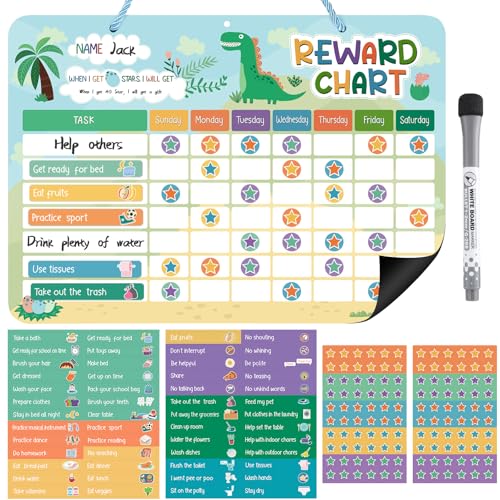
Reward Chart for Kids, Dinosaur Magnetic Behavior Chart for Kids at Home with 26 Chore Charts, 120 Magnetic Star Stickers Dry Erase Responsibility Chart for Toddlers Potty Training
【Encourage Good Behavior】Use this chores chart for kids to arrange things for your child to complete every day,…
As an affiliate, we earn on qualifying purchases.
As an affiliate, we earn on qualifying purchases.

Reward Chart for Kids – Dinosaur Magnetic Kids Behavior Chart, Pad with 26 Chore Charts, 1920 Star Stickers, 49 Incentive Stickers, Responsibility Chart for Kids Boys Toddlers – Kids Chore Chart
Motivate and Reward: Yasest reward chart for kids is designed to keep kids motivated and rewarded for their…
As an affiliate, we earn on qualifying purchases.
As an affiliate, we earn on qualifying purchases.