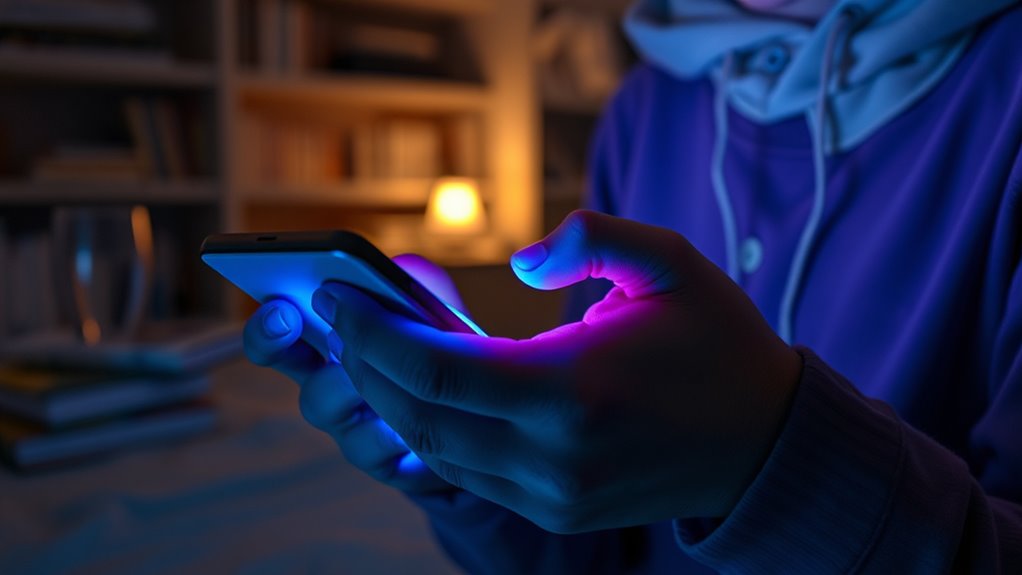

Understanding the difference between habits and addiction helps you manage screen time more effectively. Habits are routine actions you do automatically, like checking your phone out of boredom, and are usually harmless. Addiction, however, involves a compulsive need that’s hard to control, even when it disrupts your life. Recognizing whether your screen use is a habit or a dependency can guide better choices and solutions—if you stay curious, you’ll discover more about this important distinction.
Key Takeaways
- Habits are automatic routines, while addiction involves compulsive engagement driven by psychological dependence and cravings.
- Excessive screen time may start as a habit but can develop into addiction if it disrupts daily life.
- Recognizing the difference helps determine whether to modify habits or seek support for addiction.
- Strategies like setting limits and replacing screen time with other activities are effective for managing habits.
- Self-awareness and honest assessment are key to distinguishing between harmless habits and problematic addiction.

Many people confuse habits with addiction, but understanding the difference is essential for managing your behavior and well-being. Habits are routine actions you perform almost automatically, often without much thought, like brushing your teeth or checking your phone first thing in the morning. They develop through repeated behavior patterns, becoming ingrained over time. Addiction, on the other hand, involves psychological dependence that goes beyond routine. It’s characterized by compulsive engagement in certain activities or substance use despite negative consequences. When you’re addicted, your brain’s reward system is hijacked, creating a powerful craving that’s tough to resist.
Habits are automatic routines; addiction involves compulsive, uncontrollable dependence despite negative consequences.
In the context of screen time, recognizing this distinction helps you see whether your habits are harmless or if they’ve crossed into problematic territory. For example, scrolling through social media for a few minutes daily can be a simple habit—something you do out of boredom or habit. But if you find yourself unable to stop, even when it interferes with work, sleep, or relationships, you might be experiencing a form of psychological dependence. This dependence fuels the urge to keep engaging with screens, making it difficult to break free from the cycle. Your behavior patterns may have shifted from conscious choice to compulsive need, driven by the brain’s craving for dopamine hits generated by screen engagement.
Understanding this difference is vital because habits can be modified or replaced, while addiction often requires more deliberate intervention. If your screen use is merely a habit, you can work on strategies like setting time limits, creating tech-free zones, or replacing screen time with other activities. However, if you’re dealing with psychological dependence, you may need to seek additional support, such as counseling or support groups, to address underlying issues. Recognizing when your behavior has moved from a simple habit to an addiction helps you prioritize your mental health and develop healthier routines.
Ultimately, the key lies in self-awareness. Pay attention to your behavior patterns and be honest with yourself about whether your screen use is a manageable habit or an uncontrollable craving. Differentiating between the two empowers you to take appropriate action—whether it’s establishing boundaries or seeking help—so you can regain control over your screen time and protect your overall well-being.

Screen Time For Kids: Reward Tickets – Time Tokens for Kids and Teenagers
As an affiliate, we earn on qualifying purchases.
As an affiliate, we earn on qualifying purchases.
Frequently Asked Questions
How Can I Tell if My Screen Time Is a Habit or an Addiction?
You can tell if your screen time is a habit or addiction by noticing behavioral cues and dependency signs. If you find yourself unable to resist checking your devices despite wanting to stop, or if your screen use interferes with daily responsibilities, it might be an addiction. A habit is more controlled, while dependency signs show a compulsive need, making it harder to disconnect without discomfort.
What Are the Long-Term Health Effects of Excessive Screen Use?
Excessive screen time can lead to long-term health issues like eye strain, disrupted sleep, and decreased physical activity. It’s like a slow drain on your well-being, but a digital detox helps reverse these effects. Regular breaks, especially from screens, allow your eyes to rest and improve sleep quality. If you ignore these signs, you might face chronic problems, so prioritize balance to protect your health long-term.
Can Screen Habits Influence Mental Health Negatively?
Yes, your screen habits can negatively influence mental health, especially if you don’t practice mindful consumption. Constant exposure to social media or notifications may increase anxiety or feelings of inadequacy. To counter this, consider a digital detox, setting boundaries for screen time, and being intentional about your online activities. These steps help protect your mental well-being and promote healthier habits, ultimately reducing stress and improving your mood.
Are There Effective Strategies to Break Compulsive Screen Use?
Think of breaking compulsive screen use like pruning a tree—you cut back what’s unnecessary to promote healthier growth. To do this, try a digital detox and set specific boundaries, like no screens during meals. Practicing mindful usage helps you recognize when you’re mindlessly scrolling and redirect your focus. These strategies empower you to regain control, reduce stress, and foster a healthier relationship with technology.
How Does Screen Time Impact Sleep Quality and Patterns?
Your screen time, especially before bed, can negatively impact sleep quality by exposing you to blue light, which hampers melatonin production. This disrupts your circadian rhythm, making it harder to fall asleep and stay asleep. To improve sleep patterns, limit screen use at least an hour before bed, use blue light filters, or wear glasses that block blue light. These steps help protect your sleep and overall health.

Digital Wellbeing: Empowering Connection with Wonder and Imagination in the Age of AI
As an affiliate, we earn on qualifying purchases.
As an affiliate, we earn on qualifying purchases.
Conclusion
Think of your screen habits as a garden. If you tend it mindfully, it blossoms into a space of growth and balance. But neglect or overwatering can turn it wild, becoming an uncontrollable jungle. Recognize the difference between nurturing a healthy garden and losing control to weeds. By steering your choices wisely, you can cultivate a digital space that enriches rather than entangles, ensuring your garden remains a haven rather than a jungle.

Teracube Thrive Kids Smart Phone – Safe Android Phone for Kids & Teens with Parental Controls, Block/Limit Social Media and Internet, GPS, Talk & Text, Spam Blocker (Monthly Plan Required)
📱 All-in-One Smartphone for Kids & Teens: Kids phone for 7–16, the Teracube Thrive is the perfect first…
As an affiliate, we earn on qualifying purchases.
As an affiliate, we earn on qualifying purchases.

Zone Tech Car Universal High Power Door Lock Actuator – Premium Quality Heavy Duty Durable Automotive Locking Mechanism (2-Pack)
► CLUTCH DRIVE – The Zone Tech power door lock actuator features a clutch drive system that provides…
As an affiliate, we earn on qualifying purchases.
As an affiliate, we earn on qualifying purchases.