
As a teen maneuvering a digital world filled with AI-generated content, it’s crucial to develop media literacy skills to spot deepfakes and false information. Learn to question where videos or images come from and check for inconsistencies or signs of manipulation. Use critical thinking and verify content through reputable sources. Staying aware of how AI tools create convincing fake media can help you avoid being misled. Keep exploring to discover more ways to stay informed and responsible online.
Key Takeaways
- Developing media literacy skills enables teens to critically evaluate deepfake content and identify misinformation.
- Understanding how AI creates deepfakes helps teens recognize realistic but fake videos and images.
- Questioning content sources and verifying information from multiple credible outlets reduces susceptibility to manipulation.
- Staying informed about technological advances in deepfake detection enhances teens’ ability to discern authentic media.
- Promoting responsible digital citizenship encourages teens to use AI ethically and avoid spreading or believing fake content.
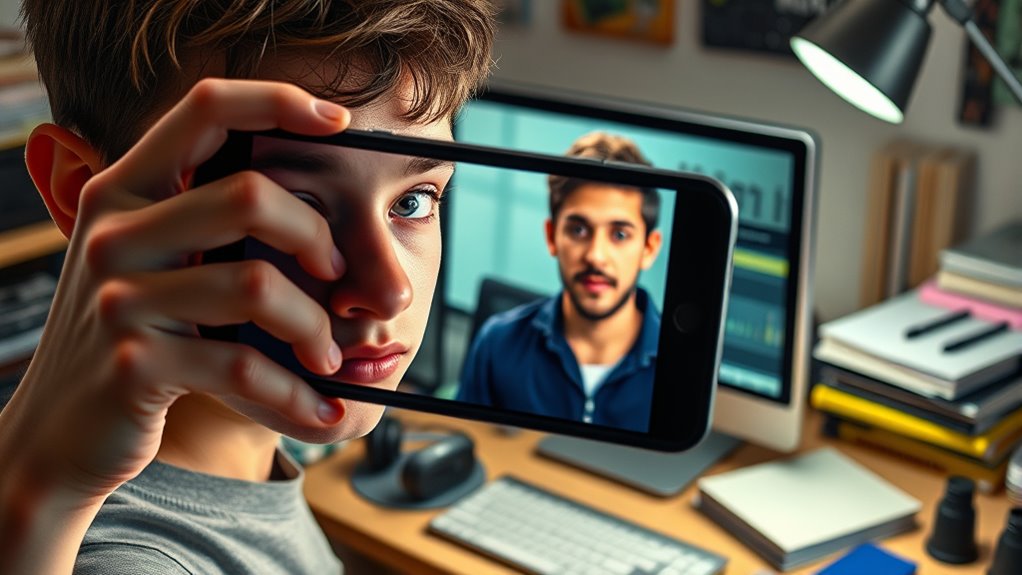
Deepfakes, powered by artificial intelligence, have rapidly transformed the way we create and perceive digital content. These realistic but fake videos and images can make it seem like someone did or said something they never actually did. This technological leap is impressive, but it also raises serious ethical concerns. As a modern teen, you’re living in a world where seeing isn’t always believing, and that’s why understanding these issues is more important than ever. Technological advancements have made creating deepfakes easier and more convincing, often requiring only basic skills or access to free tools online. This accessibility means that anyone can generate convincing fake content, making it *essential* for you to develop media literacy skills to navigate this complex landscape.
The ethical concerns surrounding deepfakes are significant. They can be used maliciously to spread misinformation, manipulate opinions, or damage someone’s reputation. For example, a deepfake video of a political leader saying something controversial could sway public opinion or spark unrest. In the entertainment industry, deepfakes might be used to create fake endorsements or misleading advertisements. These scenarios highlight the need for responsible use of this technology and for you to approach digital content with skepticism. Recognizing the potential for harm helps you understand why media literacy isn’t just about spotting fake images but also about questioning the motives behind the content you consume.
Deepfakes can spread misinformation and harm reputations, so always question the motives behind digital content.
Technological advancements continue to push the boundaries of what’s possible with deepfakes, making detection more challenging. Researchers are developing tools that analyze videos for subtle inconsistencies, but these aren’t foolproof. As a teen, you should be aware that even sophisticated detection methods can sometimes be fooled. That’s why critical thinking and verifying information through multiple sources are *vital* skills. When you come across a shocking or unbelievable video, take a moment to question its authenticity: Who uploaded it? What’s the context? Are there other credible sources confirming this story? Developing these habits helps protect you from falling victim to fake content and helps you become a responsible digital citizen.
Understanding media literacy is crucial in this landscape, as it empowers you to critically evaluate digital information and recognize potential manipulation. In the end, understanding the ethical concerns and technological advancements behind deepfakes arms you with the knowledge needed to navigate the digital world wisely. As technology evolves, so should your ability to discern truth from fiction. Embracing media literacy means staying informed, questioning what you see, and recognizing the power and potential dangers of AI-generated content. By doing so, you’ll be better prepared to engage with media responsibly and contribute to a digital environment where truth and integrity are valued.

Deepfake and Image Forgery Detection: Cybersecurity, Multimedia Forensics, Image Manipulation (De Gruyter STEM)
As an affiliate, we earn on qualifying purchases.
As an affiliate, we earn on qualifying purchases.
Frequently Asked Questions
How Can I Tell if a Video Is a Deepfake?
To spot a deepfake, look for irregularities like unnatural facial movements or inconsistent lighting. Check for digital watermarking, which some creators embed to verify authenticity. Use facial recognition tools to compare the person’s face in the video with real images; discrepancies might indicate a deepfake. Stay skeptical of videos that seem too perfect or strange, and always verify from trusted sources before believing what you see.
Are Deepfakes Dangerous for Teenagers?
Are deepfakes dangerous for teens? Absolutely, they can pose serious risks like privacy concerns and emotional impact. You might be tricked into believing false information, which can damage reputations or cause anxiety. As a teen, staying cautious and verifying sources helps protect you. Remember, deepfakes are designed to manipulate emotions and trust, so being aware of their potential harm is vital for your safety and mental well-being.
What Tools Can Help Identify Ai-Generated Media?
You can use AI detection tools like Deepware Scanner or Sensity AI to spot AI-generated media. Media verification platforms such as InVID, Amnesty’s YouTube fact-checker, or TinEye help confirm the authenticity of images and videos. These tools analyze signs of manipulation and verify sources, making it easier for you to distinguish real content from deepfakes or AI-generated media, keeping you safer online.
Can Deepfakes Be Used for Good Purposes?
Deepfakes can be used for incredible good, transforming lives in ways you’d never imagine. They open up amazing educational opportunities, allowing students to explore history by “interacting” with famous figures or bring stories to life. In ethical applications, deepfakes help create realistic training simulations for doctors and pilots, enhancing skills safely. When used responsibly, deepfakes become powerful tools for learning, entertainment, and positive innovation, rather than manipulation or harm.
How Is AI Technology Evolving to Prevent Deepfake Misuse?
AI technology is evolving to prevent deepfake misuse by improving detection tools, but ethical considerations and regulatory challenges remain. You should know that developers are creating algorithms to identify fake content, while policymakers work on regulations to curb misuse. However, ethical concerns about privacy and freedom of expression complicate these efforts. Staying informed helps you recognize authentic media and understand ongoing efforts to combat malicious deepfakes effectively.

Rourke Educational Media I Use Science Tools―Children’s Book About Different Science Instruments, K-Grade 1 Leveled Readers, My Science Library (24 Pages) Reader
As an affiliate, we earn on qualifying purchases.
As an affiliate, we earn on qualifying purchases.
Conclusion
As you navigate today’s digital world, remember that deepfakes and AI can be as tricky as a snake in a tech-savvy garden. Stay sharp, question what you see, and don’t be fooled by slick appearances—think of it like avoiding the siren’s call in Odysseus’ journey. Media literacy isn’t just a skill; it’s your shield against deception. Trust your instincts, stay curious, and keep surfing the web with a keen eye and a modern mind.

ANNKE Home Wired Camera Security System with Audio, 8CH 3K Lite H.265+ AI DVR with 1 TB Hard Drive and 8 X 1080P IP67 Weatherproof Cameras with Dual Light, Human/Vehicle Detection, Color Night Vision
【The Cost-Effective One-Stop Security System】This is not an ordinary security system set, but an upgraded kit that includes…
As an affiliate, we earn on qualifying purchases.
As an affiliate, we earn on qualifying purchases.

Fake News or Not? (2nd Edition)
Fake News or Not? is the captivating game about phony funny stories and ludicrous true tales!
As an affiliate, we earn on qualifying purchases.
As an affiliate, we earn on qualifying purchases.