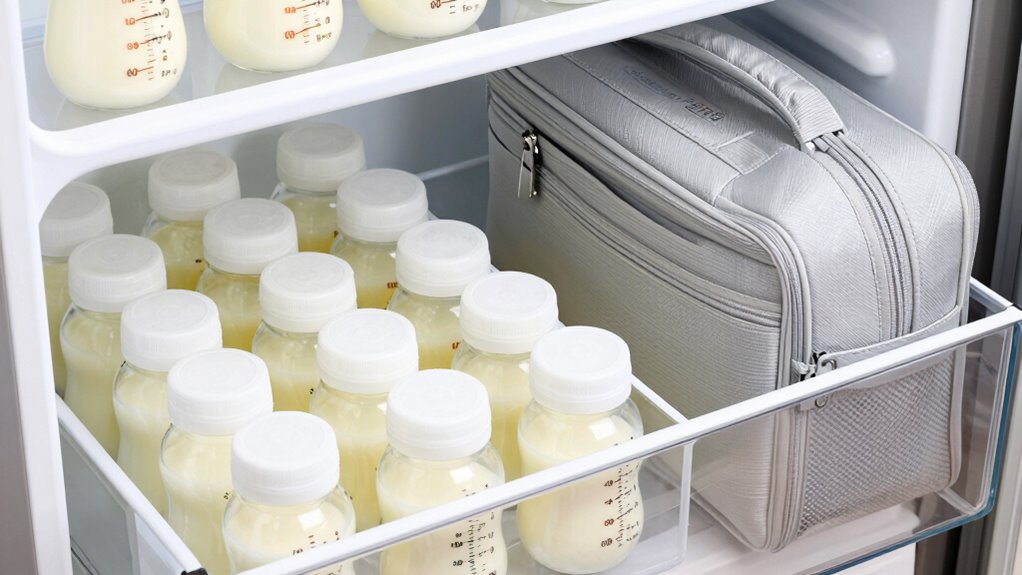
To store breastmilk safely, keep it in clean, BPA-free containers and label with date and time. In the fridge, it’s good for up to 4 days at or below 39°F, while the freezer can hold milk for 6 to 12 months. Use insulated containers and ice packs for travel, and never refreeze thawed milk. Properly following these guidelines helps preserve nutrients and keeps your baby safe—learn more to master storage with confidence.
Key Takeaways
- Store breastmilk in BPA-free containers and label with date and time for easy tracking.
- Keep milk in the main body of the fridge at or below 39°F, up to 4 days.
- Freeze milk in small portions for 6 to 12 months, and avoid refreezing thawed milk.
- Use insulated containers and ice packs during travel; consume milk within 24 hours.
- Follow proper handling and storage durations to preserve nutrients and prevent contamination.

Momcozy Natural Baby Bottle, Wide-Neck, BPA Free Breast Milk Container, Storage Collection Bottle for Fridge & Milk Cooler, Breastfeeding Essential, 11 oz, 4 pcs
𝐁𝐞𝐲𝐨𝐧𝐝 𝐌𝐢𝐥𝐤 𝐒𝐭𝐨𝐫𝐚𝐠𝐞: Tired of juggling multiple bottles? Our wide-mouth connection seamlessly docks with most wide-neck pumps and…
As an affiliate, we earn on qualifying purchases.
As an affiliate, we earn on qualifying purchases.
Why Proper Breastmilk Storage Matters
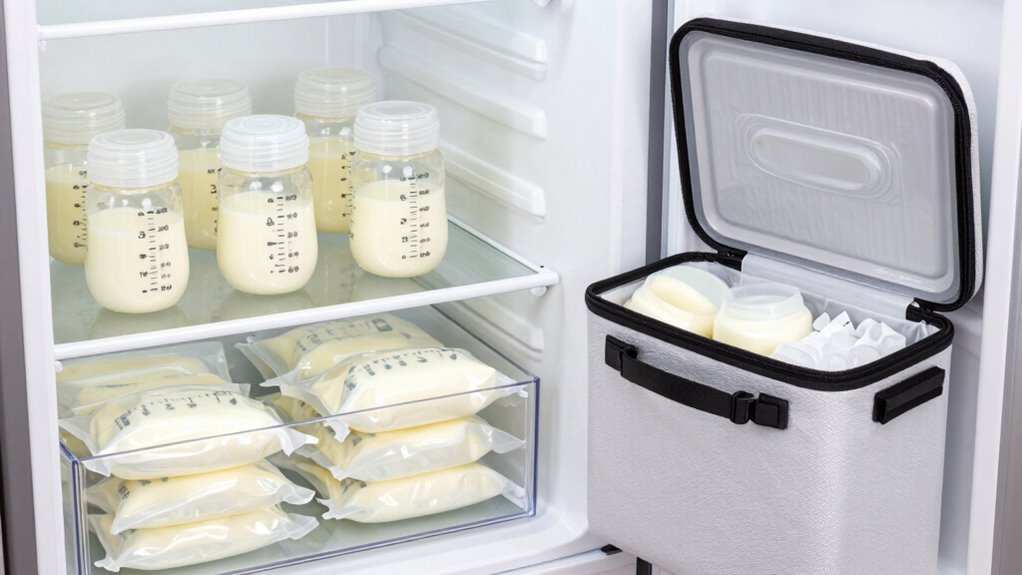
Proper breastmilk storage is essential because it helps preserve the milk’s nutrients and safety for your baby. Breastmilk composition includes crucial fats, proteins, and immune factors that support your baby’s growth and health. When stored correctly, these nutrients stay intact, ensuring your baby gets the most benefit from each feeding. Additionally, proper storage provides emotional reassurance, knowing you’re giving your baby safe, nutritious milk. It also helps you maintain a routine and reduces stress about feeding times, especially when you’re away or balancing multiple responsibilities. By understanding how to store breastmilk properly, you create a secure environment that protects your baby’s health and supports your confidence as a parent. Contaminant control is also important, as safe storage practices minimize the risk of bacteria and microplastics contaminating the milk. Proper storage techniques also help prevent milk spoilage and extend the usable period for expressed milk. Maintaining correct storage temperatures is crucial for keeping breastmilk safe and nutritious over time. Additionally, understanding storage guidelines can help you optimize the freshness and quality of your breastmilk over time.
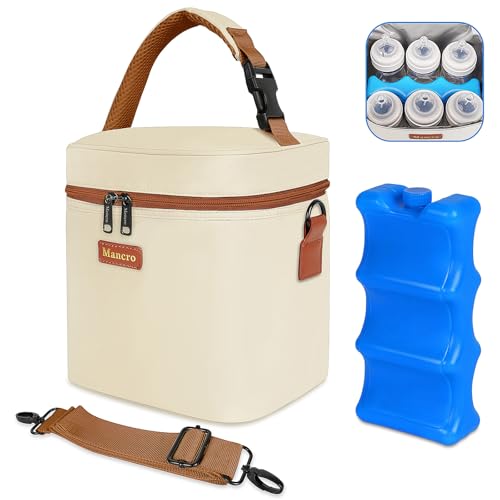
Mancro Breast Milk Cooler Travel Bag with Ice Pack, Insulated Baby Bottle Bag Fits for 6 Baby Bottles Up to 9 Ounce with Detachable Shoulder Strap, Breastmilk Cooler for Working Mom or Daycare, Beige
LARGE CAPACITY: The breastmilk cooler bag measures 8.66 x 7 x 8.66 inches and offers an 8.5L capacity,…
As an affiliate, we earn on qualifying purchases.
As an affiliate, we earn on qualifying purchases.
Breastmilk Storage Basics: What Every Parent Should Know

Understanding the basics of breastmilk storage helps you maintain your milk fresh and safe for your baby. Proper storage guarantees your milk retains nutrients and flavor, supporting your breastfeeding techniques. Remember, milk stored in clean containers should be labeled with date and time. Keep storage areas clean and organized for easy access, especially when coordinating infant sleep routines. Use the following table to compare storage options:
| Storage Method | Duration |
|---|---|
| Fridge | Up to 4 days |
| Freezer | Up to 6 months (best) |
| On-the-Go (Travel) | Use within 24 hours in cool bag |
Additionally, understanding storage guidelines ensures you maximize the storage safety and freshness of your breastmilk across different environments. Properly maintaining your storage containers and following recommended handling procedures can further extend the quality of your milk.

Labelebal 512pcs 1 x 4 Inch Baby Milk Bottle Labels to Write On,Freezer Labels Removable, Food Labels Cartoon Waterproof, No Residue Food Storage Labels for Kitchen, Mason Jar Labels,Can Not be Torn
NO RESIDUE: No paper or glue residue left on the food container or milk bottle.Our kitchen labels are…
As an affiliate, we earn on qualifying purchases.
As an affiliate, we earn on qualifying purchases.
How to Safely Store Breastmilk in the Fridge
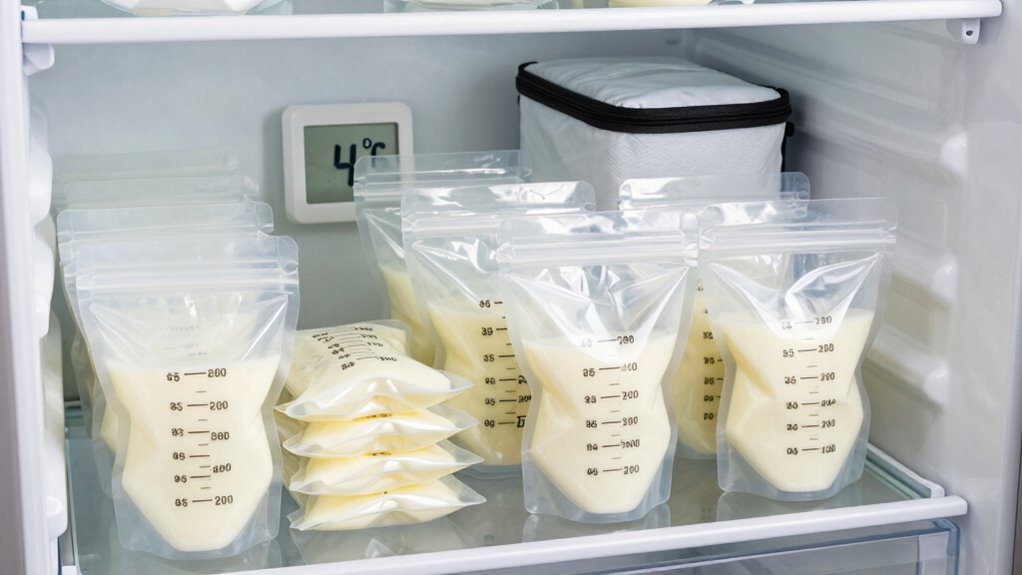
To keep your breastmilk safe, make sure your fridge stays at or below 39°F (4°C). Use clean, airtight containers designed for breastmilk storage to prevent contamination. Proper temperature and containers are key to preserving milk quality and safety. Additionally, avoiding frequent temperature fluctuations can help maintain the milk’s freshness and nutritional value. Temperature stability is especially critical, as electric bikes and other appliances can impact fridge performance. Being mindful of your home’s electrical setup can help ensure your fridge maintains a stable environment for your breastmilk. Maintaining a consistent temperature also supports the safety of stored milk, as power surges and fluctuations can compromise refrigeration efficiency.
Optimal Storage Temperature
Storing breastmilk at the right temperature is essential to keep it safe and nutritious. The ideal temperature for refrigerated breastmilk is at or below 39°F (4°C). Maintaining consistent cooling prevents bacteria growth and preserves milk quality. To guarantee this, keep your fridge temperature steady and avoid frequent opening or temperature fluctuations. Place breastmilk in the main body of the fridge, not the door, where temperatures can vary. Use a thermometer to monitor the temperature regularly. Proper temperature control helps prevent spoilage and keeps your milk fresh longer. Additionally, temperature stability is crucial in preventing bacterial growth and ensuring milk safety. Ensuring adequate cooling efficiency can further help maintain optimal storage conditions. Regularly checking for temperature fluctuations and adjusting your fridge settings can help sustain a safe environment for storing breastmilk. Maintaining proper storage conditions is vital for preserving nutrients and preventing contamination. By following these guidelines, you ensure your breastmilk remains safe and nutritious for your baby.
Proper Container Use
Using the right containers is essential for keeping breastmilk safe and fresh in the fridge. Choose from various breastmilk container types like BPA-free bottles, breastmilk storage bags, or sterile containers. Guarantee they’re specifically designed for milk storage to prevent contamination. Always label each container with the date you expressed the milk, so you know how long it’s been stored. Use waterproof markers or labels for clarity. Proper labeling and dating help you prioritize which milk to use first and avoid waste. Avoid using regular household containers, as they may not be safe or leak. Make sure containers are clean and tightly sealed to prevent spoilage and contamination. Following these guidelines ensures your breastmilk stays fresh and safe for your baby. Additionally, selecting appropriate tracking gear can help monitor storage times and ensure proper handling. Remember to regularly check stored breastmilk for signs of spoilage before use. To maintain quality, it’s also helpful to understand storage duration guidelines for different storage methods and temperatures, which are supported by storage safety principles to prevent bacterial growth and spoilage. Properly understanding storage capacity can also help you plan and avoid overfilling containers, reducing the risk of leaks and contamination.

Lansinoh Breastmilk Storage Bags, 50 Count, Baby Essentials, Fast Freeze & Thaw Breast Milk Bags for Baby Bottle Feeding, Strength & Stretch, 4 Ounce
SUPER STRONG- Designed with reinforced double sealed side seams and bottom with a double zipper to protect and…
As an affiliate, we earn on qualifying purchases.
As an affiliate, we earn on qualifying purchases.
Freezing Breastmilk: Tips for Long-Term Storage
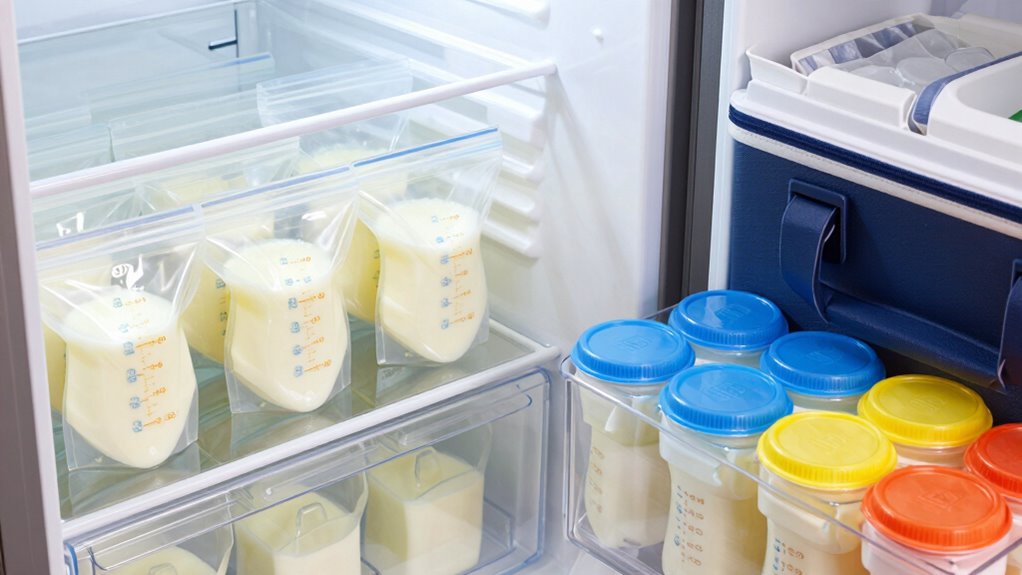
Freezing breastmilk is an effective way to preserve its freshness for later use, but doing it properly guarantees the milk maintains its quality and safety. To maximize storage time, use clean, airtight containers designed for freezing. Leave some room at the top, as milk expands when frozen. Label containers with date and amount for easy tracking. For added safety, consider breastmilk pasteurization if storing milk for longer periods or sharing it. If your baby needs milk fortification, freeze pre-measured amounts of added nutrients separately to mix later. Avoid refreezing thawed milk, as this can compromise safety and quality. Proper freezing techniques help maintain the beneficial properties of your breastmilk and guarantee it remains safe for your baby’s consumption over extended periods. Proper storage methods are critical for ensuring milk safety and quality during long-term preservation. Additionally, understanding storage duration guidelines can help you plan your milk usage effectively.
Transporting Breastmilk: How to Do It Safely on the Go
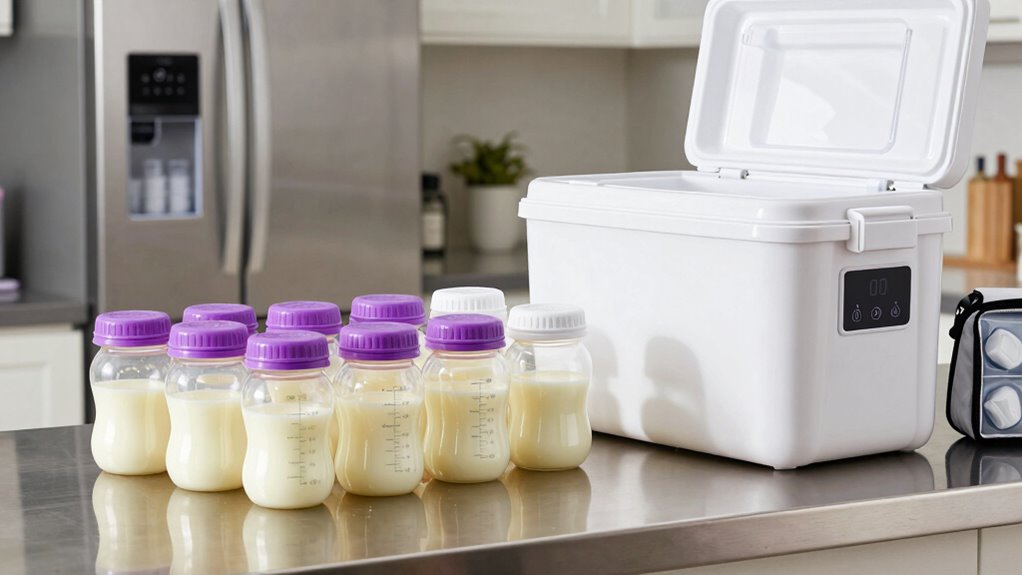
Transporting breastmilk safely is just as important as storing it properly at home. Use an insulated cooler or bag with ice packs to keep milk cold, ideally below 39°F (4°C). Always label containers with the date and time collected, following proper labeling practices. Keep milk at the back of the cooler to maintain a consistent temperature. Avoid leaving breastmilk in hot cars or exposed to direct sunlight. When you arrive, transfer the milk to the fridge promptly. If you need to discard any leftover milk, follow disposal guidelines to ensure safety. Proper temperature management during transport helps preserve the nutrients and safety of breastmilk. Here’s a quick guide:
| Tip | Why it Matters |
|---|---|
| Use insulated containers | Keeps milk cold and safe |
| Label with date/time | Ensures proper use and disposal |
| Avoid temperature fluctuations | Maintains milk quality |
Additionally, consider portable cooling solutions to maintain consistent temperatures during longer trips and prevent temperature fluctuations that can compromise milk safety. Proper handling practices are essential to ensure the milk remains safe and nutritious throughout transportation.
How Long Can Breastmilk Last in the Fridge and Freezer?
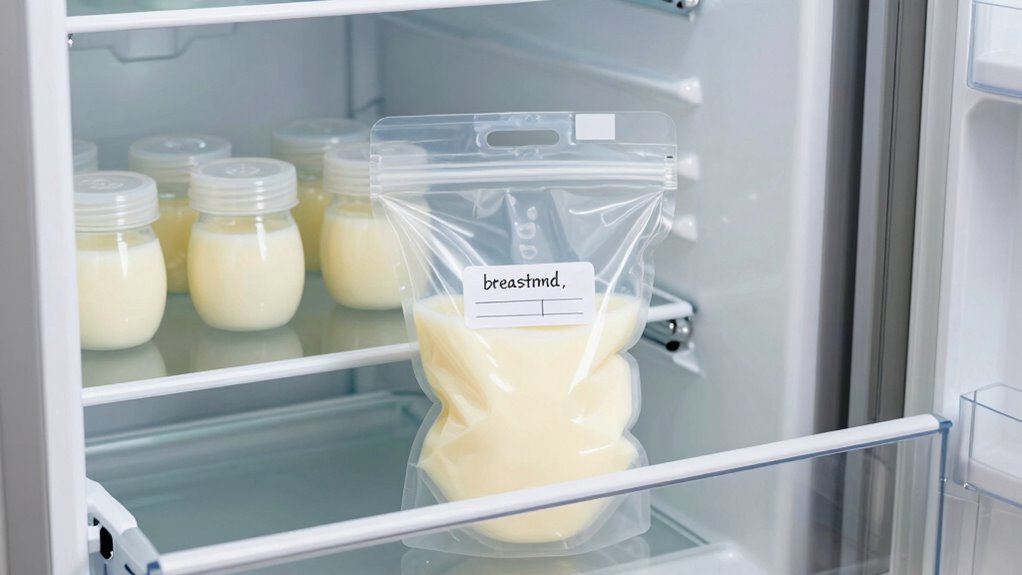
Properly stored breastmilk remains safe and nutritious for a limited time, depending on where you keep it. In the fridge, you can usually keep it for up to 4 days, which helps you manage breastfeeding challenges and busy schedules. If you freeze it, your milk can last 6 to 12 months for ideal quality, making it easier to plan ahead and stick to baby sleep routines. To guarantee freshness, always label your milk with the date it was expressed. Keep it in the back of the fridge or in a deep freezer to avoid temperature fluctuations. Remember, thawed milk should be used within 24 hours and never refrozen. Proper storage helps maintain milk’s nutrients and supports your breastfeeding journey. Storage guidelines are essential to ensure your milk remains safe and nutritious.
Common Mistakes to Avoid When Storing Breastmilk
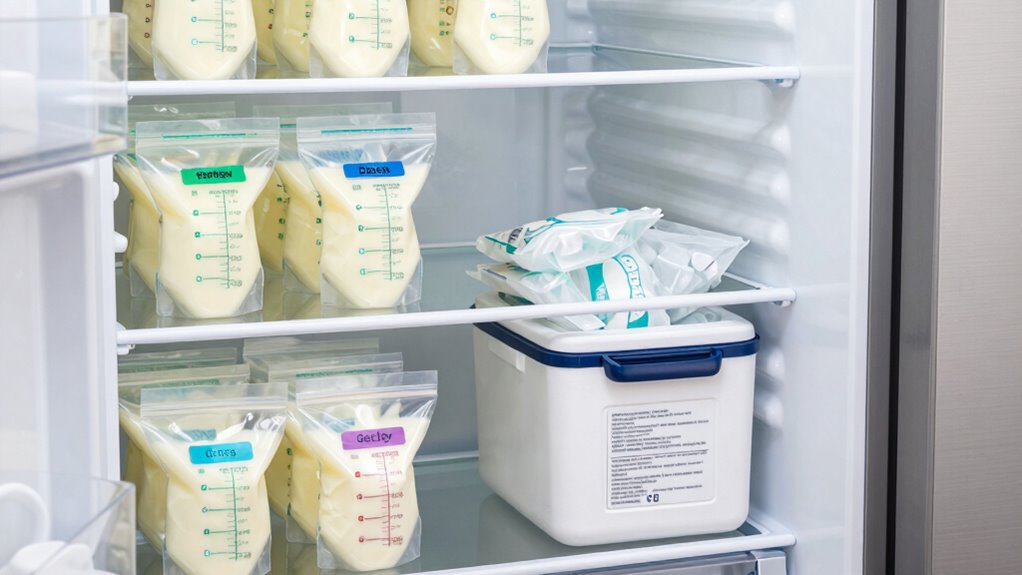
Storing breastmilk correctly is key to preserving its nutrients and safety, but many moms make common mistakes that can compromise its quality. One frequent error is neglecting proper labeling, which can lead to confusion about storage dates and cause you to use outdated milk. Always label each container with the date it was expressed to ensure freshness. Another mistake involves thawing errors; never refreeze breastmilk after it has been thawed, as this can promote bacterial growth and reduce nutritional value. Also, avoid leaving milk out at room temperature for too long, and don’t shake the milk vigorously, which can damage beneficial fats. By paying attention to proper storage practices and avoiding these mistakes, you’ll help guarantee your breastmilk remains safe and nutritious for your baby.
Frequently Asked Questions
Can I Reuse Breastmilk Containers for Multiple Sessions?
Yes, you can reuse breastmilk containers for multiple sessions, but make sure to thoroughly clean and sterilize them between uses to prevent bacteria growth. Always check the storage duration; if the milk has been stored long enough, discard it. Proper container cleaning and timely use guarantee your baby’s safety and maintain milk quality. Reusing containers saves money and reduces waste, just ensure they’re hygienic before each new storage session.
Is It Safe to Mix Freshly Expressed Milk With Stored Milk?
Mixing freshly expressed milk with stored milk is safe if you follow proper storage safety guidelines. Think of it as blending two puzzle pieces to complete the perfect picture; just make certain the freshly expressed milk is cooled first and added to milk stored in the fridge or freezer. Always use the oldest milk first, and avoid mixing milk from different feeding sessions to prevent bacterial growth and maintain milk quality.
How Do I Label Breastmilk Storage Containers Properly?
To guarantee proper breastmilk storage, you should label your storage containers clearly. Use waterproof markers to write the date and time of expression on each container, so you know which milk to use first. Include your baby’s name if needed for daycare. Proper breastmilk labeling and storage container labeling help track freshness and prevent confusion, making it easier to organize and safely feed your little one.
What Signs Indicate Breastmilk Has Spoiled?
You’ll know breastmilk has spoiled if it smells sour, looks lumpy or discolored, or tastes off. Follow milk storage guidelines to keep it fresh and safe, and always check for signs of spoiled milk before feeding. If anything seems unusual—whether smell, appearance, or taste—discard it. Trust your senses; they’re your best tools for ensuring your baby’s milk is safe and nourishing.
Can I Thaw Frozen Breastmilk Gradually at Room Temperature?
You should avoid thawing frozen breastmilk gradually at room temperature. Instead, it’s safest to use gentle warming methods, like placing the milk in warm water or using a bottle warmer. Thawing at room temperature can encourage bacterial growth and spoilage. Always thaw breastmilk in the fridge or with gentle, controlled heat, and use it within 24 hours for ideal safety and quality.
Conclusion
Remember, taking the time to store breastmilk properly guarantees your baby gets the best nutrition possible. Keep in mind, “A stitch in time saves nine”—so follow these tips to prevent waste and keep your milk fresh. Whether in the fridge, freezer, or on the go, your careful attention makes a difference. Trust your instincts and stay vigilant—your little one’s health depends on it. You’ve got this!