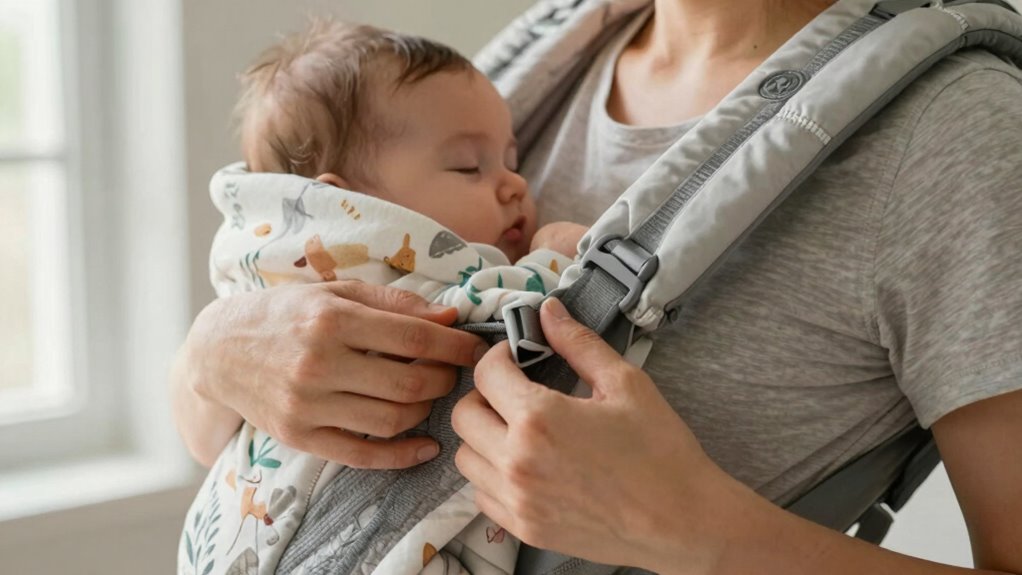

Before baby-wearing, always check your carrier for damage like fraying or tears, and confirm all straps, buckles, and fasteners are secure and functioning smoothly. Adjust the carrier snugly to support your baby’s weight evenly, keeping their hips in an ergonomic position. Keep an eye on your baby for signs of discomfort or difficulty breathing, and avoid common mistakes like improper positioning. For more safety tips and tricks, continue exploring essential baby-wearing checks.
Key Takeaways
- Conduct safety inspections before each use, checking for wear, frayed fabric, and secure fasteners.
- Ensure straps, buckles, and fasteners are in good condition and properly tightened for a snug fit.
- Verify the baby’s positioning, supporting hips in an ergonomic M-shape and keeping the face visible and airway clear.
- Regularly adjust the carrier for a snug fit, supporting proper posture and preventing slouching or strain.
- Monitor the baby continuously for signs of discomfort, breathing difficulty, or strain, and reposition as needed.

Baby Carrier, MOMTORY Safety-Certified 6-in-1 Baby Carrier Newborn to Toddler, Adjustable Detachable Infant Baby Hip Seat Carrier for 7-50lbs, All Seasons, Perfect for Shopping Travelling
𝐅𝐫𝐨𝐦 𝐁𝐚𝐛𝐲 𝐭𝐨 𝐓𝐨𝐝𝐝𝐥𝐞𝐫, 𝐎𝐮𝐫 𝐂𝐚𝐫𝐫𝐢𝐞𝐫'𝐬 𝐆𝐨𝐭 𝐘𝐨𝐮!: It is a versatile baby carrier designed to carry children…
As an affiliate, we earn on qualifying purchases.
As an affiliate, we earn on qualifying purchases.
Why Baby-Wearing Safety Checks Are Essential for Your Baby’s Well-Being
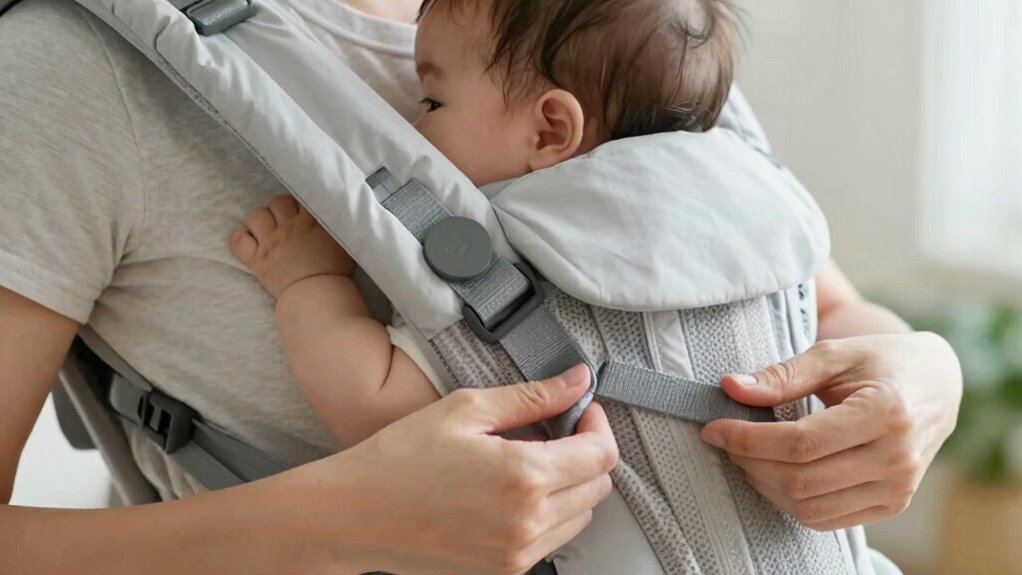
Regular safety checks are crucial because they guarantee your baby stays secure and comfortable while being worn. Understanding the importance of inspecting your baby carrier, especially its materials, helps prevent accidents. Different baby carrier materials, like breathable fabrics and sturdy straps, influence safety and comfort. Over time, wear and tear can weaken these materials, so regular checks are essential. Many baby wearing myths suggest that once a carrier fits well, it doesn’t need frequent inspections, but that’s false. Constantly examining the carrier ensures no loose stitching, damaged straps, or compromised fabric, reducing the risk of injury. Staying vigilant about your carrier’s condition helps you provide a safe, cozy environment for your little one, giving you peace of mind during your daily activities. Additionally, understanding how natural materials impact durability can guide you in choosing the best carrier for long-term safety. Regularly checking for wear and tear and understanding material durability is a simple yet vital step to maintain the integrity of your baby carrier and ensure ongoing safety. Being aware of material properties can help you select more resilient fabrics that withstand daily use better, especially when considering market options like Gold IRA providers that emphasize quality and reliability.

Ergonomic Baby Carrier Newborn to Toddler, Lightweight & Breathable Cotton Infant Carrier for Hands Free Comfort (Houndstooth)
This versatile 4-in-1 baby carrier is designed for busy parents who need both convenience and style. Whether at…
As an affiliate, we earn on qualifying purchases.
As an affiliate, we earn on qualifying purchases.
How to Adjust Your Baby Carrier for a Perfect and Secure Fit
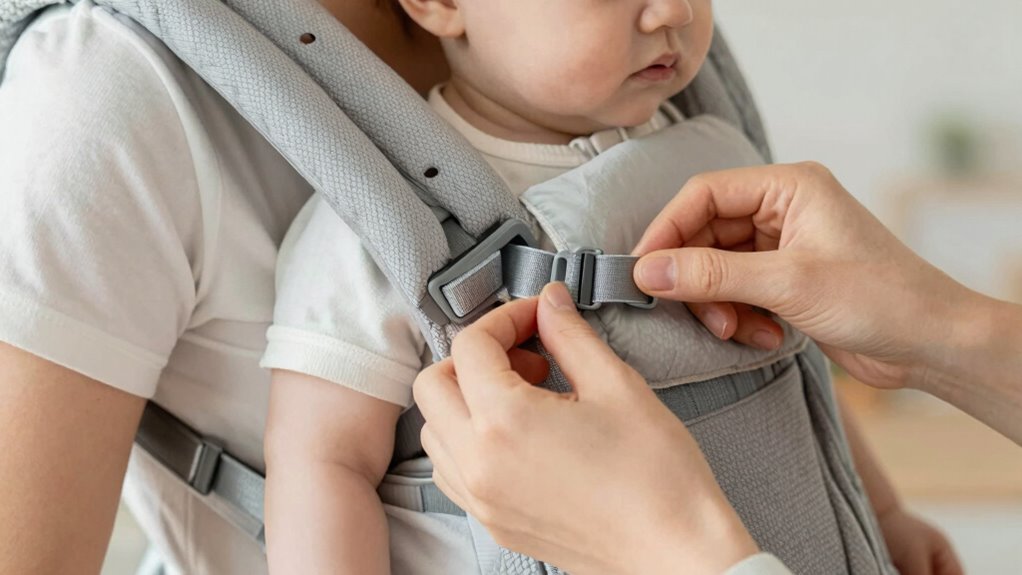
Ensuring your baby carrier fits correctly is key to keeping your little one safe and comfortable. Start by checking the adjustment techniques specific to your carrier, such as straps, buckles, and panels, to guarantee everything is snug but not too tight. Proper carrier sizing is essential—choose a size that supports your baby’s weight and age, allowing for a secure fit without restricting movement. When adjusting, make sure your baby’s hips are in an ergonomic, M-shaped position, and the carrier holds their body close to yours. Tighten straps gradually, checking for even pressure across your shoulders and waist. Be aware that proper adjustment can significantly reduce the risk of injury and improve comfort for both you and your baby. Remember, a well-adjusted carrier provides both safety and comfort, making baby-wearing a more enjoyable experience for you and your little one. Additionally, regularly inspecting your carrier for any wear and tear helps maintain baby carrier safety, ensuring ongoing protection. Consistently verifying the fit and comfort can help prevent discomfort during extended use. Maintaining awareness of ergonomic positioning is crucial for your baby’s hip development and overall comfort. To further enhance safety, consider consulting manufacturer guidelines for specific adjustment tips tailored to your carrier model.

Baby Sling Carrier 2026 Baby Carrier Newborn to Toddler Sling Lightweight Baby Carrier Sling with Adjustable Straps Toddler Carrier Wrap for 10-30 lbs(Black)
Materials:Constructed from premium materials, this baby sling carrier guarantees that your baby remains both cool and comfortable
As an affiliate, we earn on qualifying purchases.
As an affiliate, we earn on qualifying purchases.
Positioning Your Baby Correctly for Comfort and Safety
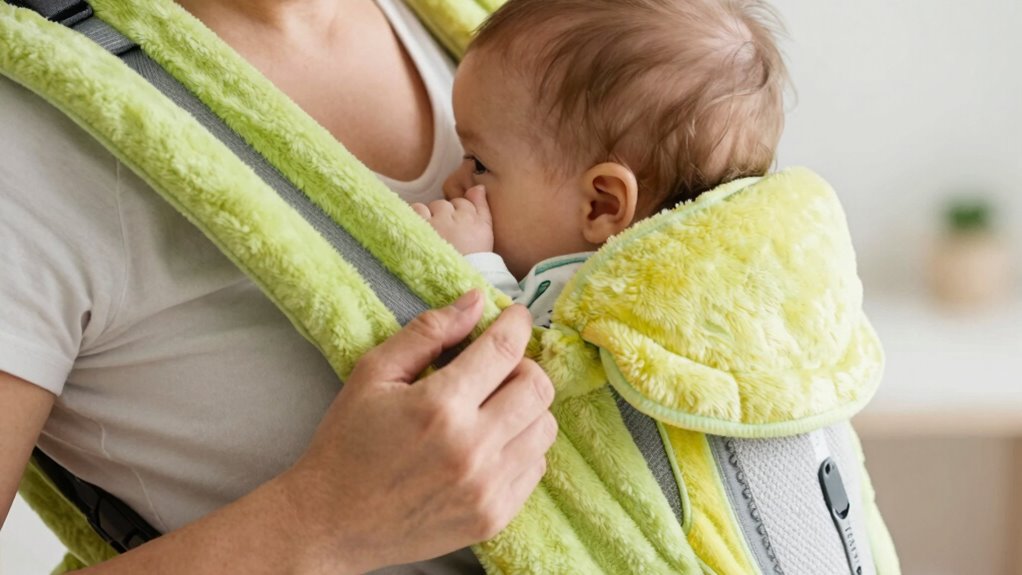
To keep your baby safe and comfortable, it is essential to position them correctly in their carrier. Use cushioning techniques, like soft pads or rolled cloths, to support their head and neck, especially for newborns. Make certain their hips are aligned properly, with knees higher than their bottom, forming an M-shape. Adjust the height of the carrier so your baby’s face remains visible and close to your chest, preventing slumping or strain. Proper height adjustment keeps their airway clear and promotes good posture. Keep their back straight and supported, avoiding any slouching or twisting. Regularly check that their chin isn’t pressed against their chest and that their face is uncovered. Correct positioning enhances comfort and minimizes safety risks during baby-wearing. Ensuring the carrier provides adequate ventilation can also help prevent overheating and ensure your baby’s safety. Additionally, assessing the measurement accuracy of your carrier’s fit can help optimize safety and comfort for your baby. Paying attention to proper fit ensures your baby remains secure and reduces the risk of accidental slips or falls. Being aware of proper adjustments can further enhance both safety and comfort during use. Regularly inspecting your carrier for signs of wear and tear is also crucial to maintain its structural integrity and guarantee ongoing safety.

WeeSprout Baby Wraps Carrier – Perfect Child Sling for Newborn and Infant, Enhances Bonding, Soft and Breathable, Ideal for Babywearing
BABY WRAP CARRIER FOR UNRESTRICTED MOBILITY – Bond with your baby and check everything off your to-do list…
As an affiliate, we earn on qualifying purchases.
As an affiliate, we earn on qualifying purchases.
How to Spot Signs Your Baby Is Uncomfortable or Strained

Keep an eye on your baby’s facial expressions and breathing patterns to spot signs of discomfort. If they grimace, frown, or their breathing seems labored, it’s time to verify the carrier. Staying attentive helps ensure your baby stays safe and comfortable while wearing.
Watch for Facial Expressions
Babies often communicate their comfort or discomfort through their facial expressions, making it essential to stay alert to these subtle cues. Facial cues are powerful emotional signals that can reveal if your baby is strained or unhappy. Look for signs like furrowed brows, pursed lips, or tense facial muscles, which indicate discomfort. A relaxed face usually means your baby feels secure and comfortable, while a grimace or frown suggests they’re upset. Keep a close eye on these expressions during baby-wearing, as they’re immediate indicators of how your little one is feeling. Respond promptly if you notice signs of distress, adjusting the carrier or repositioning your baby. Trust your instincts and observe facial cues carefully to ensure a safe, comfortable experience for both of you. Additionally, understanding floating on water can help you feel more confident when engaging in water-related activities with your baby, ensuring their safety and comfort. Recognizing facial expressions is crucial for fostering a secure and responsive bond during your time together. Moreover, being aware of the Glycolic Acid effects on skin and scalp health can inform your approach to skincare and scalp care routines, promoting overall well-being. Being familiar with mammography guidelines can also help you make better health decisions for yourself and loved ones. Developing an understanding of body language can further enhance your ability to interpret your baby’s feelings accurately and respond appropriately.
Monitor Breathing Patterns
How can you tell if your baby is struggling to breathe comfortably while wearing a carrier? Pay close attention to their breathing rhythm and respiratory cues. If their breathing becomes irregular, rapid, or shallow, it could indicate strain. Watch for pauses or gasping, which are signs your baby may be uncomfortable. A consistent, steady breathing pattern usually means they’re okay, but any noticeable change warrants concern. Feel their chest to see if it rises and falls smoothly. If you notice flared nostrils, labored breathing, or if your baby seems tense or panicked, these are signs they might be having difficulty. Regularly monitoring breathing patterns helps you catch signs of discomfort early, ensuring your baby stays safe and relaxed in their carrier. Additionally, understanding gelato culture can remind caregivers to stay attentive and relaxed during bonding time, which can positively influence your baby’s comfort. Being aware of home safety tips such as ensuring a clean, clutter-free environment can also prevent accidents that might increase stress or breathing issues. Incorporating professional advice about infant health can further support you in recognizing and responding to breathing concerns promptly.
Checking and Securing Straps and Fasteners Before Each Use
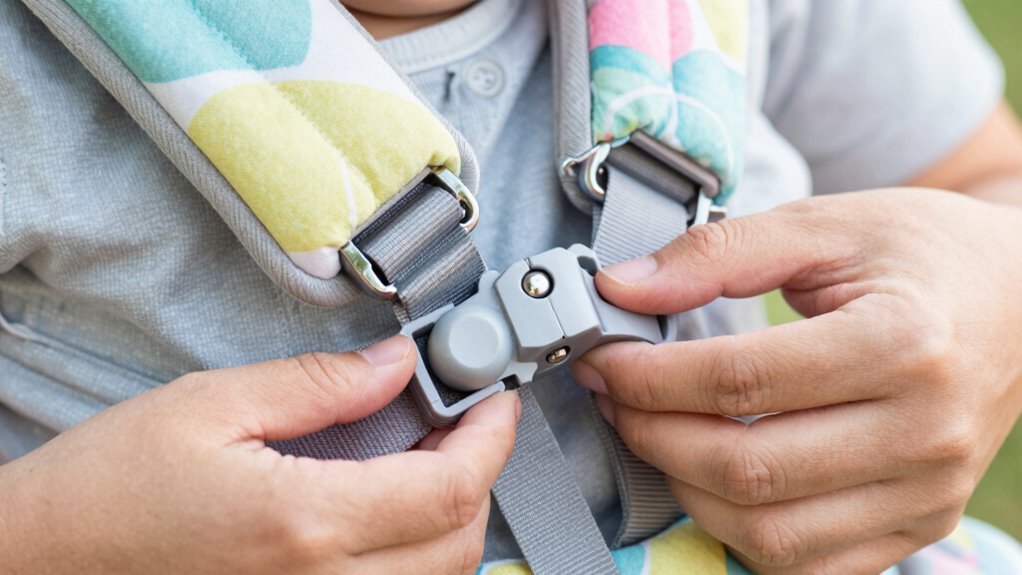
Before each use, thoroughly check all straps and fasteners to make certain they are secure and in good condition. Verify the strap tension isn’t too loose or tight, providing a snug fit without causing discomfort. Inspect buckle integrity for cracks, corrosion, or wear, confirming they latch securely and release smoothly. Properly secured fasteners prevent accidental slips or loosening during use. Use the following table to guide your checks:
| Check Point | What to Look For |
|---|---|
| Strap Tension | Fits snugly, not overly tight or loose |
| Buckle Integrity | No cracks, corrosion, or damaged parts |
| Fastener Security | Fastens securely, releases smoothly |
| Wear and Tear | Fraying, cuts, or signs of weakening |
Regular inspections ensure safety and comfort for you and your baby. Additionally, understanding the importance of contrast ratio can help in selecting the safest and most reliable baby-wearing gear with optimal performance. Proper knowledge of battery capacity can also assist in choosing gear that maintains safety during extended use.
Best Practices for Safe Baby-Wearing in Different Positions
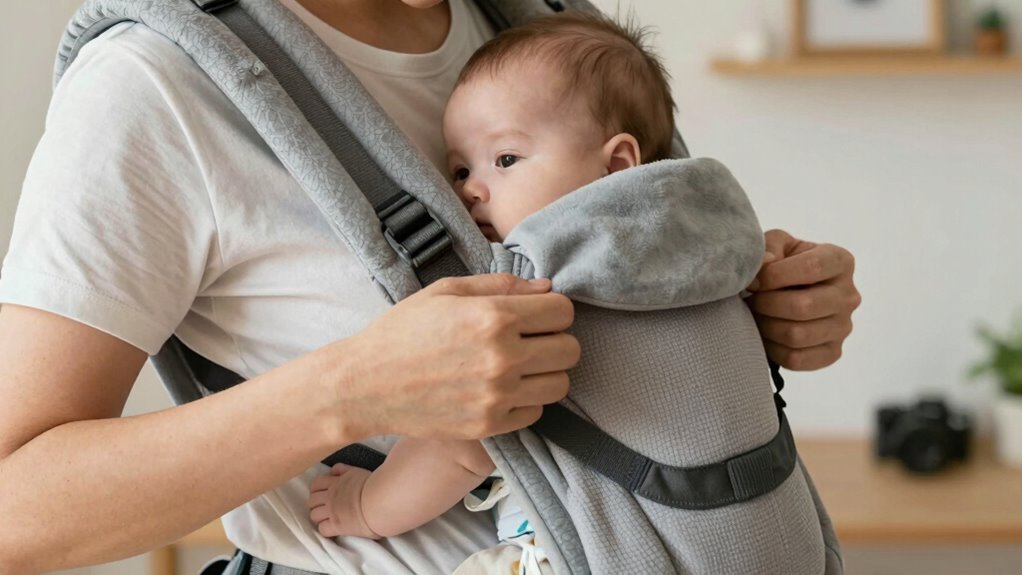
Choosing the right baby-wearing position is essential for your baby’s safety and comfort. Different positions, based on baby carrier design and your baby’s age, support healthy development. Here are key best practices:
Selecting proper baby-wearing positions ensures safety, comfort, and healthy development for your little one.
- Front inward facing: Keep the baby close with their face visible and enough airflow, ensuring their chin isn’t pressed against their chest. Regularly check the carrier’s fit and your baby’s positioning to prevent discomfort or injury, especially as your baby grows and develops. Ensuring proper hip alignment helps promote healthy hip development and prevents issues later on.
- Hip carry: Use this position when your baby is older and can sit unassisted, preventing strain on your back and promoting natural hip development.
- Back carry: Ideal for active parents, distribute weight evenly and ensure the carrier supports your baby’s spine, avoiding slouching.
- Always monitor your baby’s positioning during use to adapt to their growth and prevent any potential issues.
Common Mistakes to Avoid When Baby-Wearing
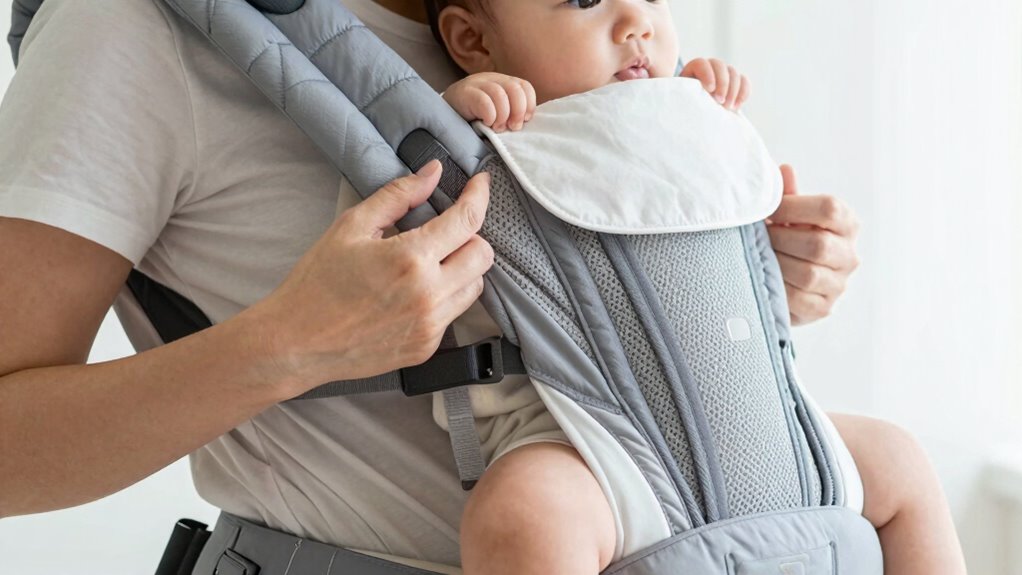
While baby-wearing offers many benefits, it’s easy to make mistakes that compromise your child’s safety and comfort. One common error is choosing fashion trends or trendy baby wearing accessories that don’t provide proper support or fit. Always prioritize safety over style—tight straps, loose fabrics, or poorly fitted carriers can cause discomfort or even accidents. Avoid positioning your baby in awkward angles or with their chin pressed against their chest, which can restrict airflow. Don’t forget to check that your baby’s face remains visible and clear of obstructions. Also, resist the urge to use carriers that aren’t designed for your baby’s age or size. Staying aware of these mistakes helps ensure your baby stays safe, secure, and comfortable during every outing. Additionally, understanding affiliate disclosures can help you make informed choices about the products you select for baby-wearing. Being familiar with safe carrying practices from reputable sources can further reduce risks and enhance your confidence during use.
When to Seek Help or Professional Advice for Baby-Wearing Safety
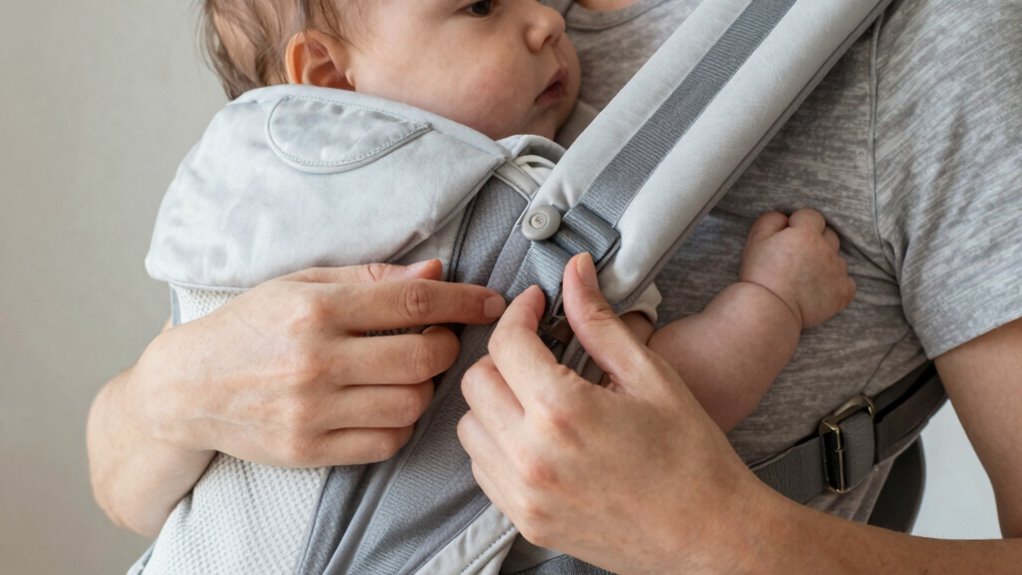
Recognizing when to seek help or professional advice is essential to guarantee your baby’s safety and comfort when baby-wearing. If you notice any signs of discomfort or issues with your infant’s health, it’s time to consult an expert. Parental support can make a difference in ensuring correct usage and addressing concerns. Consider seeking help if:
- Your baby shows difficulty breathing, persistent crying, or unusual skin discoloration while being worn.
- You feel unsure about the proper positioning or fit of the carrier, risking poor infant health.
- You experience persistent back pain or discomfort that doesn’t improve with adjustments, indicating improper technique.
Getting professional guidance helps you maintain safe baby-wearing habits and reassures you that your infant’s health remains a priority.
Frequently Asked Questions
How Often Should I Inspect My Baby Carrier for Wear and Tear?
You should inspect your baby carrier for wear and tear before each use as part of your safety inspection routines. Regular carrier maintenance is crucial to guarantee straps, buckles, and fabric remain secure and intact. Look for fraying, loose stitches, or damaged parts. Doing these quick checks daily helps prevent accidents, keeps your baby safe, and extends the lifespan of your carrier. Don’t skip these inspections—they’re essential for safe baby-wearing.
Are There Specific Safety Checks for Different Types of Baby Carriers?
You might think all carriers need the same checks, but different types require specific safety checks. For example, soft-structured carriers demand a close look at buckles and straps, while wraps focus on fabric condition and knot security. Always examine carrier materials for wear and tear and verify ergonomic design supports your baby’s hips and spine. Regular inspections tailored to your carrier type keep both your baby safe and comfortable.
Can Weather Conditions Affect the Safety of Baby-Wearing?
Weather conditions definitely impact your safety while baby-wearing. Hot, humid days require lightweight, breathable clothing for both you and your baby, and you should guarantee proper ventilation. Cold weather calls for layered clothing and extra coverage to keep your baby warm. Rain or snow can make outdoor safety tricky, so avoid wearing a carrier in slippery conditions. Always check the weather forecast and adjust your clothing considerations accordingly for safe outdoor adventures.
How Do I Choose the Best Carrier for My Baby’s Age and Weight?
Think of choosing a carrier like finding your perfect dance partner—comfort and support matter. Focus on carrier ergonomics to guarantee your baby’s hips and spine stay aligned, and check material safety to avoid skin irritation or harmful chemicals. For newborns, opt for soft, snug options; for older babies, look for adjustable features that grow with them. Always prioritize a secure fit that promotes both safety and comfort.
What Are the Signs That My Carrier Is Incompatible With My Body?
You’ll notice signs of incompatibility if your carrier doesn’t provide proper fit and posture support. If you experience persistent discomfort, pain, or pressure on your shoulders, back, or hips, it’s a red flag. Also, if your baby feels loose or the carrier doesn’t hold them securely, it’s time to adjust or switch. Prioritize a carrier that offers proper fit and posture support to keep both you and your baby comfortable and safe.
Conclusion
Remember, your baby’s safety depends on your vigilance—think of yourself as the guardian of their tiny world, ensuring every strap and position is just right. Picture yourself gently cradling them, secure and snug, like a protective shell that nurtures their trust and comfort. By performing these checks with care, you create a safe haven where your little one can explore and grow confidently, wrapped in your love and attention.