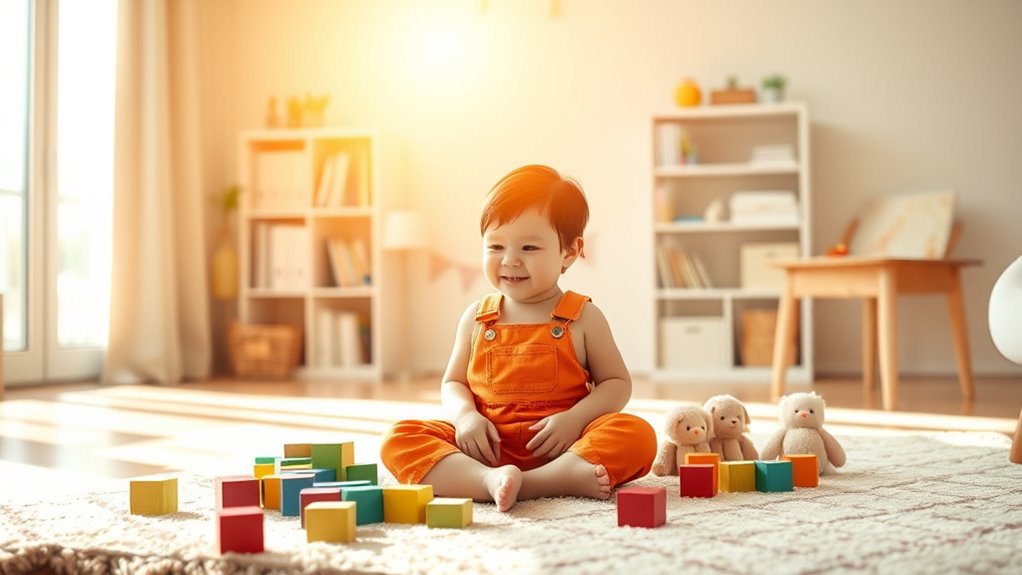

Encouraging your child to play independently helps build their confidence, resilience, and problem-solving skills while fostering a sense of autonomy. Create safe, designated spaces filled with age-appropriate toys and household objects to inspire imagination. Trust their abilities by allowing them to explore without constant interference, offering support when needed. Balancing supervision with independence is key to helping your child learn limits safely. Keep exploring more tips to support their growth confidently.

Turn the school run and nap time into listening time
- Thousands of audiobooks, podcasts and originals
- Listen on your phone, tablet or Echo — also offline
- Cancel anytime
Key Takeaways
- Create safe, designated play areas filled with age-appropriate toys to foster independence without feeling guilty.
- Allow children to explore and try activities independently, offering encouragement and trust.
- Balance supervision with freedom, ensuring safety while minimizing over-involvement or interference.
- Remove hazards and assess toys using quality principles to promote safe, self-directed play.
- Recognize that independent play builds confidence, resilience, and problem-solving skills, supporting healthy development.

Have you ever wondered how to help your child develop confidence and creativity on their own? Encouraging independent play is a powerful way to do that, and it comes with many benefits of independence that extend beyond just entertainment. When kids learn to entertain themselves, they develop problem-solving skills, resilience, and a sense of autonomy. They begin to trust their abilities and feel more capable of handling challenges, both in play and in real life. Creating safe spaces is essential for fostering this independence. When your child knows they’re in a secure environment, they’re more likely to explore, experiment, and take risks without fear. This sense of safety gives them the freedom to be curious and inventive, knowing you’re nearby if they need support but not hovering over every move.
By establishing designated areas where your child can play freely, you give them the space to develop their imagination and decision-making skills. Think of this as setting up a mini universe tailored to their interests—a corner filled with age-appropriate toys, art supplies, or even simple household objects. When these spaces are safe and inviting, your child feels empowered to try new things, whether it’s building a tower, drawing a picture, or inventing a game. It’s important to resist the urge to constantly direct or interfere; instead, offer encouragement and trust that they’ll figure things out on their own. This approach nurtures independence and helps them learn from their successes and setbacks.
Creating safe spaces also means removing unnecessary hazards and ensuring supervision is appropriate but not overbearing. You want your child to feel free to explore without the risk of injury or accidents. This balance allows them to build confidence in their abilities and understand their limits gradually. As they gain more independence through these safe environments, you’ll notice them becoming more self-reliant and inventive. They’ll learn to entertain themselves without always relying on screens or constant interaction, which is vital for healthy development. Incorporating quality assessment principles into your environment can help ensure that the toys and objects they explore are safe and suitable for their age.
age-appropriate educational toys for independent play
As an affiliate, we earn on qualifying purchases.
As an affiliate, we earn on qualifying purchases.
Frequently Asked Questions
How Can I Tell if My Child Is Ready for Independent Play?
You can tell your child is ready for independent play when they show curiosity and can stay engaged for a few minutes. Start by setting up a safe, inviting play area and establishing routines, like a consistent start time. Watch how they explore and respond to independence, gradually increasing their alone time. If they’re comfortable and willing, it’s a good sign they’re ready to play independently without guilt.
What Are Safe Toys to Encourage Independent Play?
A wise saying goes, “The right tools make all the difference.” For safe, engaging independent play, choose age-appropriate toys and sensory toys that suit your child’s development. Look for sturdy, non-toxic options without small parts to prevent choking. Sensory toys like textured balls or soft blocks stimulate their senses and keep them entertained. Always supervise play to ensure safety, and rotate toys to keep their interest alive.
How Do I Handle Tantrums During Independent Play?
When tantrums happen during independent play, stay calm and avoid parental guilt. Gently set boundaries by calmly explaining that it’s okay to feel upset, but they need to take deep breaths or pause. Offer reassurance and help them express feelings. By maintaining consistency and patience, you teach emotional regulation without guilt, encouraging your child to develop independence while understanding boundaries. Remember, handling tantrums constructively fosters growth and confidence.
When Should I Start Encouraging Independent Play for a Newborn?
Did you know that babies start exploring their environment as early as 3 months old? You can begin encouraging independent play around this time by setting gentle boundaries and fostering curiosity. Keep in mind, short, supervised sessions help your newborn feel safe and build confidence. As they grow, gradually increase independent playtime, making it a natural part of their development while always staying attentive.
How Can I Balance Independent Play With Social Interaction?
You can balance independent play with social interaction by scheduling regular playdates, which give your child opportunities to socialize without overwhelming them. Set boundaries during playtime, allowing your child to explore independently but also encouraging shared activities. This way, they develop confidence and social skills gradually. Remember, a mix of solo play and social time helps your child thrive, fostering independence while building meaningful relationships.
Conclusion
Remember, fostering independent play isn’t about letting go completely; it’s about planting seeds for confidence to grow. When you step back and let your child explore on their own, you’re giving them the gift of self-reliance. It might feel uncomfortable at first, but trust that they’ll find their way, like a boat finding its course in open waters. With patience and support, you’re helping them build a foundation that will carry them far beyond today.
Fall Picks
fall essentials
As an affiliate, we earn on qualifying purchases.