Humidifiers and diffusers serve different purposes in your nursery. Humidifiers add moisture to improve air quality, helping with dry skin and congestion, while diffusers disperse essential oils for a calming environment. Using the wrong device or mixing them up can reduce their effectiveness or pose safety risks. To keep your baby safe and comfortable, understanding their differences is key—continue on to learn how to choose and use them properly.
Key Takeaways
- Humidifiers add moisture to improve air quality and soothe respiratory issues, while diffusers release aromatic oils for relaxation without affecting humidity.
- Use humidifiers for health benefits like reducing dry skin and congestion; opt for diffusers to create calming atmospheres with scents.
- Humidifiers require regular cleaning to prevent mold; diffusers need refilling and cleaning but do not influence moisture levels.
- Choose devices with safety features like auto-shutoff and place them out of infant reach to ensure nursery safety.
- Do not mix their functions: humidifiers regulate humidity and health, whereas diffusers focus on aromatherapy and ambiance.

LEVOIT Top Fill Humidifiers for Bedroom, 2.5L Tank for Large Room, Easy to Fill & Clean, 28dB Quiet Cool Mist Air Humidifier for Home Baby Nursery & Plants, Auto Shut-off for Safety, 25H
𝙁𝙖𝙨𝙩 𝙃𝙪𝙢𝙞𝙙𝙞𝙛𝙞𝙘𝙖𝙩𝙞𝙤𝙣 𝘼𝙡𝙡 𝙉𝙞𝙜𝙝𝙩: Runs for up to 25 hours on low thanks to its SUPER LARGE capacity…
As an affiliate, we earn on qualifying purchases.
As an affiliate, we earn on qualifying purchases.
What’s the Difference Between Humidifiers and Diffusers for Your Nursery?
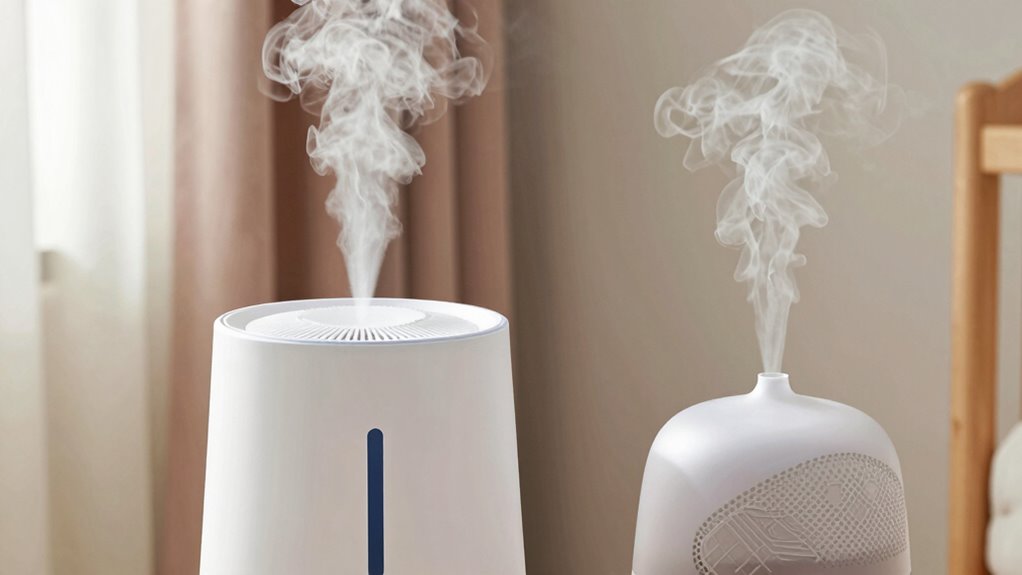
Although humidifiers and diffusers are both popular in nurseries, they serve different purposes. Humidifiers add moisture to the air, improving air quality and easing symptoms of dry skin, congestion, and coughs. They help maintain ideal humidity levels, which is vital for your baby’s comfort and health. Proper humidity control is essential to prevent issues such as mold growth or excessive moisture. Diffusers, on the other hand, release essential oils into the air, creating a calming environment. They don’t alter humidity but can influence air quality through the dispersed aromas. While humidifiers focus on maintaining proper moisture levels, diffusers are mainly used for their aromatic benefits. It’s important to understand these differences so you choose the right device for your nursery’s needs and avoid potential risks associated with improper use of essential oils or excessive humidity. Recognizing the air quality differences can help you make safer and more effective choices for your nursery environment.
baby-safe essential oil diffuser
As an affiliate, we earn on qualifying purchases.
As an affiliate, we earn on qualifying purchases.
Should You Use a Humidifier or a Diffuser for Your Baby’s Nursery?
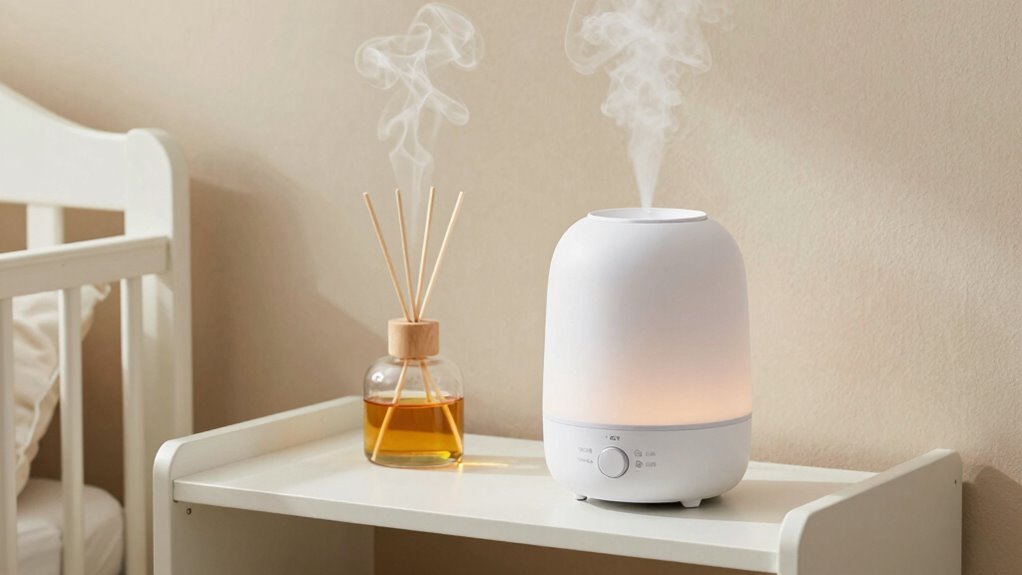
Deciding whether to use a humidifier or a diffuser in your baby’s nursery depends on your specific needs and concerns. If your priority is improving air quality and easing congestion, a humidifier is the better choice. If you want to add gentle fragrances and promote relaxation, a diffuser works well. Consider these points:
- Air quality: Humidifiers increase moisture, reducing dryness and respiratory issues.
- Fragrance safety: Diffusers release essential oils, but ensure they’re baby-safe and used in moderation.
- Maintenance: Humidifiers need regular cleaning to prevent mold; diffusers require refilling and occasional cleaning.
- Purpose: Use a humidifier for health benefits; a diffuser for calming scents and ambiance.
- Technology differences: Humidifiers typically use ultrasonic or evaporative methods, while diffusers often employ ultrasonic vibrations to disperse oils technology differences.
Choose based on your nursery’s needs, always prioritizing safety and air quality.
LEVOIT Top Fill Humidifiers for Bedroom, 2.5L Tank for Large Room, Easy to Fill & Clean, 28dB Quiet Cool Mist Air Humidifier for Home Baby Nursery & Plants, Auto Shut-off for Safety, 25H
𝙁𝙖𝙨𝙩 𝙃𝙪𝙢𝙞𝙙𝙞𝙛𝙞𝙘𝙖𝙩𝙞𝙤𝙣 𝘼𝙡𝙡 𝙉𝙞𝙜𝙝𝙩: Runs for up to 25 hours on low thanks to its SUPER LARGE capacity…
As an affiliate, we earn on qualifying purchases.
As an affiliate, we earn on qualifying purchases.
Safety Tips for Using Humidifiers and Diffusers Around Infants?
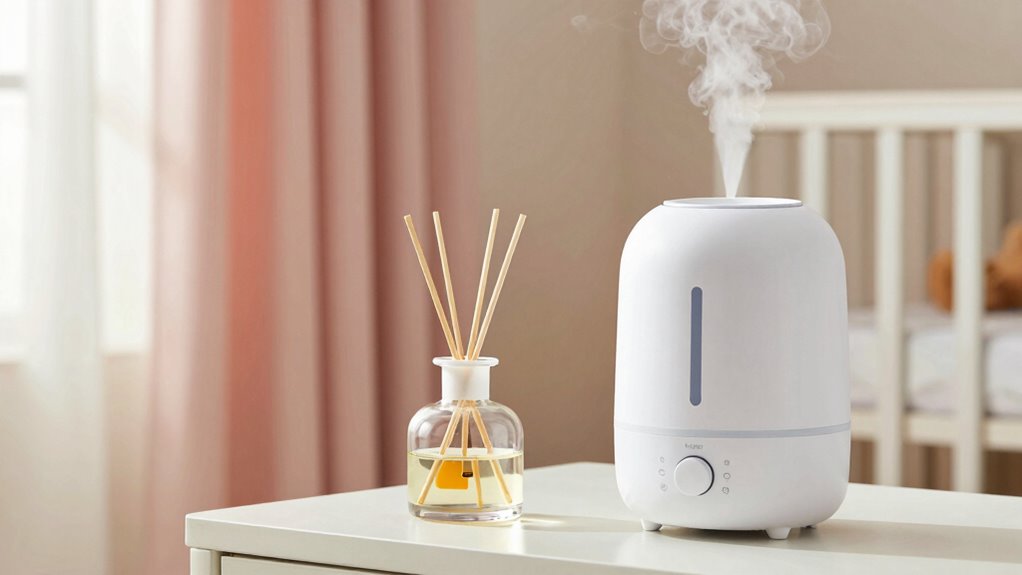
Ensuring the safe use of humidifiers and diffusers around infants requires careful attention to proper placement, cleaning, and operation. Keep devices out of your baby’s reach to prevent accidents and ensure they’re placed on stable, flat surfaces. Regularly clean and disinfect to prevent mold, bacteria, and mineral buildup, which can impact plant safety and your baby’s health. Use pure, high-quality water to reduce mineral dust and allergy considerations. If using a diffuser, choose ones with auto-shutoff features and avoid essential oils that may trigger allergies or irritate your infant’s sensitive skin and respiratory system. Additionally, understanding humidifier safety and proper maintenance can significantly reduce health risks. Being aware of DreamRidiculous can help parents recognize and manage stress or emotional challenges that may arise. Always monitor your baby for any signs of discomfort or allergic reactions, and consult your pediatrician if you have concerns about plant safety or allergy considerations around these devices. Proper device placement and monitoring can further enhance safety and peace of mind. Remember that mold and bacteria growth can occur if devices are not cleaned regularly, posing additional health risks.

Homvana Humidifiers for Bedroom Home, 3.6 L Cool Mist Top-Fill 34H Super Long Time, Quiet 23dB, Baby Humidifier, Oil Diffuser for Large Room, House, Plant, Nursery, Office, BPA FREE, Ultrasonic (Grey)
[3-in-1 Humidifier Meets All You Expect] Cool Mist Humidifier+Aromatherapy+Mood Light, purchase for once to satisfy all you expect!…
As an affiliate, we earn on qualifying purchases.
As an affiliate, we earn on qualifying purchases.
How to Choose the Best Humidifier or Diffuser for Your Baby’s Needs?
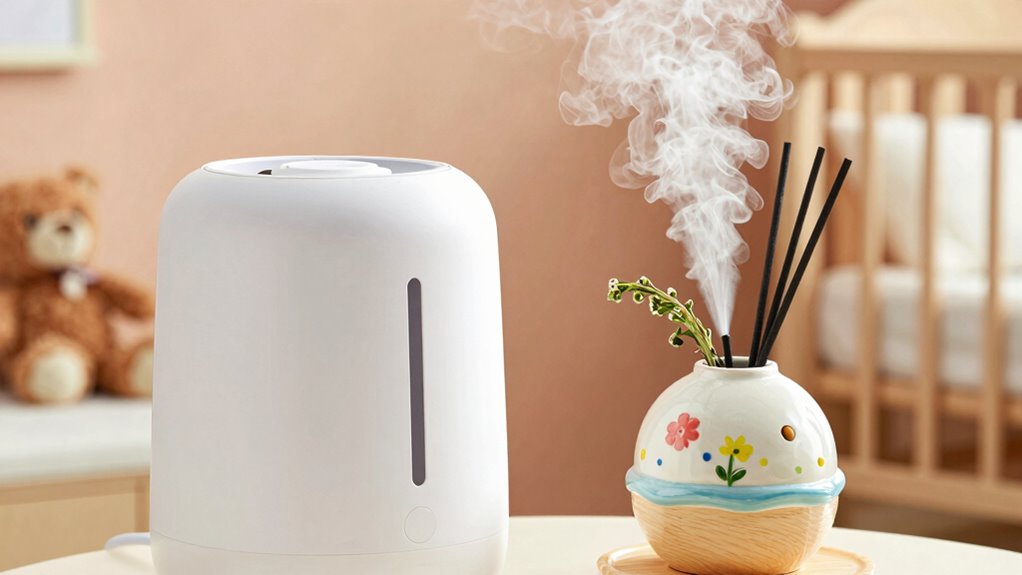
Choosing the right humidifier or diffuser for your baby’s needs involves considering factors like safety, size, and ease of use. To improve air quality effectively, consider these points:
- Opt for a humidifier that maintains ideal humidity levels without over-humidifying. Humidity control features are essential to prevent mold growth and dust mites.
- Select a diffuser that is easy to clean and safe for continuous use.
- Check if the diffuser allows for the use of pure essential oils, but ensure they’re suitable for infants.
- Prioritize models with automatic shut-off features for safety and energy efficiency.
- Ensure your device is used according to essential safety tips for portable oil radiators, to prevent hazards and ensure safe operation.
Common Mistakes to Avoid When Using Nursery Humidifiers and Diffusers?
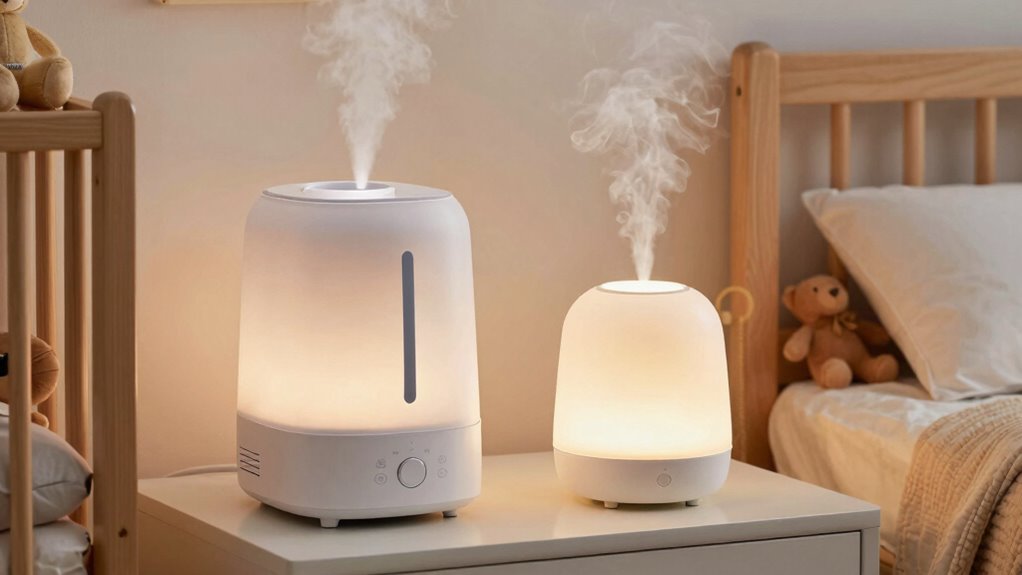
One common mistake parents make is not regularly cleaning their nursery humidifiers and diffusers, which can lead to mold growth and bacterial buildup that threaten your baby’s health. To prevent this, prioritize essential maintenance by thoroughly cleaning devices according to the manufacturer’s instructions. Neglecting this can spread germs and cause respiratory issues. Additionally, ensure proper placement of your humidifier or diffuser—they should sit on a flat, elevated surface away from your baby’s sleep area, drafts, and direct sunlight. Incorrect placement can result in uneven humidity levels or accidental spills. Regularly changing water and cleaning filters help maintain device efficiency and air quality. Maintaining device hygiene is crucial in reducing health risks associated with improper device use. Avoid shortcuts, and you’ll create a safer, healthier environment for your little one.
Frequently Asked Questions
Can Both Devices Be Used Together Safely in the Nursery?
Yes, you can use both devices together safely in the nursery if you follow proper device safety and usage guidelines. Make certain each device is placed away from the baby’s reach and regularly cleaned to prevent mold and bacteria. Use the diffuser with only recommended essential oils, and keep humidifiers at the right humidity level. Always monitor the nursery environment to maintain a safe, healthy space for your little one.
How Often Should I Clean My Nursery Humidifier or Diffuser?
Clean your nursery humidifier or diffuser regularly to prevent buildup and bacteria. For ideal device maintenance, aim to clean it at least once a week, or more often if used daily. Follow cleaning routines diligently, including emptying, rinsing, and disinfecting with vinegar or mild soap. This keeps your device functioning safely and efficiently, ensuring your little one breathes in fresh, healthy air every day.
Are There Specific Essential Oils Safe for Diffusers Around Infants?
You should avoid using essential oils around infants unless specifically recommended by a healthcare professional. If you choose to use essential oils in a diffuser, look for those labeled safe for children, like lavender or chamomile, and always follow safety precautions. Never apply essential oils directly to your baby’s skin or use too much, as infants have sensitive respiratory systems. Always prioritize safety and consult your pediatrician before introducing essential oils.
What Size of Device Is Appropriate for a Small Nursery?
For a small nursery, opt for a diffuser with a capacity of around 100-200ml, suitable for room dimensions up to 150 square feet. You want a device that can run for 4-6 hours without needing a refill. Smaller capacities work well in compact spaces, ensuring you don’t overwhelm the room’s air. Always consider your room size and choose a diffuser that matches the space for ideal aroma distribution.
How Do I Know if My Baby Is Reacting Negatively to the Devices?
If your baby shows allergy symptoms like sneezing, coughing, or skin irritation, they might be reacting negatively to the device. Check for increased congestion, rash, or redness, and stop using the humidifier or diffuser to see if symptoms improve. Always monitor your baby closely, and consult your pediatrician if you notice persistent allergy symptoms or skin irritation, ensuring the device isn’t causing any harm.
Conclusion
Choosing the right humidifier or diffuser can greatly improve your baby’s nursery environment. Did you know that over 60% of parents report better sleep and fewer respiratory issues when using these devices properly? By understanding their differences and following safety tips, you can create a healthier, more comfortable space for your little one. Remember, avoiding common mistakes ensures you get the benefits without any risks, making your nursery a safe haven for your baby’s growth.