Understanding terms like HEPA H13, CADR, and ACH helps you select an effective air purifier. HEPA H13 filters trap at least 99.95% of tiny particles, including viruses and allergens. CADR shows how quickly a device cleans the air, while ACH indicates how often the air in a room gets replaced each hour. Knowing how these work together guarantees you pick the right purifier for your space—keep going to learn more about making the best choice.

Turn the school run and nap time into listening time
- Thousands of audiobooks, podcasts and originals
- Listen on your phone, tablet or Echo — also offline
- Cancel anytime
Key Takeaways
- HEPA H13 filters capture ≥99.95% of 0.1-micron particles, ensuring high air purification standards.
- CADR measures how much clean air an purifier delivers per minute, indicating removal speed.
- ACH indicates how many times indoor air is replaced per hour, reflecting ventilation efficiency.
- Proper airflow and air exchange rates optimize pollutant removal and purifier effectiveness.
- Selecting devices with verified CADR and ACH ratings ensures suitable performance for room size and air quality needs.
As an affiliate, we earn on qualifying purchases.
What Is a HEPA H13 Filter and Why Does It Matter?
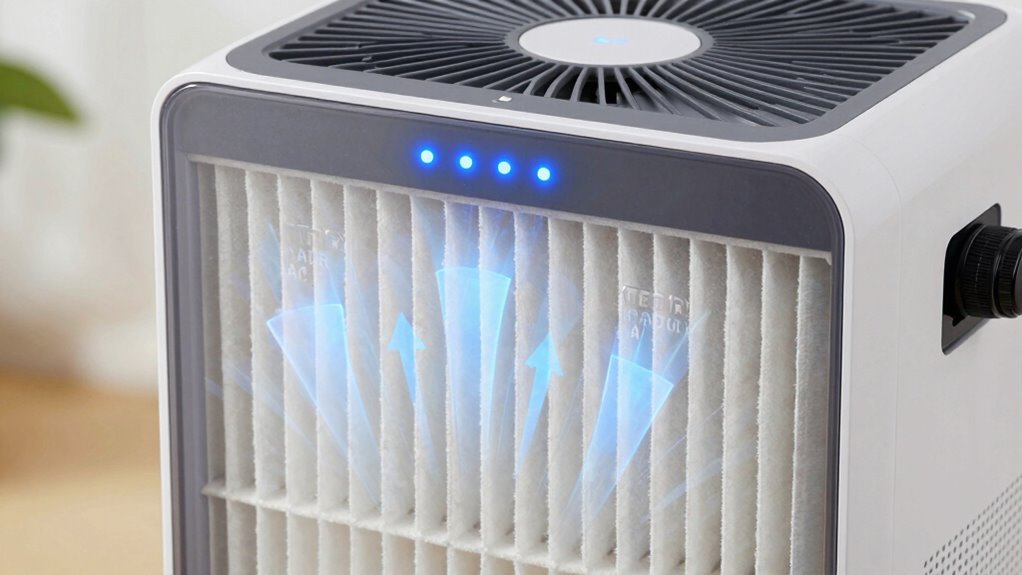
A HEPA H13 filter is a high-efficiency air filter designed to capture at least 99.95% of airborne particles as small as 0.1 microns. This makes it essential for effective air purification, especially in environments needing cleaner air. Because of its advanced filtration capabilities, a HEPA H13 filter helps remove allergens, dust, bacteria, and viruses, improving indoor air quality substantially. To keep your air purifier functioning properly, regular filter maintenance is vital. Over time, filters can become clogged with trapped particles, reducing their effectiveness. Replacing or cleaning the filter as recommended guarantees ideal performance and maintains the high standards of air purification that a HEPA H13 provides. Proper filter maintenance directly impacts the efficiency and lifespan of your air purifier. Best Gear and Knife Roundups for Smart Shopping Additionally, understanding air purification standards can help you choose the right filter for your needs. Regularly monitoring filter performance ensures optimal operation and sustained air quality benefits. Maintaining filter integrity is crucial to ensure your air purifier continues to deliver the best possible air quality. Being aware of filtration efficiency ratings can further assist in selecting the most suitable air cleaning device for your environment.
How Does CADR Measure an Air Purifier’s Effectiveness?
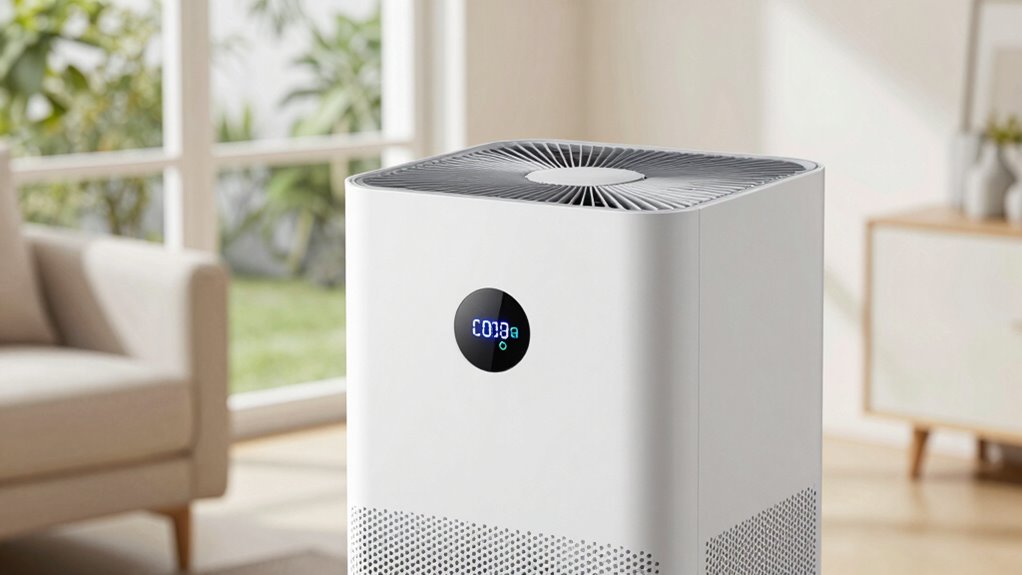
Understanding CADR, or Clean Air Delivery Rate, is essential because it directly indicates how effectively an air purifier cleans the air in your space. CADR measures the volume of filtered air an air purifier delivers per minute, helping you compare models based on their ability to meet air quality standards. A higher CADR means faster removal of pollutants like dust, smoke, and pollen. It also impacts the filter’s lifespan; a unit with a high CADR often requires more frequent filter changes if used continuously. When choosing an air purifier, consider its CADR ratings to ensure it suits your room size and air quality needs. Additionally, accurate measurement of CADR allows you to better assess the purifier’s capacity to handle different levels of indoor pollutants, leading to more informed purchasing decisions. This measurement provides a clear, practical way to gauge how well an air purifier will perform in maintaining cleaner, healthier air. Moreover, understanding air quality standards helps you select a model that effectively meets your specific indoor air needs. Proper understanding of filter efficiency can also guide you toward choosing devices that offer optimal pollutant removal.
What Is ACH (Air Changes per Hour), and Why Is It Important?
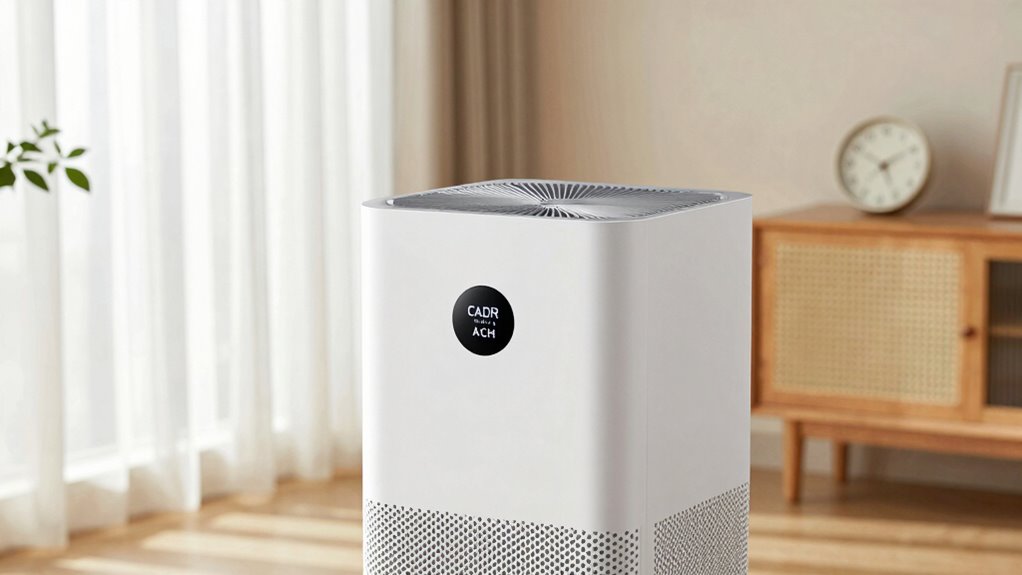
Ever wonder how effectively your air purifier refreshes the air in your room? ACH, or Air Changes per Hour, measures how many times the entire volume of air is replaced in an hour. It’s a key factor in air quality monitoring because it directly influences ventilation efficiency. A higher ACH means your purifier is cycling air more frequently, reducing pollutants and allergens faster. Knowing the ACH helps you choose the right unit for your space, ensuring you maintain healthy indoor air. It’s especially important in rooms with poor natural ventilation or high pollutant levels. By understanding ACH, you can better evaluate how well your air purifier handles air refresh rates, ultimately creating a cleaner, safer environment for you and your family. Understanding ventilation is essential in maintaining optimal indoor air quality. Additionally, considering air purifier specifications like ACH can help you select devices that effectively improve your indoor environment, especially in ventilation-limited spaces. Recognizing the prognosis of air quality can further assist in making informed decisions about air purification needs. To optimize air quality, it’s also helpful to understand how air exchange rates impact pollutant removal and overall health.
Comparing HEPA H13, CADR, and ACH: Which Matters Most for Your Home?
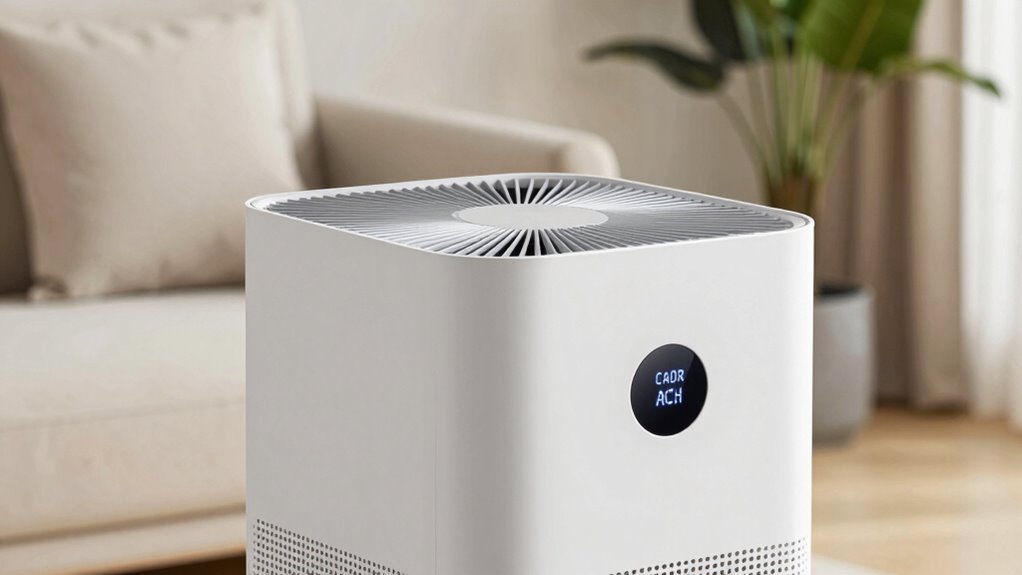
When choosing an air purifier, it’s important to compare how different specifications impact its performance in your home. HEPA H13 filters are vital for capturing fine particles like allergens and viruses. CADR (Clean Air Delivery Rate) measures how quickly an air purifier cleans the air, which impacts efficiency in larger spaces. ACH (Air Changes per Hour) indicates how often the air is replaced, affecting overall air quality. Consider these factors:
- Higher CADR for faster cleaning
- ACH for thorough air turnover
- Air quality sensors for real-time feedback
- Noise levels for quiet operation
While HEPA filters guarantee effective particle removal, CADR and ACH influence how quickly and thoroughly your space improves. Noise levels and air quality sensors help you balance performance with comfort and awareness, ensuring your home stays both clean and quiet.
How to Use HEPA, CADR, and ACH to Choose the Right Air Purifier for Your Needs
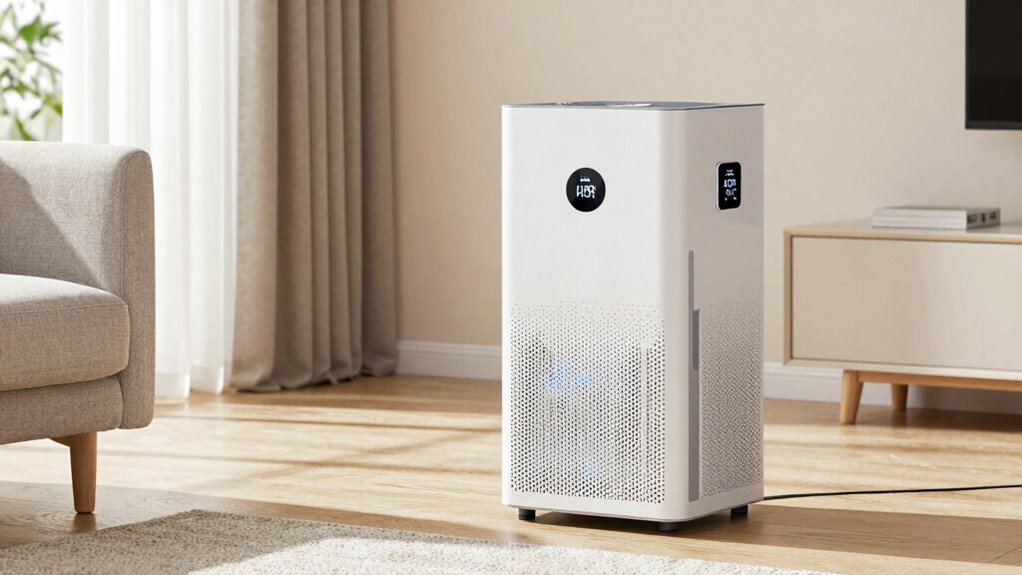
To select the right air purifier, you need to match its capacity with your room size. Understanding filtration standards like HEPA, CADR, and ACH helps you compare models effectively. This ensures that you choose a device with appropriate airflow capacity for your space. This way, you guarantee your purifier will clean the air efficiently for your specific needs. Additionally, paying attention to filter replacement frequency can help maintain optimal performance over time. Knowing about measurement tools used to test air quality can also help you assess the effectiveness of different purifiers.
Matching Air Purifier Capacity
Choosing the right air purifier starts with understanding its capacity to handle your space. To do this effectively, match the purifier’s CADR and ACH ratings to your room size. A higher CADR means faster air cleaning, while a suitable ACH ensures your air turns over enough times per hour. Keep in mind that a larger room requires a purifier with a higher CADR, which can impact filter lifespan. Here are key points to contemplate:
- Ensure the CADR matches your room size for efficient cleaning
- Check ACH to see how many times air is refreshed each hour
- Larger rooms need higher capacity units
- Proper matching extends filter lifespan and maintains performance
- Considering water damage and rug cleaning tips can help prevent mold growth that impacts indoor air quality
Matching capacity prevents overworking the filter and keeps your air clean without unnecessary replacements.
Understanding Filtration Standards
Understanding filtration standards is essential to selecting an air purifier that effectively removes pollutants. These standards, such as filtering efficiency and technical standards, help you gauge how well a purifier captures particles. Filtering efficiency indicates the percentage of particles a filter can remove at specific sizes, like 0.3 microns for HEPA filters. Technical standards ensure consistent performance across devices, giving you confidence in their capabilities. When comparing air purifiers, look for certifications or ratings aligned with recognized standards. This way, you know you’re choosing a device capable of delivering the level of purification you need. By understanding these filtration standards, you’ll make smarter choices, ensuring cleaner air and better health for your space.
Common Questions About Air Purifier Terms : Simple Answers
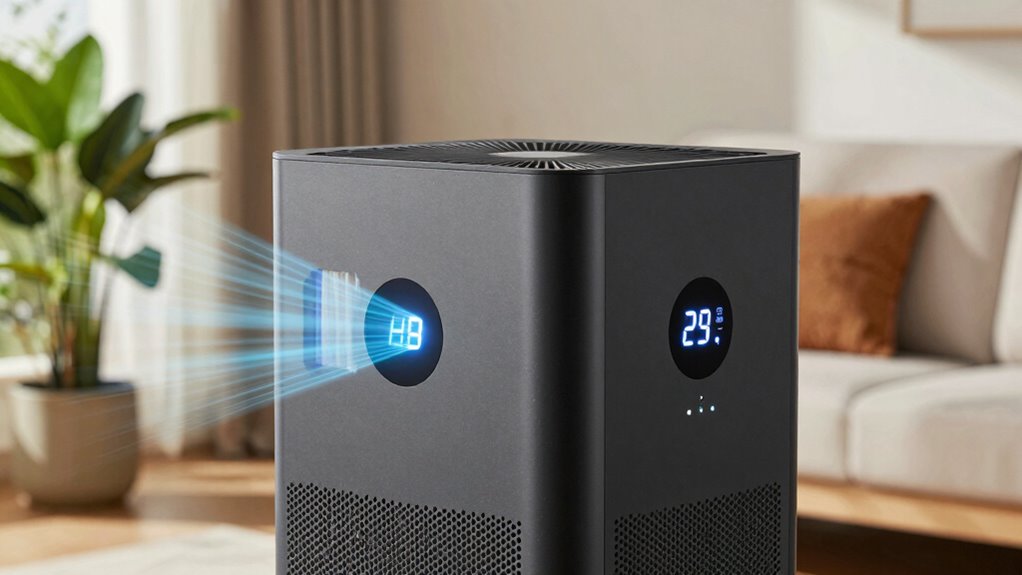
Many people find air purifier terminology confusing, but understanding these terms can help you make better choices. Common questions include what units like CADR and ACH mean, or how air quality monitoring works. Here’s what you need to know:
- CADR (Clean Air Delivery Rate): Measures how much filtered air an purifier produces per minute.
- ACH (Air Changes Per Hour): Shows how many times the air in your room is filtered each hour.
- Air quality monitoring: Tracks indoor pollution sources to help you adjust your purifier’s settings.
- Indoor pollution sources: Things like cooking, smoking, or pets that impact your air quality. Knowing these terms helps you pick the right device for better air quality. Understanding air filtration efficiency helps you select an effective air purifier for your needs, especially when considering air exchange rates and their impact on overall air quality.
Additionally, grasping air exchange rate concepts can aid in optimizing your purifier’s placement and operation for maximum effectiveness, especially considering airflow patterns within your space. Recognizing how filter replacement frequency influences overall efficiency can also ensure your device performs optimally over time.
Frequently Asked Questions
Can Air Purifier Jargon Vary Between Brands or Models?
Yes, air purifier jargon can vary between brands or models. Different brands often use unique terminology or emphasize certain features in their model specifications, which may confuse consumers. You’ll notice variations in how they describe filtration levels, coverage, or technology. To make informed choices, compare model specifications carefully and familiarize yourself with common terms, so you understand what each brand’s terminology truly means for your air quality needs.
Do Higher CADR or ACH Always Mean Better Filtration?
Higher CADR or ACH doesn’t always mean better filtration, especially if airflow efficiency drops or filter lifespan shortens. Think of it like a car: faster doesn’t always mean better if the engine wears out quickly. You want a balance—strong airflow to clean air effectively without stressing the filter. So, focus on overall performance rather than just numbers, ensuring your air purifier maintains efficiency and lasts longer.
How Often Should I Replace HEPA H13 Filters?
You should replace your HEPA H13 filters every 6 to 12 months, depending on usage and air quality. Check your filter’s lifespan recommendations from the manufacturer, as replacement frequency can vary. If you notice reduced airflow, increased odors, or visible dirt, it’s time to replace the filter sooner. Regularly maintaining your filter ensures peak air quality and keeps your air cleaner working efficiently.
Are There Differences in Noise Levels With Different ACH Settings?
Yes, changing ACH settings can impact noise level variations. When you increase the ACH, the air cleaner works harder and often produces more noise, especially at higher speeds. Conversely, lowering the ACH typically results in quieter operation, as the fan runs at a slower pace. So, if you prefer a quieter environment, opt for lower ACH settings, but keep in mind they may be less effective at cleaning the air quickly.
Is a Higher CADR Suitable for Larger Rooms Only?
Imagine a gentle breeze swirling through your cozy living room—that’s what a higher CADR offers, making it suitable for larger rooms. It boosts air circulation, quickly filtering out pollutants and allergens. For smaller spaces, a lower CADR works fine, providing quiet, effective air cleaning. So, choose a higher CADR for bigger rooms where more air needs to move, ensuring fresh air flows freely and keeps your space healthier.
Conclusion
Understanding HEPA H13, CADR, and ACH helps you select the right air purifier for your home. By knowing what each term signifies, you can make smarter decisions and guarantee cleaner air for yourself and your loved ones. Don’t let confusing jargon hold you back—aren’t you worth the best possible air quality? With this knowledge, you’re ready to pick an effective purifier that truly makes a difference in your space.
Cold & flu season Picks
humidifiers
As an affiliate, we earn on qualifying purchases.