

To create an AAP-aligned family media plan today, start by evaluating your current screen habits and setting clear boundaries around device use, like mealtimes or before bed. Involve your children in this process to promote understanding and cooperation. Focus on quality content and use parental controls to support healthy habits. Consistent enforcement and regular updates help maintain balance. Keep exploring these practical steps to build a responsible digital environment for your family.
Key Takeaways
- Assess your current screen time habits to identify patterns needing adjustment and set realistic boundaries.
- Involve children in creating the media plan to promote understanding and cooperation.
- Establish clear device-free times, like meals and before bed, to encourage balanced routines.
- Focus on quality content and use parental controls to support healthy digital habits.
- Regularly review and adjust the plan as children grow to ensure ongoing developmentally appropriate boundaries.
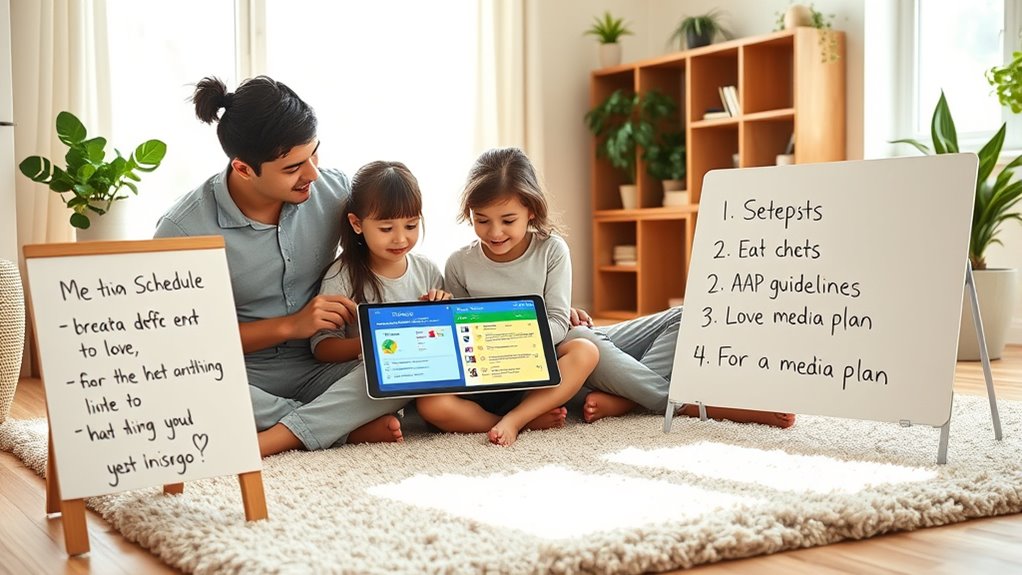
Creating a family media plan is essential in helping your family use technology responsibly and intentionally. As screens become an unavoidable part of daily life, setting clear guidelines around screen time and establishing digital boundaries can make a significant difference. When you create a plan, you actively decide how much time your kids spend on devices, what they do online, and when they disconnect. This proactive approach helps prevent excessive screen use, reduces conflicts, and encourages healthier habits. It also teaches your children to develop self-control and makes them more aware of their digital consumption.
A family media plan promotes responsible tech use, healthy habits, and digital boundaries for children’s growth and well-being.
To start, assess your family’s current screen time habits. Observe when and how often your children are using devices, and identify patterns that might need adjusting. Once you understand their habits, set reasonable limits that align with your family’s values and routines. For example, you might decide that screens are off during mealtimes, homework hours, or an hour before bed. These boundaries create a clear structure, so your children know what to expect and can develop self-discipline. Remember, digital boundaries aren’t meant to be restrictive but to foster a balanced relationship with technology. They help your kids focus on other activities like outdoor play, reading, or family conversations.
Involving your children in the planning process encourages cooperation and understanding. Explain why setting limits is important for their well-being, growth, and social development. When kids understand the purpose behind digital boundaries, they’re more likely to respect them. Make the rules consistent and fair, and stick to them as much as possible. If adjustments are needed, discuss them openly and agree on new limits together. This teaches flexibility and responsibility, which are vital skills in the digital age.
Additionally, incorporating screen time management strategies can support your efforts to create a healthy digital environment for your family. Also, think about the quality of screen time, not just the quantity. Encourage your children to engage with educational content, creative apps, or communication tools that promote learning and connection. Set rules about the types of content they can access, and consider using parental controls to help enforce these boundaries. Creating a family media plan is not a one-time task; it’s an ongoing process that evolves as your children grow. Regularly review and update your boundaries to suit their changing needs and maturity levels.

Screen Time Tokens – Clip To Rewards – Behavior Management Tool – Positive Reinforcement
Helps limit Scree-Time! (Video Games; Tablets; TV)
As an affiliate, we earn on qualifying purchases.
As an affiliate, we earn on qualifying purchases.
Frequently Asked Questions
How Often Should I Review and Update My Family Media Plan?
You should review and update your media plan at least every few months or whenever your child’s routines or media habits change. Regular media plan review helps keep boundaries clear and guarantees your updates align with their developmental needs. Establishing an updating schedule, like every three to six months, makes it easier to stay proactive and adapt to new devices, apps, or challenges. Consistent reviews foster healthy media habits over time.
What Tools or Apps Can Help Implement the Media Plan?
You can use apps like Qustodio, Bark, or Google Family Link to help with digital wellbeing and manage screen time effectively. These tools let you set limits, monitor activity, and customize rules for your family’s media use. By leveraging these apps, you actively promote healthy digital habits, ensuring your kids balance screen time with other activities, fostering a safer and more mindful approach to media consumption.
How Do I Handle Conflicts Over Screen Time With My Child?
You handle conflicts over screen time by setting clear boundaries and practicing effective communication. Explain your reasons calmly, listen to your child’s perspective, and work together to find a compromise. Consistently enforce the limits you agree on, and reinforce positive behavior. When conflicts arise, stay patient, keep dialogue open, and remind your child that boundaries are in place to support their well-being and foster trust between you both.
How Can I Involve My Children in Creating the Media Plan?
You can involve your children in creating the media plan by encouraging their child participation and making media planning collaboration a fun, engaging process. Ask for their input on screen time limits, preferred activities, and media choices. Listen actively and incorporate their ideas, helping them feel responsible and empowered. This collaborative approach fosters understanding, builds trust, and promotes healthier media habits for the whole family.
Are There Specific Media Guidelines for Children With Special Needs?
Did you know that children with special needs benefit from tailored media guidelines? You should focus on adaptive strategies and inclusive content to support their unique needs. Set personalized limits, choose accessible media, and involve specialists if needed. This way, you create a safe, engaging media environment that promotes learning and well-being, ensuring your child’s media use is both enjoyable and beneficial, respecting their individual abilities and challenges.

Amazon Kids
Amazon Kids offers a kid-friendly environment for kids to explore and enjoy age-appropriate content
As an affiliate, we earn on qualifying purchases.
As an affiliate, we earn on qualifying purchases.
Conclusion
Creating a family media plan is like planting a sturdy tree—nurturing healthy habits now helps it grow strong and resilient in the future. By setting clear boundaries and staying engaged, you’re guiding your family through the digital landscape with confidence. Remember, the roots of good communication and mindful media use will support your family’s well-being for years to come. Start today, and watch your family’s digital health blossom into a lasting, vibrant tree.

Trayoo Kids Tablet 7 Toddler Children's Learning Tablet with WiFi, YouTube, Parental Control, Durable Case Education Learning Apps for Boys Girls (Blue)
【Powerful Configuration Toddler Tablet】: Trayoo kids tablet 7 inch toddler tablet runs more smoothly than other models, comes…
As an affiliate, we earn on qualifying purchases.
As an affiliate, we earn on qualifying purchases.

50 Family Activities – Adventure Scratch Off Cards for Family Nights – Fun Conversation Cards – Gift for Families – Game Night Gift Basket Idea for Kids and Adults – Unique for Christmas and Birthdays
50 SURPRISE ACTIVITIES. Just scratch card and enjoy. Kids date night ideas; fun and adventurous challenge for family…
As an affiliate, we earn on qualifying purchases.
As an affiliate, we earn on qualifying purchases.