Helping your kids with household chores teaches them important life lessons like managing time, taking responsibility, practicing patience, and solving problems. As they complete tasks like cleaning or organizing, they develop skills that build independence and foster personal growth. These experiences also promote fairness and teamwork within the family. If you keep exploring, you’ll discover even more ways chores can shape your child’s future success and character.
Key Takeaways
- Kids learn time management and planning by balancing chores with other activities.
- Sharing household responsibilities teaches responsibility, fairness, and teamwork.
- Completing chores develops patience and perseverance through handling challenges calmly.
- Problem-solving during chores fosters creativity and resourcefulness in everyday tasks.
- Engaging in chores builds practical skills and personal growth essential for independence.
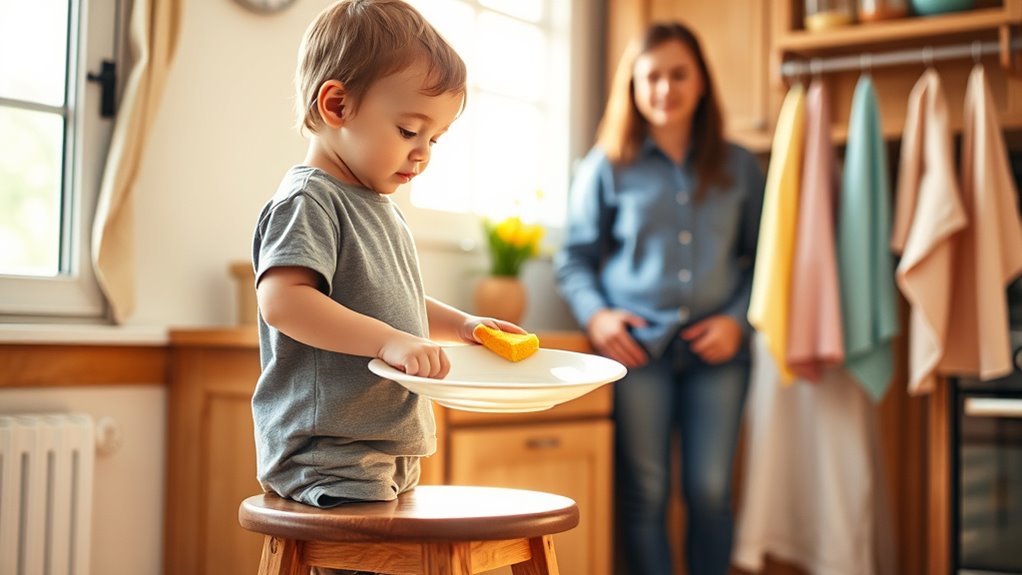
Household chores might seem like simple tasks, but they often serve as valuable lessons in responsibility, patience, and problem-solving. When you help out around the house, you’re not just cleaning or tidying up—you’re learning essential skills that will serve you well in many areas of life. One of the most important lessons is time management. As you juggle chores with your other activities, you start to see how planning ahead and prioritizing tasks help everything run smoothly. For example, if you know laundry takes a certain amount of time, you learn to set aside specific periods to complete it, avoiding last-minute rushes. This skill isn’t just about chores; it translates into managing school assignments, hobbies, and future commitments. Using appropriate tools and techniques during chores can also improve efficiency and make tasks easier to complete, which is a helpful skill in many areas beyond the home.
Responsibility assignment also plays a key role when you’re involved in household chores. When chores are divided among family members, you learn how to take ownership of your part. Whether it’s washing dishes, taking out the trash, or cleaning your room, you understand that your contribution matters. This sense of responsibility fosters accountability, and you realize that the household depends on everyone doing their part. Sometimes, responsibilities are assigned based on age or ability, which teaches you about fairness and teamwork. You see that sharing duties helps keep the household functioning smoothly and that your effort is appreciated.
Dividing chores teaches responsibility, fairness, teamwork, and that everyone’s effort keeps the household running smoothly.
Doing chores regularly also helps develop patience. Cleaning a cluttered room or waiting for laundry to finish can test your ability to stay calm and focused. You learn that some tasks require time and persistence, and rushing can lead to mistakes or incomplete work. Over time, you become more efficient and learn how to handle setbacks without frustration. This patience becomes a valuable trait, especially when faced with more complex challenges later in life.
Helping around the house also encourages problem-solving. When something isn’t quite right—like a stubborn stain or a cluttered space—you’re prompted to think creatively about solutions. Maybe you discover a new cleaning technique or figure out how to organize your belongings better. These small problem-solving experiences build confidence and teach you to approach challenges with a can-do attitude.
In the end, household chores are more than just tasks to check off a list—they’re practical lessons in managing your time, taking responsibility, exercising patience, and solving problems. These skills might not seem obvious at first, but they form the foundation for independence and success as you grow older. The more you engage with chores, the more you develop qualities that will benefit you far beyond the walls of your home.

HELLOWOOD Kids Cleaning Set, 8 Pcs Wooden Housekeeping Play Set Includes Broom Mop Duster Dustpan Brushes Rag and Organizing Stand, Cleaning Toys Gift for Toddlers Girls Boys Age 3-6, Solid Beech Wood
【Durable Wooden Cleaning Toys】This cleaning kit is made of real natural solid beech wood, sturdy enough to outlast…
As an affiliate, we earn on qualifying purchases.
As an affiliate, we earn on qualifying purchases.
Frequently Asked Questions
How Can Chores Improve a Child’s Emotional Development?
Chores can boost your child’s emotional resilience by helping them face challenges and develop problem-solving skills. When they complete tasks, their self-esteem grows as they see their accomplishments. This sense of achievement encourages independence and confidence, fostering emotional strength. By involving your kids in chores, you teach them valuable lessons about responsibility and perseverance, which are essential for healthy emotional development and building a positive self-image.
What Are Age-Appropriate Chores for Toddlers?
You might think toddlers are too tiny for chores, but even the smallest helpers can make a big difference! For age-appropriate chore examples, consider simple tasks like picking up toys, wiping down surfaces, or watering plants. These chores teach responsibility and independence while fitting their developmental stage. Starting with manageable chores helps your little one build confidence, gain a sense of accomplishment, and learn valuable life skills early on.
How Do Chores Influence a Child’s Academic Performance?
Chores can positively influence your child’s academic performance by helping them develop essential skills. When you assign age-appropriate tasks, you teach responsibility building and time management, which translate into better focus and organization in school. This sense of accountability encourages your child to manage their homework and activities efficiently, ultimately boosting their confidence and academic success. By integrating chores into daily routines, you support their growth both at home and in school.
Can Chores Foster Better Sibling Relationships?
Imagine chores as the glue that binds siblings together. When you share responsibilities, you create a teamwork symbol, fostering trust and cooperation. Handling conflicts through chores teaches kids conflict resolution, turning disagreements into opportunities for growth. By working side by side, siblings learn to communicate better, respect each other’s efforts, and strengthen their bond. Chores become a shared journey, nurturing lifelong skills and a harmonious sibling relationship.
How to Motivate Reluctant Children to Do Household Tasks?
To motivate reluctant children, try using reward systems and chore charts. You can set clear expectations and celebrate small wins, making chores feel more rewarding. Offer praise and tangible incentives, like stickers or extra playtime, to encourage consistency. Keep tasks manageable and positive, so your kids see chores as part of their routine, not a punishment. Over time, they’ll develop motivation and a sense of responsibility.

inamio Magnetic Kids Responsibility Reward Chart – Engaging 3D Stars & Chore Tasks – Behavior Chart for Home & School – Ideal for Ages 3-9, Multiple Kids
Unlock Their Potential – Boost your child's motivation with an interactive responsibility chart, featuring tactile 3D stars and…
As an affiliate, we earn on qualifying purchases.
As an affiliate, we earn on qualifying purchases.
Conclusion
By helping out around the house, you’re planting seeds that grow into lifelong lessons. Each chore is like a stepping stone, guiding you through the garden of responsibility, patience, and teamwork. These small acts build a sturdy foundation that supports you through life’s storms. Remember, the more you nurture these habits, the stronger your character becomes—like a mighty oak rooted deeply in the soil of everyday life. Keep tending to your growth; the fruits will be worth it.

Caroeas 90L Laundry Basket (13 Colors), Waterproof Laundry Hamper, Laundry Bag with Padded Handles, Clothes Hamper Stands Up Well, Collapsible Laundry Basket Easy Storage
【Aluminum Soft Rubber Handle Design】This laundry hamper is equipped with qualified aluminum handle with soft sponge on it,…
As an affiliate, we earn on qualifying purchases.
As an affiliate, we earn on qualifying purchases.

Magnetic Dry Erase Chore Chart – 14.5"x11" Chore Chart for Kids, Teens and Adults – 6.5"x8.5" List Board for Fridge – 6 Extra Fine Point Markers Included – Shipped Flat
Magnetic chore chart – Teach responsibility with our 14.5"x11" magnetic chore chart. It features 20 lines to track…
As an affiliate, we earn on qualifying purchases.
As an affiliate, we earn on qualifying purchases.