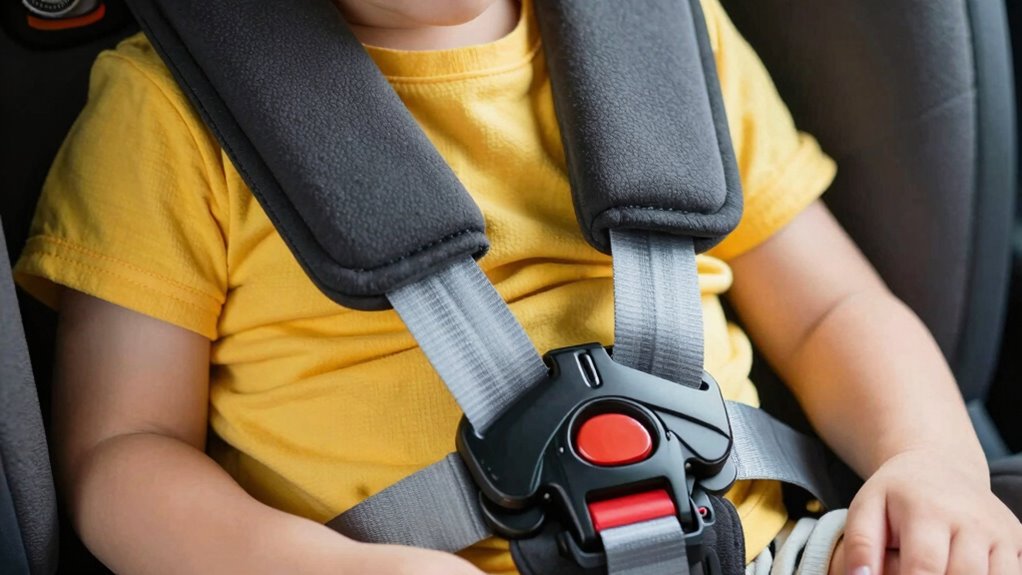

To guarantee your child’s safety, check that the harness straps are at or just above their shoulders (forward-facing) or below (rear-facing), with the straps snug enough to prevent slack—perform the pinch test to confirm. Make sure the chest clip is at armpit level to keep the straps in place, and regularly verify the harness height as your child grows. Keeping these three elements properly adjusted reduces injury risk; explore further tips for a safer, more confident install.
Key Takeaways
- Ensure harness straps are at or just above shoulder level for forward-facing seats, or below for rear-facing, and aligned with shoulder slots.
- Position the chest clip at armpit level to keep harness straps properly in place.
- Check that harness straps are snug, with no slack, and lie flat without twists, performing the pinch test.
- Verify the seat is securely installed with minimal movement and straps are free of damage or wear.
- Conduct routine safety checks before each trip, confirming all components are correctly positioned and fastened.

ZROSIN 5-Point Kids Safety Harness Adjustable Polyester Safety Belt for High Chair/Stroller/Car Seat(2pcs)
🔒 5-Point Full Body Protection – This kids safety harness features a 5-point design (shoulder ×2, waist ×2,…
As an affiliate, we earn on qualifying purchases.
As an affiliate, we earn on qualifying purchases.
Why Proper Harness Positioning Is Critical for Child Safety
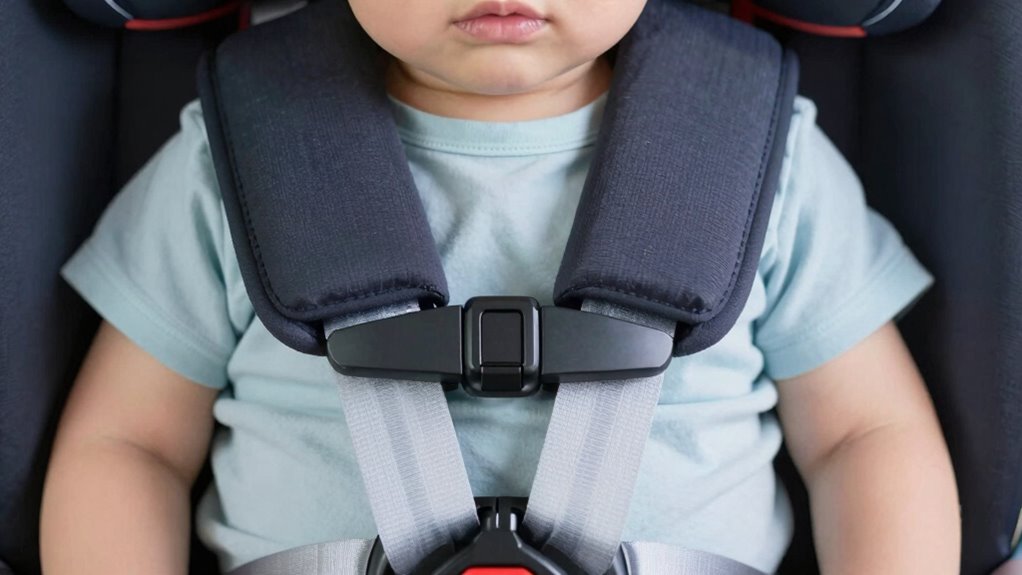
Proper harness positioning is essential because it guarantees your child’s safety in the event of a crash. Correct harness positioning ensures the straps stay snug against their body, preventing excessive movement that could cause injury. When you adjust the harness, pay attention to seat belt routing, making sure the straps follow the designated path without twists or twists. Proper seat belt routing keeps the harness properly aligned and distributes crash forces evenly across your child’s strongest areas. An improperly positioned harness can allow your child to slip out or move too much, increasing injury risk. Always check that the harness is at or just below your child’s shoulders for rear-facing seats and at or above for forward-facing seats. This way, you maximize protection and keep your child secure during every ride. Ensuring the harness is tight enough is vital because it prevents slack that could compromise safety during a sudden stop or collision proper harness tightness. Regularly inspecting harness adjustments helps maintain safety standards and adapts to your child’s growth, ensuring ongoing protection adjustment checks. Additionally, understanding how test accuracy plays a role in assessing harness fit can help you make more informed safety decisions. Being aware of proper fit assessment techniques allows for more precise safety evaluations and better protection. Remember that consistent checks are crucial because harnesses can shift over time or with movement, impacting safety maintenance routine.
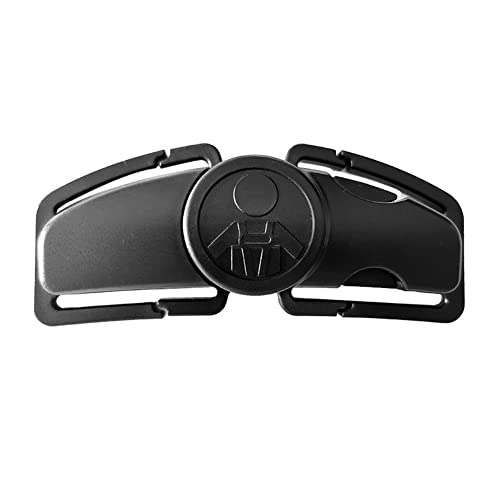
Universal Child Car Seat Chest Harness Clip Universal Safer Belt Clip Buckle Lock Stroller Chest Clip Adjustable Guard for Baby and Kids (Black)
As an affiliate, we earn on qualifying purchases.
As an affiliate, we earn on qualifying purchases.
How to Check and Adjust the Harness Height Correctly

To guarantee your child’s harness is at the correct height, start by checking that the straps are at or just above their shoulders. Make sure the harness slots are aligned with the child’s shoulder level for proper support. Adjust the harness height as needed to maintain a snug fit and ideal safety. Regularly inspect the harness system for wear and tear that ensure it remains effective over time. Ensuring proper fit and adjustment is crucial for optimal safety and comfort. Additionally, understanding the importance of contrast ratio can help you recognize the significance of a secure and reliable harness system in providing clear, consistent protection. Being aware of air-purifying qualities of certain safety features can also contribute to a healthier environment around your child.
Proper Seat Positioning
Have you checked if your child’s harness height is correctly adjusted lately? Proper seat positioning ensures your child’s comfort and safety. Start by ensuring the harness straps are at or just above your child’s shoulders if they’re in a forward-facing seat, or at or below if they’re rear-facing. When adjusting, make sure the harness lies flat against their body without slack, but isn’t too tight. A comfortable, snug fit helps prevent unwanted movement during a crash. Additionally, check your seat installation to confirm the seat is secure and doesn’t shift side to side. Correct seat positioning maximizes harness effectiveness and keeps your child comfortable, and enhances overall safety. Regularly reviewing and adjusting the harness height and seat placement is essential for ongoing protection. Traffic analysis cookies can help monitor and improve the safety features of your car seat setup. To maintain optimal safety, always refer to your car seat’s manufacturer guidelines for proper adjustment techniques. Also, regularly inspecting your seat’s installation stability can identify potential issues before they compromise safety. Keep in mind that consistent inspection routines are key to maintaining a safe car seat environment.
Checking Harness Slots
Checking the harness slots is a key step in ensuring your child’s safety and comfort. Start by removing any seat padding that might obscure the harness slots, as thick padding can hide proper placement. For convertible or harness-type seats, verify that the harness straps are at or just below your child’s shoulders for rear-facing seats, and at or just above for forward-facing. Different harness types may have adjustable slots, so consult your car seat manual for specific instructions. Properly positioned harness slots keep the straps at the correct height, preventing slack or misalignment. Make sure the harness lies flat without twists and that your child’s shoulders are snugly secured within the slots. Adjust the harness height as needed to maintain a secure and comfortable fit. Understanding harness design features can help you identify the correct slot positioning for various car seat models. Additionally, regularly checking the harness slot positions ensures ongoing safety as your child grows. Remember that proper harness fit is essential for maximum protection and should be checked each time your child is placed in the seat.

Graco SnugRide SnugFit Infant Car Seat, Baby Car Seat with Anti Rebound Bar for Extra Safety, No-Rethread Harness, LATCH Equipped Carseat, Baby Essentials, Gift for New Parents, Gotham
SnugRide performance helps protect rear-facing infants from 4-30 lb and up to 32"
As an affiliate, we earn on qualifying purchases.
As an affiliate, we earn on qualifying purchases.
Where Should the Chest Clip Sit? Proper Placement Tips

The chest clip plays an essential role in keeping your child’s harness properly positioned, so it’s important to make certain it sits at the right spot. Proper chest clip positioning ensures the harness stays snug and secure, reducing movement during a crash. Ideally, the chest clip should sit at armpit level, aligned with your child’s chest. To achieve this, adjust the harness height as needed. Use this guide for reference:
| Chest Clip Position | Purpose | Tips |
|---|---|---|
| At armpit level | Keeps harness in correct position | Check regularly as your child grows |
| Chest clip too high | Risks harness slipping off shoulders | Readjust immediately |
| Chest clip too low | Reduces harness effectiveness | Adjust harness height accordingly |
Always verify harness height adjustment and chest clip positioning before every ride. Ensuring the chest clip is correctly positioned is a simple yet crucial step in maintaining car‑seat safety. Proper installation techniques are vital for optimal protection. Regularly inspecting the harness system and chest clip helps prevent common errors and keeps your child secure. Additionally, understanding how to properly position the chest clip can significantly impact overall child safety in the vehicle. Remember that piercings can sometimes cause discomfort or interfere with the proper placement of safety equipment, so it’s important to consider any body modifications when installing a car seat.

Safety 1st Ellaris 3-in-1 Convertible Car Seat, Slim Fit Design, Rear & Forward-Facing, 5-Position Headrest, 3-Across Fit, Travel-Friendly with Machine-Washable Seat Pad, Smokey Haze
MADE TO BE WITH YOU FOR YEARS The Safety 1st Ellaris Convertible Car Seat adapts to your growing…
As an affiliate, we earn on qualifying purchases.
As an affiliate, we earn on qualifying purchases.
How Tight Should the Car Seat Harness Be? A Simple Check

Ensuring your child’s harness is snug enough is key to keeping them safe in the car seat. Check that the harness lies flat against their body without slack, and that the padding placement doesn’t interfere with the harness’s fit. The seat padding should be properly positioned so it doesn’t push the harness away from your child’s body or create gaps. When you tighten the harness, you should be able to fit only one finger between the harness and your child’s collarbone. If the harness feels loose or if padding shifts when you tighten the straps, readjust the seat or remove excess padding. A snug harness minimizes movement and keeps your child securely in place during a sudden stop or crash.
Common Mistakes When Securing Your Child in a Car Seat
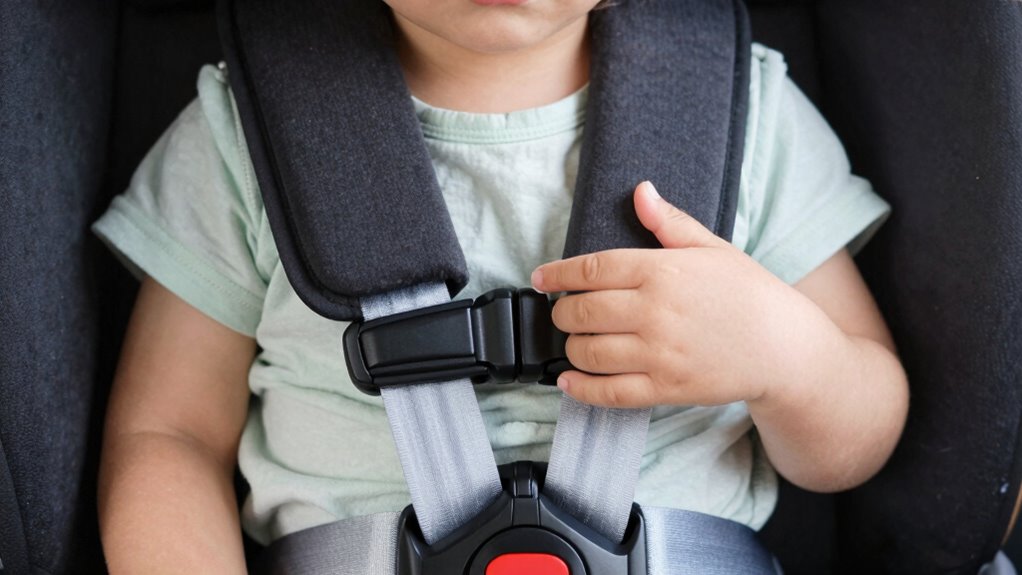
Many parents make mistakes when securing their child in a car seat that can compromise safety. Common errors include setting the harness at the wrong height, placing the chest clip incorrectly, or having straps that are too loose or too tight. Paying attention to these details helps guarantee your child stays safe during every trip. Additionally, regularly inspecting home safety products such as car seats can help ensure they are in proper condition and correctly installed. Ensuring correct harness adjustment is essential for optimal protection. Proper seat belt positioning can also prevent injuries in the event of a sudden stop or crash. Being aware of car seat safety standards can guide parents in choosing and maintaining the safest options for their children. Always remember that proper installation techniques can greatly reduce the risk of injury in accidents.
Incorrect Harness Height
Incorrect harness height is a common mistake that can compromise your child’s safety in a car seat. If the harness straps aren’t at the correct level, it affects seat belt positioning and overall protection. For rear-facing seats, straps should be at or below your child’s shoulders; for forward-facing seats, they should be at or above. Using a harness that’s too high or low can lead to poor restraint during a crash. Additionally, ensuring the harness height matches your car seat’s compatibility is essential. Not all seats have adjustable harness positions, so check your seat’s manual. Proper harness height keeps the straps snug against your child’s body, reducing movement and increasing safety. Always double-check the harness level each time you secure your child.
Improper Chest Clip Placement
One common mistake when securing your child in a car seat is placing the chest clip incorrectly. The proper chest clip should be at armpit level, ensuring it stays centered across your child’s chest. Many parents overlook this detail, which can compromise safety. A properly positioned chest clip helps keep the harness straps in the correct position, preventing them from slipping off the shoulders or shifting too low or high. Always check that the harness height matches your child’s shoulder level before fastening the chest clip. If the clip is too low or too high, it won’t provide the intended restraint. Ensuring the proper chest clip placement is a simple but essential step in maximizing your child’s safety during every ride. Additionally, regularly inspecting the car seat for wear and proper adjustment can further enhance overall safety. Proper installation techniques are crucial for maintaining the safety features of the car seat over time.
Loose or Tight Straps
When securing your child in a car seat, ensuring the straps are snug enough is essential for safety. Too much strap slack can allow your child to move excessively, reducing protection during a crash. Conversely, overly tight harness tension can cause discomfort and restrict movement. Check that you cannot pinch any strap at the shoulder; there should be no slack. The harness should lie flat against your child’s body, with no twists or twists. Proper harness tension means the straps hold your child securely without causing strain or discomfort. Regularly adjust and check the straps as your child grows or if they shift position during the ride. Keeping the straps at the correct tightness is a simple but fundamental step to maximize your child’s safety in the car seat.
Signs Your Harness Is Installed Correctly: Visual Clues
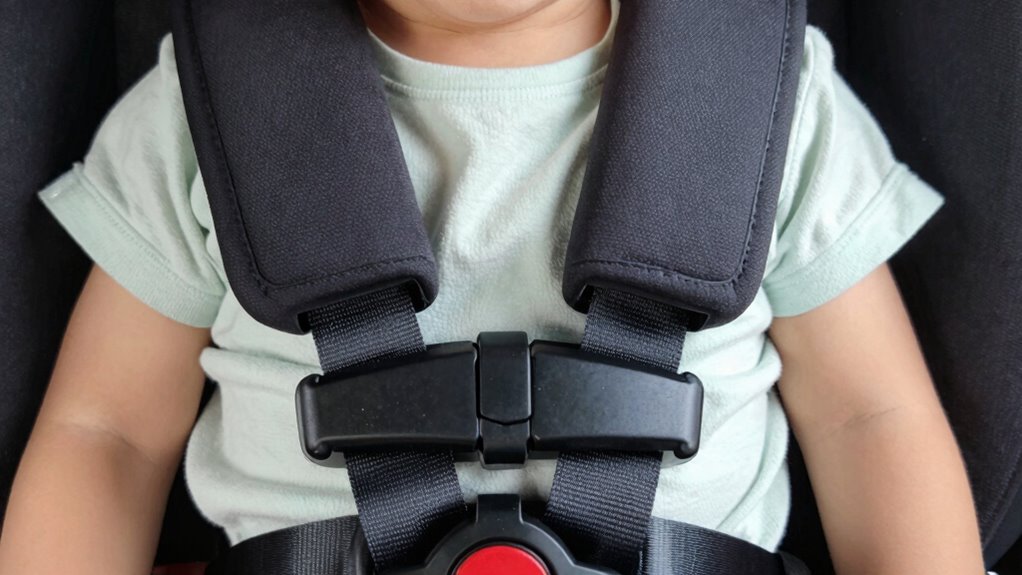
To guarantee your child’s harness is installed correctly, look for clear visual cues that indicate proper setup. First, check that the seat fabric is smooth and snug, with no slack or bunching. Second, verify the harness straps lie flat against the car seat, without twists or twists in the webbing. Third, confirm the car seat colors are consistent and match the manufacturer’s instructions, especially for indicators like tether straps or indicators that show proper installation. Lastly, affirm that the harness is positioned at or just below your child’s shoulders and that the chest clip sits at armpit level. These visual clues help ensure the harness fits securely and correctly, keeping your child safe during every ride.
How to Adjust the Harness as Your Child Grows
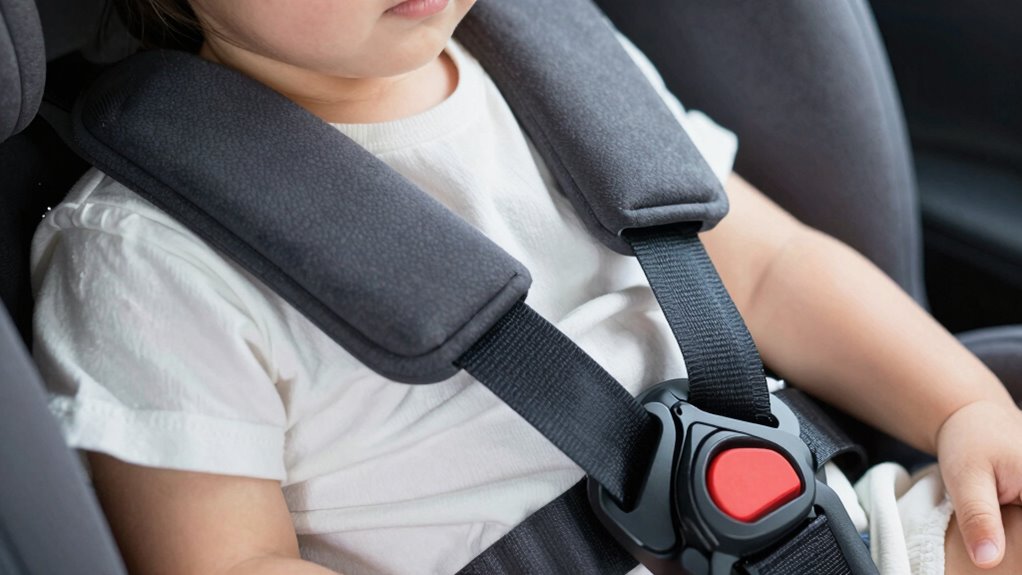
As your child grows, it’s important to regularly adjust the harness to make sure it fits properly and offers maximum safety. Proper harness adjustment ensures growth accommodation and keeps your child secure. To do this, check the harness height and strap tightness frequently, especially after weight or height increases. When adjusting, ensure the harness straps lie flat and are snug against the child’s body. Use this guide:
| Step | Action |
|---|---|
| 1 | Raise or lower the harness slots to match your child’s shoulders |
| 2 | Re-buckle and tighten the harness for a snug fit |
| 3 | Confirm the chest clip is at armpit level |
| 4 | Double-check the harness tension for a secure fit |
Regular harness adjustments promote growth accommodation and maximize safety in every trip.
Quick Tips to Make Harness Adjustments Easier
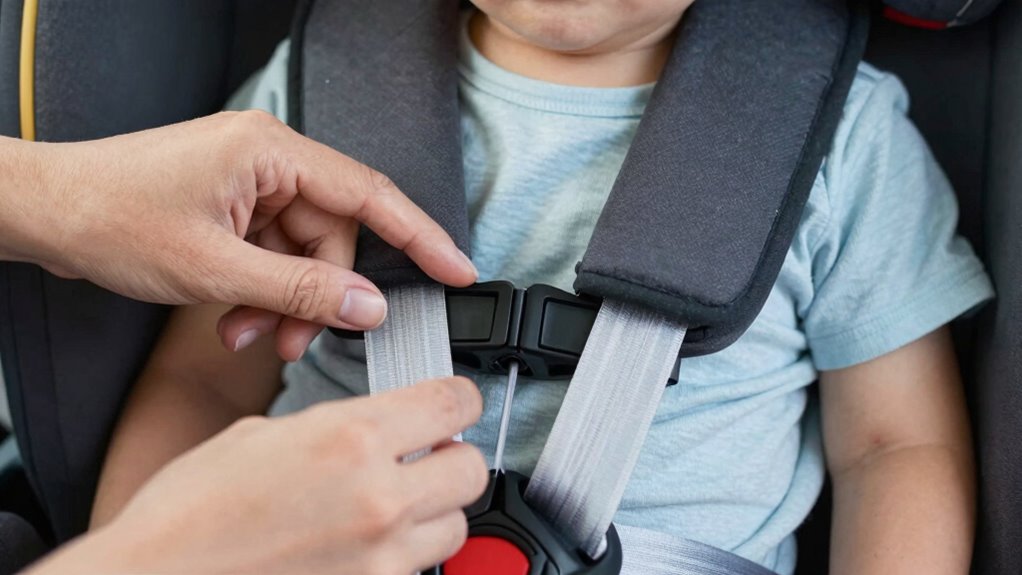
Adjusting the harness can sometimes feel tricky, but a few simple tips can make the process faster and easier. First, loosen the harness straps before repositioning the harness height or chest clip. This prevents unnecessary tugging and makes adjustments smoother. Second, always verify the harness is at the correct height, level with your child’s shoulders, for a proper fit. Third, position the chest clip at armpit level to keep the harness secure. Fourth, after making adjustments, double-check that the harness is snug—no slack should be visible—by performing the pinch test. These quick tips help ensure your child’s harness is properly adjusted, making every trip safer and more comfortable.
Understanding Your Car Seat Labels and Manufacturer Instructions
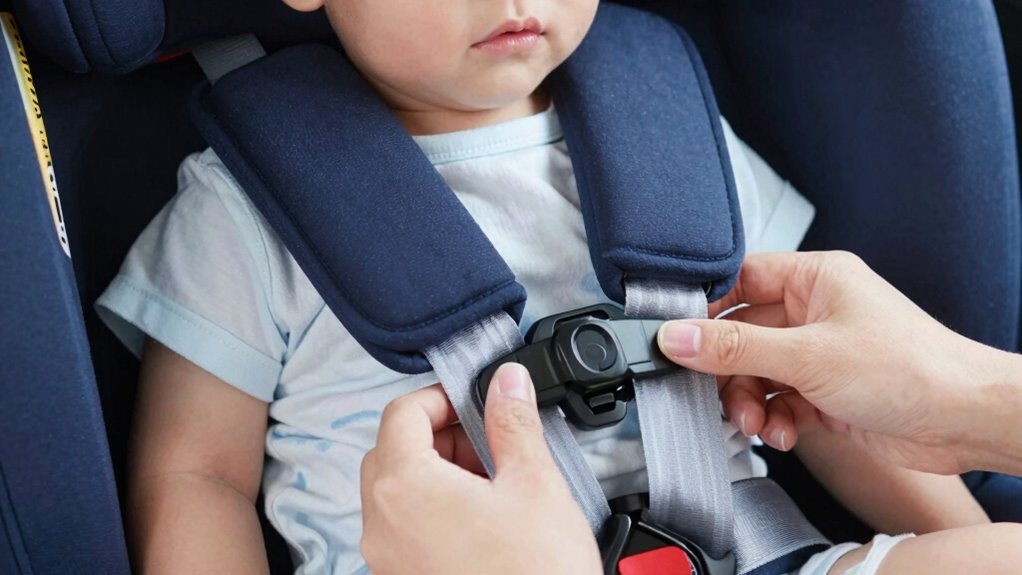
Understanding your car seat labels and manufacturer instructions is key to guaranteeing your child’s safety and proper fit. Always read the labels carefully, as they provide essential information on weight limits, harness positions, and proper installation. Pay attention to instructions about seat accessories, such as additional cushions or padding, to avoid compromising safety. Manufacturers also include guidance on what to do if your seat is involved in a recall, which is imperative to keep your child safe. Regularly check for manufacturer recalls to verify your seat hasn’t been affected by safety issues. Following the instructions precisely helps prevent installation errors and guarantees your child’s harness fits snugly. Clear understanding of these labels and instructions keeps your child protected and helps you use the seat correctly.
When and How to Re-Check Your Child’s Car Seat Before Each Trip
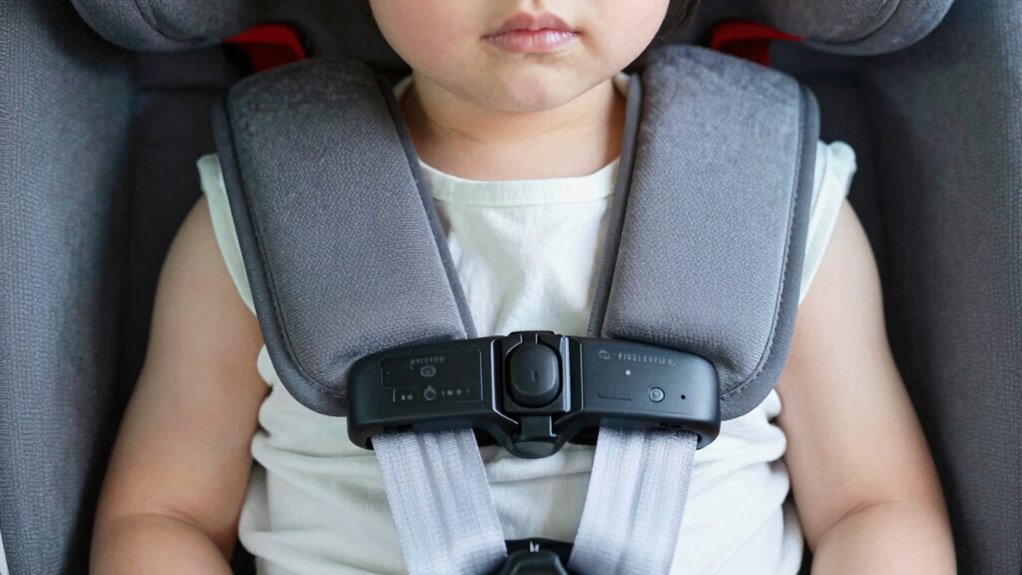
Before each trip, make certain to re-check your child’s car seat to guarantee everything is secure and properly positioned. Regular car seat maintenance and inspecting child safety accessories help ensure maximum protection. Follow these steps:
- Make sure the harness is snug and at the correct height for your child’s shoulders.
- Verify the chest clip is at armpit level.
- Check that the seat is tightly installed with minimal movement.
- Confirm all straps and clips are in good condition and properly fastened.
Doing this before every trip helps catch any looseness or damage that may have occurred. It’s a simple but crucial step to keep your child safe and ensure the car seat functions at its best. Regular re-checks promote peace of mind and child safety.
Frequently Asked Questions
How Often Should I Re-Evaluate My Child’s Car Seat Fit?
You should re-evaluate your child’s car seat fit every few months and after any significant growth or weight change. Regular car seat maintenance and safety check routines guarantee your child’s safety. Check harness height, chest clip position, and tightness frequently to make sure everything remains secure. Kids grow quickly, so staying vigilant helps keep them safe and comfortable during every ride. Don’t forget to revisit these checks regularly!
Can I Use a Second-Hand Car Seat Safely?
Is a used car seat safe? Not always. Second-hand safety depends on its age, condition, and history. You should check if it’s been in a crash, verify the manufacturer’s expiration date, and confirm it has no missing parts or damage. Remember, used car seats can have hidden issues, so it’s often safer to buy new or from a trusted source. Always prioritize your child’s safety first.
What Are Common Signs of a Faulty or Damaged Harness?
You should watch for harness damage, like fraying, tears, or worn spots, which compromise safety. If the harness slips or feels loose even when properly tightened, that’s a warning sign of potential malfunction. Always inspect for signs of wear, tears, or stretched straps before each ride. Damaged harnesses can fail during a crash, so replace or repair them promptly to ensure your child’s safety.
How Do Weather Conditions Affect Car Seat Safety Adjustments?
Picture your child snug in their car seat, but suddenly, rain slicks the windows and a gust of wind chills the air. Weather impact can loosen harness adjustments or cause clothing considerations that influence fit. Cold weather thickens clothing, making harnesses feel tighter, so you need to check fit carefully. Hot, humid days can make harness straps slip or loosen, so always reassess and tighten straps after weather changes to ensure safety.
Are There Specific Tips for Securing a Newborn Versus a Toddler?
When securing a newborn, guarantee the harness is snug and the harness straps are at or below their shoulders, using a newborn harness setting if available. For toddlers, adjust the harness height to be at or above their shoulders and ensure the chest clip is at armpit level. Always check that the harness fits snugly, with no slack, to keep your child safe and comfortable during travel.
Conclusion
Remember, your child’s safety depends on the little details you tend to with care. By paying close attention to harness height, chest clip placement, and tightness, you’re guiding them through the journey of safety and trust. Think of these checks as gentle reminders to keep their world secure and comfortable. With each mindful adjustment, you’re weaving a safety net that lets your child explore confidently—because their well-being is always worth the extra moment.